
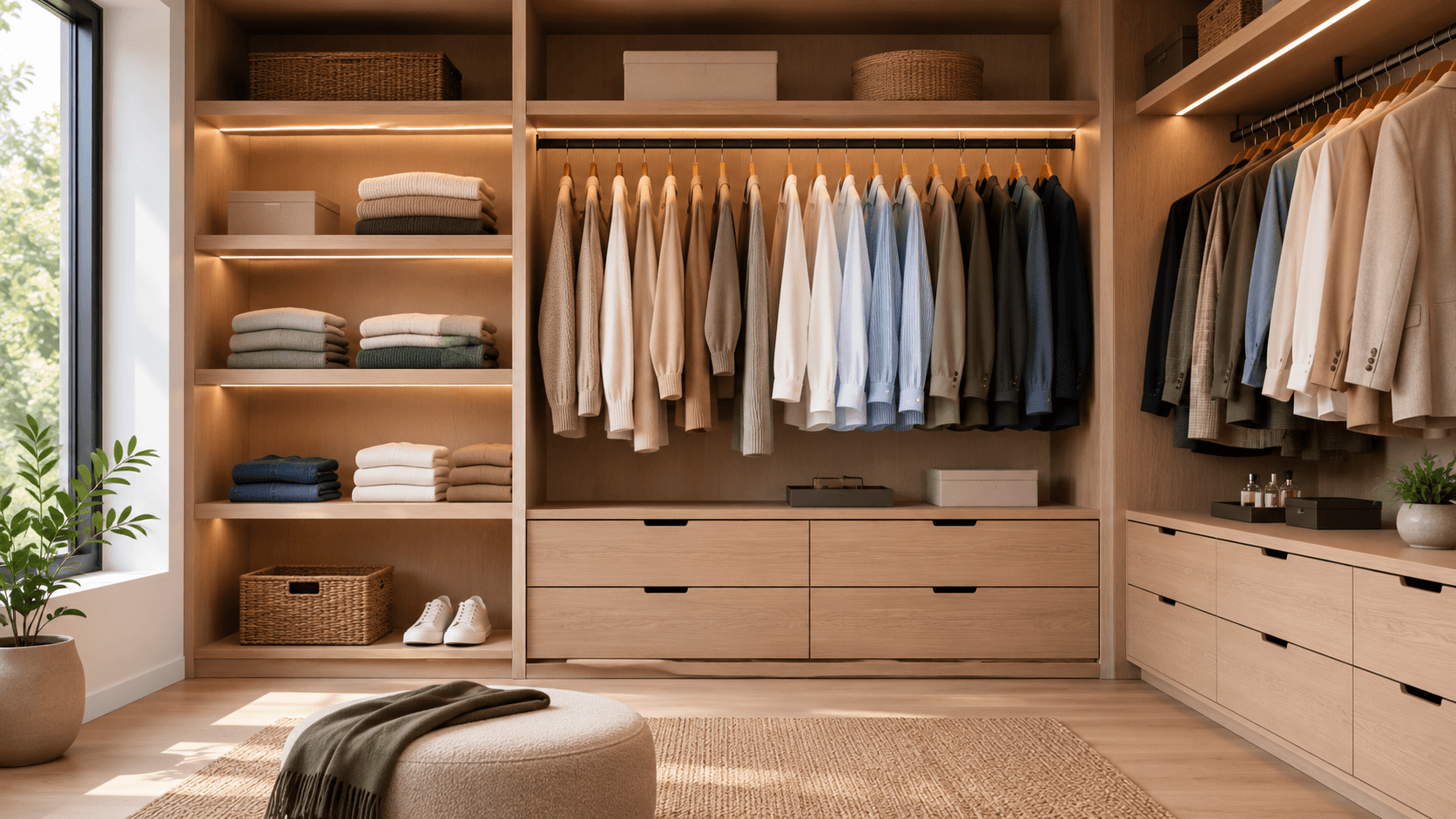
Many people start organizing a small closet by buying extra bins, but that is usually not the best first step. In most small closets, the real problem is reachability, not storage space.
Discover 20 effective small closet organizer ideas for limited spaces, including do-it-yourself shelves and smart ways to use vertical space. Keep the advice practical and affordable for reach-in coat closets or narrow bedroom closets.
What to Check Before You Organize a Small Closet
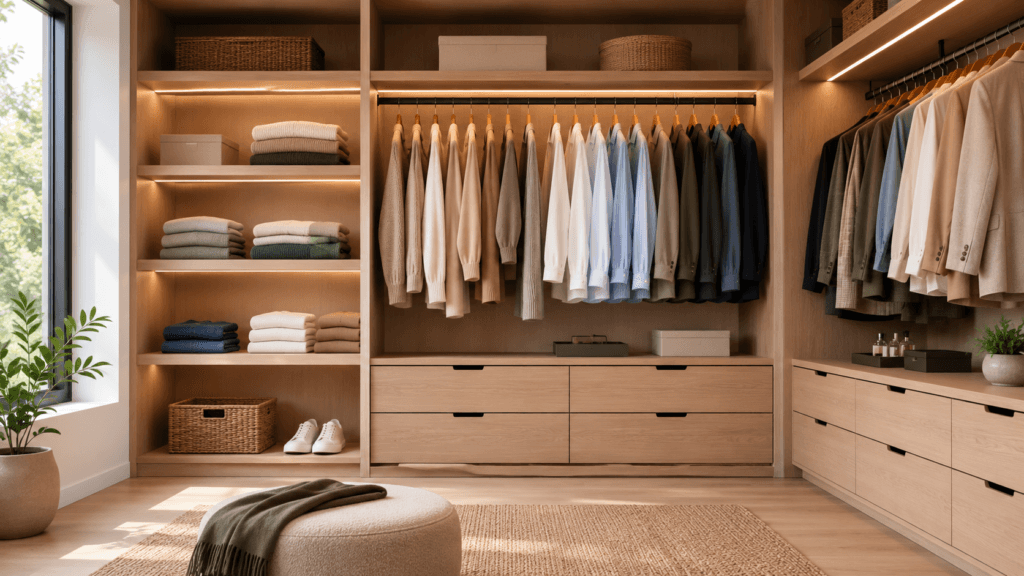
Before purchasing any bins, check your reach height. Most decoration guides fail to mention it, yet this factor often makes the difference between a closet that stays organized and one that soon becomes messy again.
Keep the clothes you usually wear each morning—the ones that sit between shoulder and hip level—since this is your natural reach area. Then you will not need a step stool, bend down, or search around to get them.
Put items you use only once a season—such as off-season coats, extra bedding, or luggage—above shoulder level, and keep shoes, hampers, or bins that you can easily reach below hip height.
Before planning your shelves, measure your reach. Stand where you normally get dressed and draw lines on the wall to show your shoulder and hip heights. Closet systems are generally built for average height rather than your exact height, which is why many small closets are harder to use than they should be.
20 Small Closet Organizer Ideas That Work in Tight Spaces
1. Double Hang Rods
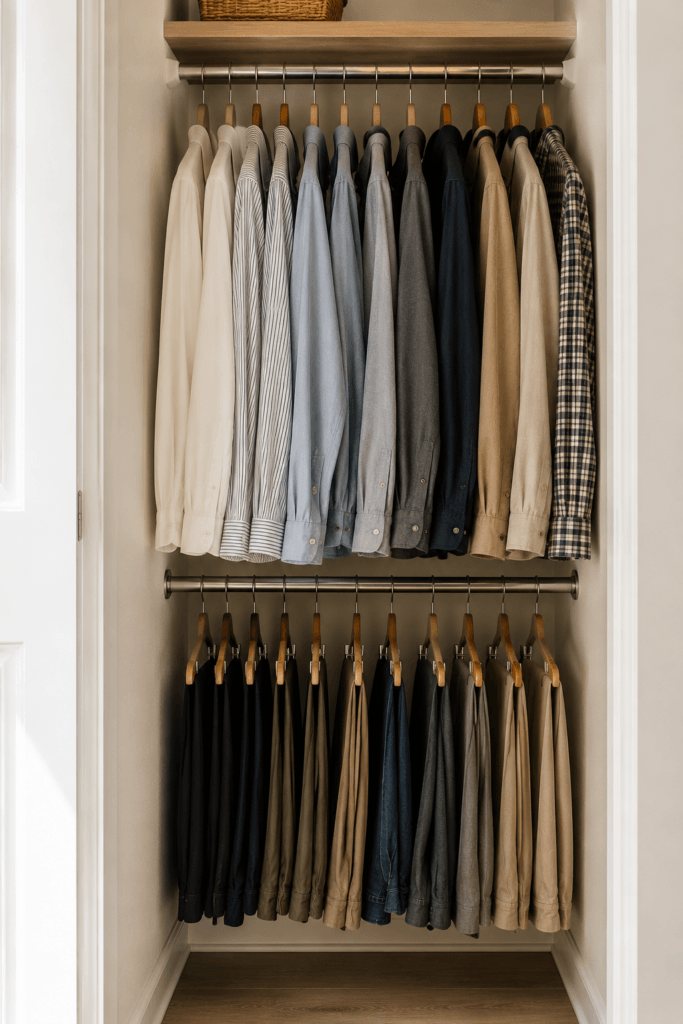
To double the hanging space for shirts, folded pants, and skirts, add a second rod underneath the one you already have. This works best when your closet has at least 80 inches of vertical space. It is a simple way to use space you already have.
2. Slim Velvet Hangers
Replacing thick plastic or wooden hangers with narrow velvet ones will return 2 to 3 inches of rod space per foot. Because the fabric grips clothes, they do not slide off, and you spend less time refolding them. This solution makes a real difference.
3. Door-Mounted Shoe Organizer
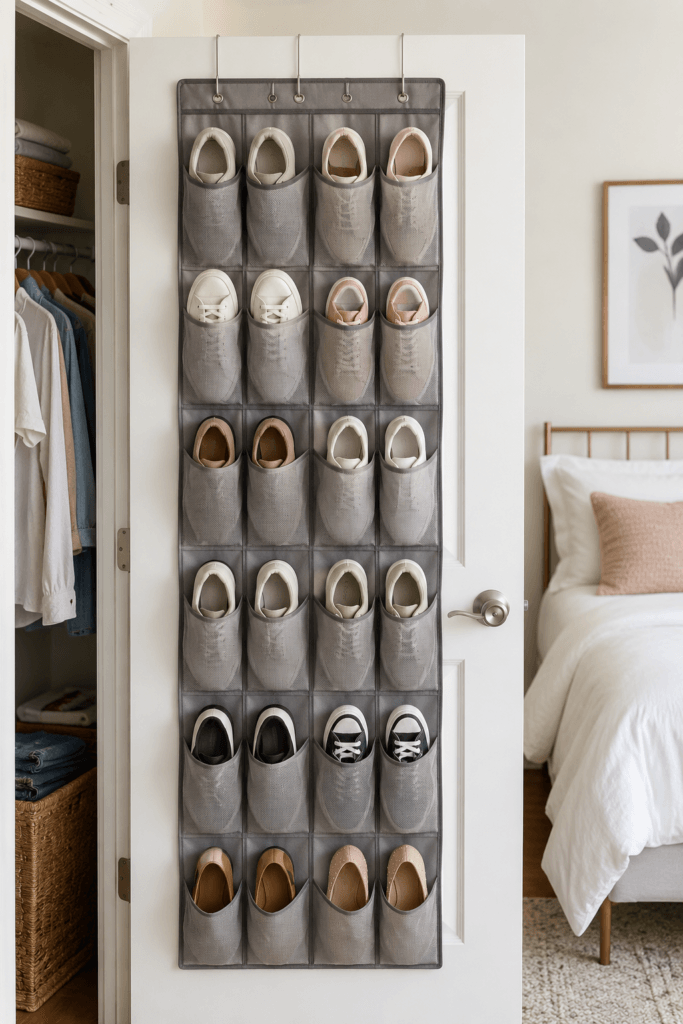
A pocket organizer hung on the door can store 12 to 24 pairs of shoes while taking up no floor space; it can also hold scarves, belts, or small bags if shoes are not your main concern. Hang it between eye and hip level, not above your head.
4. Shelving in the form of a vertical wall above the rod
Putting shelves above your hanging rod uses space that is otherwise wasted in most closets; it is the ideal place for items not in use during the season, not for everyday clothes. A 12-inch-deep shelf can hold six to eight bins, keeping less-used items out of the way.
5. Stackable Clear Bins
With clear bins, you do not need to open every box to see what is inside, which is especially useful in a small closet. Choose one or two sizes so that they stack nicely and place them on the top two shelves, where you can reach them with only a slight stretch rather than a stool.
6. Closet Rod Extenders
A tension rod extender lets you add a hanging section at right angles in a corner that would otherwise stay empty. This is especially useful in walk-in closets with awkward angles. It costs only $15 to solve the layout problem.
7. Hanging Sweater Shelves
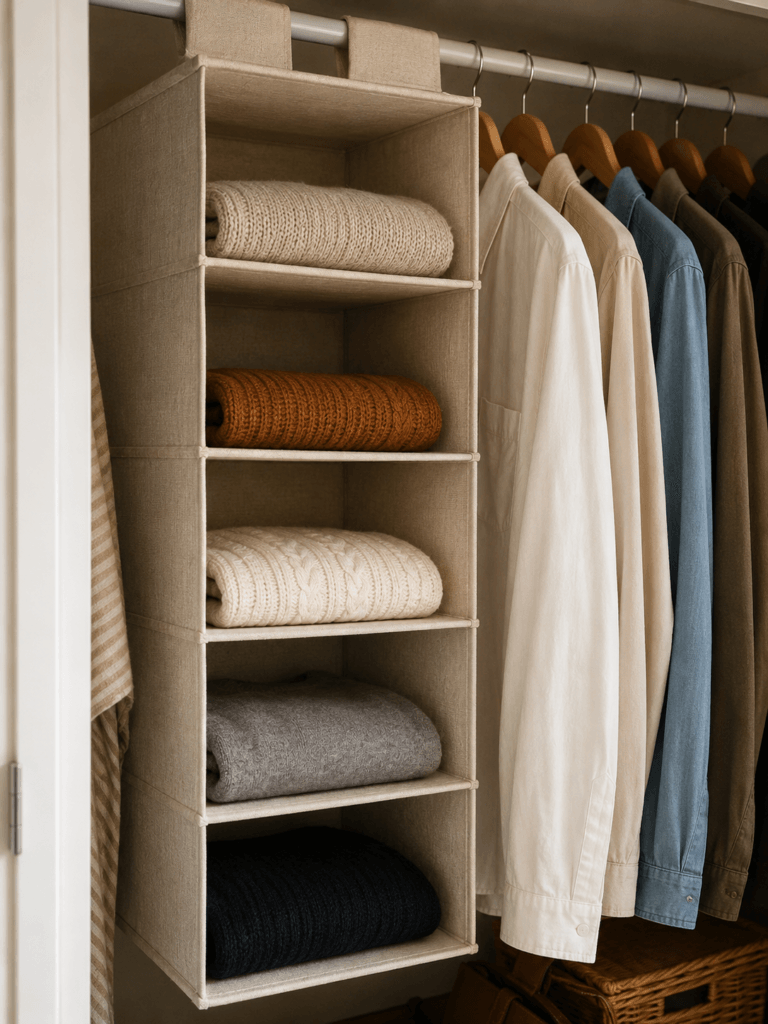
The fabric shelf organizer that hangs from the rod provides four to six compartments for sweaters or jeans and makes a dresser unnecessary since it uses space on the rod rather than on the floor; place the folded items you use most in the middle compartments at hand height.
8. Under-Shelf Wire Baskets
Small wire baskets that clip under a current shelf provide an extra storage level without any installation; they are ideal for accessories, socks, or rolled belts and are among the easiest DIY projects for adding shelving to a closet because no drilling is required.
9. Pegboard Wall Panel
Putting a small pegboard panel on one of the walls of a closet gives you flexible hook storage for bags, hats, or jewelry. Since the hooks can be reorganized as your requirements change, this is an advantage over fixed shelves. Place the hooks you use most at a height between the shoulders and the hips.
10. Cascading Hangers
With cascading or step hangers, you can hang five or six items on a single hook in a vertical arrangement; they are best for clothes you do not mind wrinkling, such as casual tops. It is a fast way to fit more items into one section of the rod.
11. Floating Corner Shelves
Small triangular shelves can be placed in closet corners that would otherwise be unused; they are suitable for folded clothes, shoes, or a small basket. This is an effective way to organize a small closet with an irregular layout.
12. Tie and Belt Rack
A rack that pulls out and is fitted to the side wall keeps ties, belts, or scarves from getting tangled and ending up in drawers. It occupies almost no floor or shelf space and should be mounted at or a little below shoulder height for everyday use.
13. Second-Level Shoe Shelf
By tilting each pair of shoes slightly, angled shelves allow you to store twice as many pairs in the same space. This arrangement works along the floor of the closet or on a low shelf. Place the shoes you wear most often on the bottom row, nearest to hip height.
14. Modular Cube Shelving
Because of the stackable cube units, you can build shelves to match the exact width of your closet rather than using a fixed system, and if your storage requirements change, you can reorganize them later. This is one of the most flexible closet organizer ideas for renters.
15. Use Drawer Dividers in Bins
If your closet has built-in drawers, dividers will stop folded clothes from sliding into a heap. Since the dividers are adjustable, they can work with different drawer sizes as your wardrobe changes. This small feature helps save time in your morning routine.
16. Hooks on the Inside of the Door
The back of your closet door is almost always unused. A row of hooks there holds robes, bags, or tomorrow’s outfit. Keep the hooks within easy reach—this is prime daily-use space, not storage for rarely worn items.
17. Vacuum-Sealed Storage Bags
Vacuum bags can reduce the volume of bulky items such as winter coats or comforters by half. Store them on the top shelf since you only need them a few times each year. This frees up valuable reach-height space for everyday items and keeps the overall layout more usable.
18. A compact standalone shelf unit
If your closet has floor space but no built-ins, a narrow freestanding shelf (12-16 inches deep) adds structure without construction. This is a good renter-friendly DIY closet shelving idea. Choose one with adjustable shelves so you can match it to your reach zone.
19. A bin system organized by category
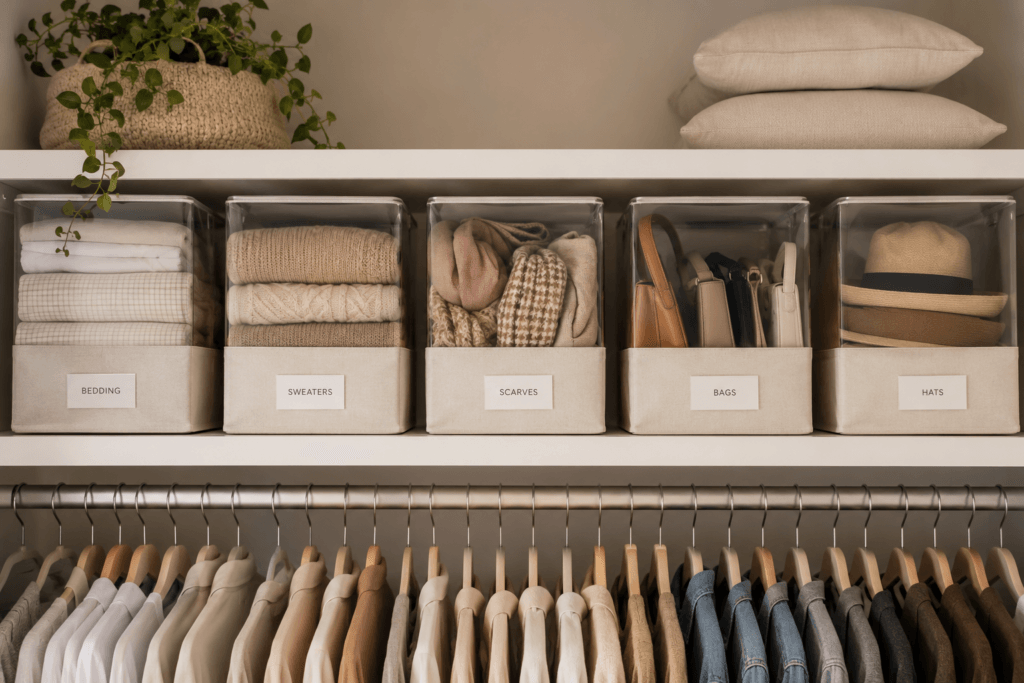
Sort the items into categories such as accessories, off-season items, or seasonal decorations and clearly label each bin. This is particularly important in small closets because you will not want to open five bins to locate one scarf. Make sure the categories you use weekly are at a height that is easy to reach, and put all the rest either above or below.
20. A full-length mirror on the door
It is not a storage tip, since few small closets have room for a mirror elsewhere in the room. By fitting a mirror on the door of the closet, you can see how your outfit looks right when you are getting dressed, and this also makes the closet area seem less crowded.
FAQ
What’s the best way to organize a small closet on a budget?
Begin with the items you currently have by grouping the clothes by category and adding slim hangers before purchasing any new ones. Next, select one low-cost improvement, for example, a door organizer or baskets to go under the shelves, according to the area that you need most. Nearly all of the ideas mentioned cost less than $20.
Should I use bins or open shelves in a small closet?
Use open shelves or clear bins for things you grab often, and opaque bins for off-season or rarely used items. Clear storage at reach height saves time, while closed storage above or below keeps clutter out of sight. Mixing both usually works better than sticking to just one system.
How do I organize a tiny closet with no built-in shelving?
Use the door and rod space first, since those don’t require installation — think hanging organizers, cascading hangers, and door hooks. Add a narrow freestanding shelf unit if there’s floor space to spare. Vertical space above the rod is usually your biggest untapped area.
How high should closet shelves be?
Keep shelves for daily-use items between shoulder height and hip height, since that is the zone you can reach without a step stool or bending down. Reserve shelving above shoulder height for seasonal or rarely used items. This single adjustment makes a small closet feel far more functional, even without adding storage.
Conclusion
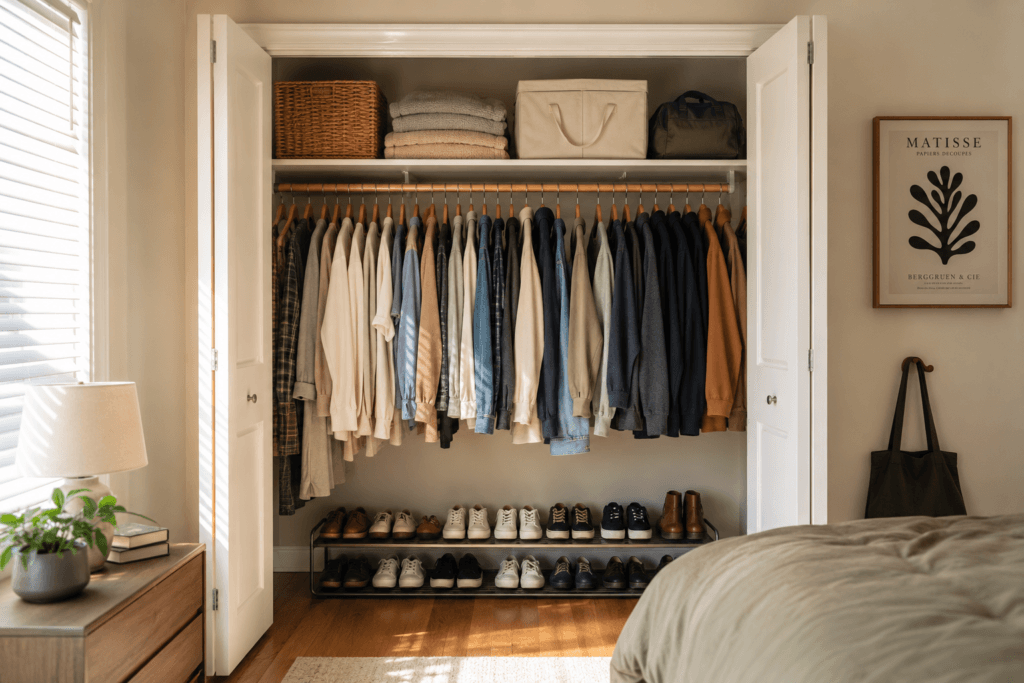
A small closet does not need more stuff crammed into it — it needs the right things at the right height. Get your reach zone sorted first, and the rest of the organizing gets a lot easier. Browse more room-by-room fixes like this one elsewhere on Ergontag.
2 thoughts on “20 Small Closet Organizer Ideas (No Step Stool Needed)”