
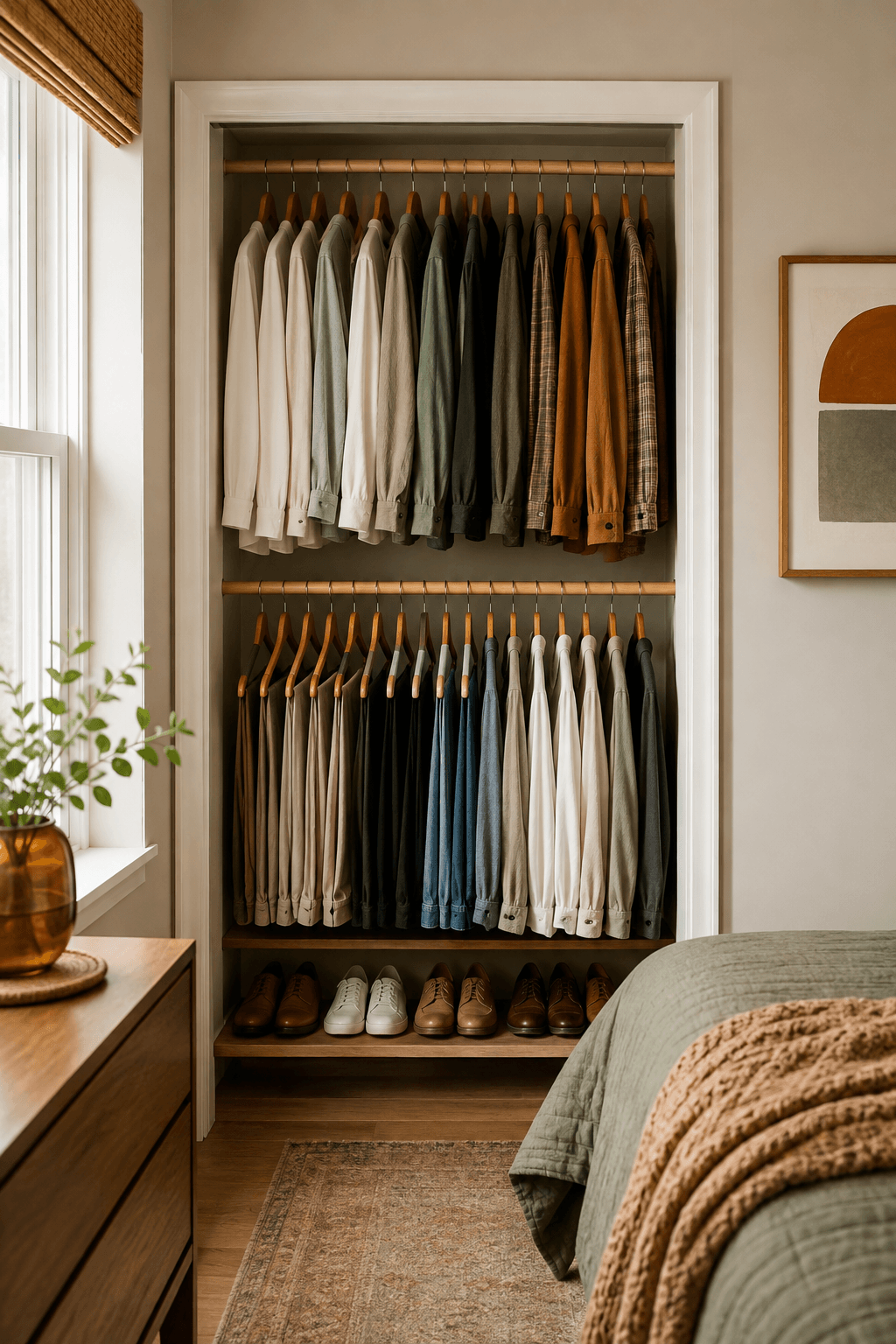
People often buy bins first when renovating a small closet, but that shouldn’t be the first step. Before buying organizers, check that shelf and rod heights match how you actually reach them, not just standard builder spacing.
Builders usually install one rod at a fixed height because it is quick and cheap, not because it suits your clothes or reach. That is why closets can feel crowded even when half full: the vertical space isn’t used properly.
The article outlines the checks you should make before buying bins, then gives a step-by-step method for organizing your small closet so it holds more and stays organized.
What to Check Before You Start
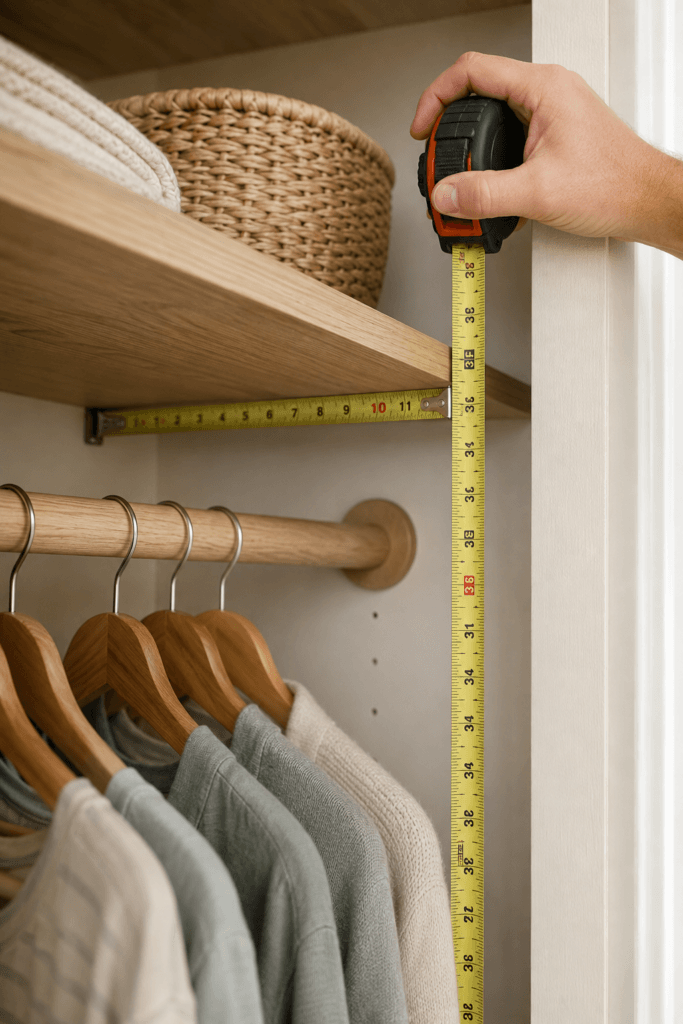
Before installing shelves or buying organizers, check three important measurements. If you skip this step, your closet may look neat at first but soon become messy again.
The average closet has one rod 66 to 70 inches above the floor, which suits coats but not shirts or folded pants. Use two rods instead: one at 40 to 42 inches for shirts and folded pants, and keep the upper rod for dresses, robes, or long coats. This simple adjustment doubles your hanging space.
If shelves are deeper than 14 inches, you will stack items and lose sight of those at the back. This causes people to buy duplicates. Keep daily-use shelves 12 to 14 inches deep, and use deeper shelves only for items you do not need often.
The 15-degree sightline rule means that when you open your closet, your line of sight drops about 15 degrees from eye level. Items above this are easy to overlook, which is why upper shelves often hold forgotten things. Keep everyday items between shoulder and hip height and place infrequently used bins above or below this range.
If you sort out these three things, your closet system will work much better.
The Small Closet Organization System
1. Before you buy anything, figure out what you need.
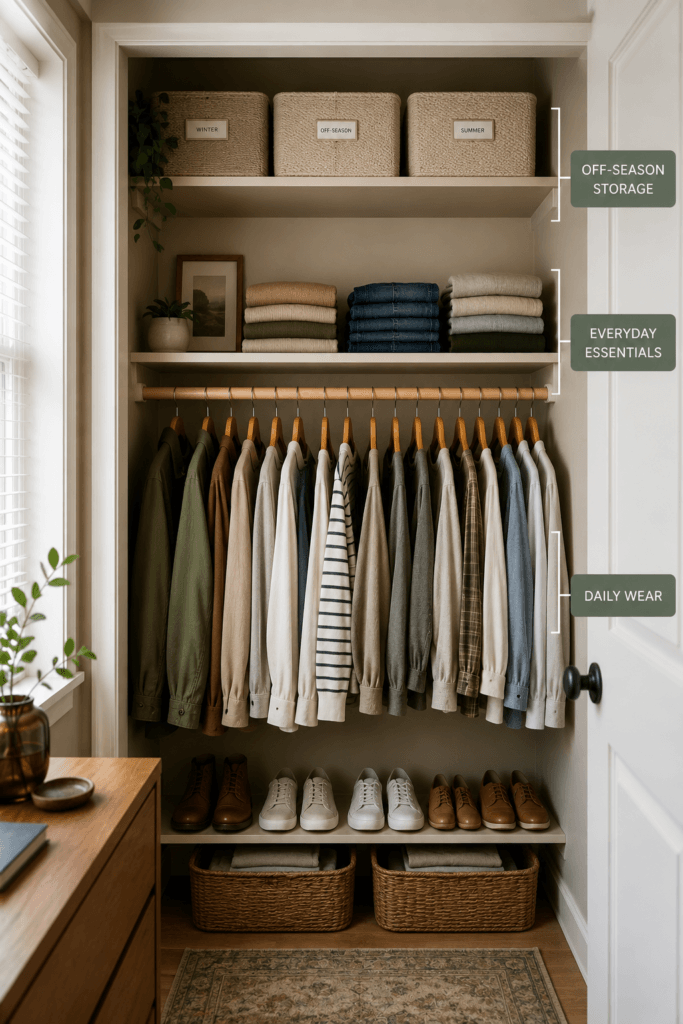
Mentally divide your clothes into three categories: daily use, occasional use, and off-season. Place daily wear within 40 inches of the ground and on shelves at eye level. Move the rest higher, lower, or out of the closet so occasional items do not take the best spots.
2. Hang the shorter items double.
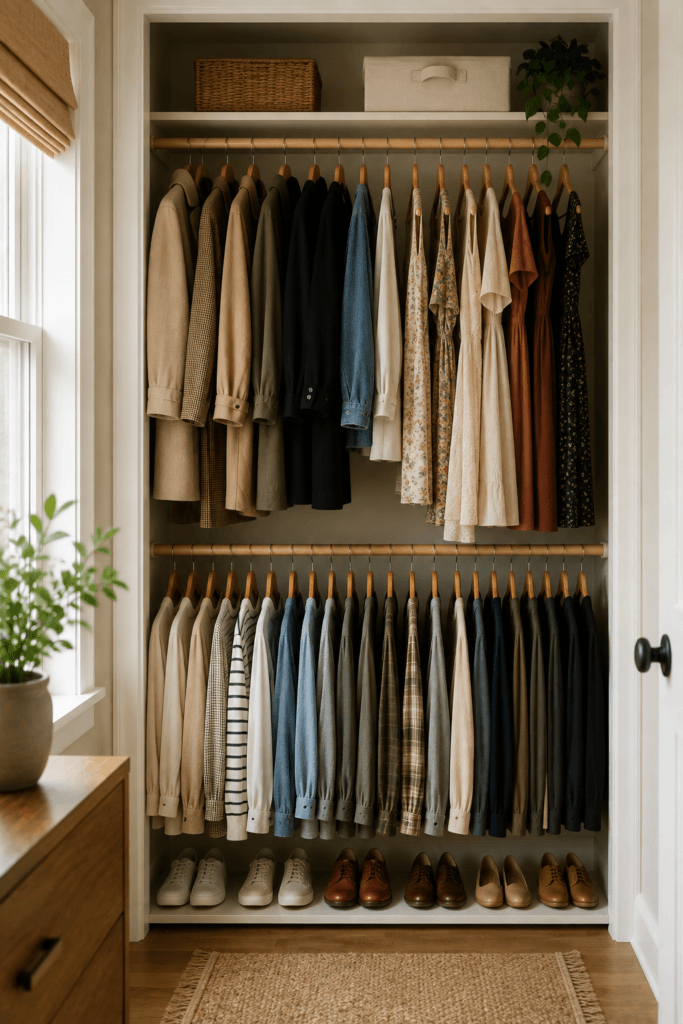
Add a second rod about 40 inches below the top one. Use it for shirts, folded pants, and skirts—anything that doesn’t need full length. This simple change usually creates more space without using more room.
3. Use Slim, Matching Hangers
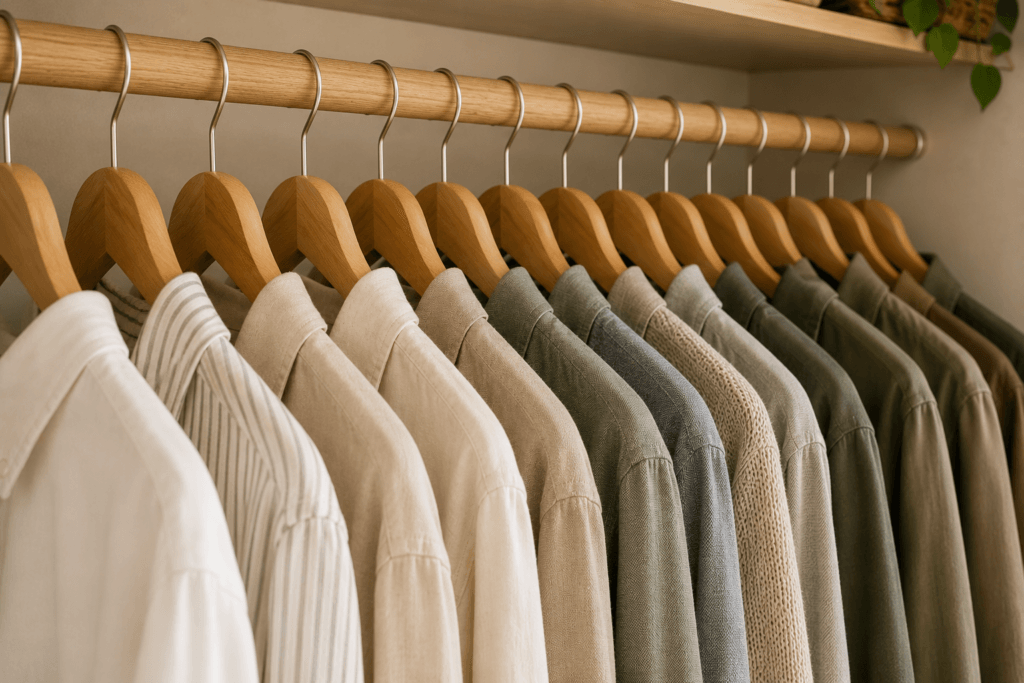
Switch out wire or bulky plastic hangers for slim velvet or wood hangers, all the same type. Different hangers waste 2 to 3 inches of rod space because of the extra bulk. Matching hangers also keep your closet looking orderly. 4. Fit a shoe shelf at floor level, not a bin. It keeps things organized.
4. Add a Shoe Shelf at Floor Level, Not a Bin
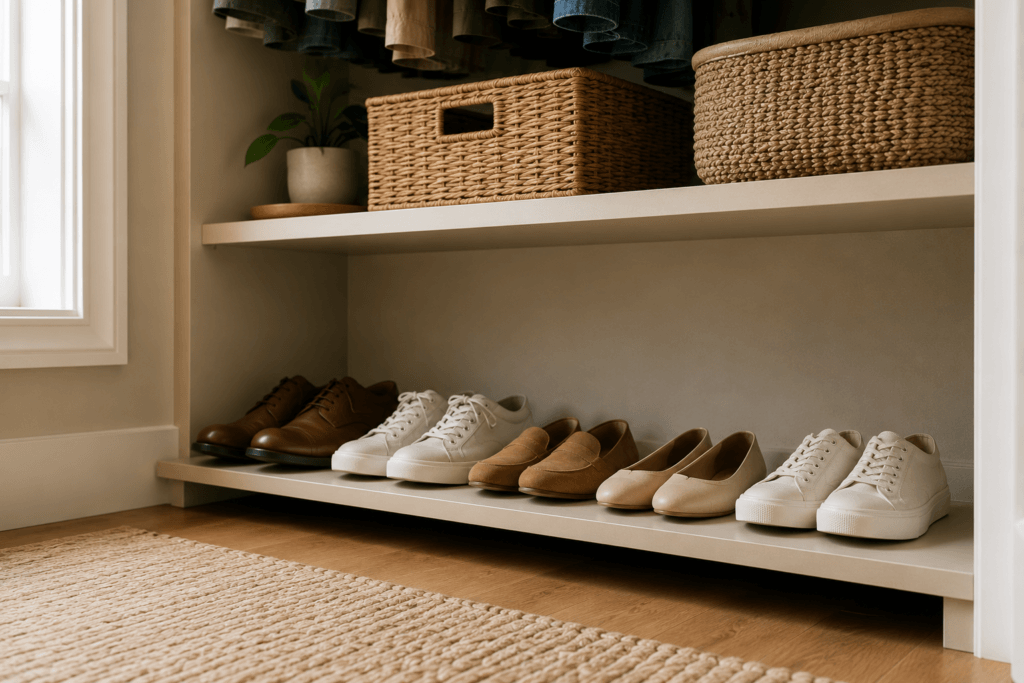
Loose shoe piles take up vertical space because shoes stack instead of lying flat. A slim, angled, or tiered shoe shelf keeps shoes in a single layer at the bottom, leaving room above for another shelf or bins.
5. Install Door-Back Storage for Flat Items
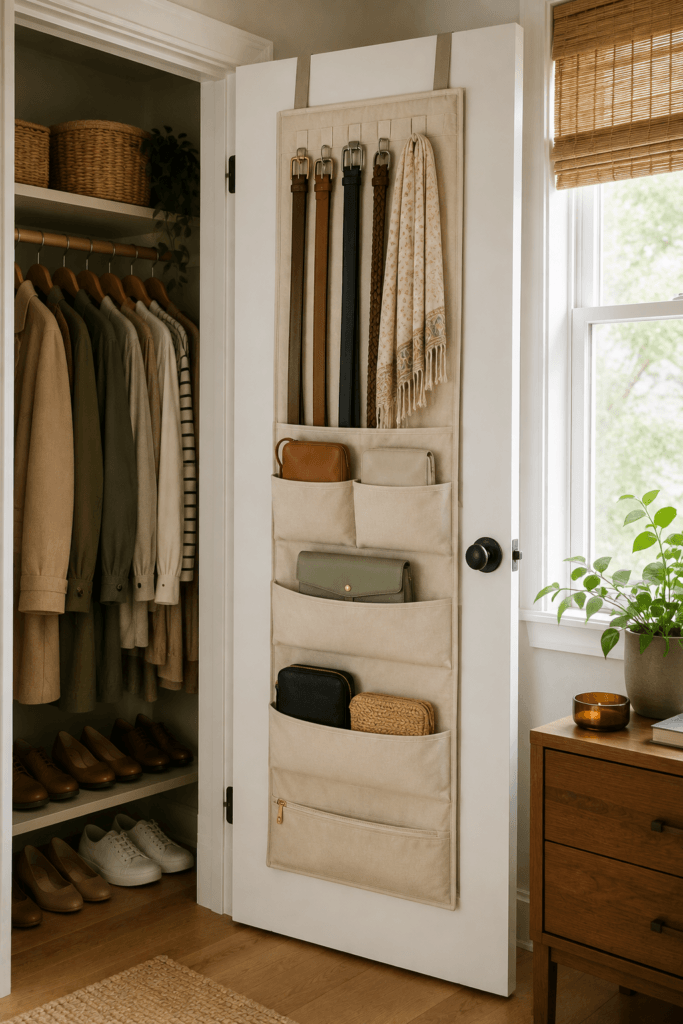
The back of your closet door is often wasted space. Use an over-the-door organizer with shallow pockets 2 to 4 inches deep for belts, scarves, small bags, or jewelry. Pockets under 4 inches deep let the door open easily.
6. Use Vertical Dividers, Not Horizontal Stacks
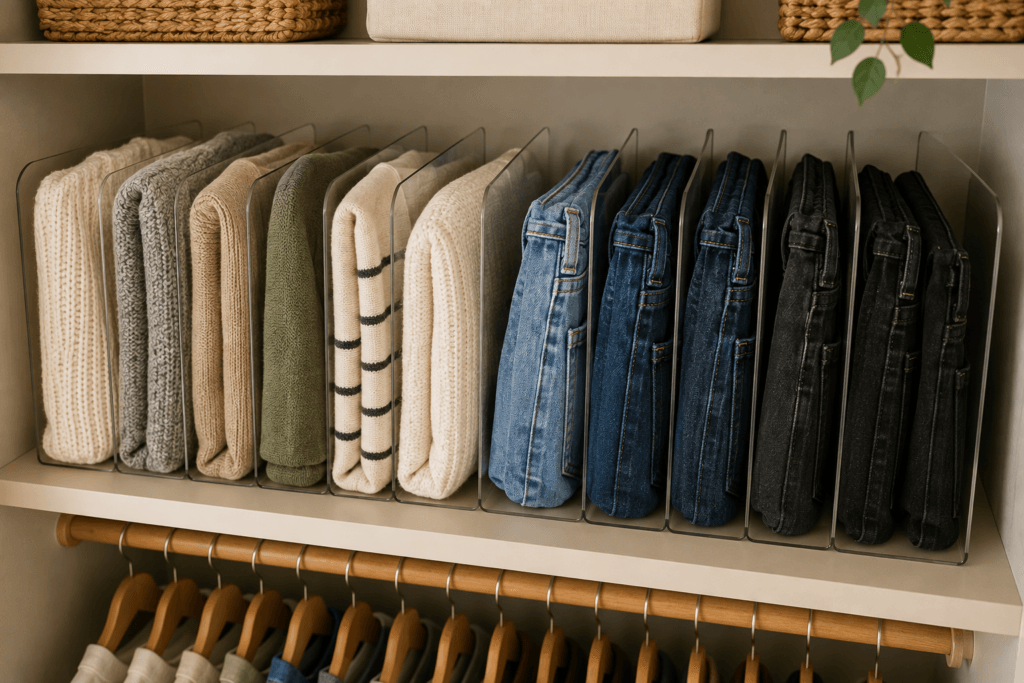
With folded garments such as sweaters or jeans, stacking creates digging and ruins the pile. Vertical dividers let you stand items up so you can remove one without affecting the others, while using the same shelf space.
7. Mark the bins with labels at eye level, not on top.
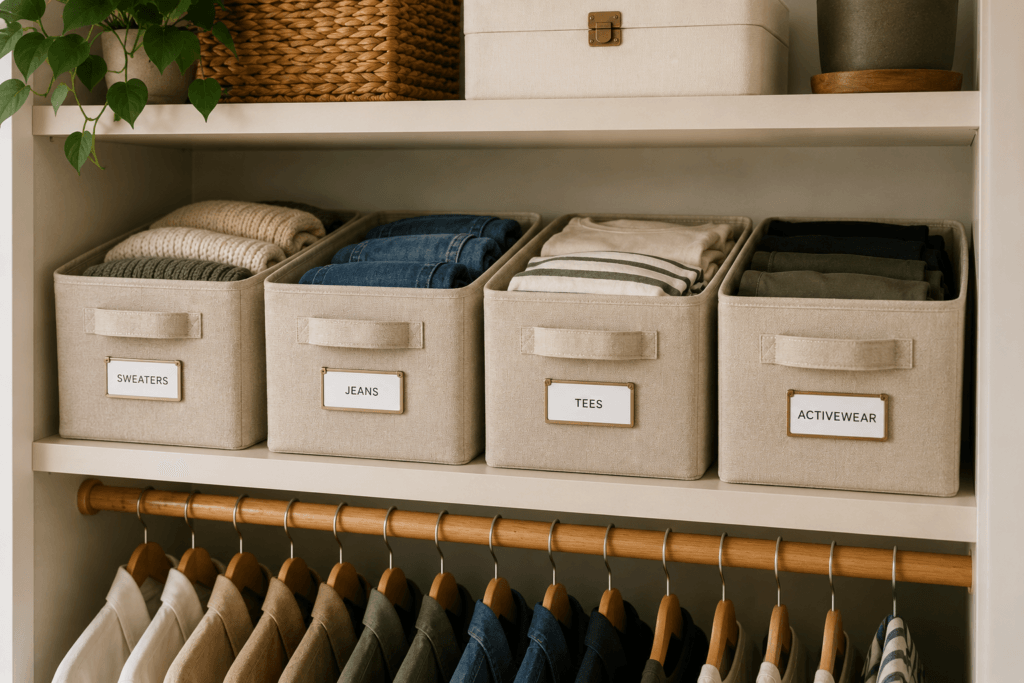
If the only part of a bin’s label that is visible is the top section, you will forget what is in it within a month, especially when the bins are on shelves above the 15-degree sightline. So label the side that faces forward at the height you will actually be looking at when the closet door is open.
8. Leave about one-fifth of the closet unoccupied.
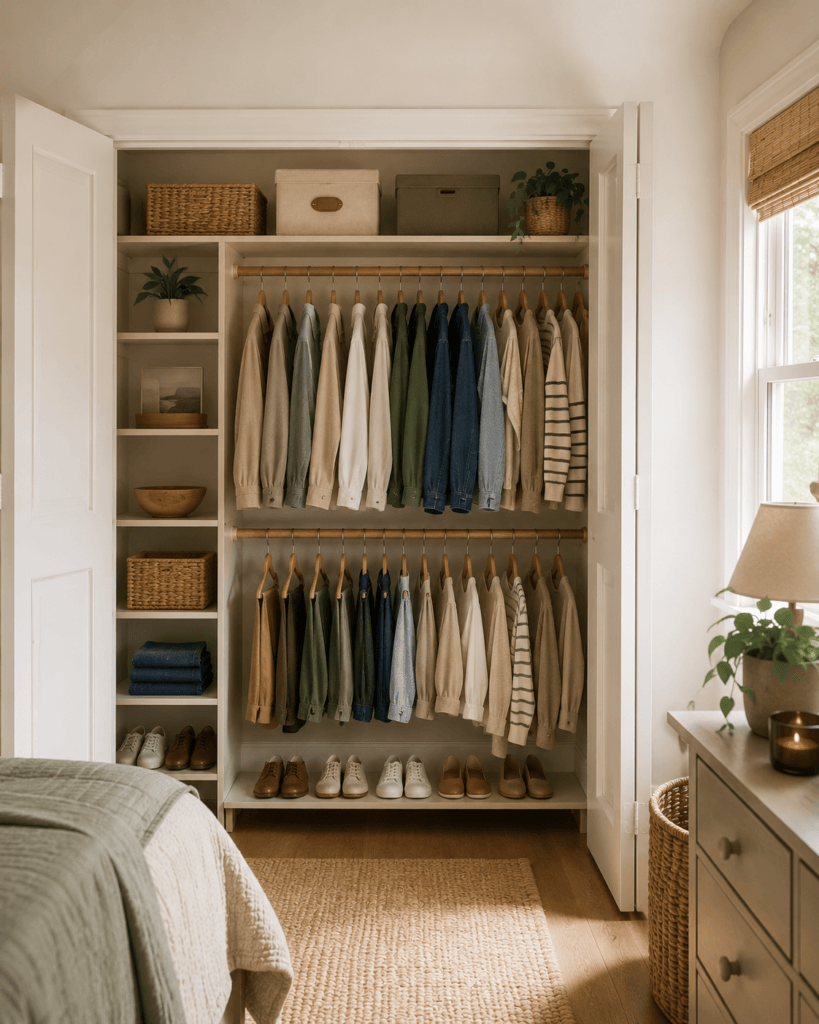
On day one, a drawer may look organized, but by day thirty it can become chaotic because there is no room left to put things back where they belong. Plan for about 20% open space because it lets the system look after itself rather than needing a complete overhaul each season.
FAQ
How do I organize a small closet with no space for a dresser?
For shirts and pants, add a second rod using the double-hang method to eliminate the need for dresser drawers. On a shelf, use vertical dividers for items that need to remain folded, such as sweaters.
How high should closet rods be when you are hanging two items?
Set the top rod about 80 to 82 inches and the bottom rod about 40 inches from the floor, giving about 40 inches of hanging space in each area. Shirts, folded pants, and skirts will fit without dragging on the floor or the rod above.
To what depth should closet shelves be?
Make sure the shelves you use every day are 12 to 14 inches deep so nothing gets lost in the back. Deeper shelves suit storage you don’t use often or only access seasonally; don’t use them for items you need to see or grab quickly.
Do closet organizer bins actually save space?
Bins help only if they fit your shelf depth and are easy to reach. Oversized or top-shelf bins usually move clutter around instead of fixing it. Measure your shelf first, then buy bins that fit.
Closing
Small closet organization is not about buying more bins — it is about matching rod height, shelf depth, and sightlines to how you actually reach and see. Get those three right first, and the storage products become optional extras instead of a rescue mission.
If you want to improve storage in other rooms, check out more layout guides on Ergontag for tips on organizing different spaces in your home.