
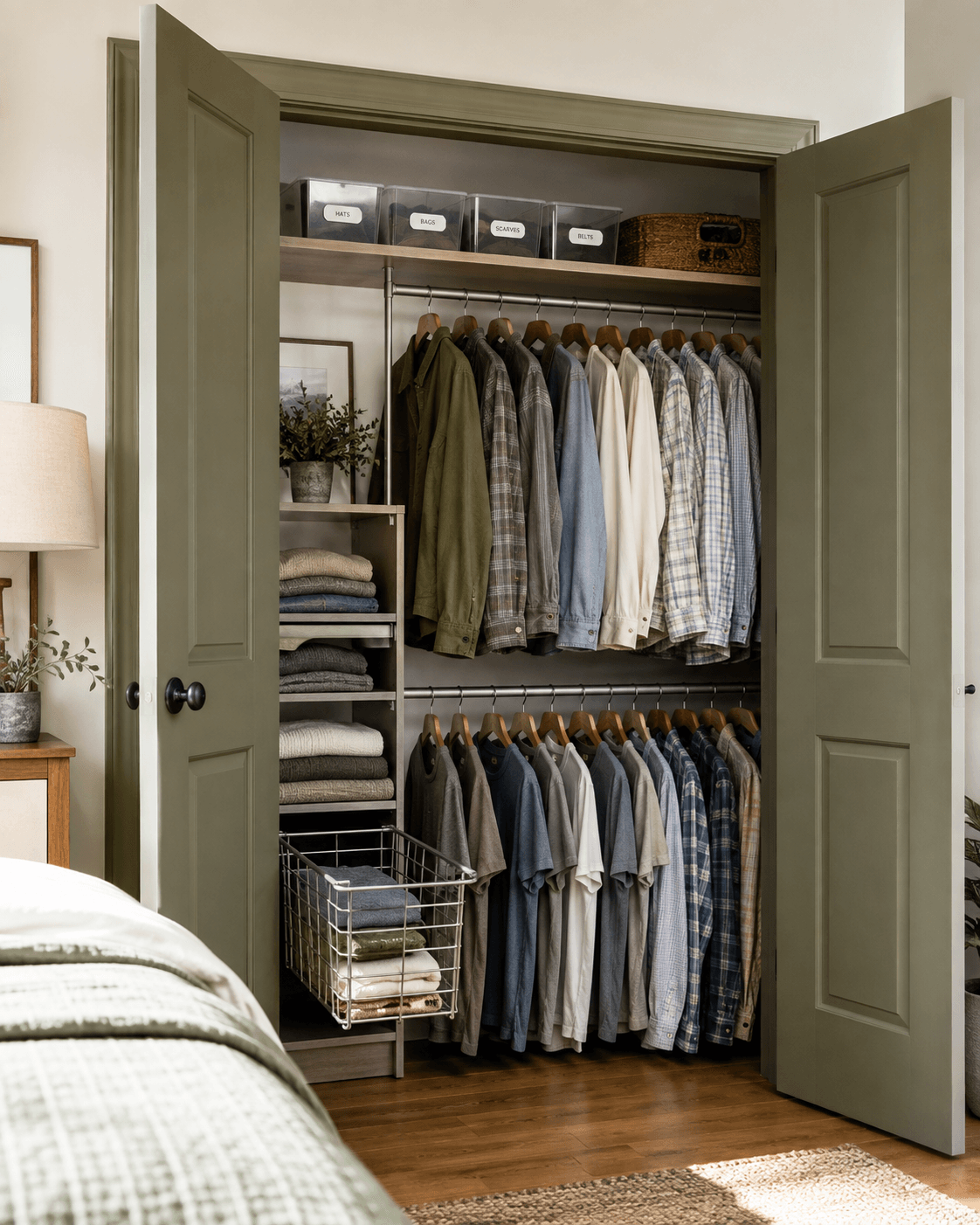
Most small closet organizer ideas fail because they focus on how the closet looks when the door is open. They do not focus on how you actually reach for items when getting dressed in the morning. A shelf may look good at eye level, but if it is just out of easy reach, it will not be useful. In small closets, you have no extra space to compensate for these errors.
The article outlines what you should measure before making a purchase or deciding to build something. It then offers ten organizer suggestions that work in small closets, not just ones that look good in pictures. It also answers common questions people have when they begin organizing.
What to Check Before You Start
Before buying any bins or installing a rod, check three things: your reach zones, the rod height, and depth clearance. These practical considerations are frequently omitted from guides that focus on style. Yet they are exactly why many small closet organizer ideas fail to work well once installed.
Get into the zones. The distance you can comfortably reach without stretching or crouching is generally from your hip to your shoulder, about 30 to 65 inches off the floor for the average adult. Keep daily items such as work clothes and shoes you wear often in this region. Store anything you only use once a season either above 65 inches or below 30 inches. Otherwise, you will end up with a crowded middle section and an empty top part of your closet.
For rod height and hanger clearance, one rod works best for shirts and folded pants, about 40 to 42 inches from the floor. This gives folded clothes sufficient space without leaving unnecessary space above. If you prefer two rods, position the upper one at about 80 to 82 inches and the lower one at about 40 inches. Higher rods force you to reach overhead, which can be uncomfortable and may lead to shoulder strain over time. Clearance requires about 24 inches of depth to hang clothes flat. If your closet is shallower, clothes will be squeezed sideways, and the space will feel even more cramped. In that case, use angled or rotating hardware rather than forcing standard hangers to fit.
Before you begin, take the following three measurements. All of the organizer ideas listed below assume that you know your measurements.
10 Small Closet Organizer Ideas That Actually Work
1. Double-Hang Rod System
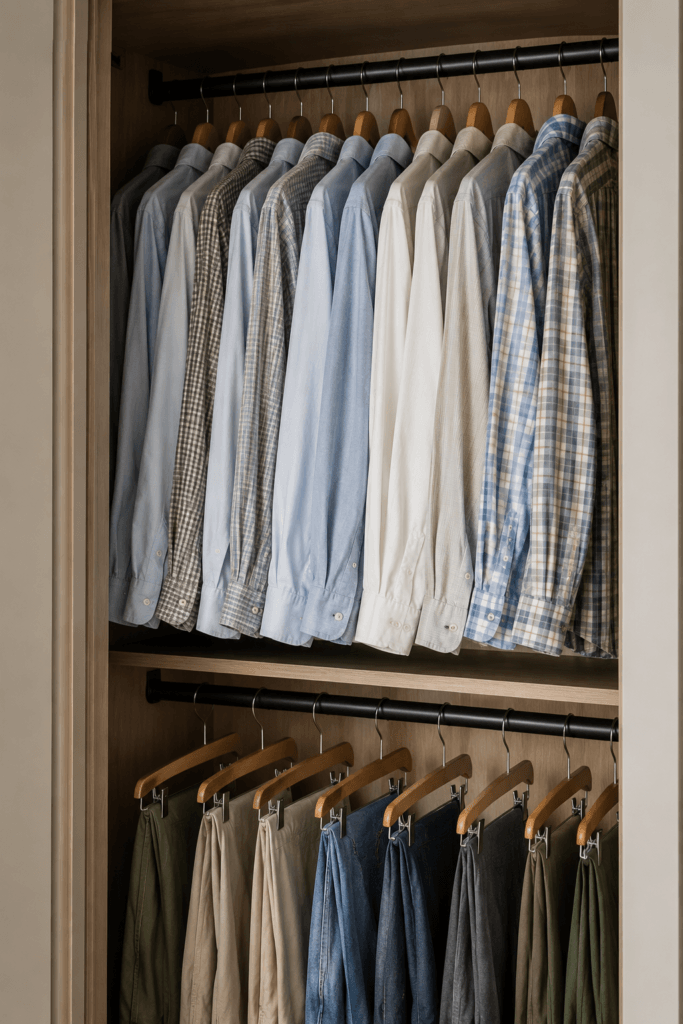
To double your hanging space without taking up more floor space, add a second rod above your current one. Keep the top rod at or below 82 inches so it is easy to reach. Use it for shorter items such as blouses, folded pants, or jackets. This arrangement works best when your closet is at least 84 inches high. Otherwise, it may seem cramped.
2. Adjustable Shelf Dividers
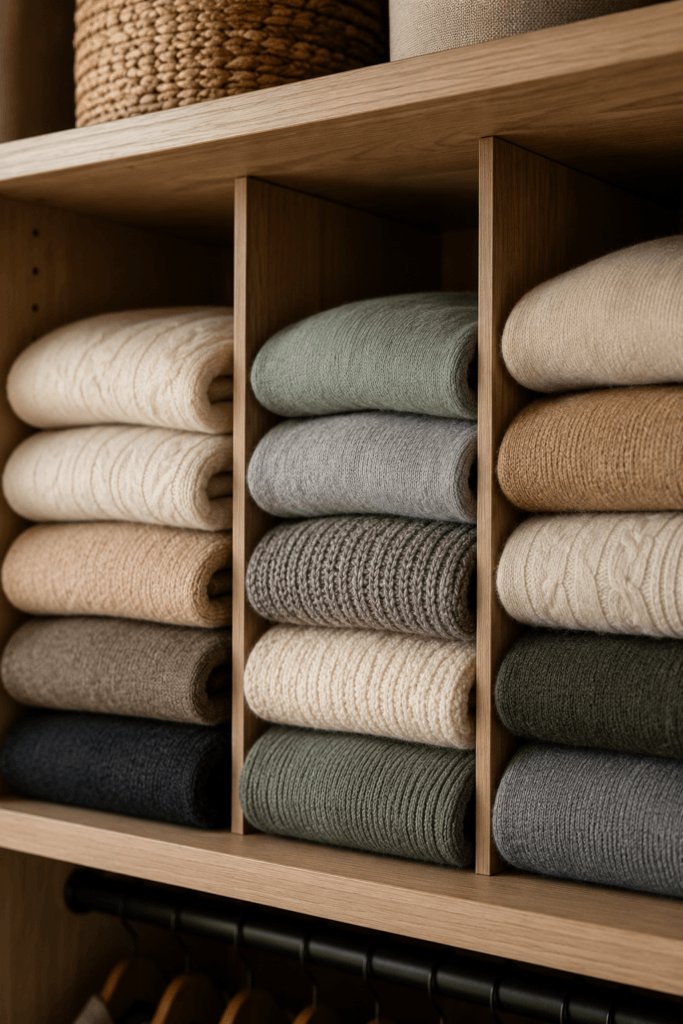
Vertical dividers can divide a wide shelf into narrow sections. This prevents folded sweaters and jeans from toppling over when you pull an item out. When storing sweaters, place the dividers 10 to 12 inches apart. Put them closer together if you are storing smaller items such as T-shirts. This simple improvement can be done on shelves you already have and doesn’t require any rebuilding.
3. Over-the-Door Shoe Organizer
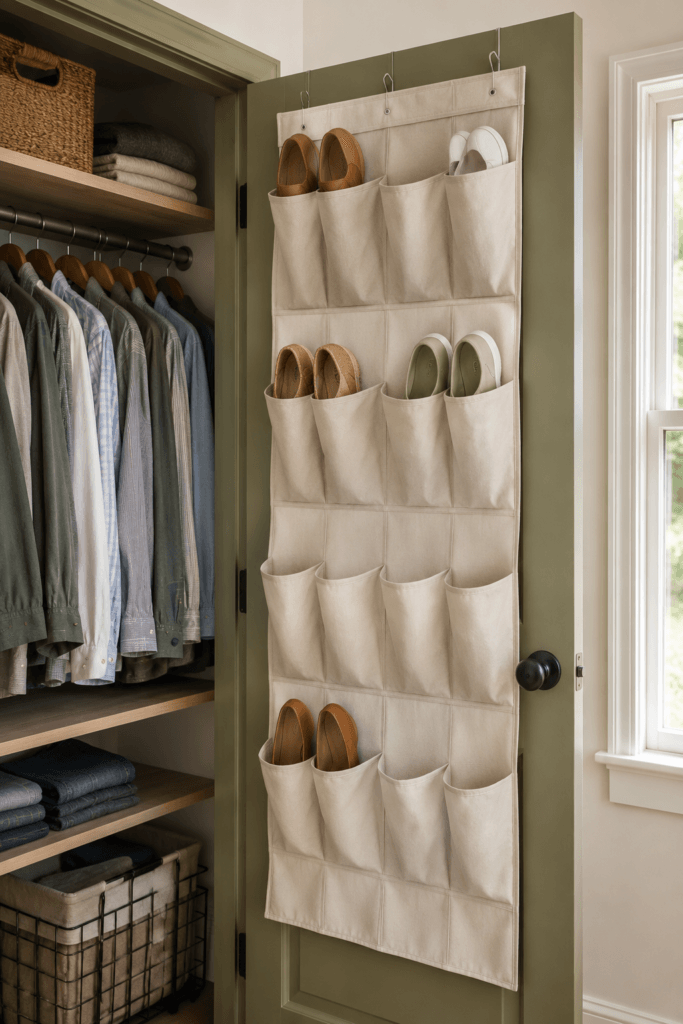
A hanging shoe rack uses space in most closets that would otherwise go unused. Hang it so the top pocket is below 65 inches, since anything higher requires you to reach up for your shoes. If the door does not close evenly, fabric organizers are better than rigid racks.
4. Pull-Out Wire Baskets
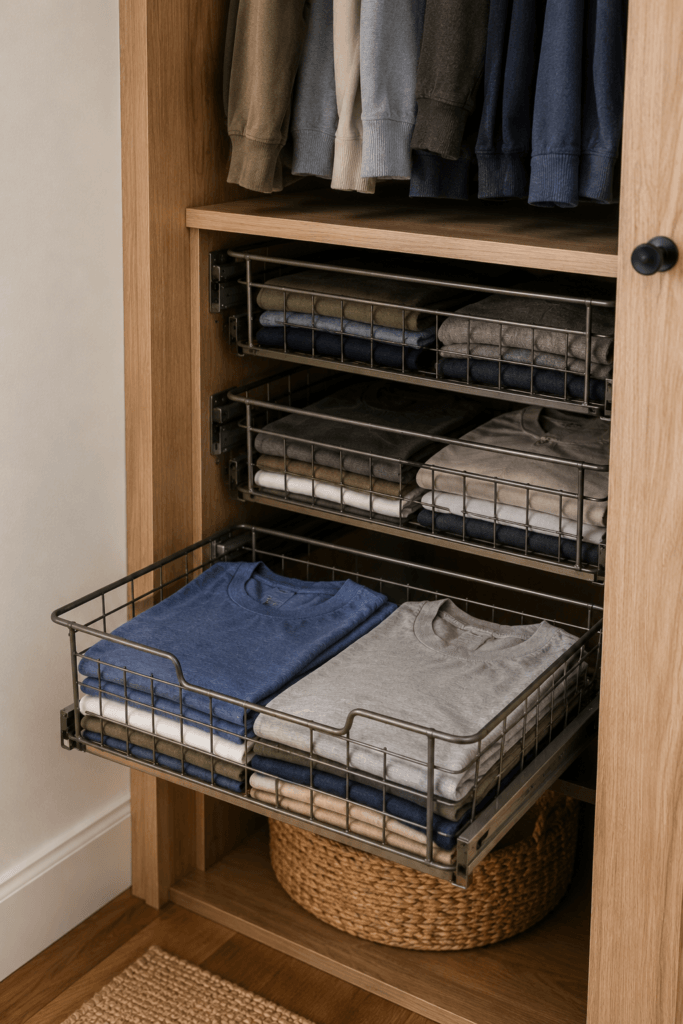
You can use wire baskets on drawer slides to treat your closet like it has drawers, even if it’s too shallow for actual drawers. Keep the baskets you use every day between 30 and 65 inches high. Place the ones used less often above or below this height. This is especially useful in closets less than 24 inches deep, since the baskets pull out rather than requiring you to reach into a dark corner.
5. Slim Velvet Hangers
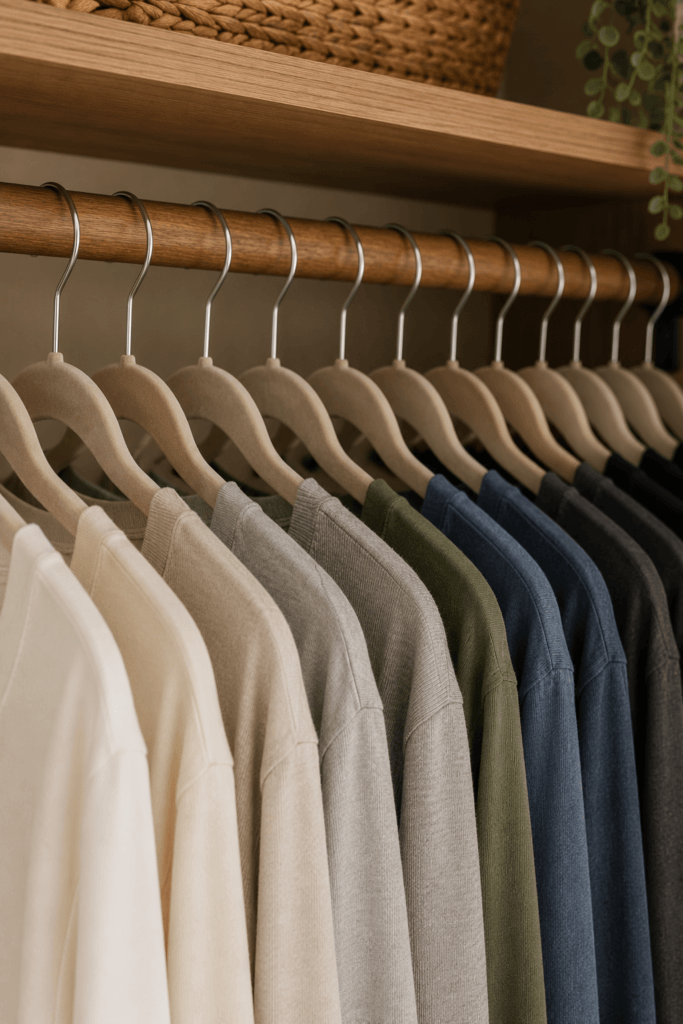
Replacing plastic or wooden hangers with narrow velvet ones returns 1 to 2 inches of rod space per foot. In a small closet, each inch makes a difference. Since velvet hangers are less slippery, your clothes stay in place, and you will not have to keep picking them up.
6. Corner Shelving Unit
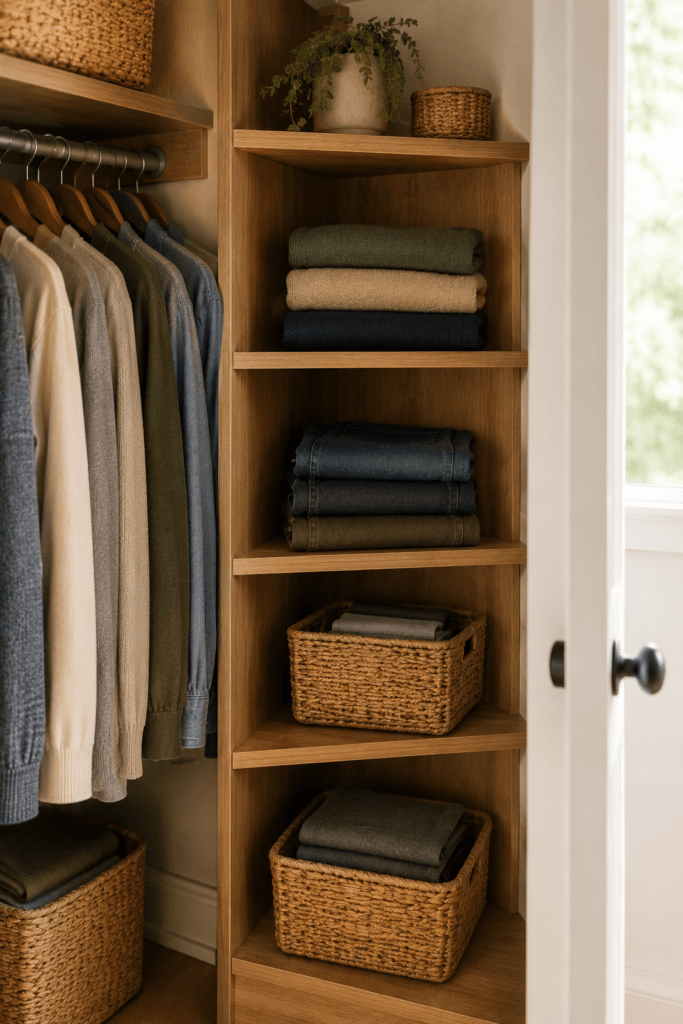
In many small closets, a vacant corner forms where two walls meet. You can use this space by fitting in a shelf unit for folded clothes or accessories, gaining extra storage without taking up your main area. Make sure the lower shelf is kept at least four inches above the floor so you can vacuum under it.
7. Clear Stackable Bins
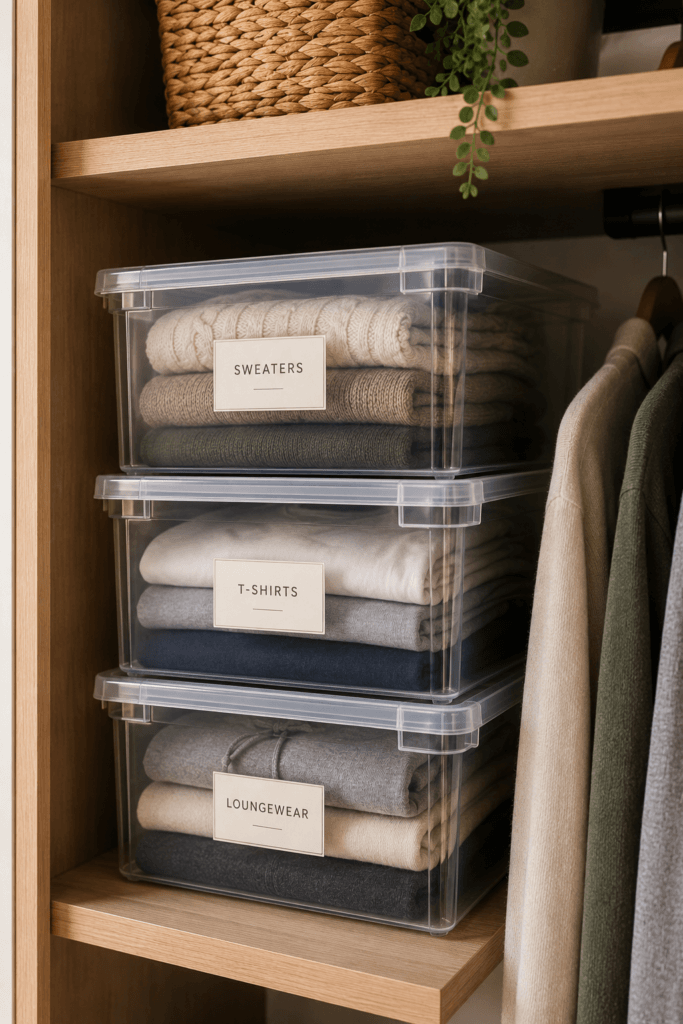
Since you cannot move back in a small closet, clear bins let you see what is inside without opening each box. Stack no more than three bins high in the area you can reach, or you will need to unstack them to access the one at the bottom. Place labels on the front of the bins rather than on the lids, since the lids are covered when the bins are stacked.
8. Tension Rod for a Second Hanging Zone
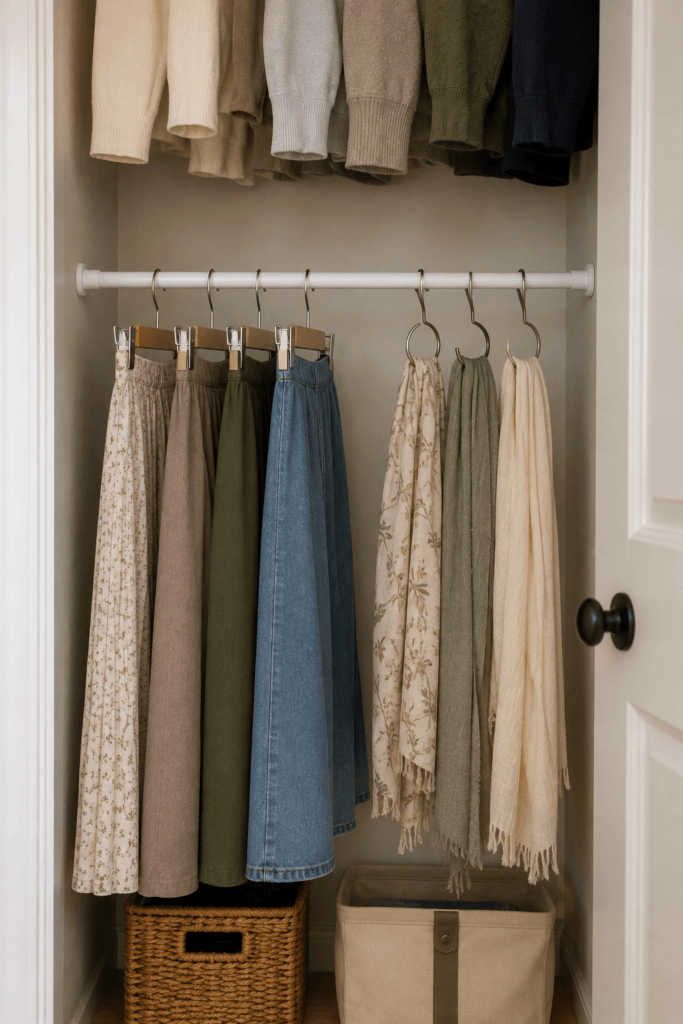
By fitting a tension rod at mid-height, you can have a temporary second hanging bar without drilling. This is useful in rental properties or closets where you aren’t ready to install hardware. If you set it low, about 40 inches, it will suit shorter items such as skirts or folded scarves on hangers. Check the weight rating before using it with anything heavier than lightweight fabric.
9. Under-Shelf Wire Baskets
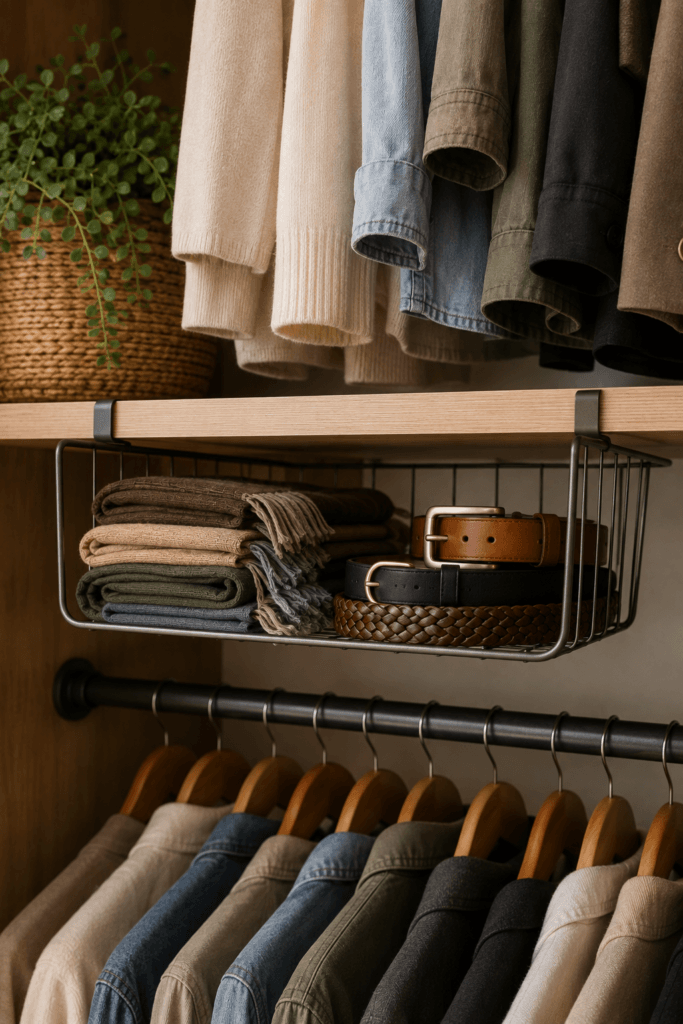
These baskets can be secured beneath a current shelf, providing extra storage in areas that are normally left unused. They are well suited for holding accessories, belts, or small folded items. Because they hang below the shelf, they don’t take up shelf space. Door-Mounted Hook Rail
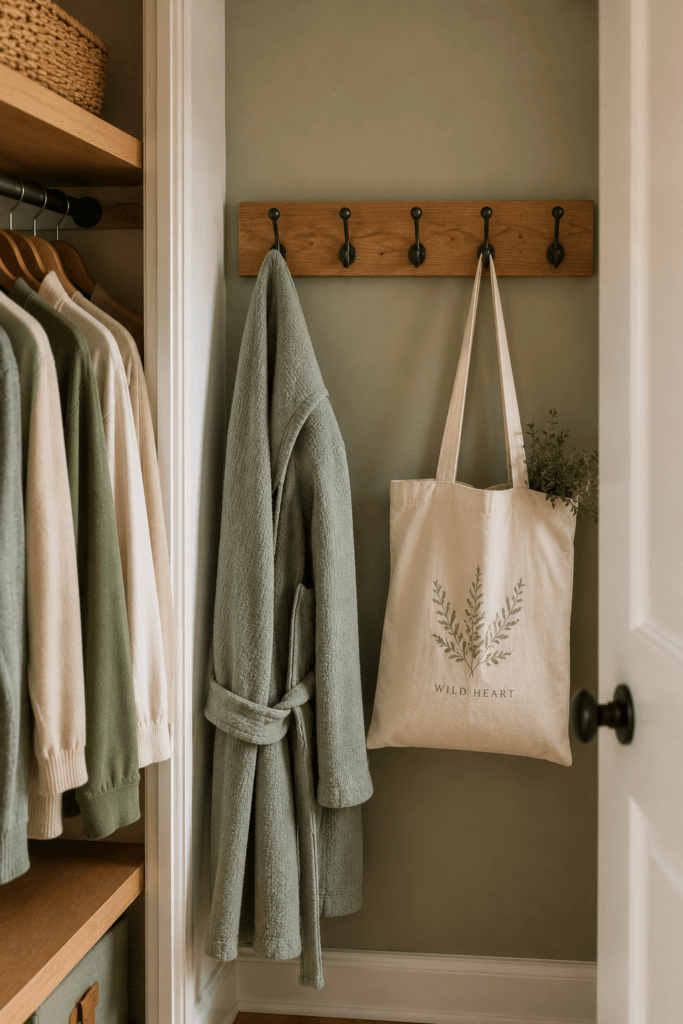
For bags, robes, or clothes you’ll wear tomorrow, the row of hooks on the inside of the closet door is ideal. Position the hooks between 48 and 60 inches up so they are easy to reach and will not interfere with the clothes being hung.
FAQ
What is the best idea for a small closet organizer if you are a renter?
For renters, the best choices are tension rods, over-the-door organizers and clip-on wire baskets since none of them involve drilling and they can be easily removed when you move, a point which is more important than the amount of storage they provide.
What is the way of organizing a small closet if there are no shelves?
Start with a double-hang rod system, and then install hanging fabric organizers or over-the-door racks before purchasing any freestanding furniture. This gives you more vertical storage without taking up floor space, which is usually limited in small closets.
What height should closet shelves be for easy access?
For most adults, keep shelves you use every day between 30 and 65 inches from the floor; for items you need only a few times a year, use shelves above or below that range.
Does the space really increase with closet organizing systems, or do they merely reorganize it?
An effective organization system conserves space by setting shelf height based on how often you use each item, not just by adding more containers. Even if you don’t consider reach zones, your items will still feel crowded because everything ends up up high. Wrap-Up
CONCLUSION
A small-scale closet works best when the storage height matches how you actually reach for items, not just how full it can be. Since this approach starts with measurement, you should look through the other bedroom storage suggestions on Ergontag for additional solutions for each room.