
Introduction
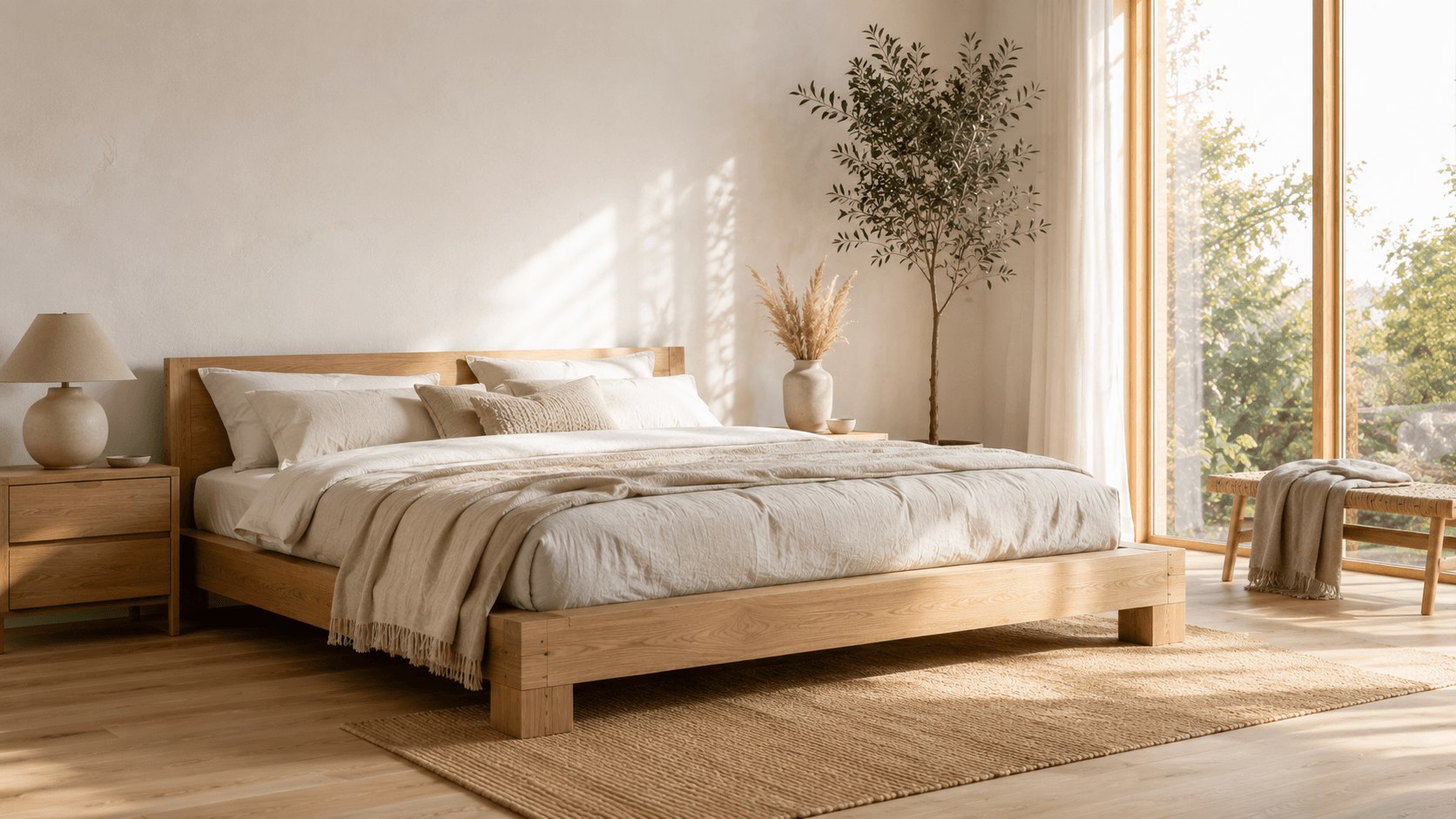
Many people think a bed frame is just about style, but it also affects how easy it is to get in and out of bed, how well your mattress works, and how long the frame lasts. Some homemade frames might look nice at first but miss key details like the right height, proper slat spacing, or enough central support. Skipping these can cause your mattress to sag, the frame to creak, and make sitting and sleeping less comfortable.
This guide shares practical DIY bed frame designs that are simple to build and easy to customize. It covers what to consider before you start, so your frame will support your mattress, feel comfortable, and fit your space. Whether you want to save money or want a more polished look, these ideas offer both function and style.
What to Check Before You Start
When deciding on a design, measure more than just your mattress. The bed should be high enough so you can sit with your feet flat on the floor and your knees at about a 90-degree angle. For most adults, the top of the mattress should be around 20 to 25 inches from the floor, but your height and mattress thickness can change this. Support matters as much as looks. Foam mattresses usually need slats no more than 2 to 3 inches apart, while many spring mattresses can handle wider gaps. For queen or king beds, add a center support beam with legs touching the floor to prevent bending and help your mattress last longer. Make sure there’s sufficient room to walk around the bed. Having at least 24 inches on each side you use will make it easier to move, clean, and get in or out without hitting anything.
1. Simple Platform Bed Frame
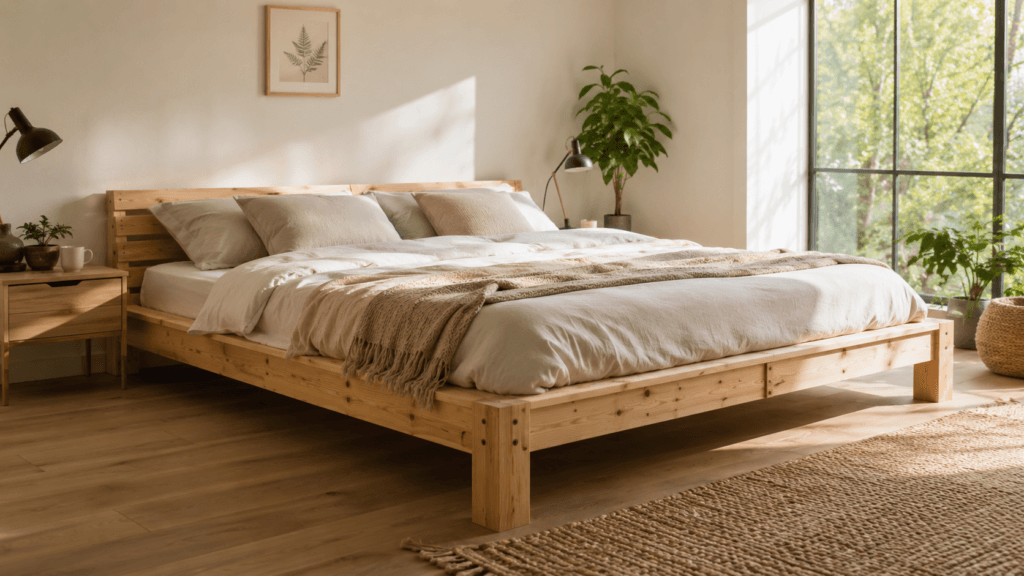
A platform bed is one of the easiest DIY projects since it uses a flat support instead of a box spring. Construct a rectangular frame, place evenly spaced slats, and finish with your preferred stain or paint.
This style suits modern bedrooms and will provide reliable mattress support as long as the slats are properly spaced.
2. Pallet Bed Frame
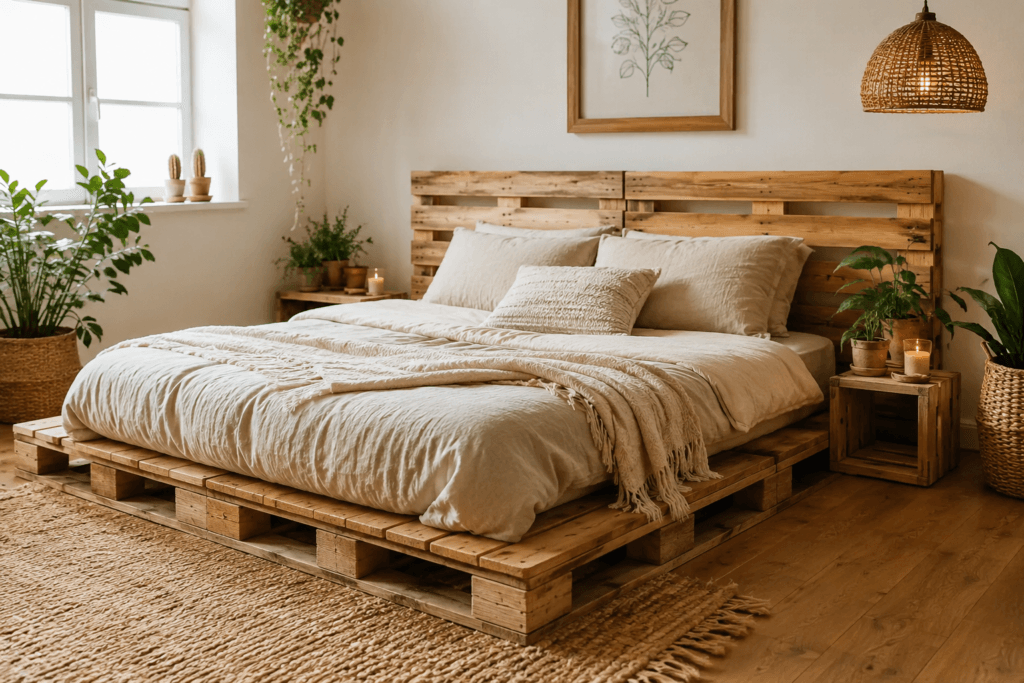
Provided that they are clean, strong, and suitable for use indoors, wood pallets can be used to make a low-cost bed frame. Sand the rough edges well and secure the pallets together to prevent them from moving.
Think about how tall the bed will be. Stacking pallets can make the bed lower or higher than you might expect.
3. Storage Platform Bed
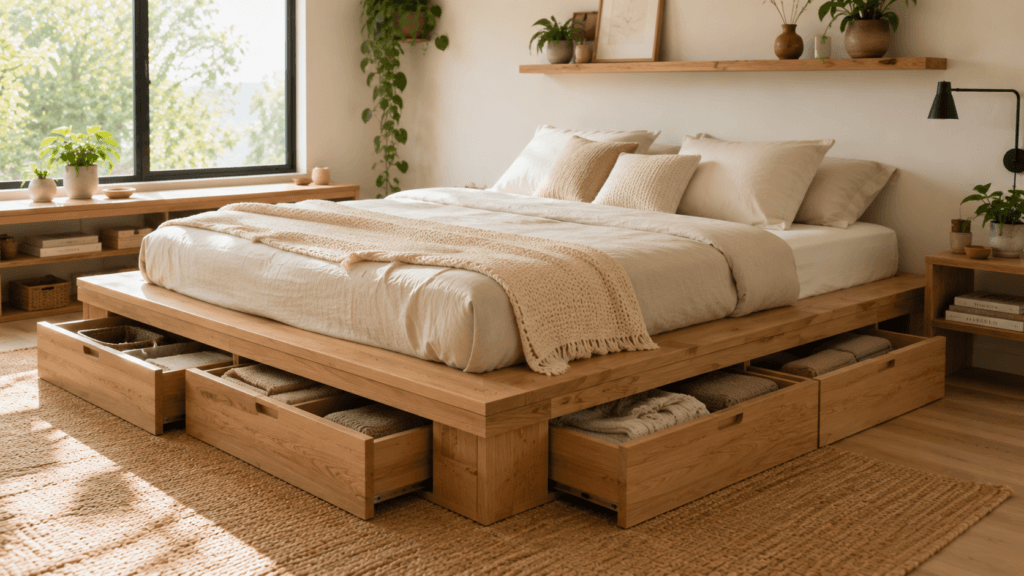
A storage bed supports your mattress and adds drawers or open shelves underneath. It’s a smart way to use space in small bedrooms with limited storage. Keep the center support open so the extra storage does not weaken the frame.
4. Floating Bed Frame
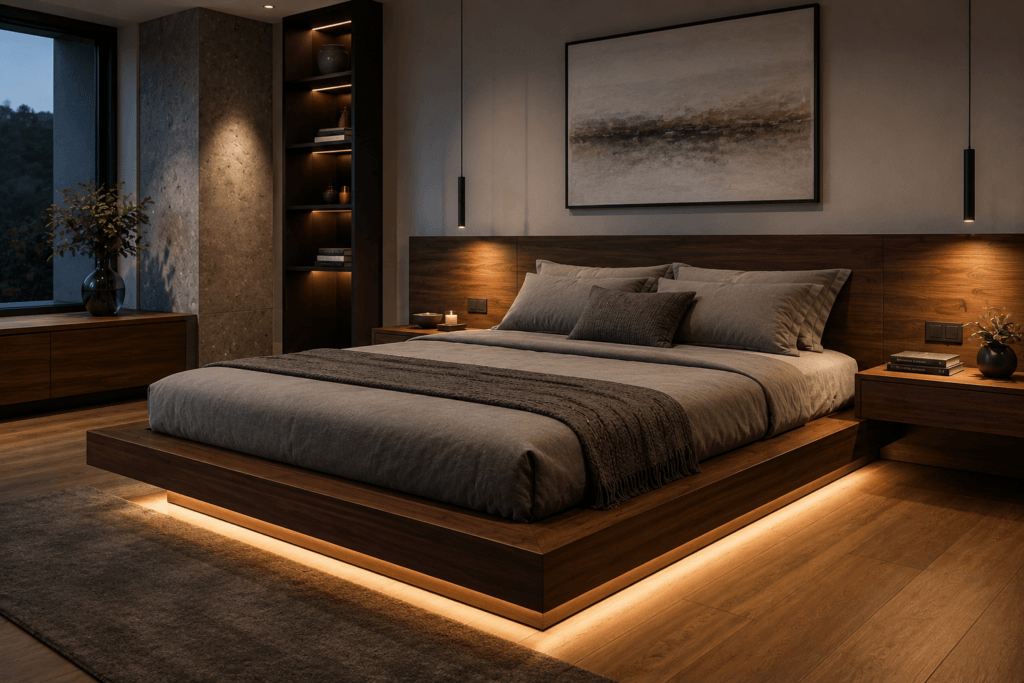
A floating bed looks like the mattress is hanging above the floor because the support base is hidden underneath. The frame you see sticks out past the hidden platform.
The hidden base must remain wide and stable enough to prevent tipping when someone sits near the edge.
5. Rustic Farmhouse Bed Frame
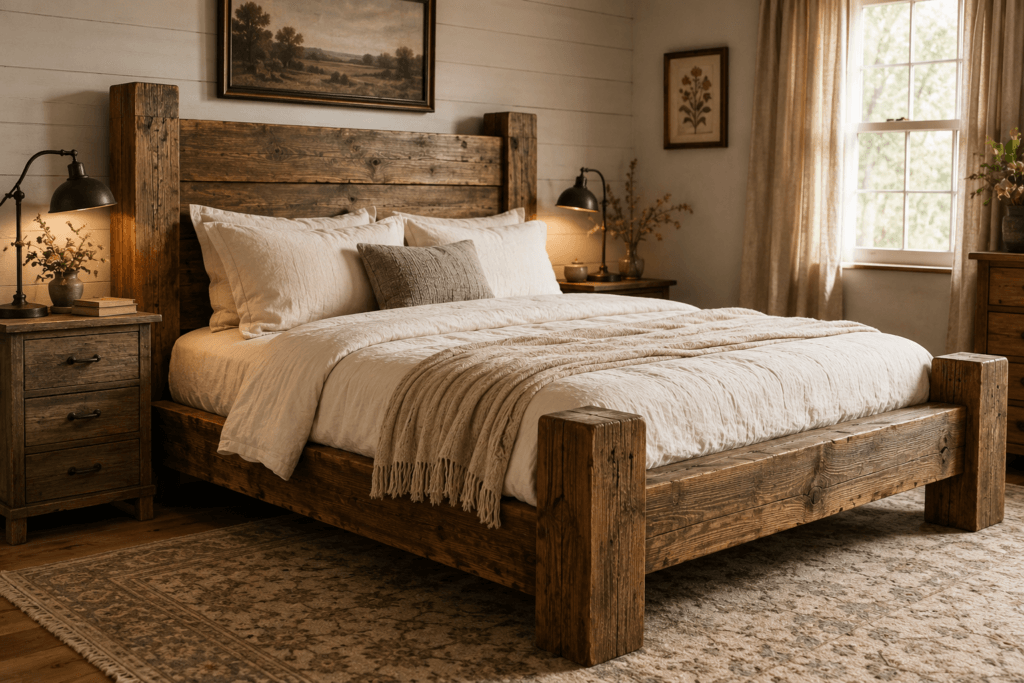
This design uses thicker lumber and simple construction techniques for a sturdy appearance. Visible wood grain and basic joinery add character without making the build overly complicated.
Check that decorative headboards are securely fastened so they don’t shift during everyday use.
6. Industrial Pipe Bed Frame
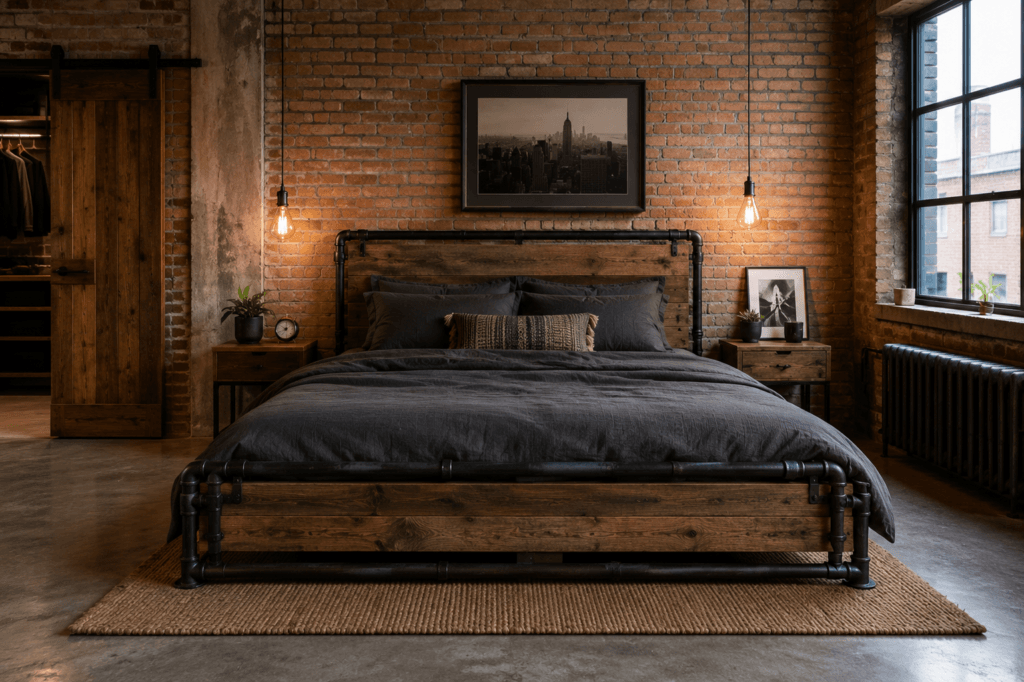
Metal pipes combined with wood create an industrial-style bed that’s durable and relatively simple to assemble. Threaded pipe fittings make adjustments straightforward during construction.
Use floor protectors under metal feet to prevent scratches and reduce noise on hard flooring.
7. Minimalist Wooden Frame
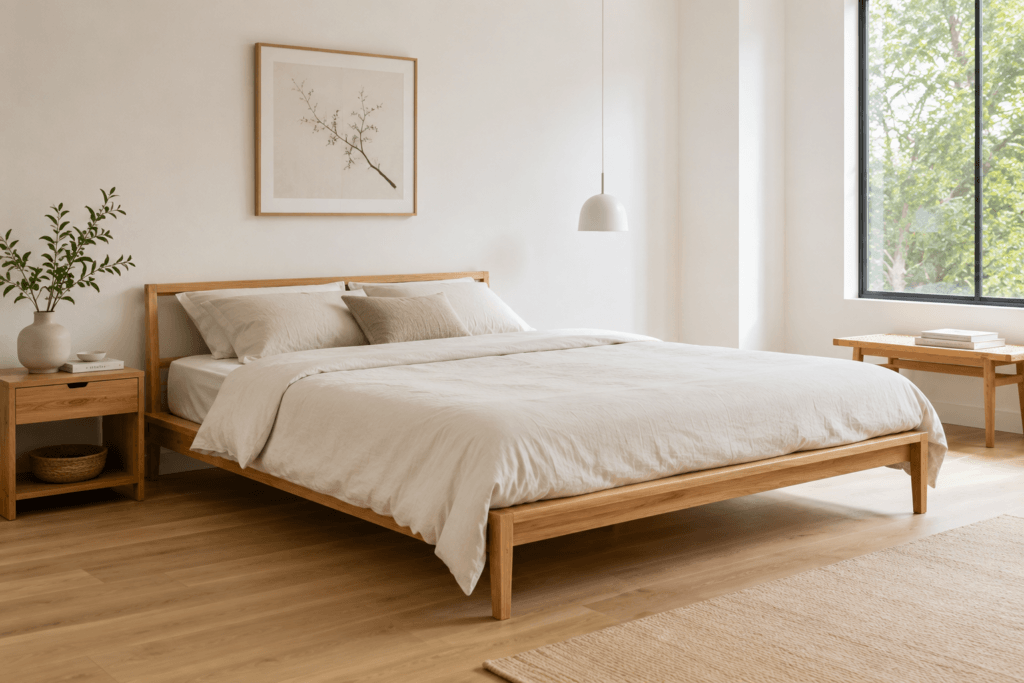
A minimalist frame uses clean lines with very little visual bulk. Fewer components also mean fewer joints that can loosen over time.
Even with a simple design, do not reduce the number of support slats to save materials.
8. Bed Frame With Headboard Shelves
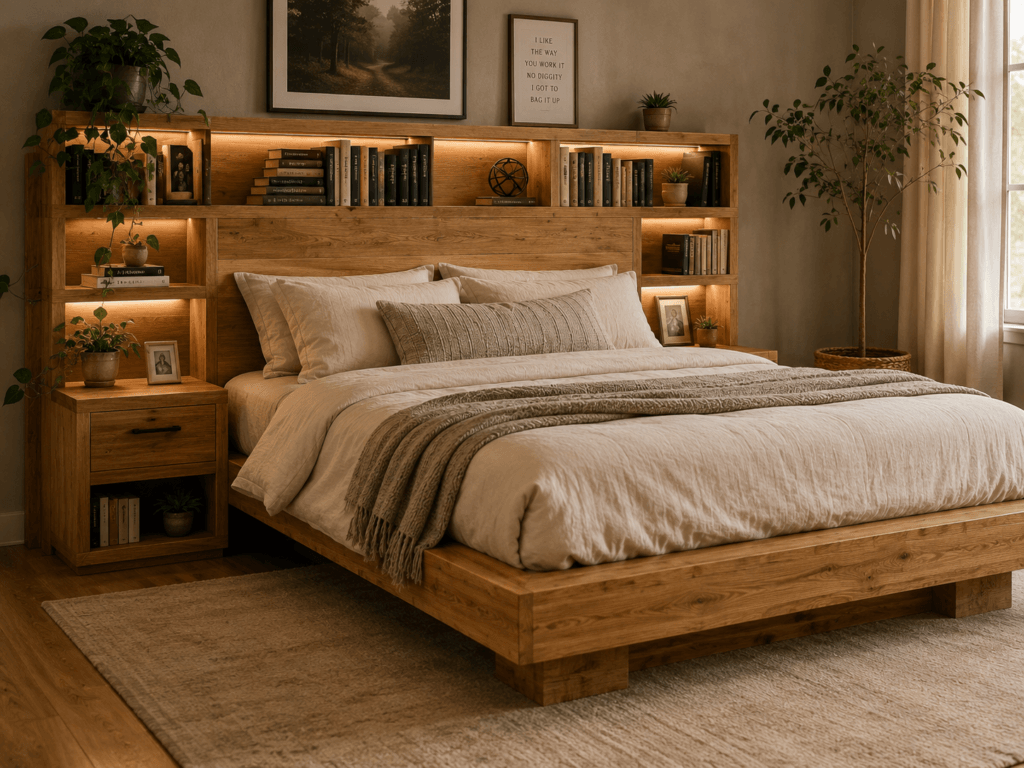
Adding shelving to the headboard creates convenient storage for books, glasses, or charging devices. It can reduce the need for bulky bedside tables in smaller rooms.
Keep shelves shallow enough that your head doesn’t contact them while sitting up in bed.
9. Box Frame With Plywood Top
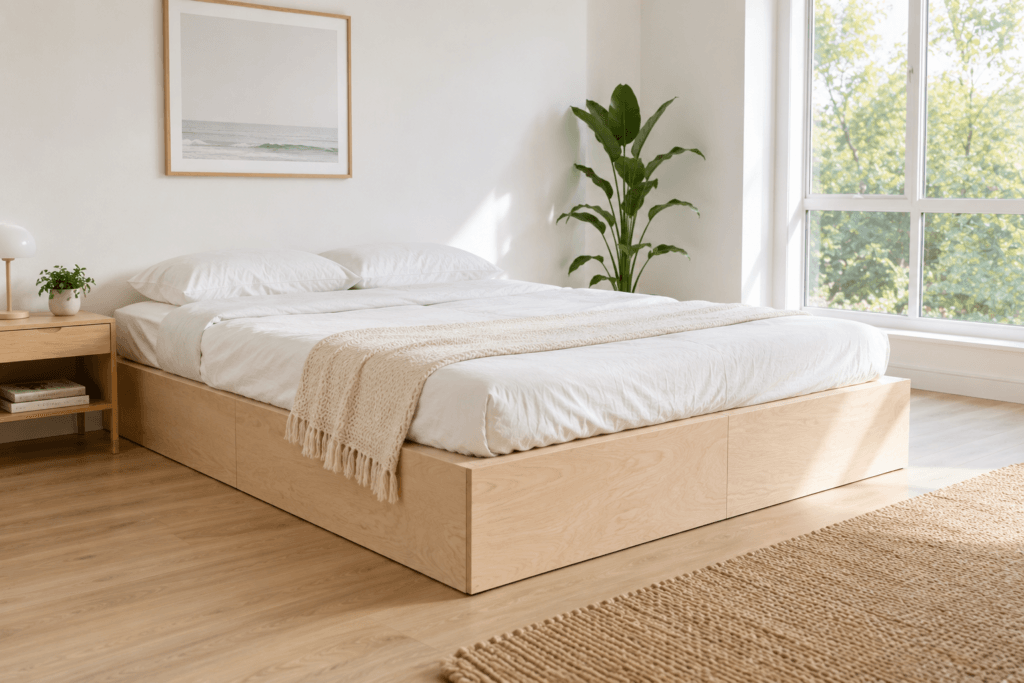
A box-style frame uses plywood panels and internal framing to create a solid foundation. This approach is beginner-friendly because it requires mostly straight cuts.
Ensure enough ventilation beneath the mattress when using large plywood surfaces by adding ventilation holes or slatted sections.
10. Reclaimed Wood Bed Frame
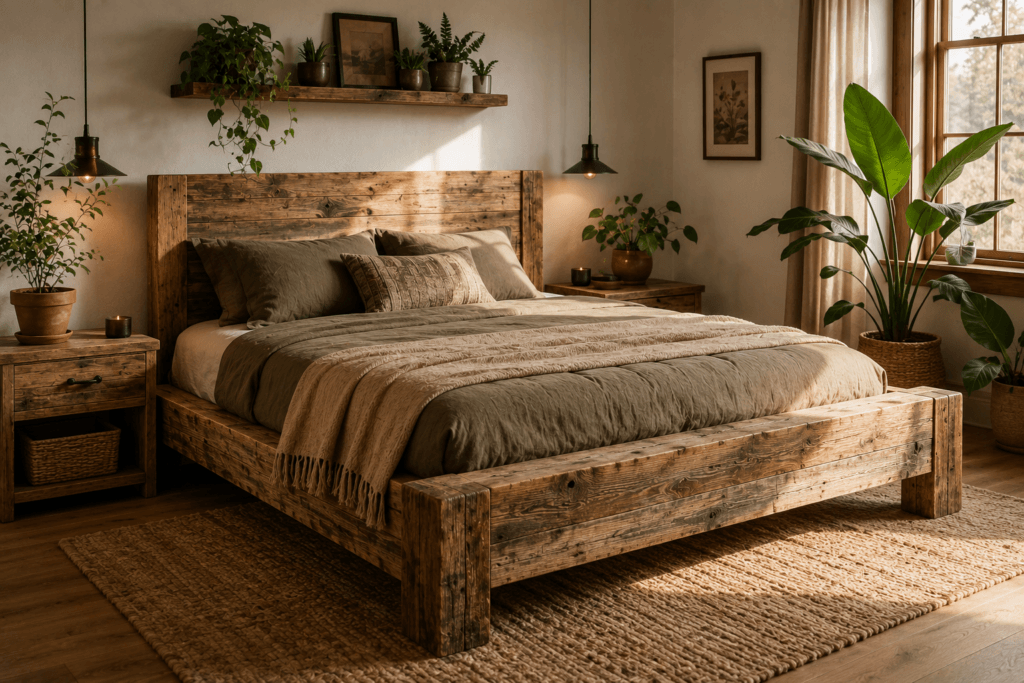
Old barn wood or reclaimed lumber gives each project a unique appearance. Inspect every board carefully for cracks, loose nails, or insect damage before use.
Plane uneven boards where necessary so the mattress sits on a level surface.
11. Low Japanese-Inspired Bed
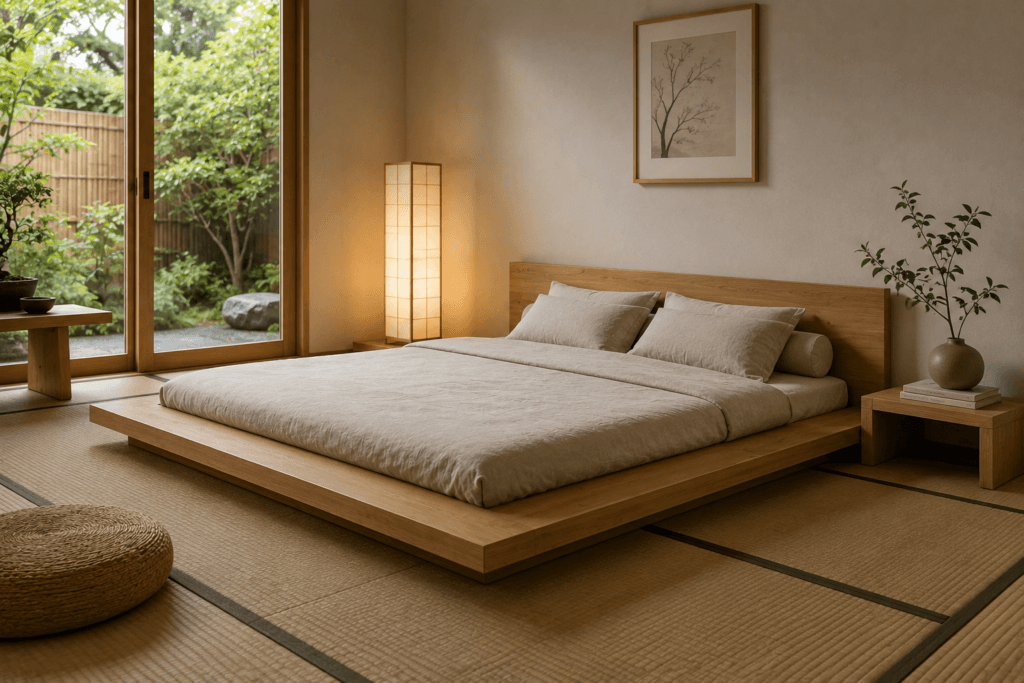
This design places the mattress close to the floor for a clean, uncluttered look. It works particularly well in bedrooms with lower ceilings.
Lower beds require deeper bending when getting up, which may be uncomfortable for people with knee or hip problems.
12. Corner-Leg Frame
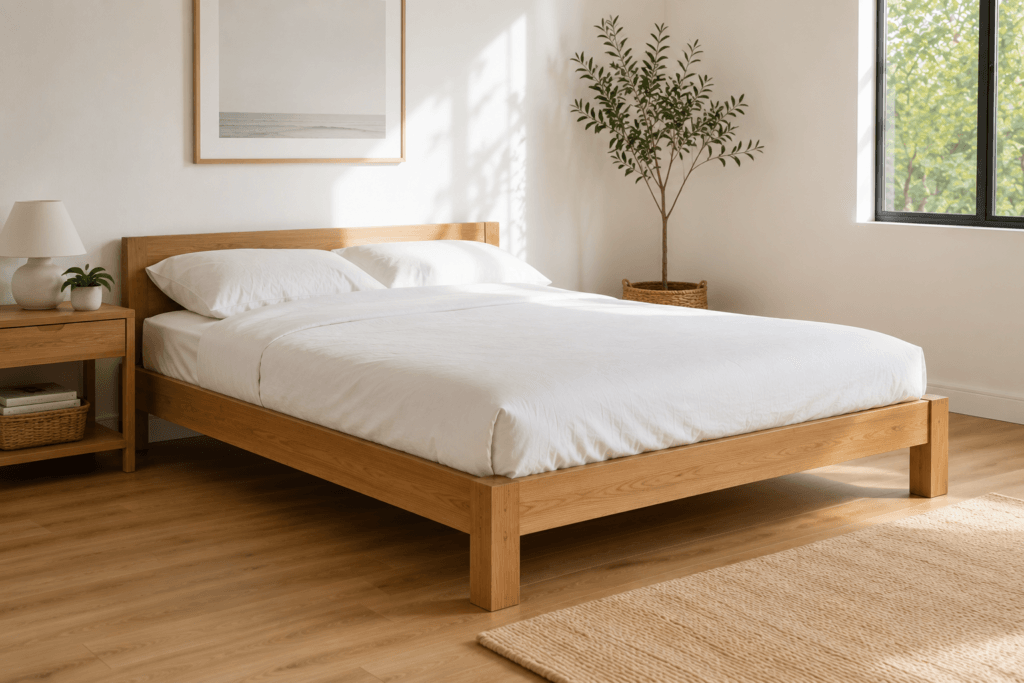
A basic frame supported by four strong corner legs is one of the fastest builds for beginners. Reinforced corner brackets add stability without much complexity.
Double-check that the legs contact the floor evenly to prevent wobbling.
13. Upholstered DIY Bed Frame

Foam padding and fabric wrapped around a wooden frame create a softer appearance while protecting against accidental bumps.
Use durable upholstery fabric and pull it tight to prevent wrinkles that collect dust over time.
14. Murphy Bed Frame Kit Finish
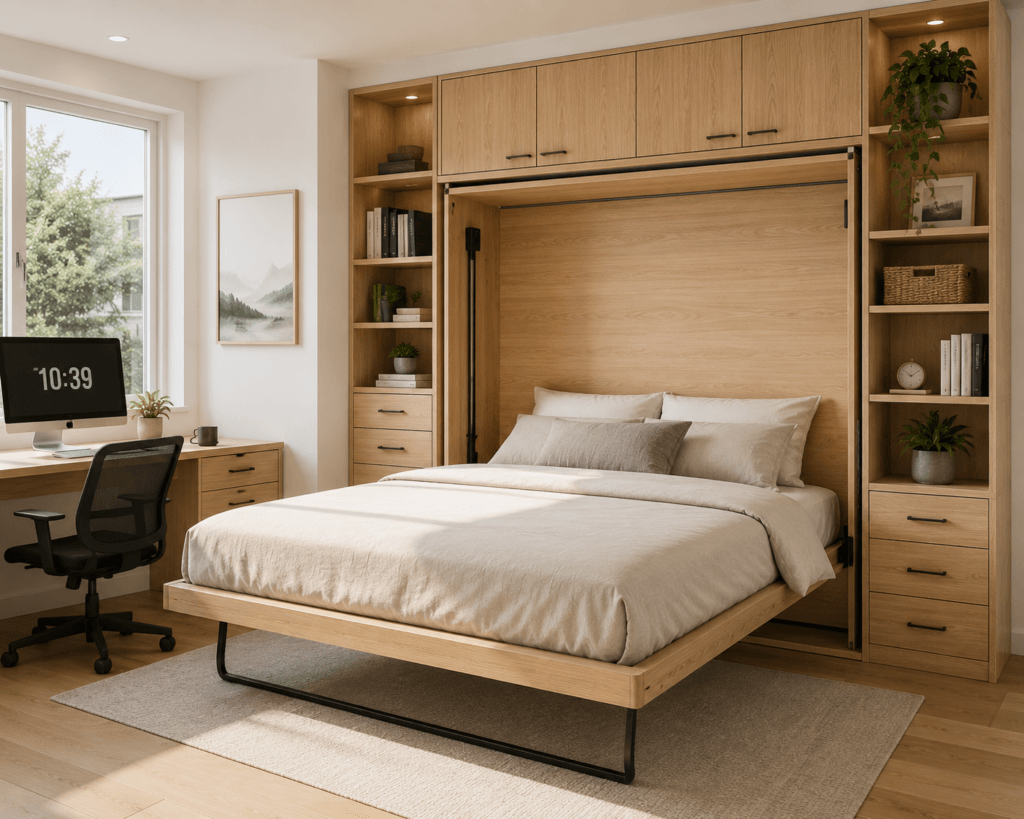
If space is limited, combining a Murphy bed hardware kit with your own wooden cabinet offers flexibility while reducing complex engineering.
Follow the hardware manufacturer’s weight limits and installation instructions exactly, especially for wall anchoring.
15. Budget Cinder Block Bed Frame
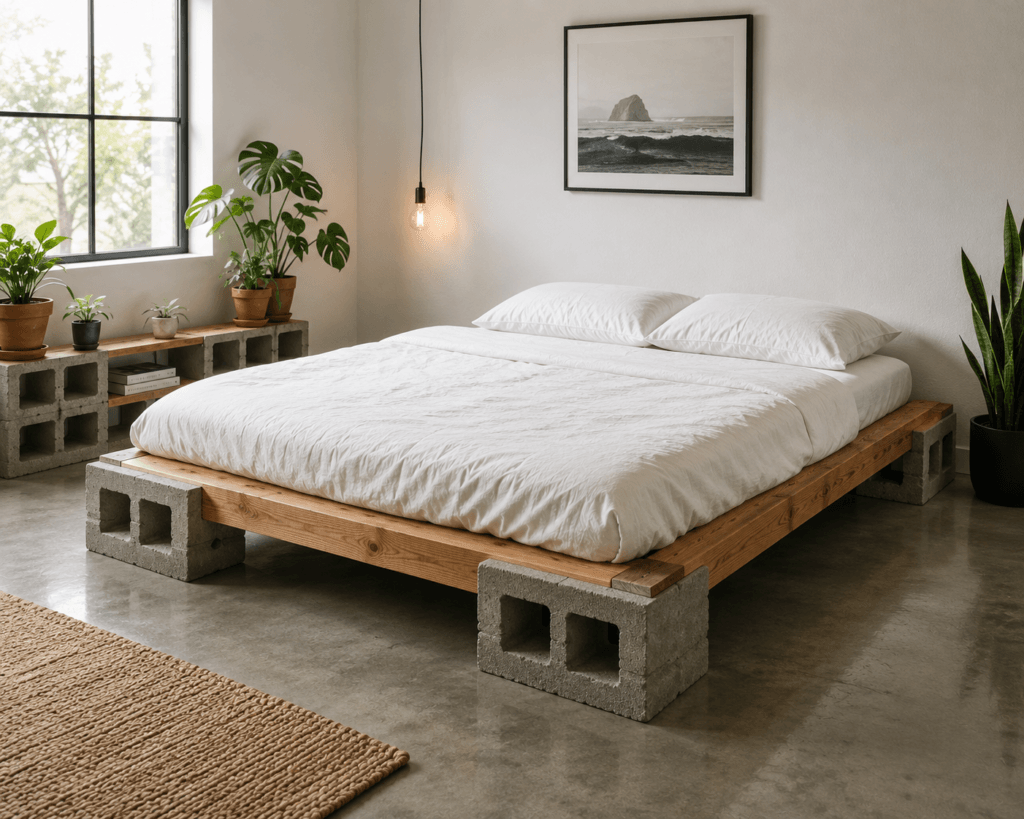
Among the most practical cheap DIY bed frame ideas, cinder blocks paired with sturdy wooden beams create a stable foundation. Assembly requires few tools and materials.
Place protective pads beneath the blocks to prevent floor damage, and verify every block sits level before adding the mattress.
16. Modular Bed Frame
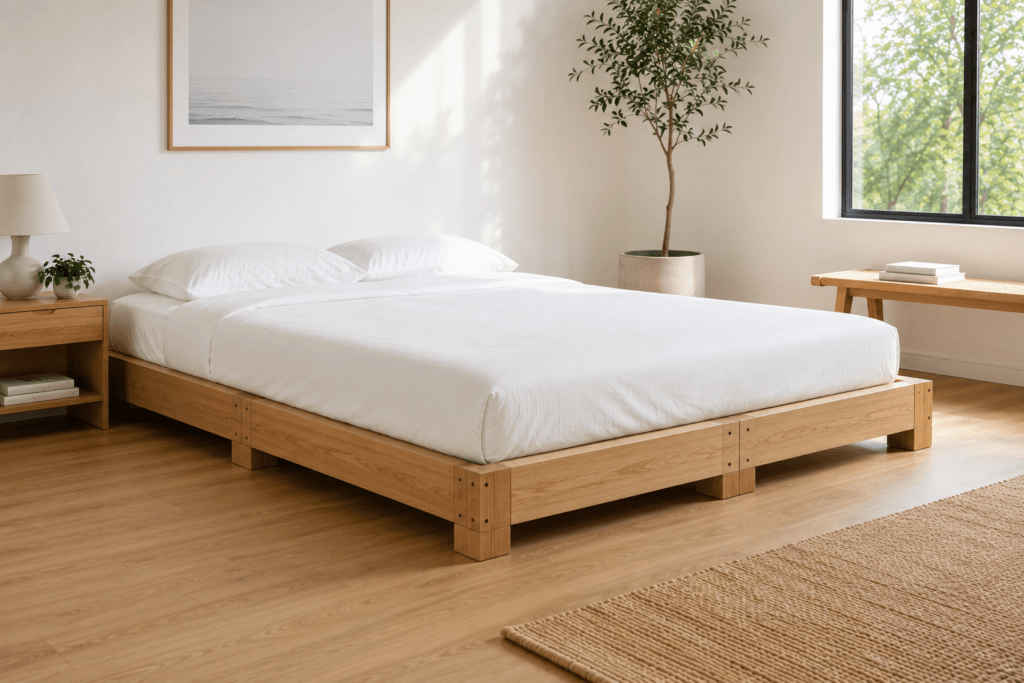
A modular design uses separate sections that bolt together, making future moves much easier. Individual parts are lighter and easier to transport than one large frame.
Label each section during assembly to make reinstallation faster if you relocate.
17. Scandinavian-Inspired Frame
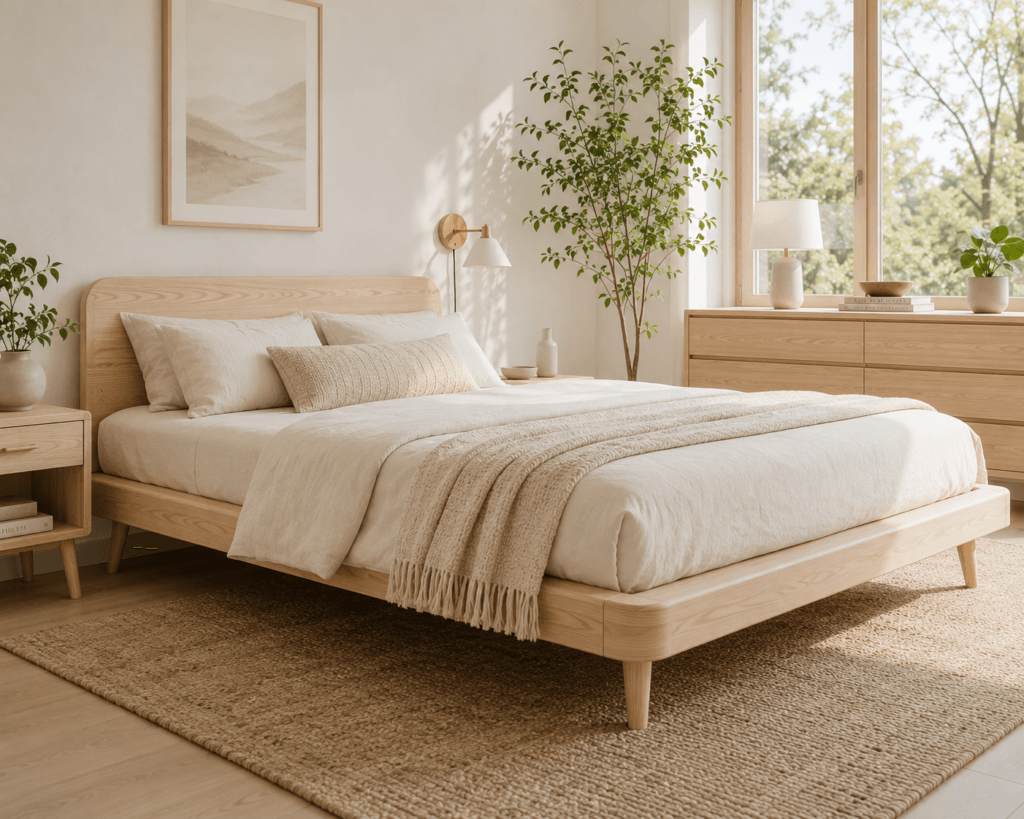
Light-colored wood and tapered legs give this frame a clean, simple appearance. The structure remains straightforward while fitting many bedroom styles.
Leave enough space beneath the bed for vacuuming without making the frame too tall.
18. Custom Oversized Bed Frame
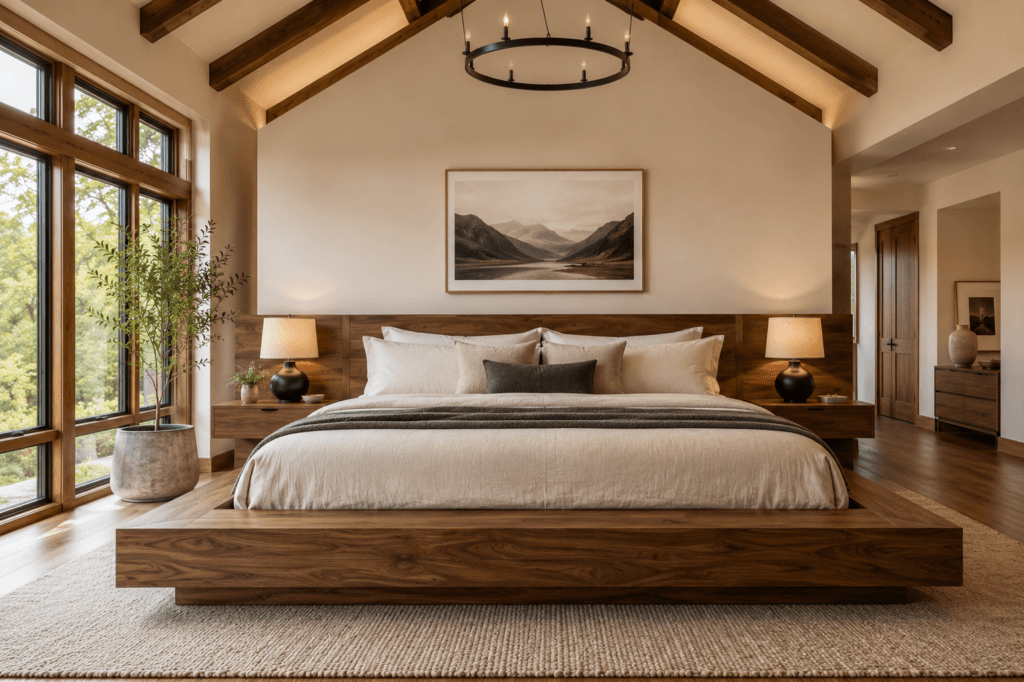
If you’re building for a custom mattress or an oversized sleeping space, design the frame around the exact mattress dimensions instead of standard sizes.
Measure the mattress in several places before cutting lumber. Small sizing differences can affect how securely the mattress fits inside the frame.
Frequently Asked Questions
Can I build a bed frame without advanced woodworking skills?
Yes. Many beginner-friendly DIY bed frames only require basic lumber, a drill, screws, and accurate measuring. A simple platform frame is often the easiest starting project.
What is the best height for a DIY bed frame?
For most adults, the top of the mattress should end up around 20–25 inches from the floor. This usually allows comfortable sitting and standing while reducing unnecessary strain on the knees.
How far apart should bed slats be?
Most foam mattresses perform best with slats spaced no more than 2–3 inches apart. Wider spacing may reduce support and can shorten the mattress’s lifespan.
What are the most affordable DIY bed frame options?
Platform frames, pallet beds, and cinder block designs are among the most affordable homemade bed frame ideas. Using standard dimensional lumber also helps keep material costs manageable while maintaining strength.
Closing
The best DIY bed frame is not just the one that looks good. It supports your mattress correctly, matches your room, and makes everyday movement more comfortable. Once your bed is functional and attractive, explore more practical bedroom guides on Ergontag to improve comfort throughout your space.
1 thought on “18 DIY Bed Frame Ideas for Better Sleep Support”