
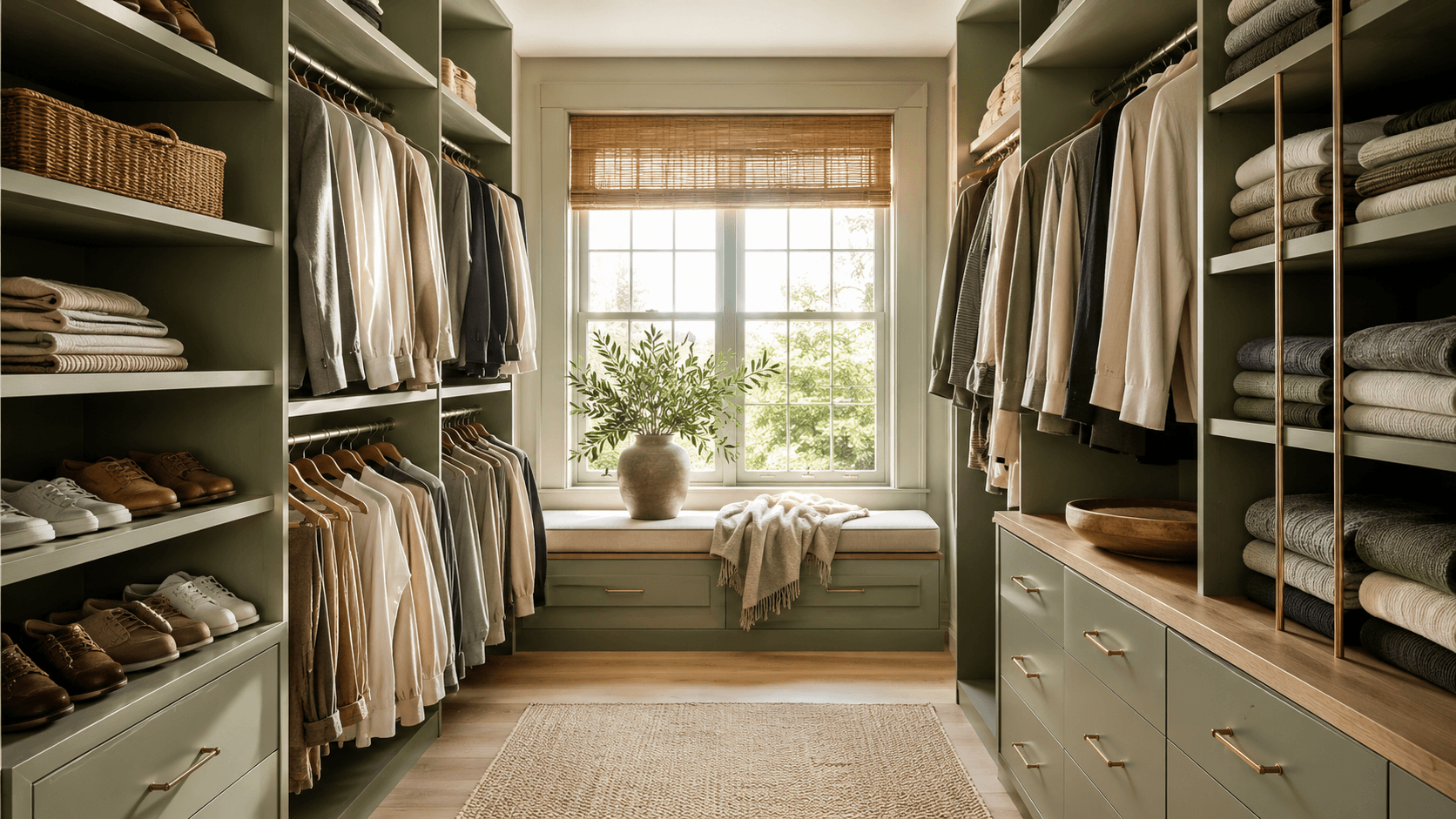
Most closet makeovers miss the real problem: you add more rods, bins, and baskets, but two weeks later you’re still sifting through a pile on the floor because your favourite clothes are out of reach. Closet storage isn’t just about appearance; it’s about how easily you can reach and move items, which most guides overlook.
The article offers closet storage suggestions based on everyday use, not just what looks good in pictures. It starts with a brief review of ergonomics most people overlook. It then lists storage improvements, showing where to place them, what problems they solve, and why they fit your morning routine.
What to Check Before You Start
When buying an organizer, check the three closet zones: the primary zone, the reach zone, and the lower zone.
The primary section stretches roughly from the hip to the shoulder, or about 30 to 55 inches from the floor for most adults. It is the area your hands reach when you neither bend nor stretch, so it is the right place for everyday items like work clothes, daily shoes, and the bag you take when you go out. By contrast, most closets don’t use this area well, filling it with folded sweaters you touch only twice a year.
The reach zone includes items above shoulder height, specifically those over 65 inches; keep anything there light and infrequently accessed, such as off-season bedding, suitcases, and keepsakes. Because of that, storing something heavy there risks shoulder strain, especially when you use a step stool and are already off-balance.
The area below about 20 inches puts more strain on your lower back if you have to bend down to it often, especially when you first rise in the morning. So store shoes in a rack or pull-out bin, not in loose piles that make you crouch over.
Another spacing tip most decoration blogs miss: hanging rods should have at least 1 inch of space above your highest item and about 2 inches per hanger to prevent crushed sleeves and creased shoulders. If the rod is packed too tightly, you are not storing clothes; you are just wrinkling them.
Closet Storage Ideas That Work With Your Body, Not Against It
1. The double-hang rods at the right split
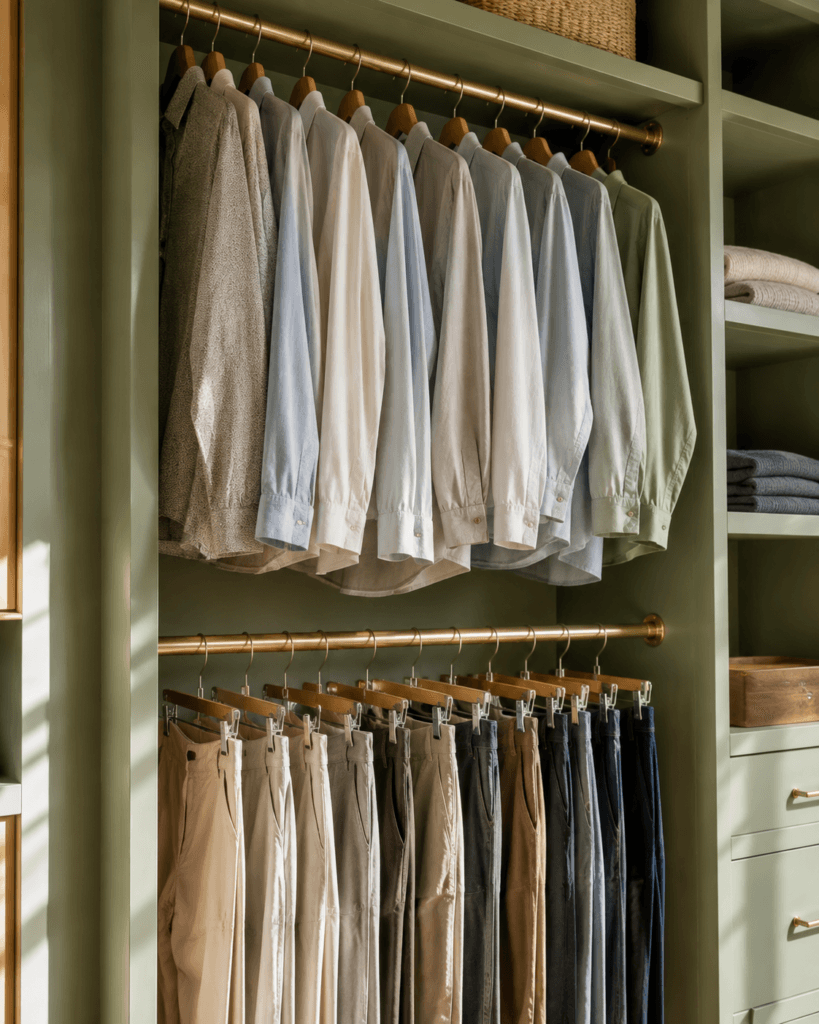
A two-rod arrangement provides twice the hanging space, as long as the heights suit both your clothes and your reach. First, place the upper rod so your shirts hang a few inches above the lower rod, and make sure the lower rod is at least four inches above the floor so nothing drags. If you are under 5’4”, lower both rods by 2 to 3 inches from the standard height so the upper rod is easier to reach.
2. Using angled shoe shelves rather than flat bins
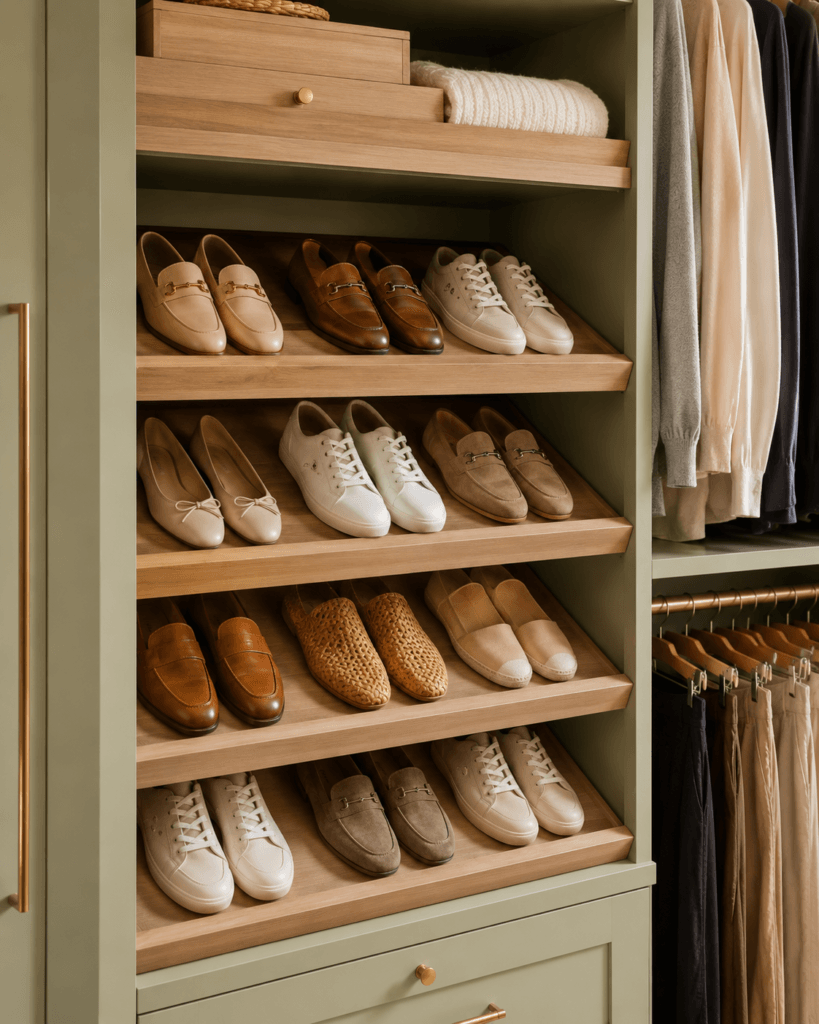
With flat shoe shelves, you have to bend down and search because shoes sit front to back and you can only see the toes. With angled shelves, however, you can grab each pair without bending past your knees. Keep the shoes you wear most often on the shelf nearest your prime zone, not on the floor.
3. Closet rod with a pull-down design for high storage capacity.
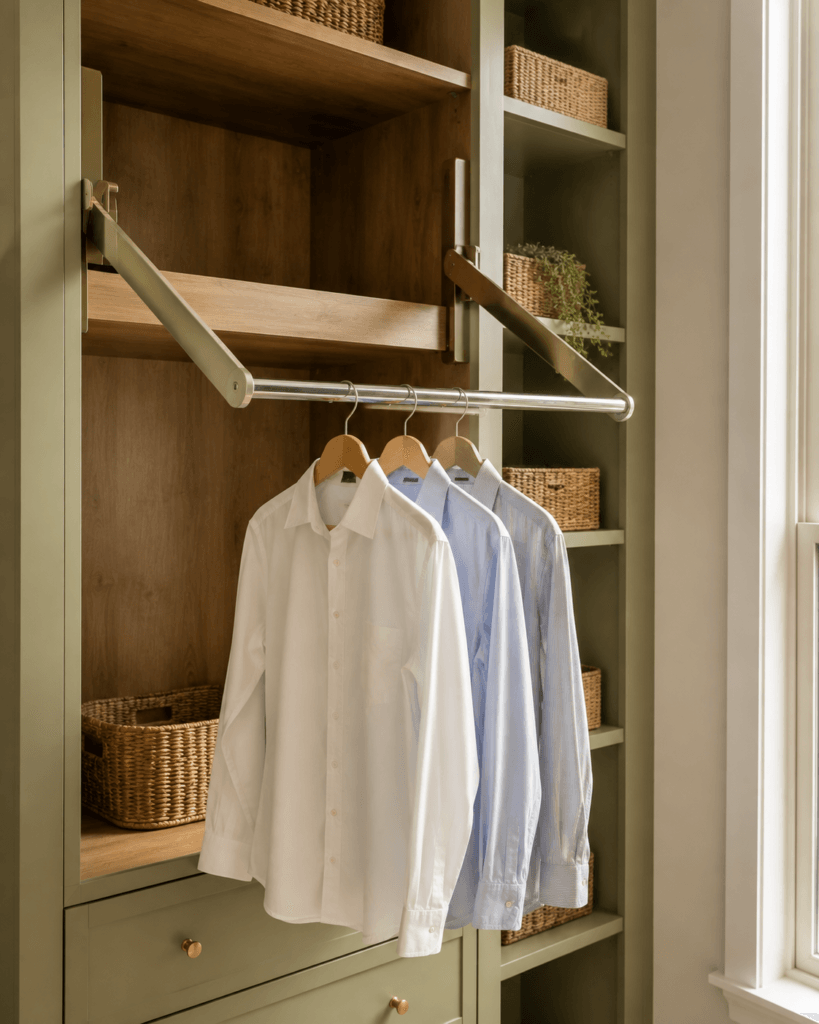
A pull-down rod is a good option if your closet has a high ceiling and you use a step stool every day to reach the upper rod, since it brings your clothes down to your main working area when you need them—especially if you have shoulder problems or are under 5’6″ with the rod placed above 78 inches.
4. Use drawer trays instead of deep shelves when storing folded items.
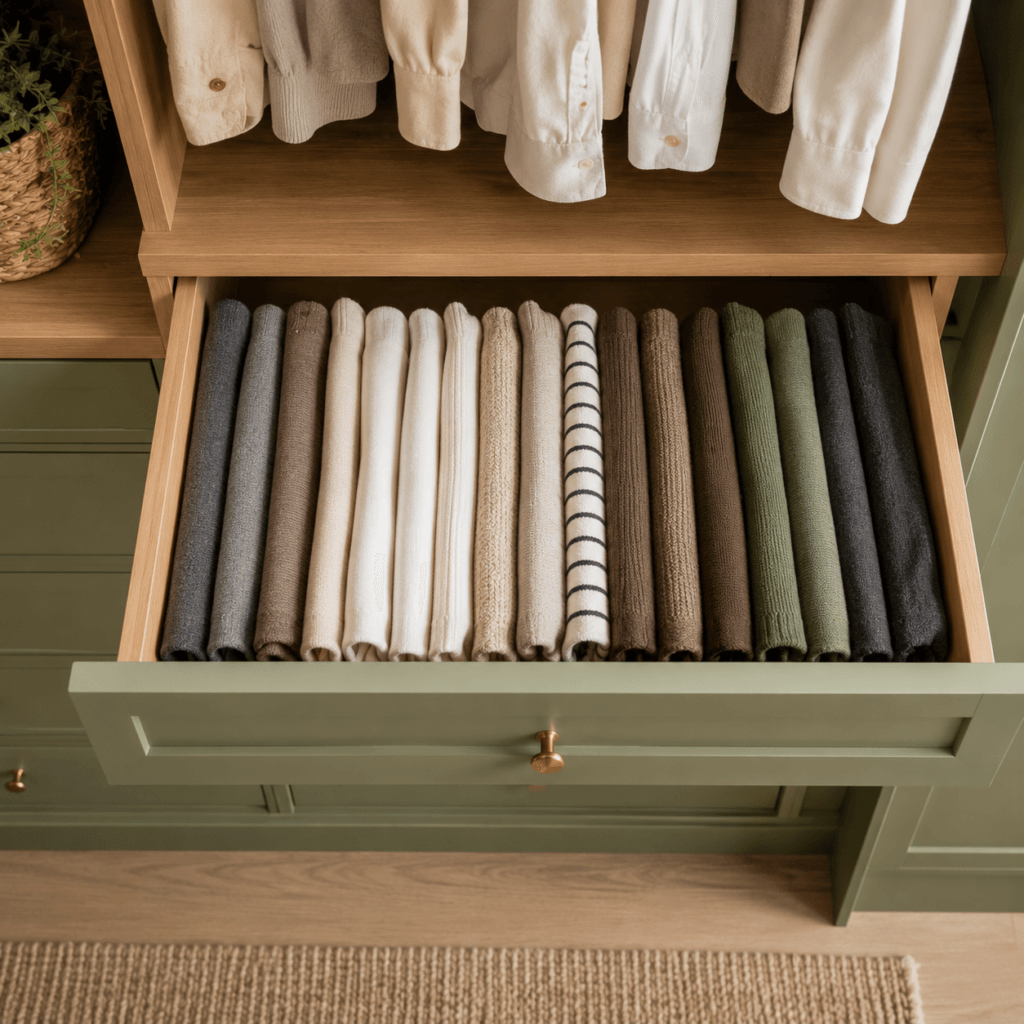
Although deep shelves may look neat in photographs, you have to remove everything to reach the items at the bottom. By comparison, drawers about 12 to 15 inches deep let you see everything from above without digging. For drawers you use every day, such as those for underwear, socks, or gym clothes, keep them at hip height rather than on the floor or above your head.
5. Vertical Dividers for Folded Stacks
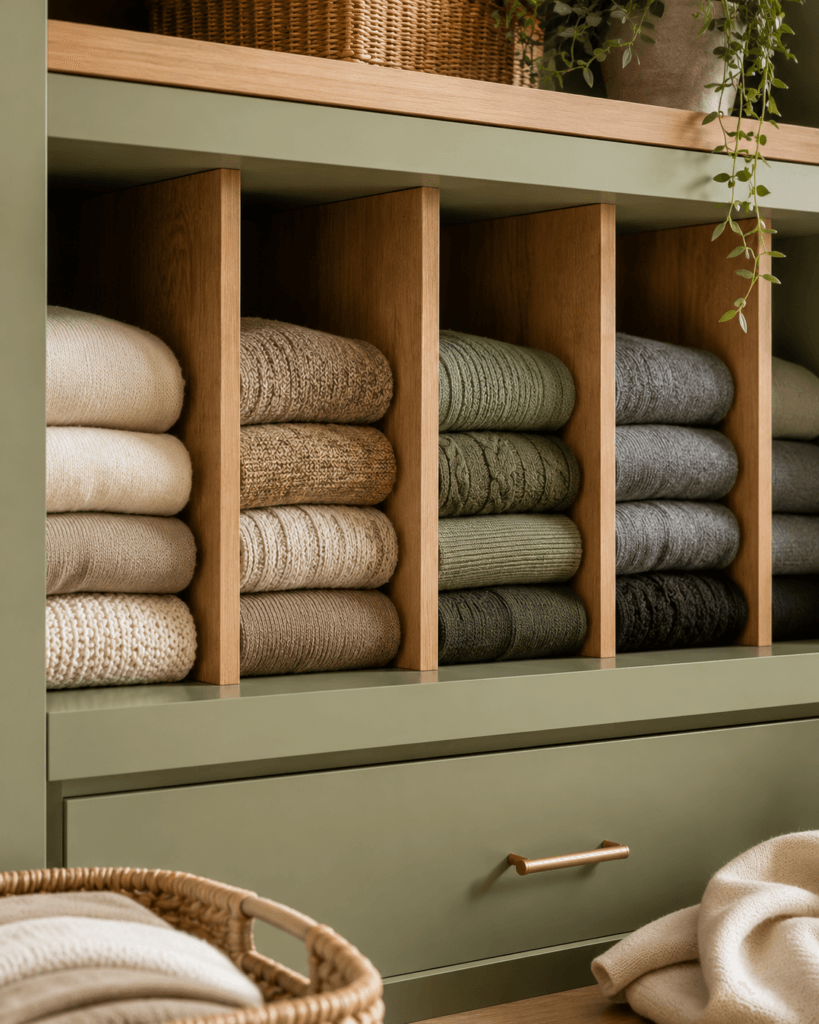
Shelves tend to get messy quickly once piles of folded clothes are more than four or five items high, and they are likely to fall over and get mixed up. If you add vertical dividers at 8- to 10-inch intervals, then the stacks will stay upright and can be separated by category, so you won’t have to unfold several shirts to find the one you want.
6. A Slide-Out Valet Rod
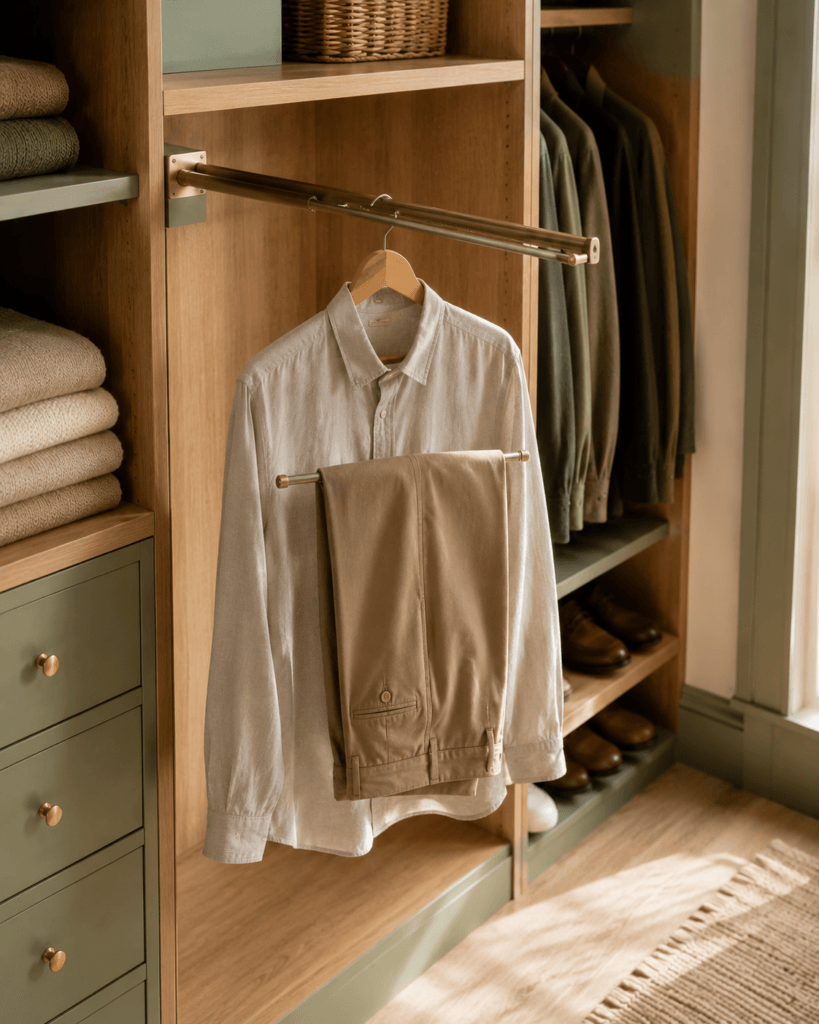
You can hang tomorrow’s clothes at eye or shoulder level by attaching a rod to the side of a shelf instead of putting them on a bed or chair. Even though this is a small change, it also eliminates the need to reach into the full closet twice—once in the evening and once in the morning.
7. Installation of motion-sensor lighting at shelf level, not just at ceiling level
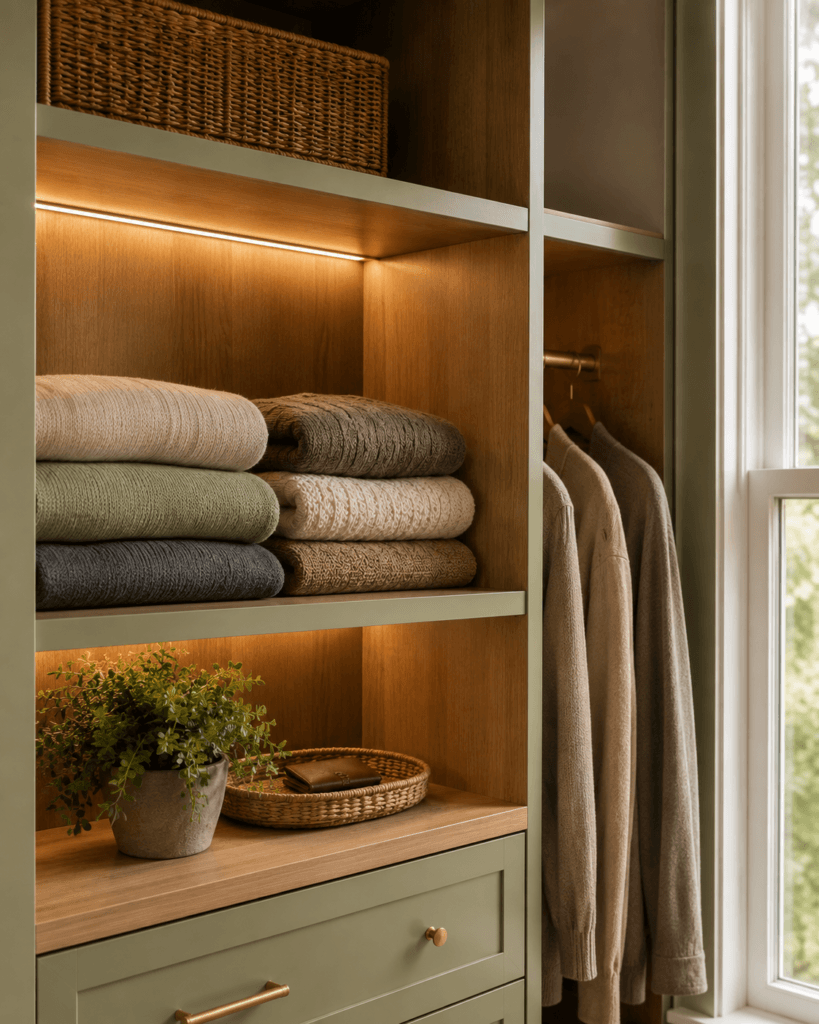
In most closets, one light hangs above, so shadows fall on the lower shelves and the floor—precisely where you need good visibility to avoid tripping or missing a step. For that reason, battery-powered LED strips under each shelf light the sections you actually reach into, not just the ceiling.
8. Adjustable-Height Shelving Over Fixed Shelves
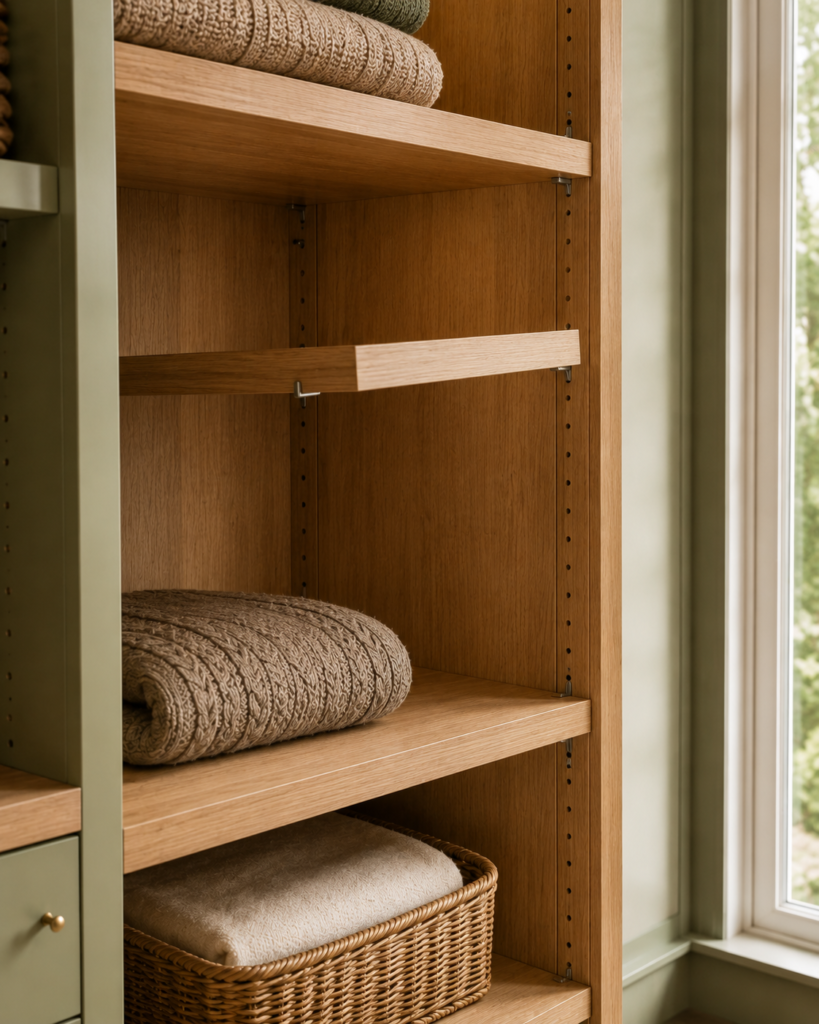
Fixed shelf heights suit the average person, but not everyone. With adjustable shelf pins or a track system, you can change shelf height so the items you use most sit in your primary zone. Later, you can rearrange if your storage needs change.
9. A full-length mirror to be used in practice
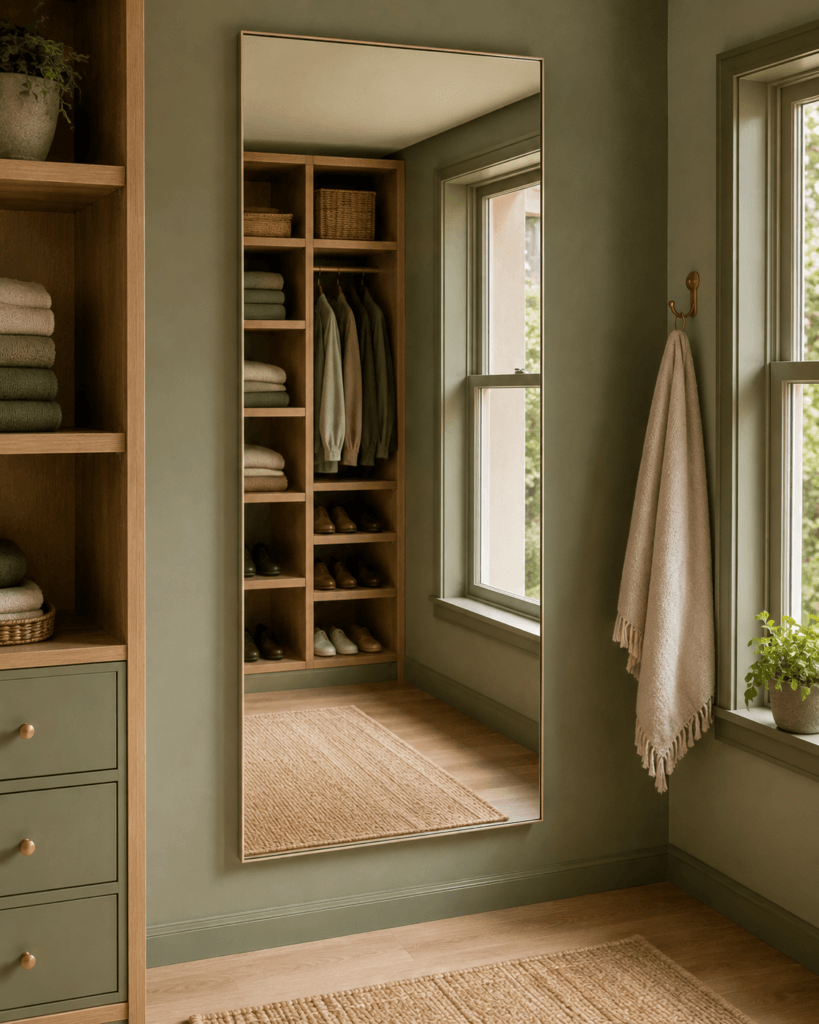
If the mirror is too high or too low, you will have to step back or bend down. So the top edge should be a few inches above your head and the bottom near the floor, so you can see the entire outfit at a glance without moving.
10. Labeled Bins at Child or Guest Height When Relevant
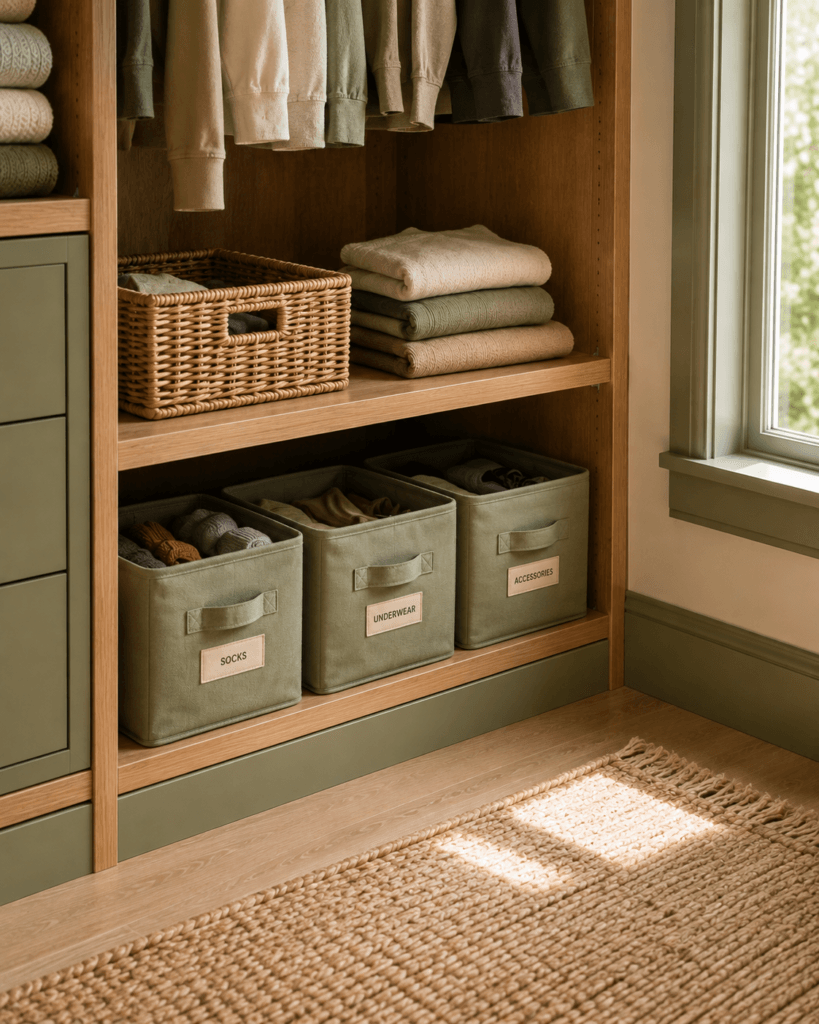
If children or visitors use part of the closet, place bins at a height they can reach, not your own. Otherwise, a bin at adult hip height is too high for a child, and the space tends to go unused, with items ending up on the floor.
FAQ
What’s the ideal height for a closet rod?
For one rod, 66 to 72 inches is suitable for most adults and keeps full-length items off the floor. With a double-rod arrangement, set the upper rod at about 80 to 84 inches and the lower rod at about 40 to 42 inches, lowering the height if most people in the household are shorter than average.
How do I organize a small closet without making it feel cramped?
Use vertical space instead of taking up floor space. Also, instead of buying furniture that takes up floor space, install shelves within reach. In the main area, keep only items you use daily, and move seasonal or infrequently worn items to storage under the bed or to another closet.
Whether shoes should be placed on the floor or on a shelf?
Wherever you can, put your shoes on a shelf or rack because stacking them on the floor involves more bending and makes it hard to see which ones you have, if you use an angled shoe rack in the lower-mid section, the shoes will be easy to see and reach without crouching.
How frequently should you reorganize your closet?
For most people, it is enough to go through and sort their things every two years in line with the seasons. Still, you should also reorganize if your daily routine changes, such as when you start a new job, have a child who is growing up, or notice you reach for different clothes each morning.
Closing
Good closet organization does not mean fitting in more items; it means making the things you use every day easy to access and getting everything else out of the way. Start by getting the different areas right, then add storage. If you would like to organize other rooms to make them more comfortable and convenient, check out the additional guides on Ergontag.