
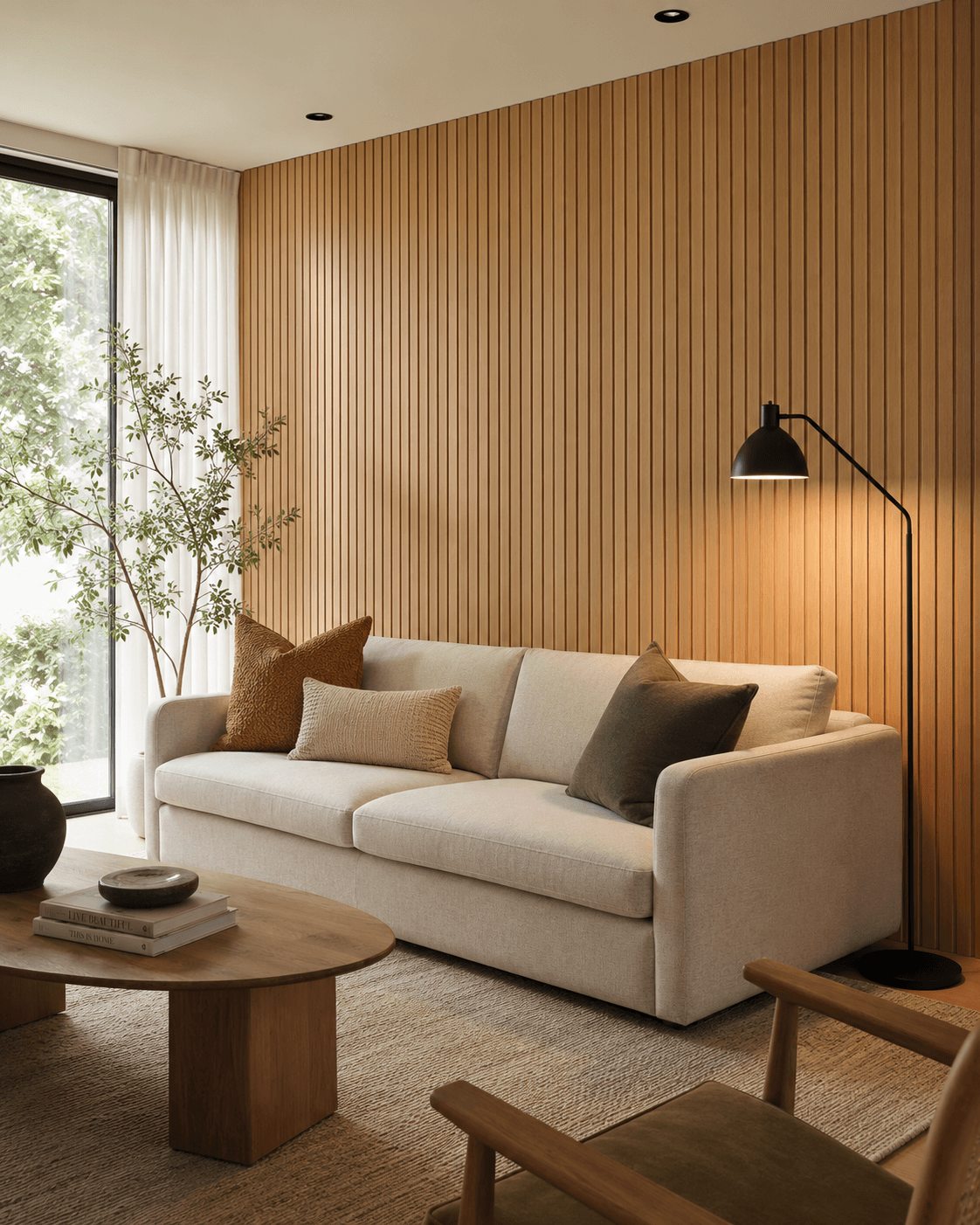
When planning a wood accent wall, many people pick a wood color that matches their floor or coffee table and think the job is done. But the direction of the planks, their depth, and the finish matter just as much. These details are easy to miss until the wall is finished and the room feels a bit off, so focus on them from the start.
This article shares wood accent wall ideas that work in real living rooms, not just in staged photos. Before you start, you’ll find tips to consider, ten different methods, and answers to common questions people have when planning their space. The main takeaway: the best wall depends on how the room is used and how the design changes the feel of the space.
What to Check Before You Start
When choosing a plank style, consider what will be in front of the wall. If it’s the main seating wall, such as behind or in front of the sofa, the wall’s texture can affect how the room sounds and feels when you sit there.
Flat drywall bounces sound around the room. In living rooms where people talk, watch TV, or relax for hours, this can make the space feel tense or noisy, even if everyone is quiet. A wood accent wall with real depth, like shiplap, reclaimed boards, or slatted wood, helps break up those sound reflections. This small acoustic change is real, and it’s one reason a textured wood wall behind the seating area can feel calmer than a flat painted wall.
This matters most for walls directly behind or next to seating, and less for walls you only see from across the room. If you’re deciding between two walls for your accent, and one is behind your sofa or reading chair, choose that one. You get both the visual impact and a bit more comfort where it counts.
Two other things worth checking before you commit:
- Begin by checking the wall’s condition. Even thin wood paneling will show every bump and dip in the drywall once light shines on it from the side. Before you install anything, skim-coat or sand out any major imperfections.
- Consider the direction of the planks and the height of your room. Vertical planks make a room feel taller and work well with standard 8-foot ceilings. Horizontal planks make a room feel wider and calmer, but they can make a low-ceiling room feel more closed in. Choose the direction based on the effect you want most.
10 Wood Accent Wall Ideas for Living Rooms
1. Vertical Shiplap in a Natural Finish
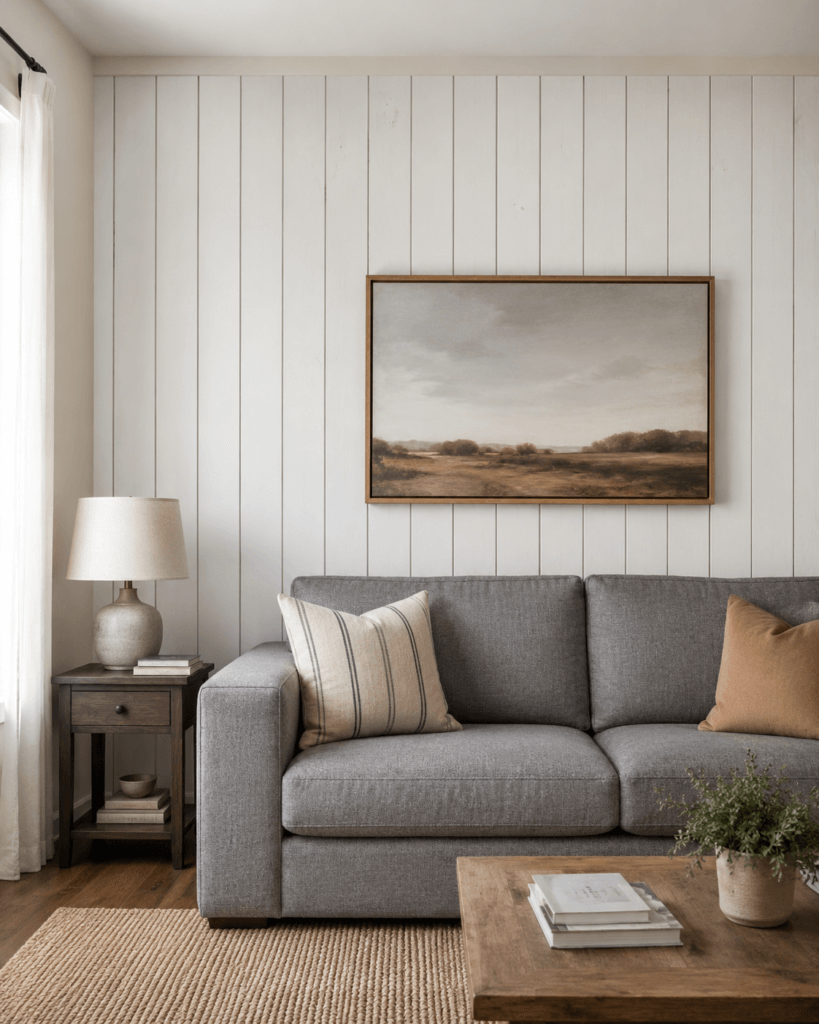
Vertical shiplap draws the eye upward, which helps in rooms with 8-foot ceilings that feel a bit short. Keep the finish light, such as raw wood, whitewash, or a thin clear coat, so the grain stays visible instead of getting lost under a heavy stain. This looks especially good behind a sofa, where the vertical lines frame the seating without competing with artwork.
2. Horizontal Reclaimed Wood Behind the TV
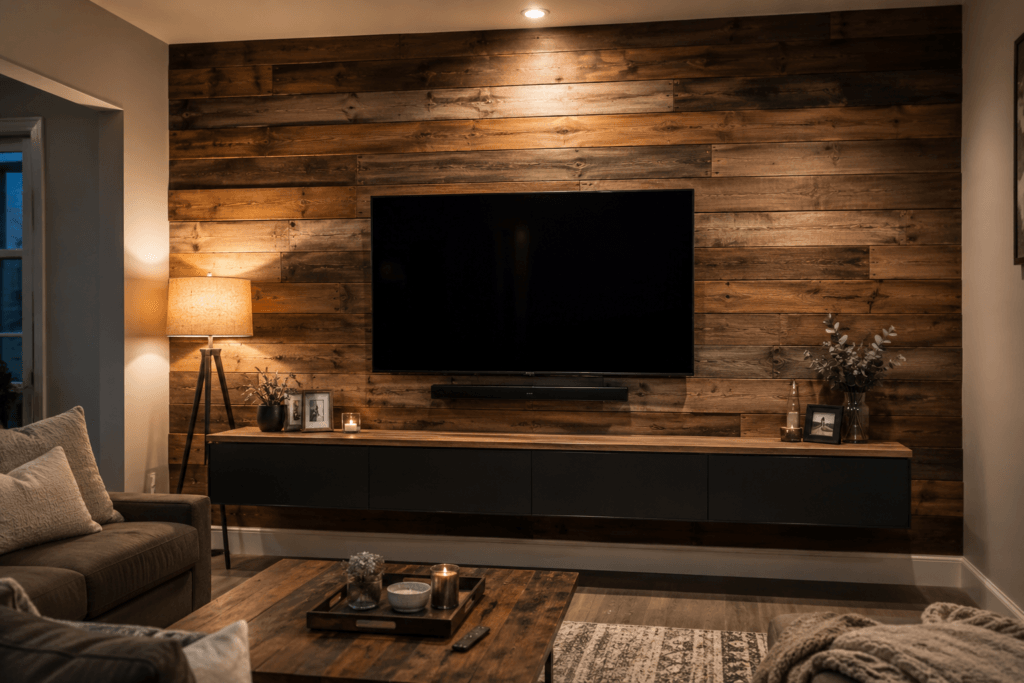
Reclaimed or barn-style boards installed horizontally behind a media wall hide mounting hardware well and add texture without demanding attention. The unevenness in reclaimed wood — knots, old nail holes, slight color variation — reads as intentional rather than messy when it’s the whole wall rather than a small patch. Before mounting the TV, do a stud-finder pass first, since reclaimed boards vary in thickness and can throw off standard mounting brackets.
3. Herringbone Wood Panel Accent
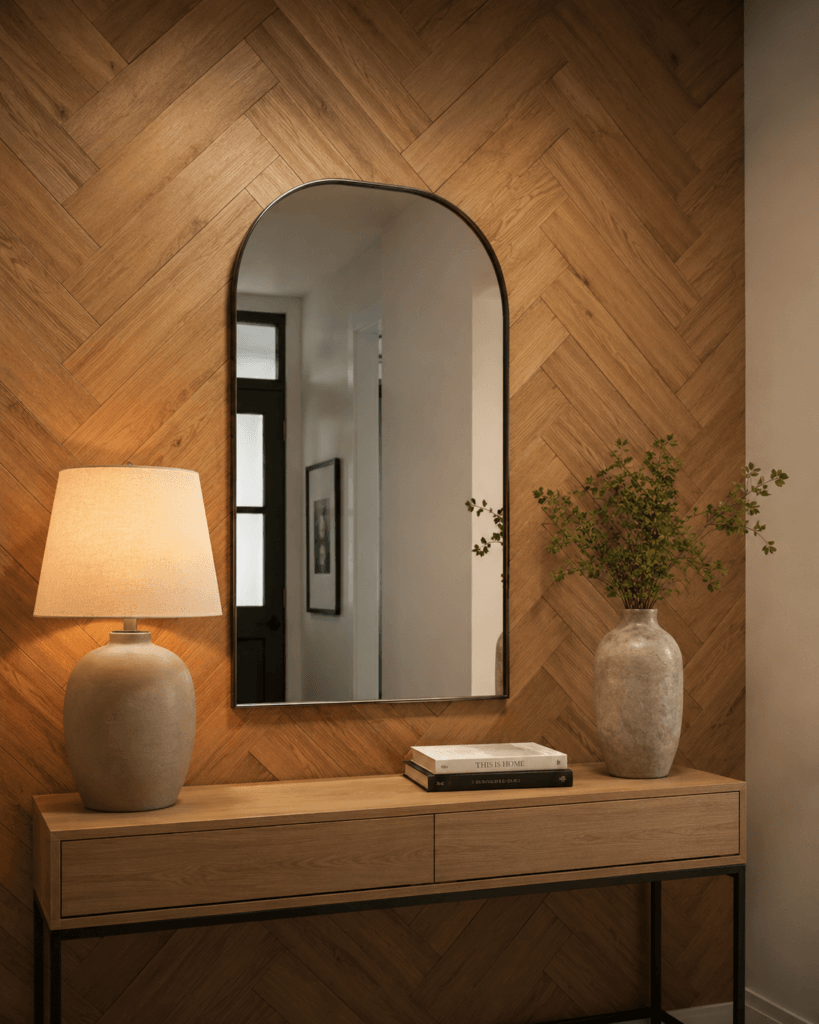
Herringbone patterns take more work to install, but they look custom-built instead of like a kit. This style works best on a smaller focal wall, such as behind a console table or a single accent chair, rather than on a full-length wall, where the repeating angles can feel too busy. If you want to save time, pre-cut herringbone panel kits are now available and can reduce installation compared with using individual planks.
4. Dark Walnut Slat Wall with Gaps
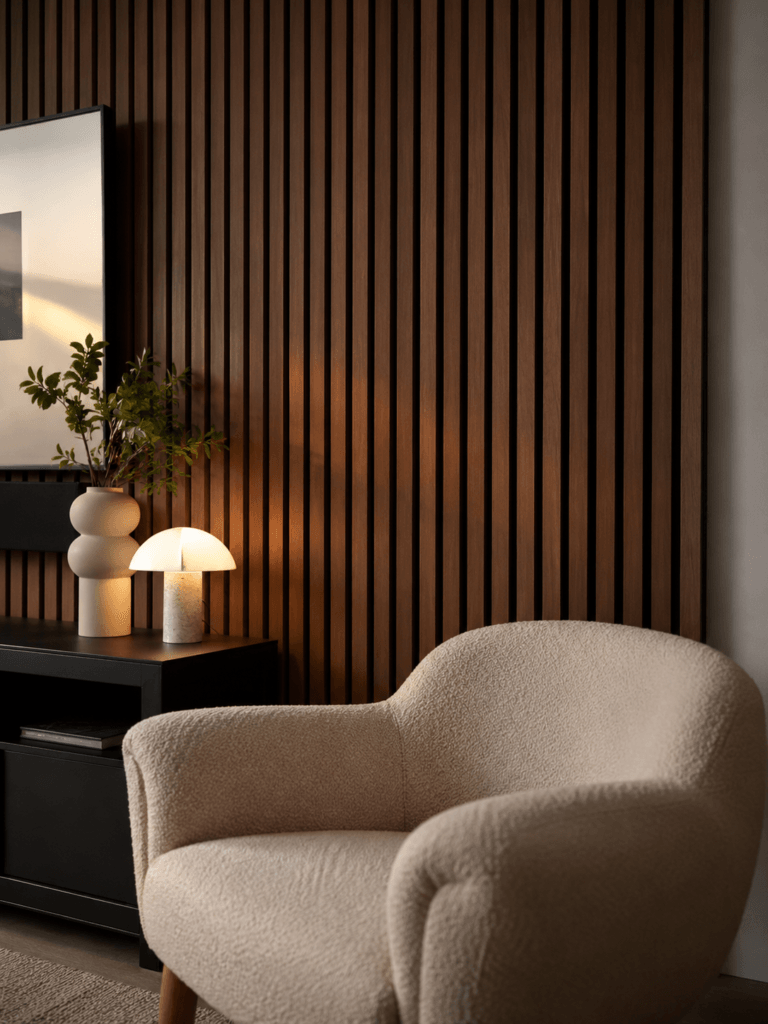
Slatted wood walls, with small gaps between each board, add real depth and shadow that a flat panel can’t. Dark walnut or espresso-toned slats work well as a backdrop for a lighter sofa, since the contrast keeps the wall from blending into the rest of the room. Those gaps are also where the acoustic benefit is strongest, as they trap and diffuse sound instead of reflecting it.
5. Light Oak Vertical Panels for a Scandinavian Look
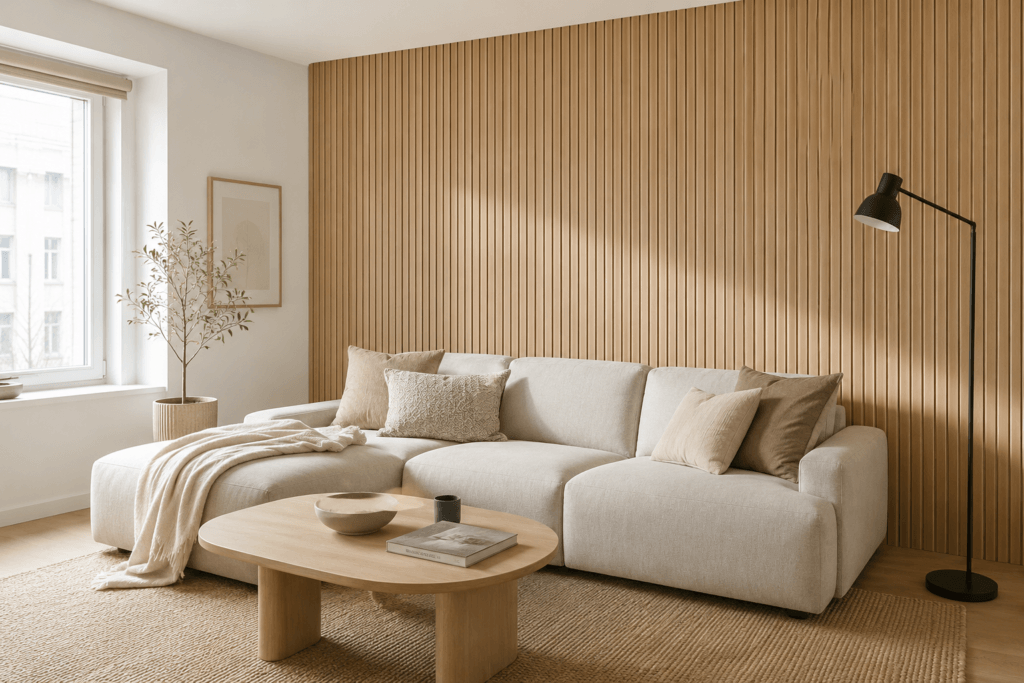
Light oak in narrow vertical panels is a popular choice for Scandinavian or Japandi living rooms. Pair it with white or off-white walls so the oak stands out as a warm contrast, not just as another wood wall. Avoid glossy sealants. A matte or raw oil finish keeps the look calm instead of shiny.
6. Geometric Wood Inlay Accent
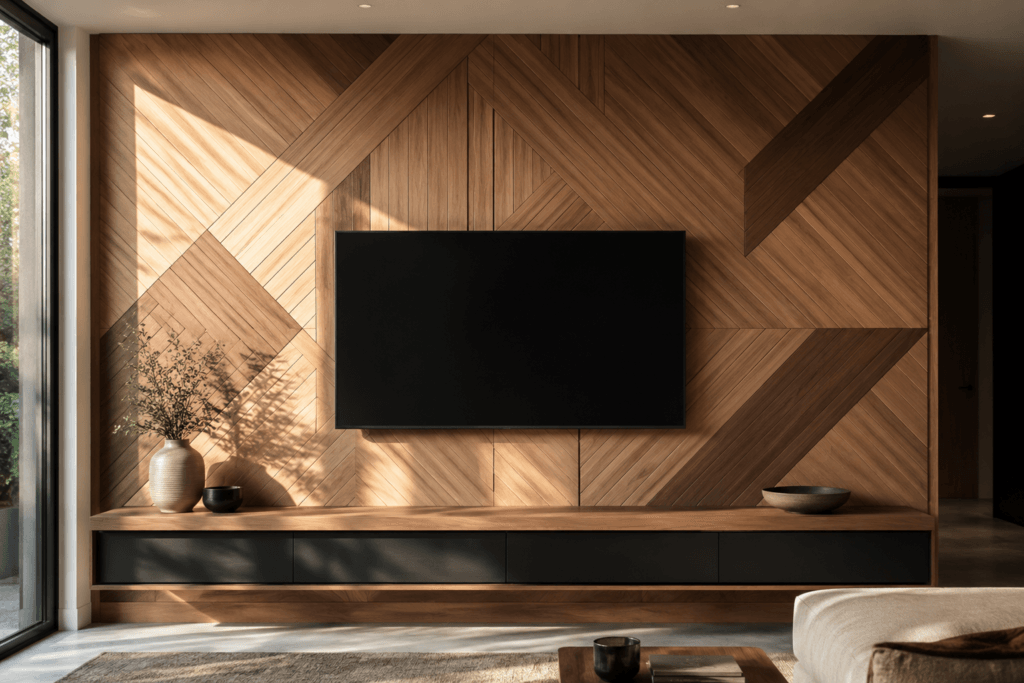
A geometric pattern, such as chevron, diamond, or a custom angular design, makes a great statement wall in a living room with simple furniture. This type of wall requires more skill to install, so it is often worth hiring a professional unless you are comfortable with precise angle cuts. To keep the pattern in focus, keep the rest of the room’s decor simple instead of competing with other patterns or busy artwork.
7. Full-Height Wood Slats with Built-In Shelving
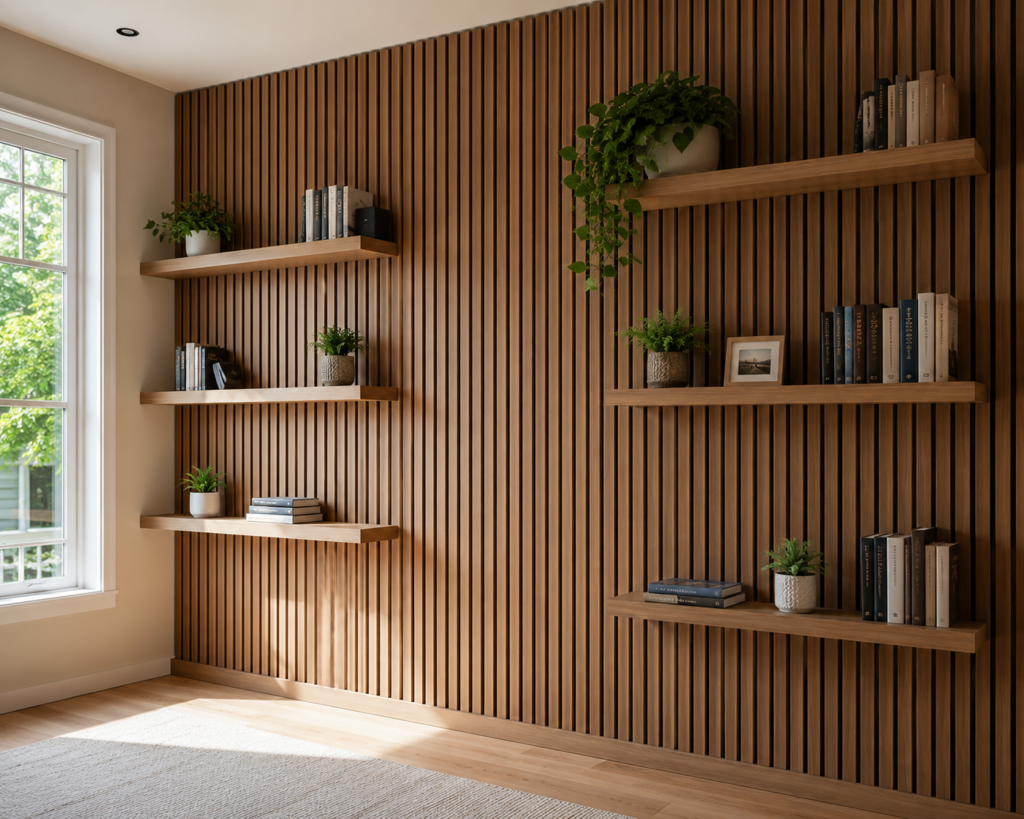
Adding a few floating shelves to a slatted wood wall makes it both decorative and useful. This works best on a wall without a sofa directly in front of it, so you have space to use the shelves. Keep the shelves less than 10 inches deep so they don’t take up too much floor space.
8. Whitewashed Pine Behind a Fireplace
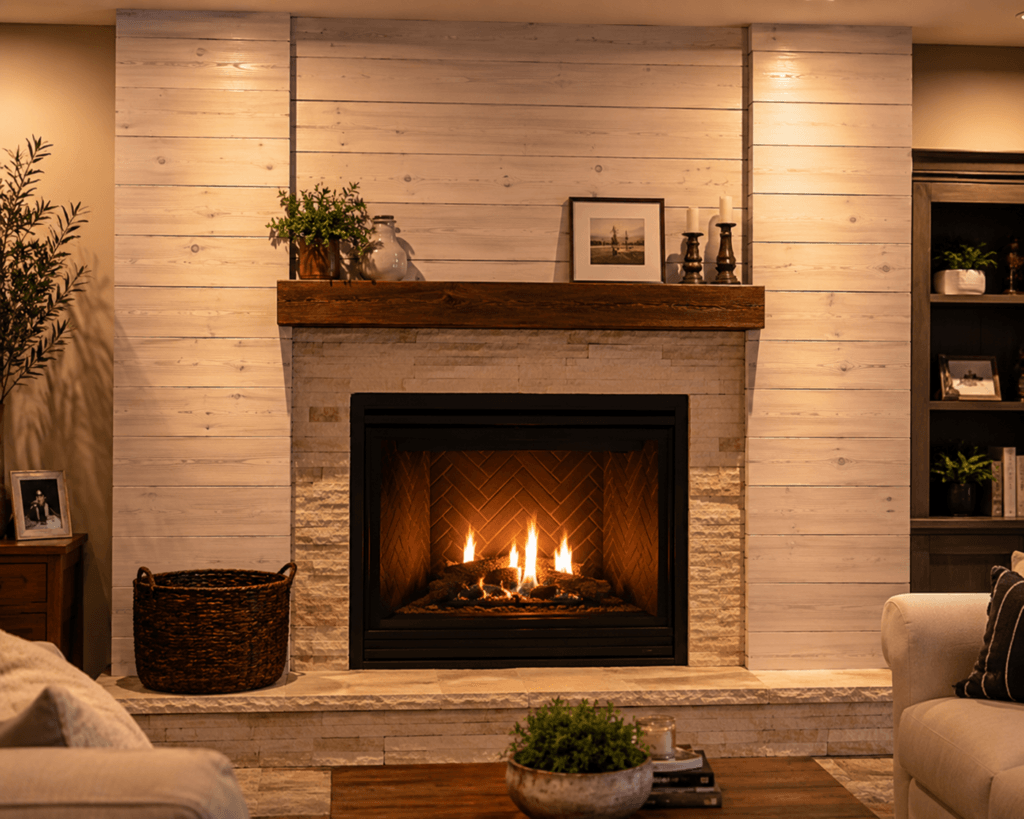
Pine looks great with a whitewash finish and softens the look of a stone or brick fireplace surround without covering it completely. Extend the wood panels a few inches past the fireplace opening on each side instead of stopping right at the edge. This gives a more finished look and avoids making it seem like an afterthought. Before installing, always check local clearance codes for combustible materials near a working fireplace.
9. Mixed-Width Plank Wall for Texture Variation
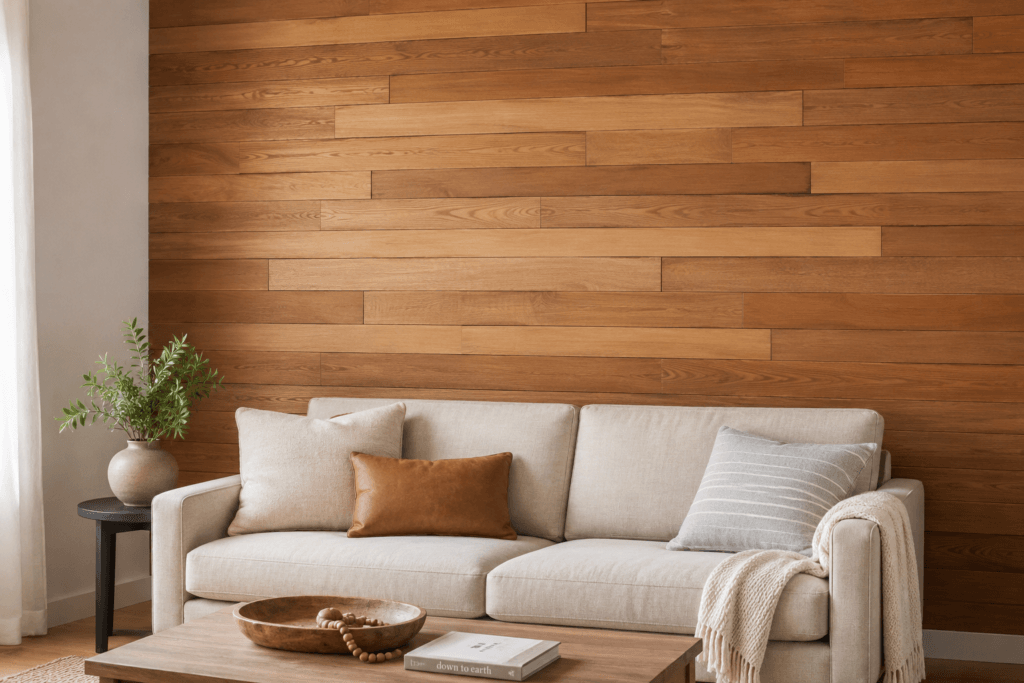
Using two or three different plank widths on the same wall, instead of just one size, adds visual texture without needing a pattern or color contrast. This is a good option if a full shiplap or slat wall feels like too much. Keep the same wood tone for all the planks so the variation looks like texture, not clutter.
10. Peel-and-Stick Wood Panel Wall (Renter-Friendly)
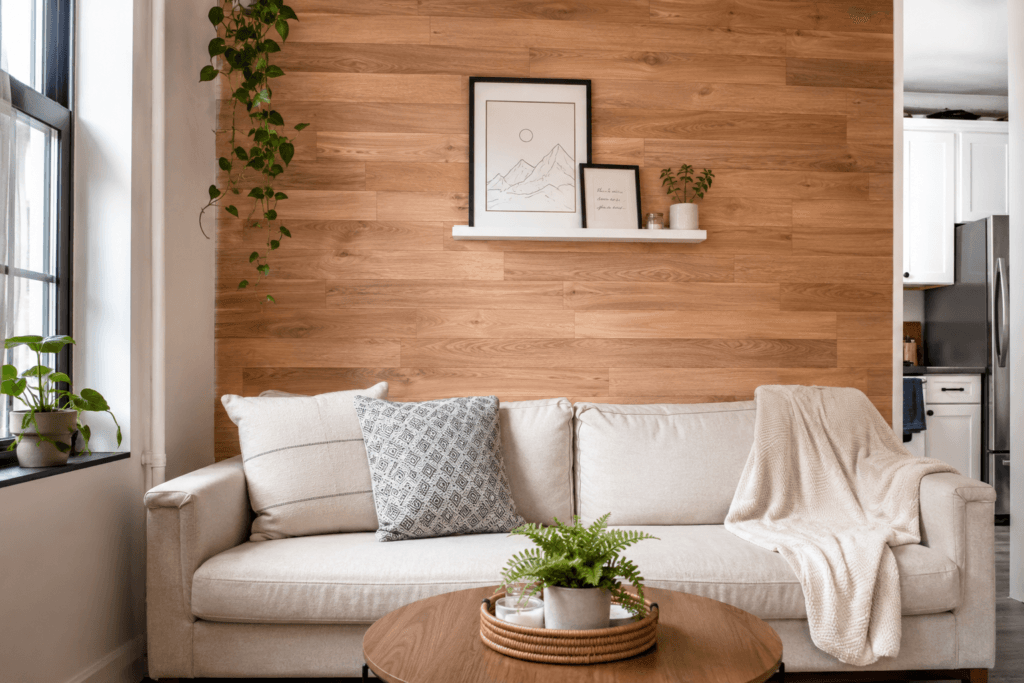
Peel-and-stick wood panels have improved and now come in realistic wood-grain finishes with real texture, not just printed patterns. They are a good choice for renters or anyone who wants to try a wood wall before committing to real lumber. Before applying the panels, clean the wall surface well and let it dry completely. Most failures happen when panels are installed over dust or leftover paint fumes.
FAQ
Usually, a wood accent wall does not make a room feel smaller. In fact, it can make the space feel larger if you choose the right finish. Light wood tones and vertical planks tend to open up a room, while dark wood on all four walls is what actually makes a space feel smaller. The takeaway: use wood to shape the room, not shrink it.
Which wall in the living room should get the wood accent?
The best wall for a wood accent is usually the one your seating faces or backs onto. People spend the most time looking at or sitting near this wall, so texture and color have the biggest effect there.
Can I install a wood accent wall myself, or do I need a professional?
Shiplap, slat panels, and peel-and-stick options are good for beginners with basic tools and a stud finder. Herringbone and geometric inlay patterns need precise angle cuts and are usually best left to professionals unless you have carpentry experience.
What wood finish works best if I have kids or pets?
A matte polyurethane or hardwax oil finish protects better than raw wood against scuffs and moisture, especially near the bottom of the wall. Avoid high-gloss finishes in busy living rooms because they show scratches and fingerprints more than a matte finish.
Final Thought
A wood accent wall is one of the few decor choices that can really change how a room feels, especially when it’s behind your seating. If you’re planning the rest of your room around it, explore our other living room guides for more ideas that combine function and style.