
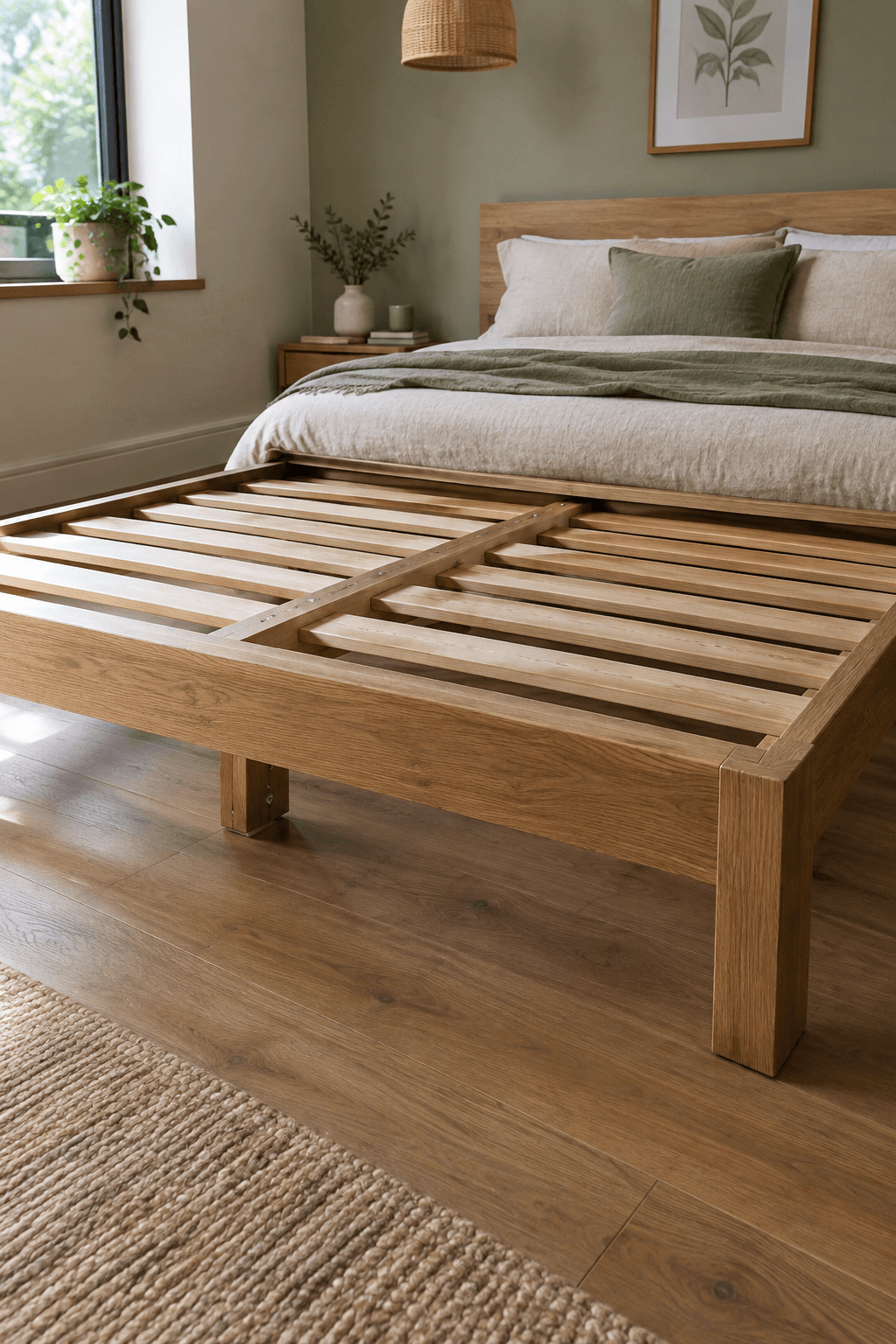
If you are looking for homemade bed frame ideas, start by choosing the right height, because a bed that feels comfortable and is easy to get in and out of each day matters more than how it is built.
When a bed frame looks acceptable but is too low, you have to climb out of bed instead of simply standing up; if it is too high, your feet dangle when you sit down to put on your socks. These are not merely matters of style, since they create real functional problems that styling cannot solve.
If your goal is to solve entry height, mattress support, sagging, and reading posture, this post presents homemade bed frame ideas that address those needs rather than frames that only look good in photographs.
What to Check Before You Build Your Homemade Bed Frame
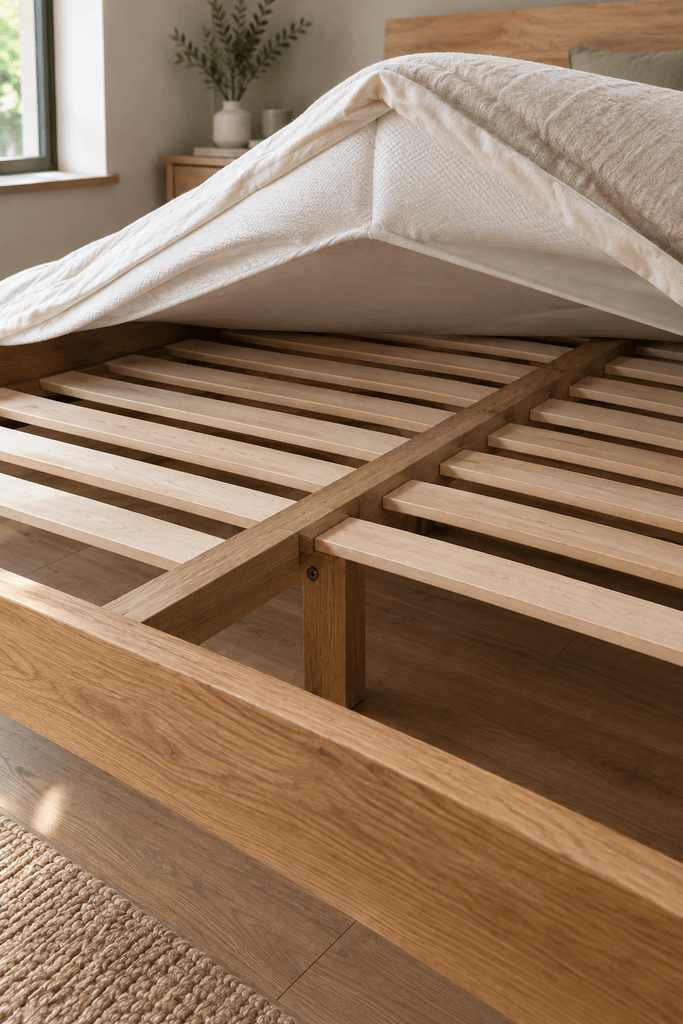
For a design that fits well, take three key measurements: the total height of the sleep surface, the slat spacing and the depth of the central support. If you skip these steps, you may experience discomfort and frustration, making both sleeping and getting in and out of bed more difficult.
To fit comfortably, set the total sleep surface height to the frame height plus the mattress thickness, measured from the floor to the top of the mattress. For the average adult, a height between 20 and 24 inches positions the knees at about a 90-degree angle when sitting on the edge, similar to a properly adjusted chair. If the height is under 16 inches, you have to push off the floor to stand up, and if it’s over 26 inches, shorter adults and children might need a step to sit down.
Construct a platform with slats that provide good support and keep spaces between them at 2.75 in.; this helps keep the mattress supported and makes the bed feel solid.
Include a beam when using a queen-size bed or queen-size frame bed to keep the bed stable; you get those three p. Choose the style that fits you best.
Homemade Bed Frame Ideas, By Project
1. A platform with leg risers on a pallet
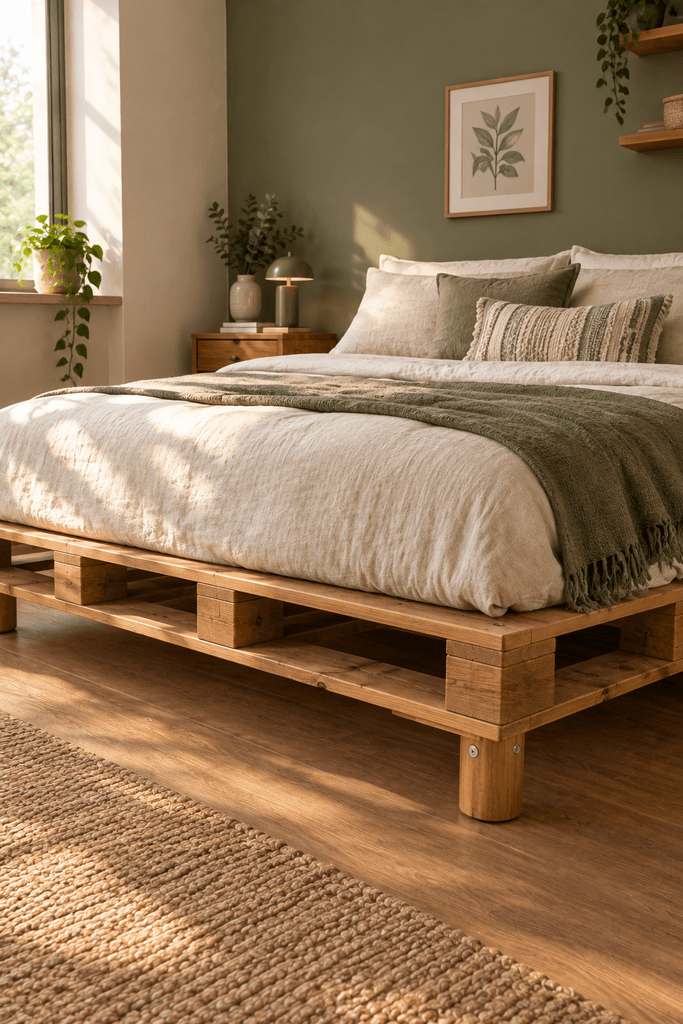
Pallets are the standard homemade bed frame, but when stacked flat, they usually end up about 12 to 14 inches high—too low for most adults to get out of comfortably. For a better fit, attach 6- to 8-inch bolt-on furniture legs to the base of the pallet so the total height reaches 20 to 24 inches after you place the mattress on top. It’s a good idea to sand the pallet boards first, since splinters at ankle height are more of a bother than they may seem.
2. A frame made up of plywood with a central beam
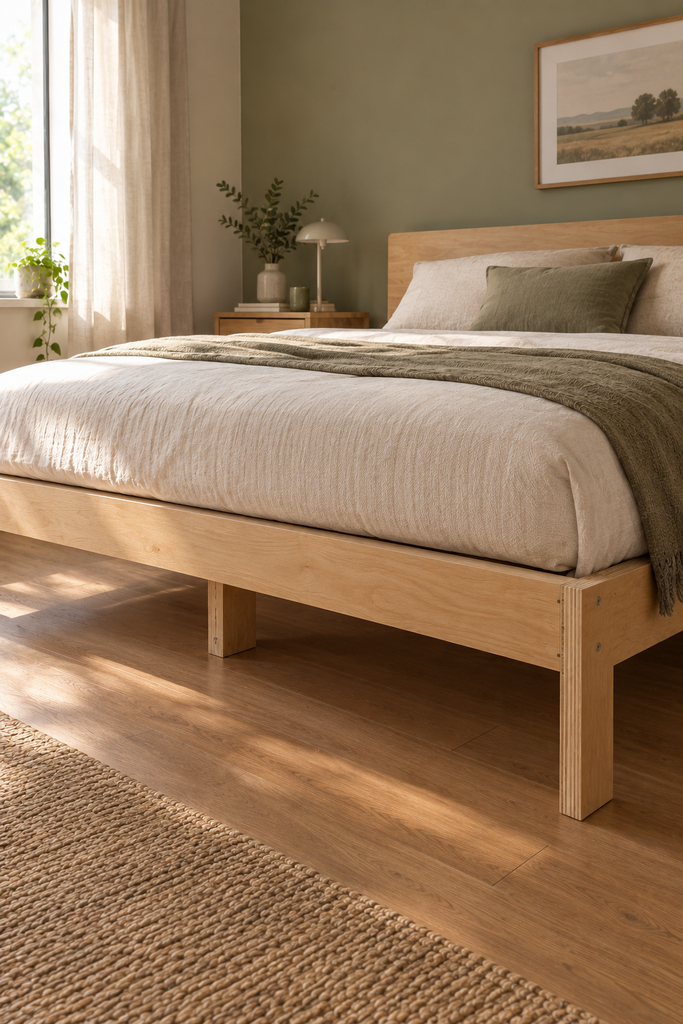
Build a rectangular box using 3/4-inch plywood, and make sure a central support beam runs the full length of the frame under a queen or king mattress. The beam must rest on its own leg at the middle point, not just be glued to the side panels, since glue alone won’t stand up to daily use. This is the strongest and most suitable option for beginners if you want your bed to remain firm for many years.
3. Bed frame with concealed blocks
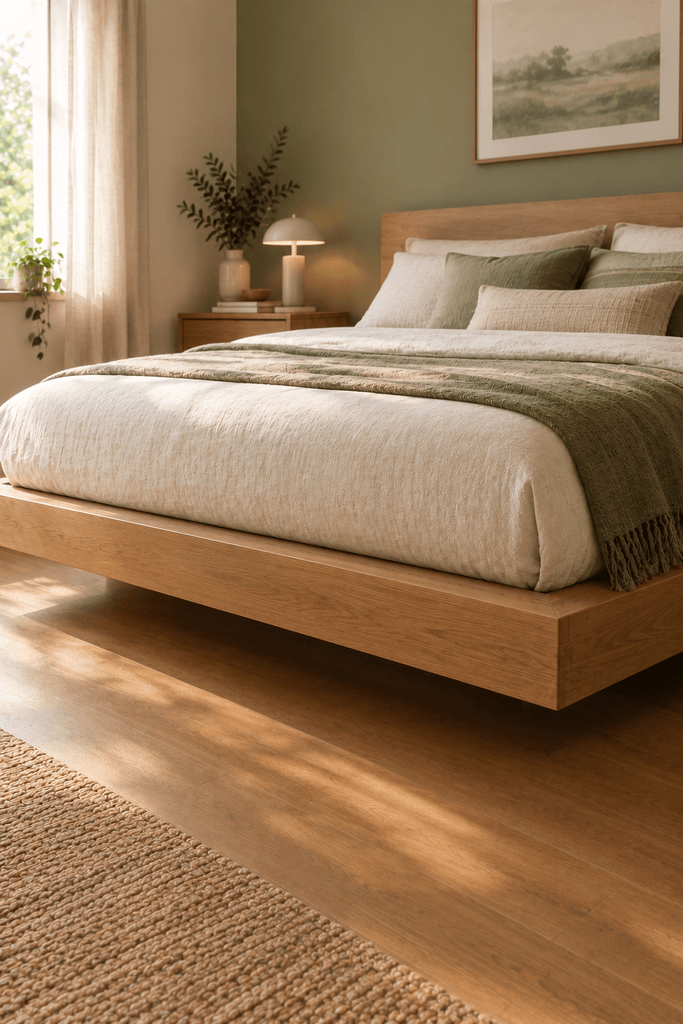
If you want a floating frame that still fits real use, design the base to sit back for the appearance of hovering, but add hidden support blocks directly underneath the parts of the mattress where your shoulders and hips will be, about a third of the way in, to avoid sagging in the areas that bear the most weight.
4. Storage Drawer Base With Correct Slat Spacing
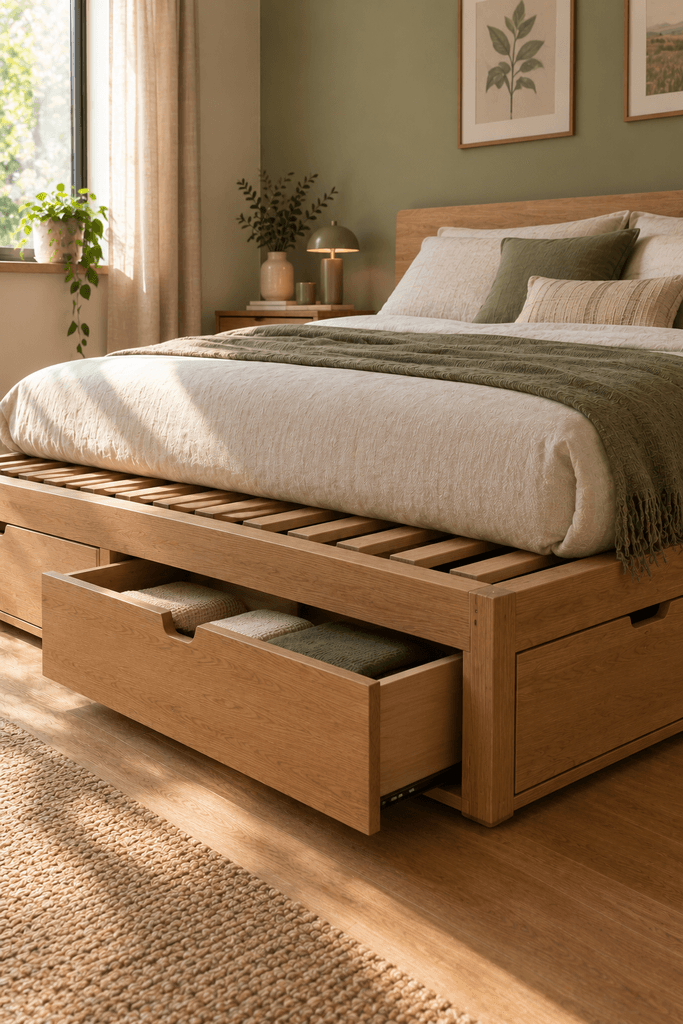
Even if you’re fitting drawer storage into the base, the slats or the plywood top must still follow the 2.75- to 3-inch spacing rule, even when there are drawers below. A common mistake is treating the drawer tops as structural and omitting the proper slats above them. As a result, flat areas with no support begin to feel different from the rest of the mattress after a few months.
5. The headboard has an adjustable panel for reading.
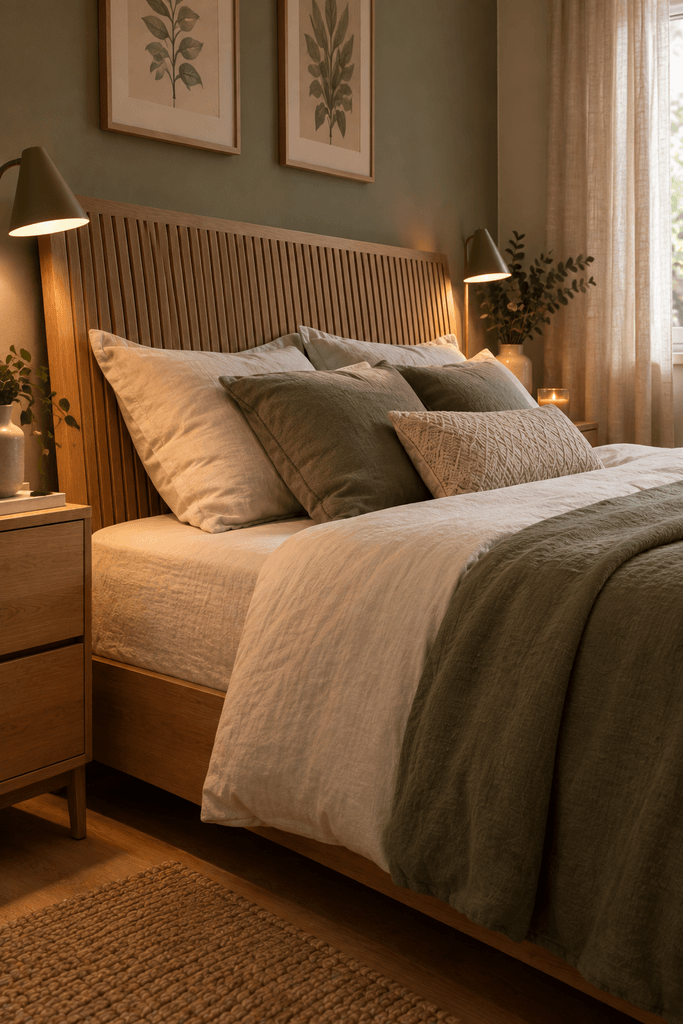
If you enjoy reading or using your phone in bed, give the headboard tilt slightly backward—about 10 to 15 degrees from vertical—rather than building it perfectly straight. When the headboard is straight up, it makes you lean your neck forward, like a monitor set too low; with a slight tilt, however, you can relax against it without rounding your upper back.
6. Pipe frame for industrial use with bracing at the corners
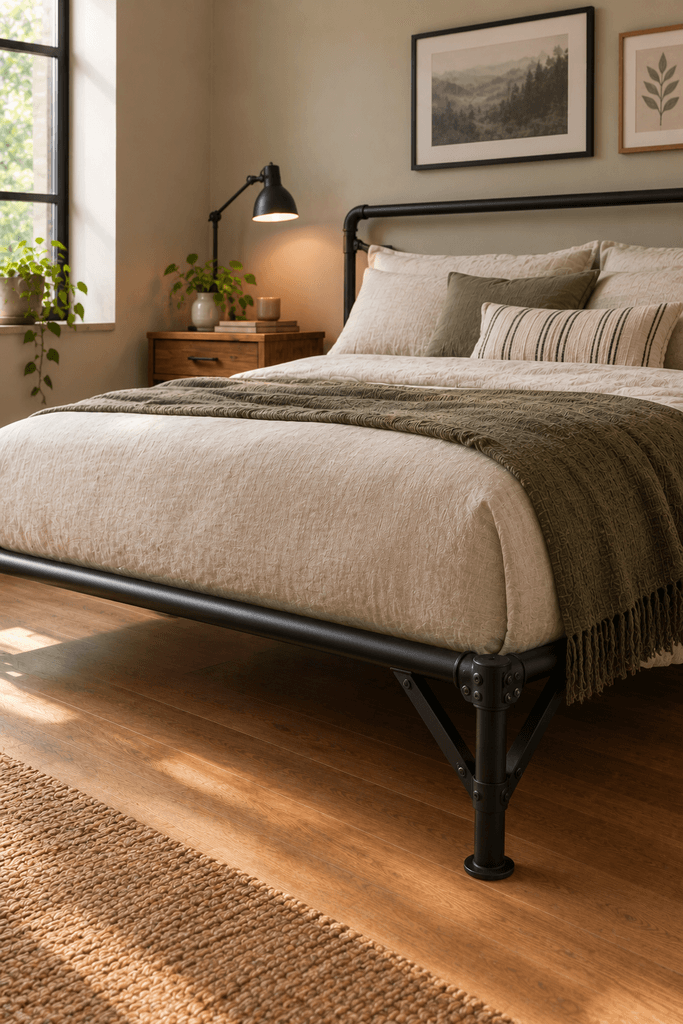
Though metal pipe frames may appear solid, their strength relies on the corner joints. To prevent the frame from shifting side to side when you’re sitting on the edge, add diagonal corner braces—such as flat metal brackets—at all four corners. Otherwise, the pipe frame can begin to wobble within a few months, even if the pipes themselves are heavy-duty.
7. Frame with a low platform for floor-style sleeping
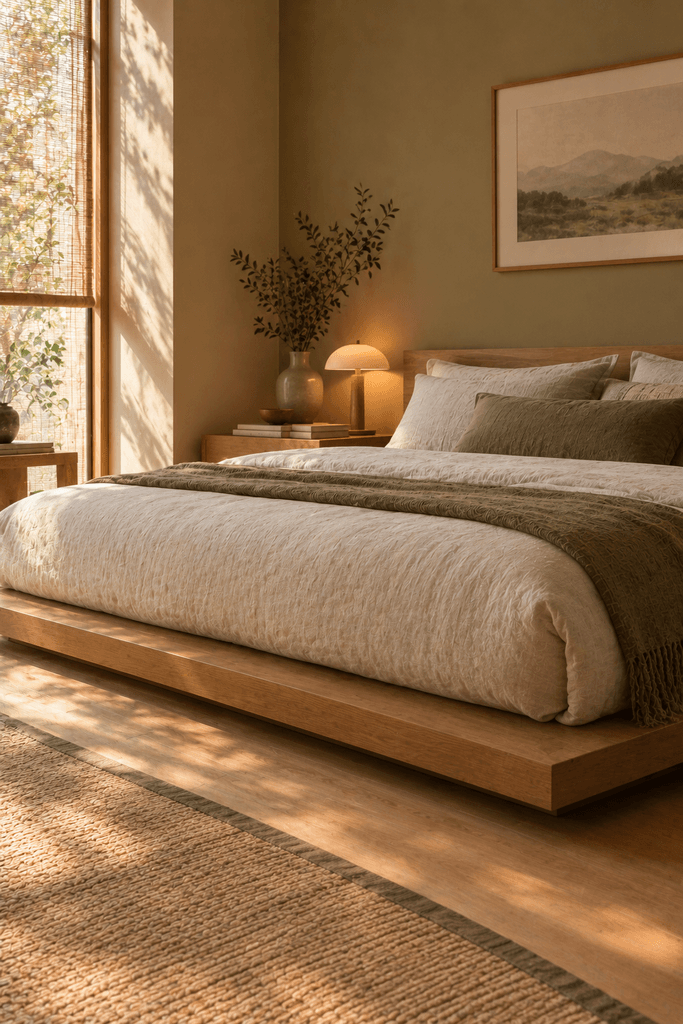
If the bed is for young adults without mobility problems, a 6- to 10-inch platform may be suitable, but it is not a good option for anyone with knee, hip, or back problems who needs a higher base to get up easily. If more than one person will use the bed, build the frame 20 to 24 inches high and omit the floor-bed style. While this type of bed may work for some people, it is not suitable for everyone.
FAQ
How tall should a homemade bed frame be? Aim for 20 to 24 inches from the floor to the top of the finished mattress, not just the frame itself. This range keeps your knees near a 90-degree angle when seated on the edge, making it easier to stand up. Adjust down slightly for kids’ beds or up for taller adults.
Do homemade bed frames need a center support beam? Yes, for any queen-size or larger. A span wider than about 45 inches without mid-point support will sag over time, regardless of how thick the wood is, because sag comes from unsupported distance, not material strength alone.
What slat spacing is safe for a mattress? Keep slats no more than 2.75 to 3 inches apart. Wider gaps let foam and hybrid mattresses dip into the spaces, which flattens support unevenly and can void the mattress warranty.
Can I build a bed frame without power tools? Yes, if you stick to designs using pre-cut lumber, bolt-on legs, and basic hand tools like a drill and screwdriver. Pallet platforms and simple box frames are the easiest to build with minimal equipment, as long as you still hit the height and support numbers above.
Final Thought
A bed frame made at home is only a success if it fits you well in the right height, spacing, and support before you consider style. If you find this practical advice useful, explore other bedroom articles on Ergontag to learn more about comfort issues you may not have realized you had.