
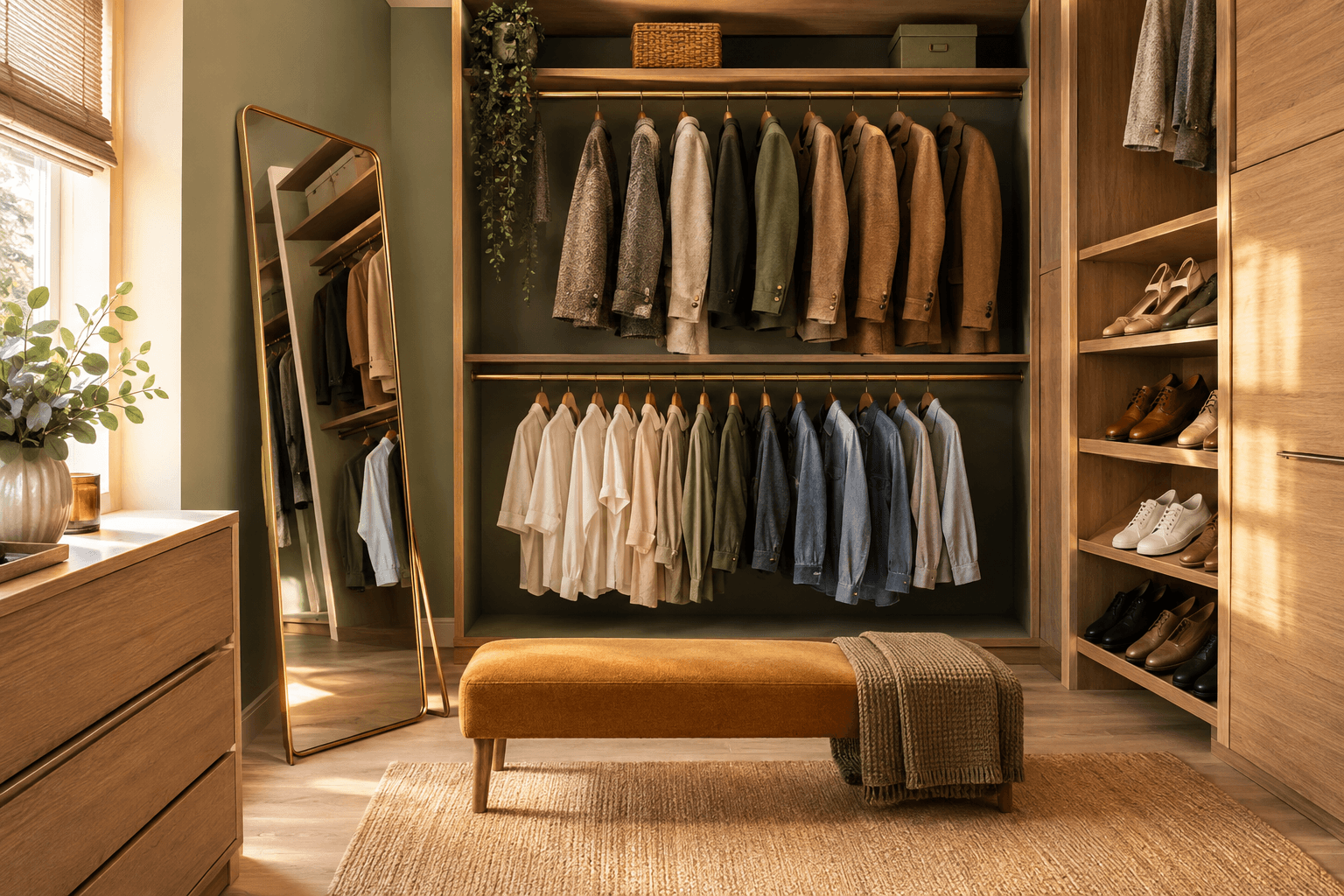
Most closet remakes fail for the same reason: people focus on photos, matching bins, and color-coded hangers, then still bend for socks or climb for sweaters six months later. The real issue isn’t appearance. It’s reach.
Closets are usually built as display cases rather than storage spaces you access every morning when you’re only half-awake. In this article, you’ll find closet ideas that address reach, bending, shoulder strain, and foot traffic while keeping a good appearance. If you’ve ever injured your back reaching for a suitcase on a high shelf, this piece is for you.
What to Check Before You Start Your Closet Design

Before you start planning, make sure you understand your reach zones. Ergonomists refer to the area between shoulder and knee height as the «golden zone»; for most adults, this range is about 20 to 59 inches from the floor. Keep everyday items such as work clothes, shoes, or bags in this area, since it is the only place you can reach without bending your back or lifting your arm above your shoulder.
Most people do not realize how important rod height is. For full-length coats, a rod that is 66 to 72 inches tall is suitable, but for everyday shirts and pants, a height of 40 to 50 inches lets you hang and take down clothes using only your wrist and elbow, not your shoulder. When rods are too high, small shoulder movements add up every week.
Most decoration blogs fail to mention shelf depth. When a shelf is deeper than 16 or 20 inches, you have to reach past your natural arm length to get items in the back, which forces you to lean your whole torso forward instead of just your arm. Shallow, wide shelves are generally better than deep, narrow ones for everyday items.
One more thing to check is the width of the door and aisle. A walk-in closet should have at least 36 inches of aisle width so you can bend at the knees when facing a drawer. If the space is narrower, you’ll have to twist your spine to reach the lower storage, which poses a greater risk of strain than the height problem most people focus on.
8 Closet Ideas That Fix a Real Comfort Problem
1. The double-hang rods are sized to reach, not based on symmetry.
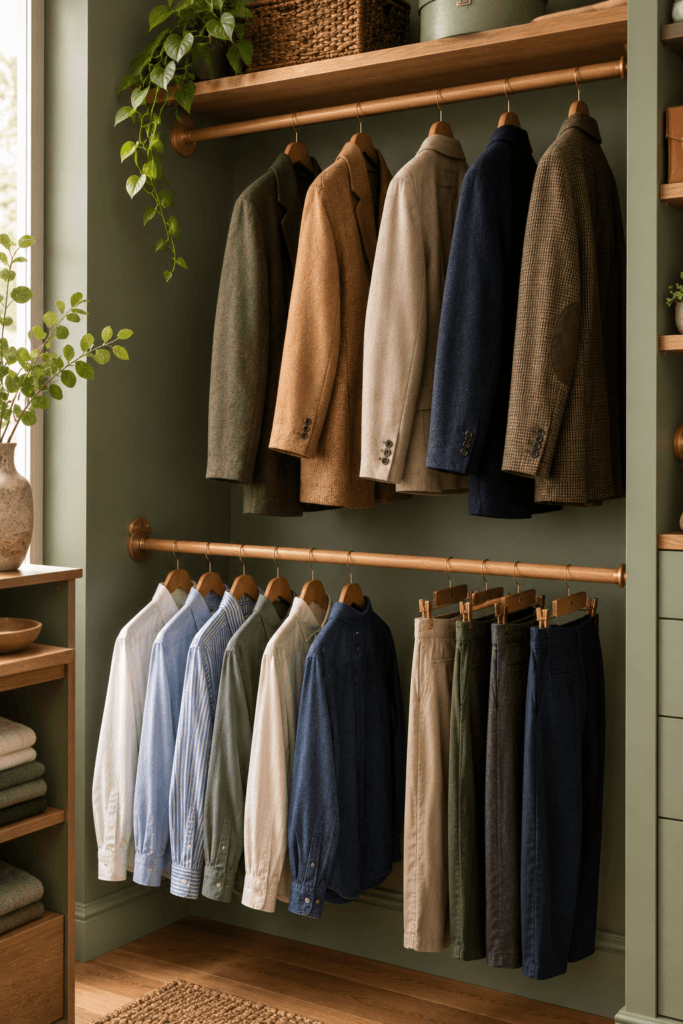
Most double-hang systems involve splitting the closet in two, so that the top rod is out of easy reach for anyone who is under 5’6″. In this case, place the lower rod at 40 inches and the upper rod between 74 and 80 inches; daily items will stay in the golden zone, while only occasional items, such as blazers, go in the upper, less convenient area.
2. Angled Shoe Shelves Which You Do Not Need to Bend to See
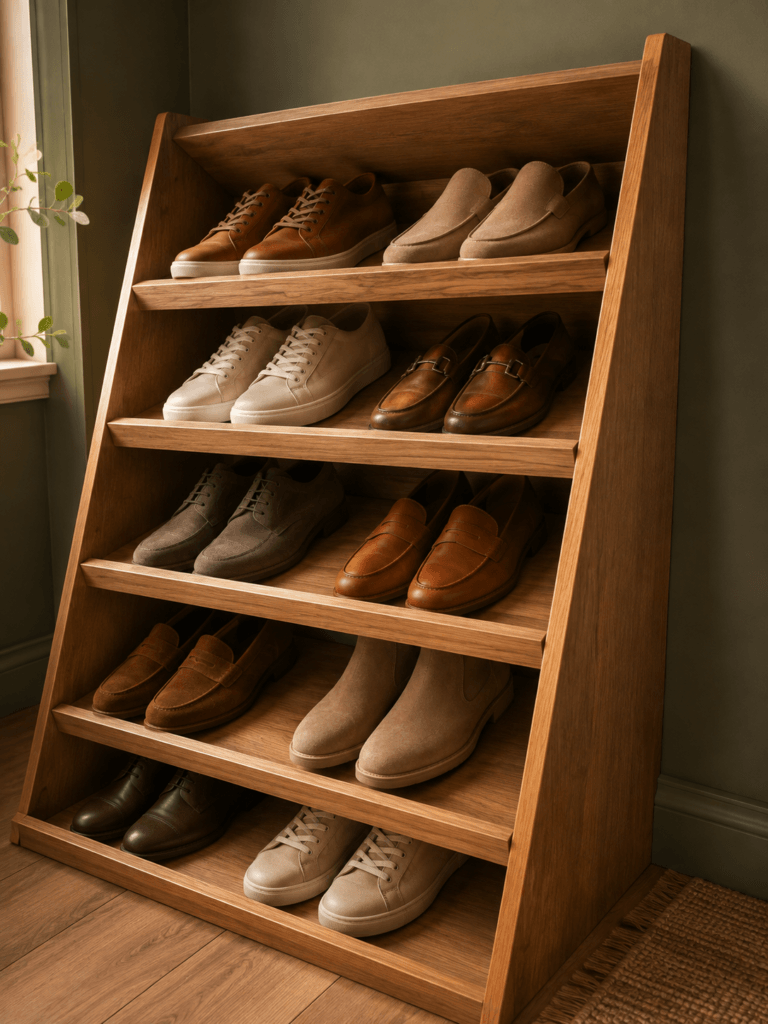
Low, stacked shoe shelves require you to crouch and tilt your head slightly to see a pair. If the shelves are inclined at 10 to 15 degrees, you can see the toes of all the shoes while standing and crouch less often. Also, because the shelves are angled, you can push the shoes forward and pick them up in a single movement rather than searching around.
3. Rods which are pulled down for high storage
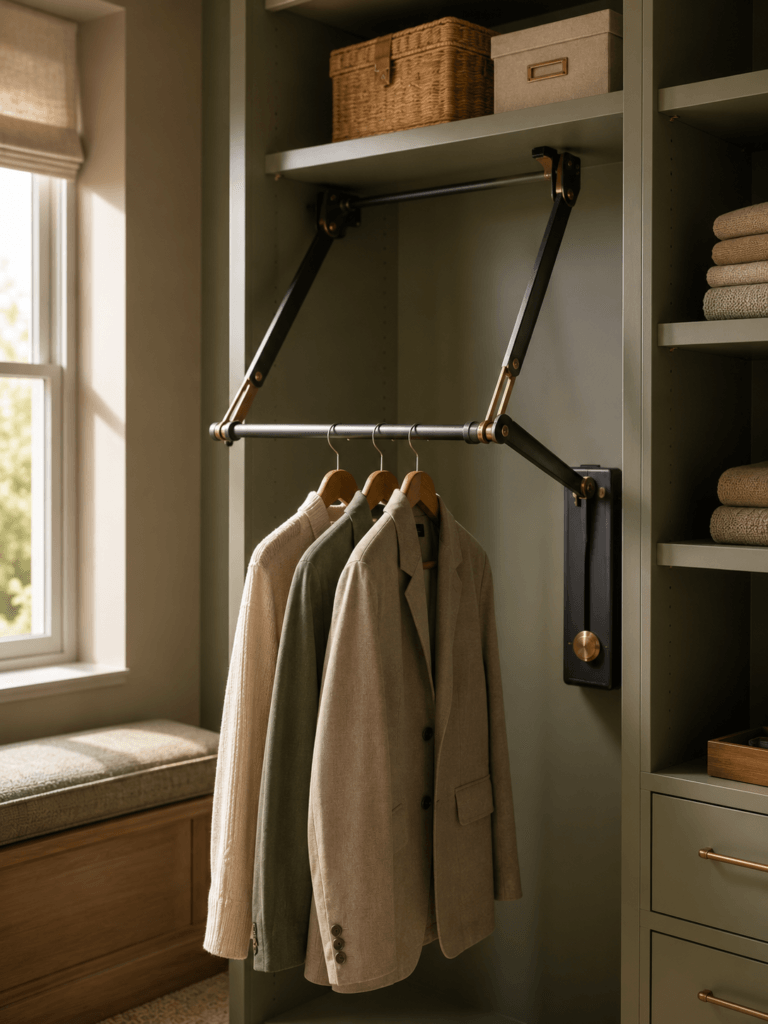
If the closet has space above 74 inches, there’s no point in leaving that section out of reach. With a pull-down closet rod, the top shelf can be lowered to hip height using one hand, something which is particularly useful for people who are under 5’4″ or have shoulder problems. This turns wasted vertical space into storage you can use every day, without needing a stool.
4. A full-length mirror adjusted so that it is at eye level
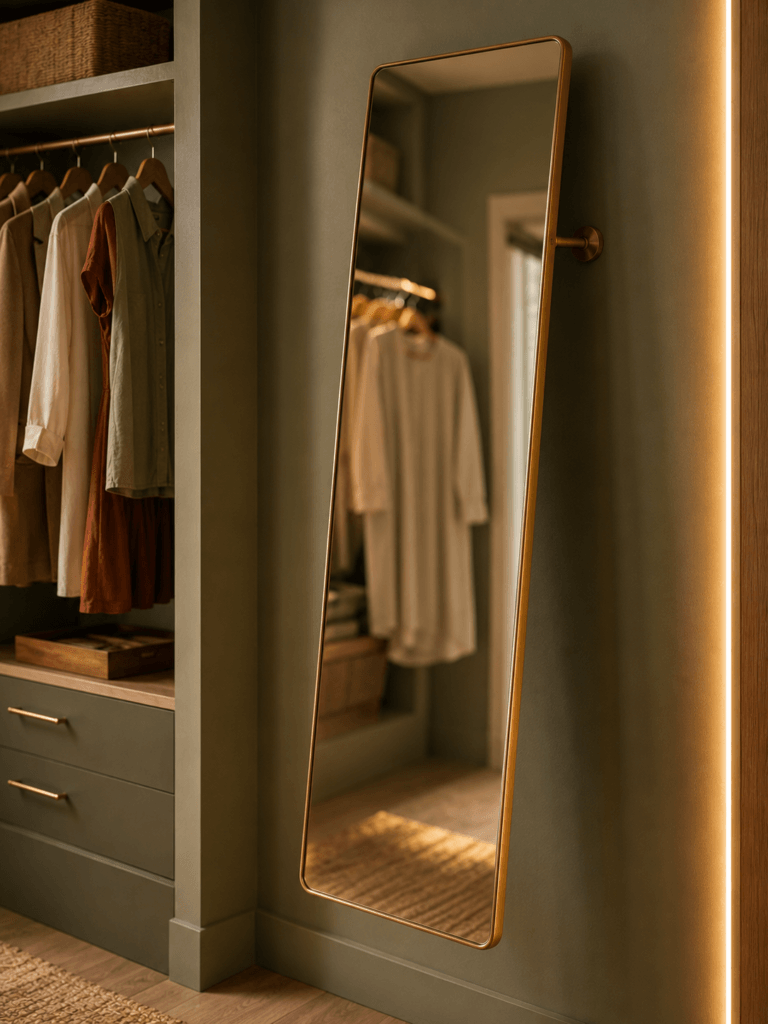
To see your entire outfit in a flat mirror, you have to step back several feet, but most closets don’t provide that much room. If you tilt the top of the mirror forward by 5 to 7 degrees, you can see yourself from head to toe while standing close. This simple solution focuses on function rather than decoration, and most closet guides fail to mention it.
5. A centre island at counter height, not at coffee-table height
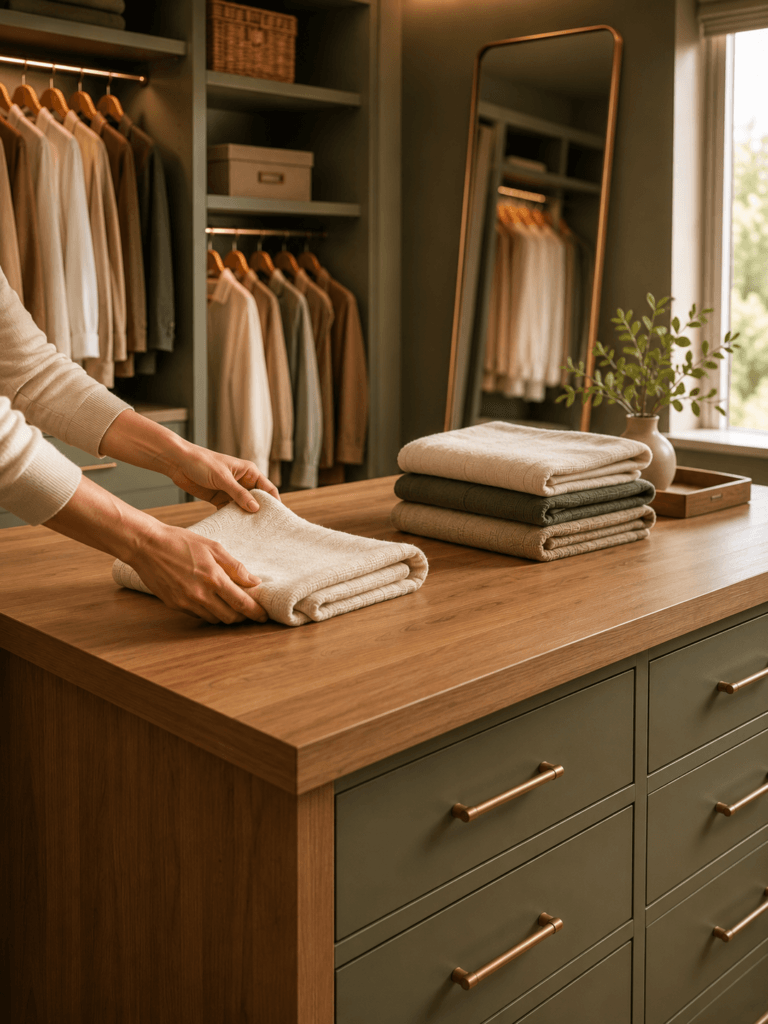
Closet islands with folding spaces are usually constructed at the height of a coffee table, that is, around 18 to 20 inches, so you have to bend forward at a 45-degree angle to fold the laundry. However, if the island is built or purchased at a height of 34 to 36 inches, which is the standard height for countertops, you can fold the laundry by bending your elbows rather than your back. This difference is especially helpful when you fold more than one basket each week.
6. Place drawer dividers at hip height, not floor level.
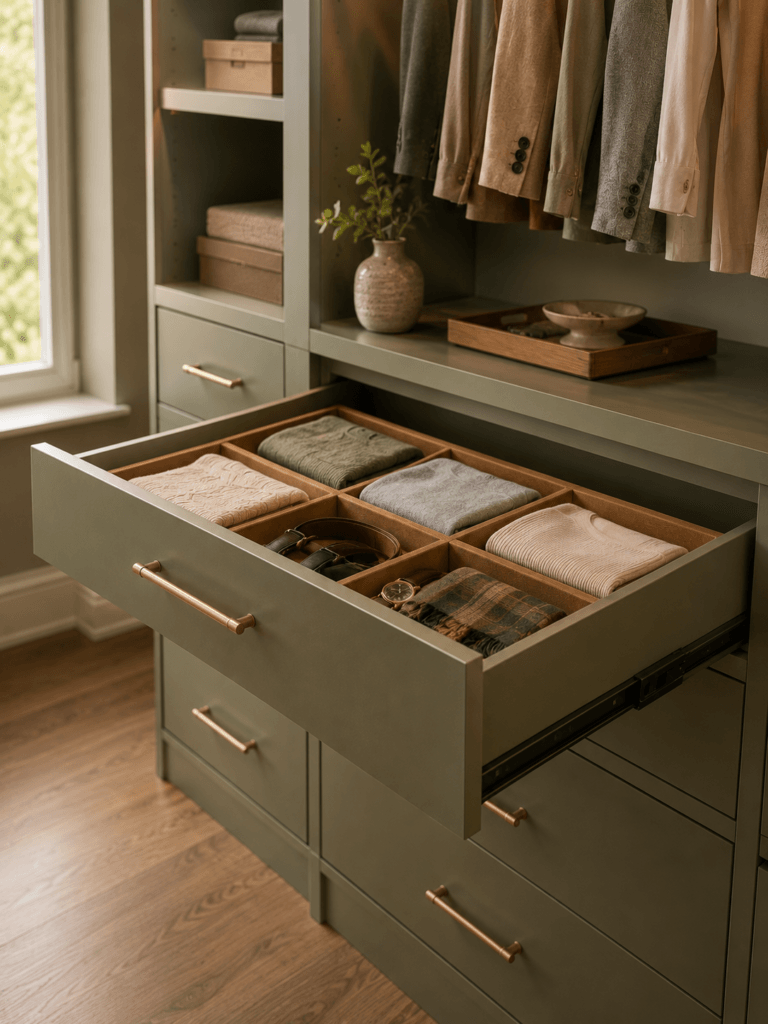
Drawers at floor level look neat in photos, but you have to squat every time you use them. Move your most-used drawer, like underwear, socks, or accessories, to the 20 to 36 inch range. Save floor-level drawers for seasonal or rarely used things. Match how often you use something with how easy it is to reach, not to fill every inch.
7. Angled Task Lighting, Not Overhead-Only
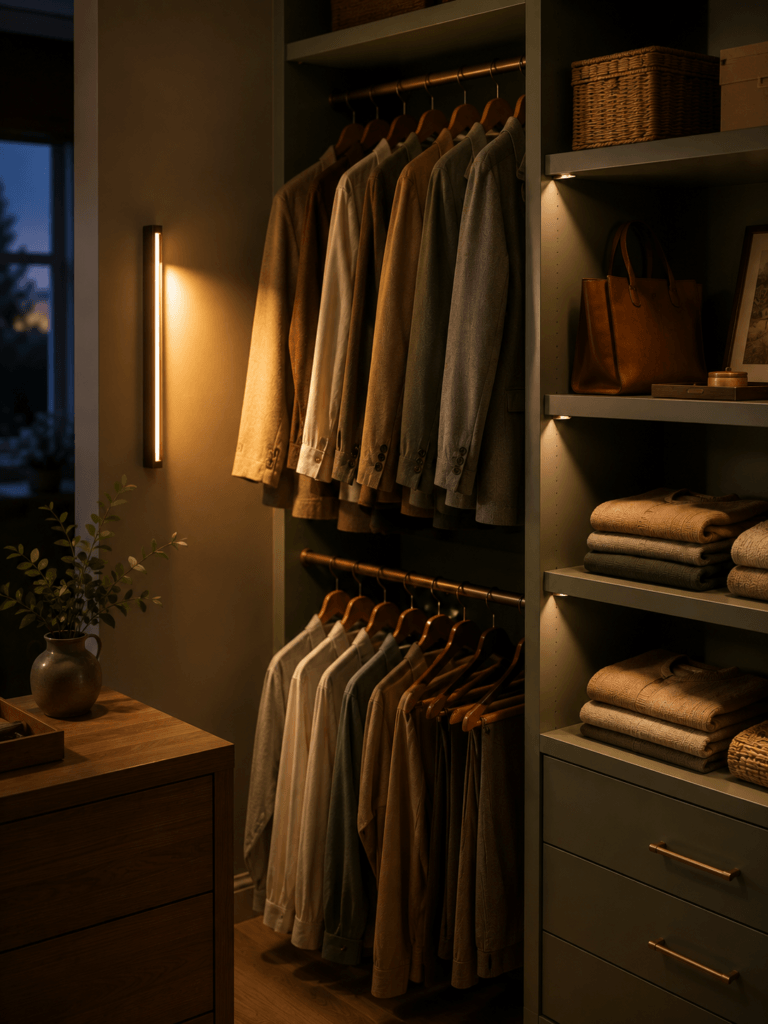
A single ceiling light casts a shadow over whatever you’re holding at chest height, where you need to read labels or match colors. Add a light from the side, about 30 degrees off vertical, mounted at shoulder height or higher. This reduces shadows without shining glare into your eyes.
8. A Bench at Sit-to-Stand Height for Shoes
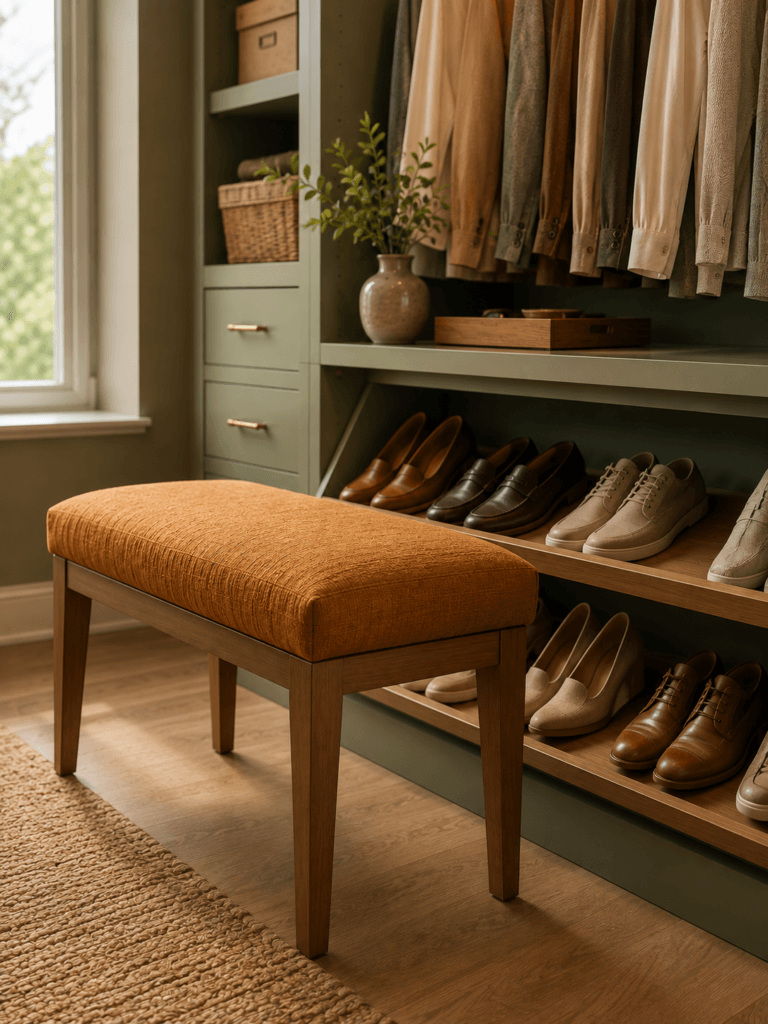
A bench less than 16 inches high makes your knees sit above your hips, straining your lower back when you stand. A closet bench should be 17 to 19 inches high, like a dining chair. This keeps your hips and knees level, making it easy and comfortable to put on shoes.
FAQ
What is the best height for a closet rod?
For clothes you use every day, 40 to 50 inches from the floor is the most comfortable height for hanging and taking things down without lifting your arm above your shoulder. Full-length items like coats or dresses need at least 66 to 72 inches, so a double-hang system with different heights works better than splitting it evenly.
How deep should closet shelves be?
Closet shelves work best when they are 16 to 20 inches deep, since this corresponds to the distance most adults can reach without leaning forward. Although deeper shelves may appear more spacious in photographs, they require you to reach beyond your normal reach each time you take something from the back.
Can a small closet still be comfortable to use?
Ergonomic design depends on item placement, not closet size. A small reach-in closet, for example, will still feel more comfortable if the items you use every day are situated in the 20 to 59 inch ‘golden zone’ and less frequently used things are placed on the floor or upper shelf, regardless of how big or small the closet is.
What is the most frequent error when it comes to closet design?
The most common mistake is splitting storage evenly by height insteaFd of by how often you use things. Most people make shelves and rods symmetrical for a tidy look, but then they end up bending or reaching for the items they use every day because those things aren’t in the easy-to-reach zone.
The Bottom Line
A closet that looks great in photos but makes you bend, reach, or stretch every morning isn’t really working for you. Match height and depth to how your body moves to make storage truly convenient. If you want to rethink other parts of your bedroom this same way, read more on the blog.