
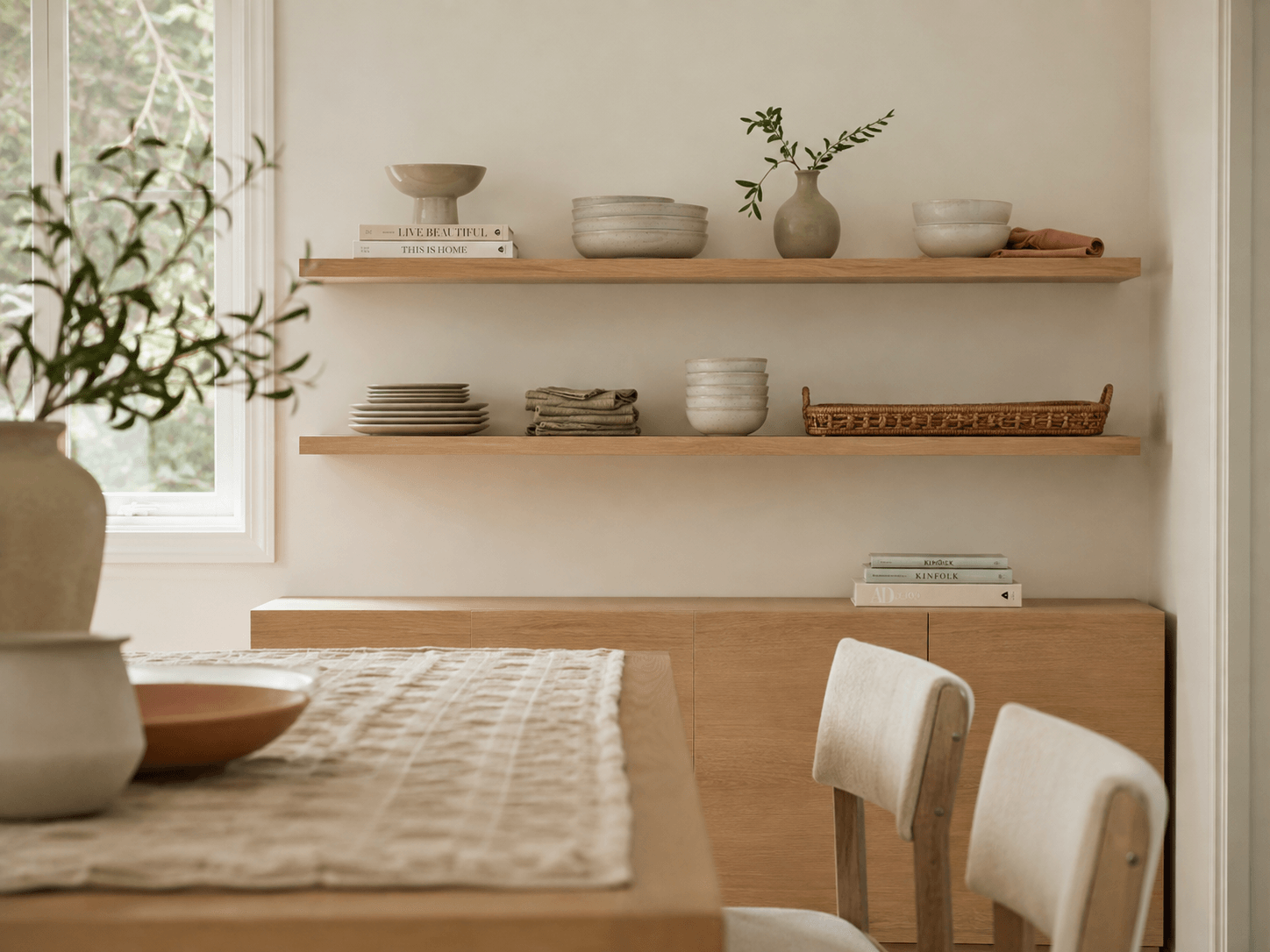
Most shelf guides recommend hanging floating shelves at eye level. For a dining room, that is often the wrong starting point. Shelves can sit too low, crowd the table, or be low enough that people hit their heads when they stand up.
Dining rooms have particular requirements because people pull out chairs, carry plates, reach across the table, and stand up while eating. A shelf that looks great in photos can become a daily annoyance if you don’t plan for real use.
This article outlines the checks to do before fitting shelves, then offers practical ideas for floating shelves in a dining room that are sized and positioned for real use, not just photos. The main takeaway: choose height, depth, and weight capacity based on how you use the room.
What to Check Before You Hang Floating Shelves in a Dining Room
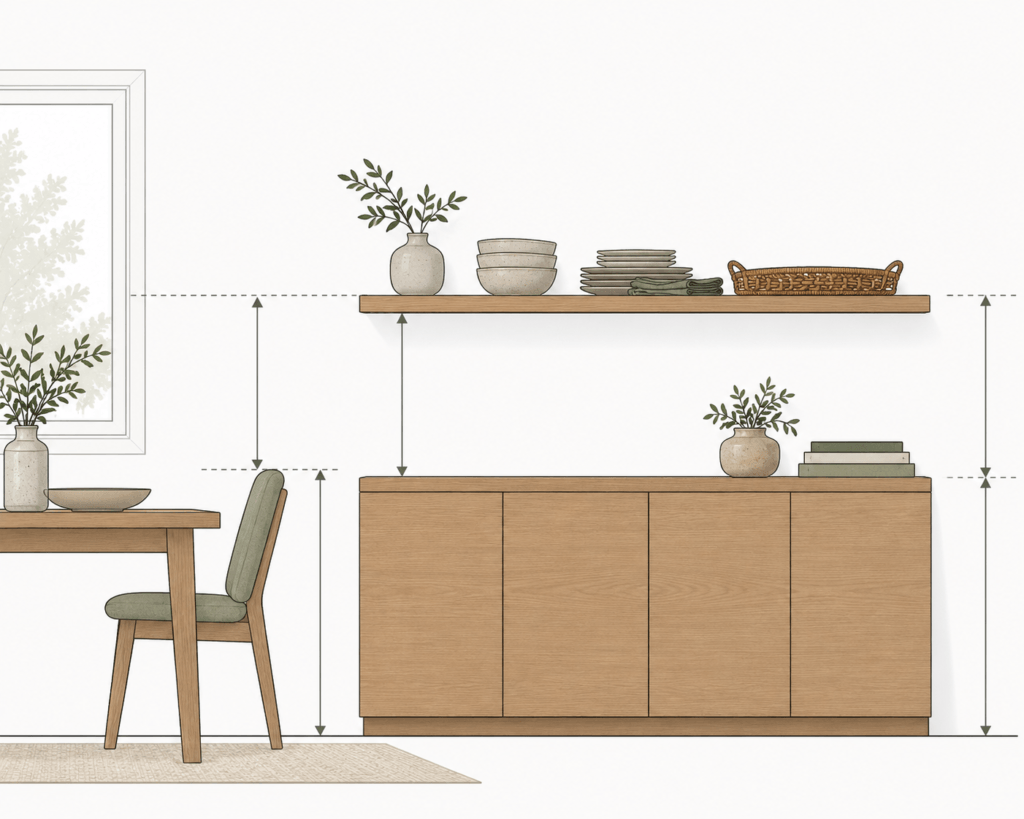
Before you choose a style, work out the three figures that really matter: clearance height, reach depth, and load path.
The clearance height should be at least 68 inches above the floor for the bottom of any shelf near a walkway or where chairs are pushed back; this is roughly 12 inches above average eye level and helps prevent adults from hitting their heads when they stand up quickly. However, if the shelf is above a buffet or sideboard and there is no foot traffic beneath it, you can reduce the height to between 60 and 64 inches without any risk of collisions.
A shelf designed for stacking plates or for picking up a serving bowl at mealtimes should be within easy reach of the shortest adult in the household, so that a step stool is not required. In most cases, this means that the top of the shelf should be below 72 inches for a person who is 5’2″ and below 78 inches for those who are taller; anything above that level is better suited to display purposes, which may be suitable for decorative reasons but is not appropriate for everyday use.
The shelves are supported by brackets secured into wall studs or by strong drywall anchors. In a dining room, they frequently carry a real weight, for example, the weight of stacked dishes, a stoneware pitcher or serving trays, whereas shelves in a home office do not. Make sure the bracket’s weight rating matches what you intend to store, not just what looks good in a photograph. A shelf rated at 15 pounds will sag or come loose if you place ceramic plates on it.
First, make sure these three points are correct; the rest of the advice assumes you’ve already addressed them. These three checks are the main takeaway before choosing any shelf style.
Floating Shelf Ideas for the Dining Room
1. One long shelf positioned above the sideboard
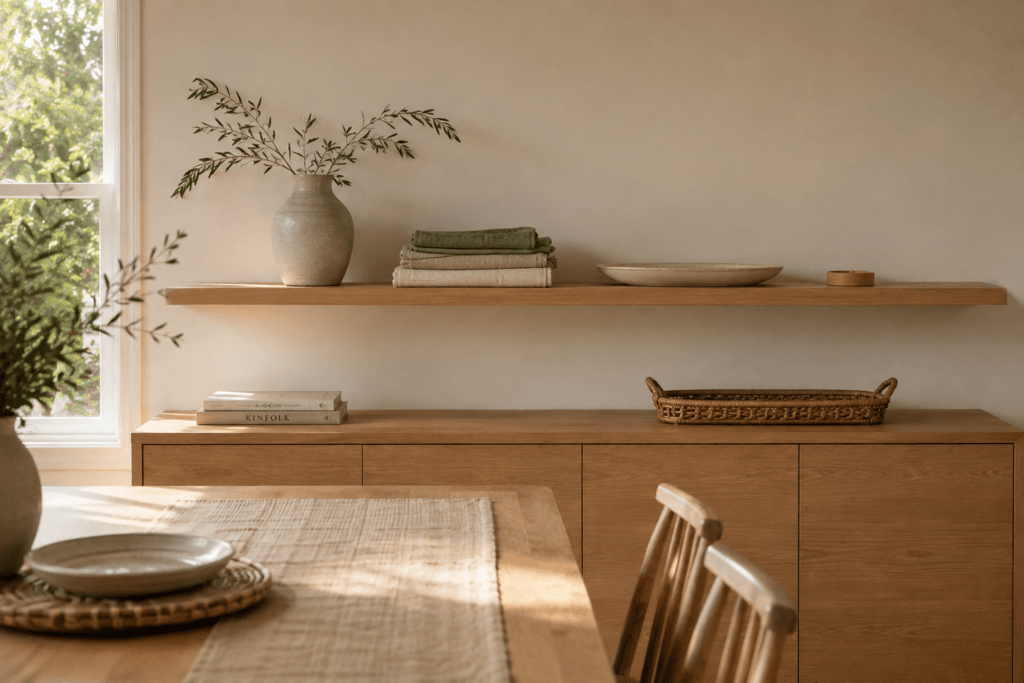
One shelf that runs the full length of your buffet or sideboard provides display space without crowding. Leave 8 to 10 inches between the shelf and the furniture underneath so you can open cabinet doors or lift lids easily. Use this shelf for items you use only occasionally, such as a stack of linen napkins, a vase, or serving platters for guests.
2. Shelves around the corners to make use of odd dead space
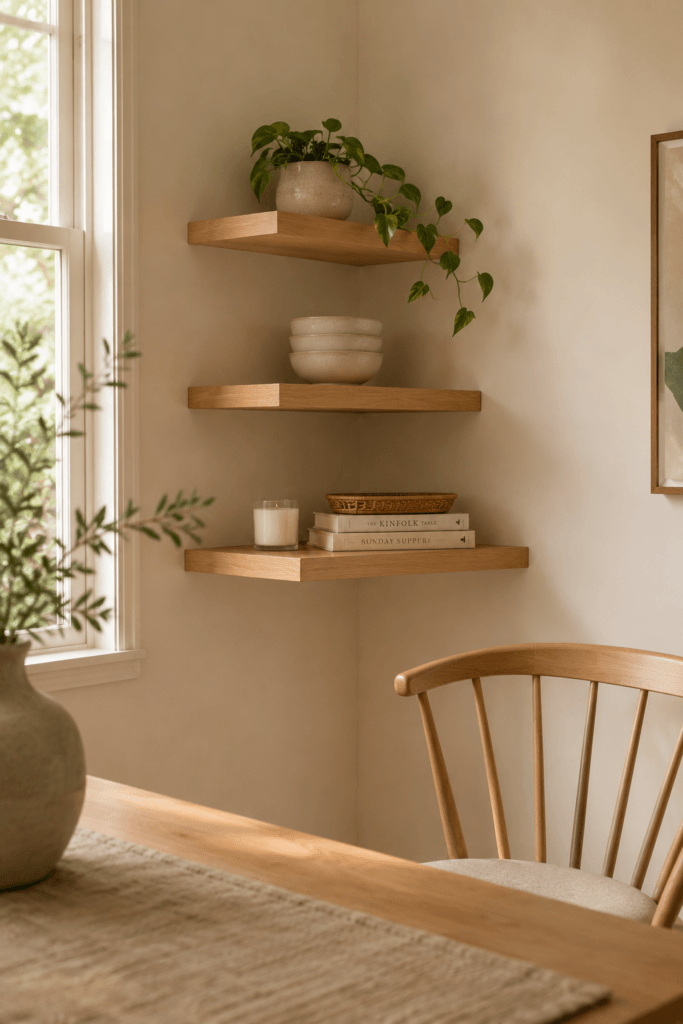
Dining rooms often have a corner by the table that’s too small for furniture but still obvious enough not to leave empty. By adding two or three corner shelves offset from each other, you can use that area without blocking the walking space. Position the lowest shelf above the height of the chair backs, typically between 38 and 42 inches, so the chairs won’t hit it when pushed back.
3. The shelves located on either side of a window or a mirror
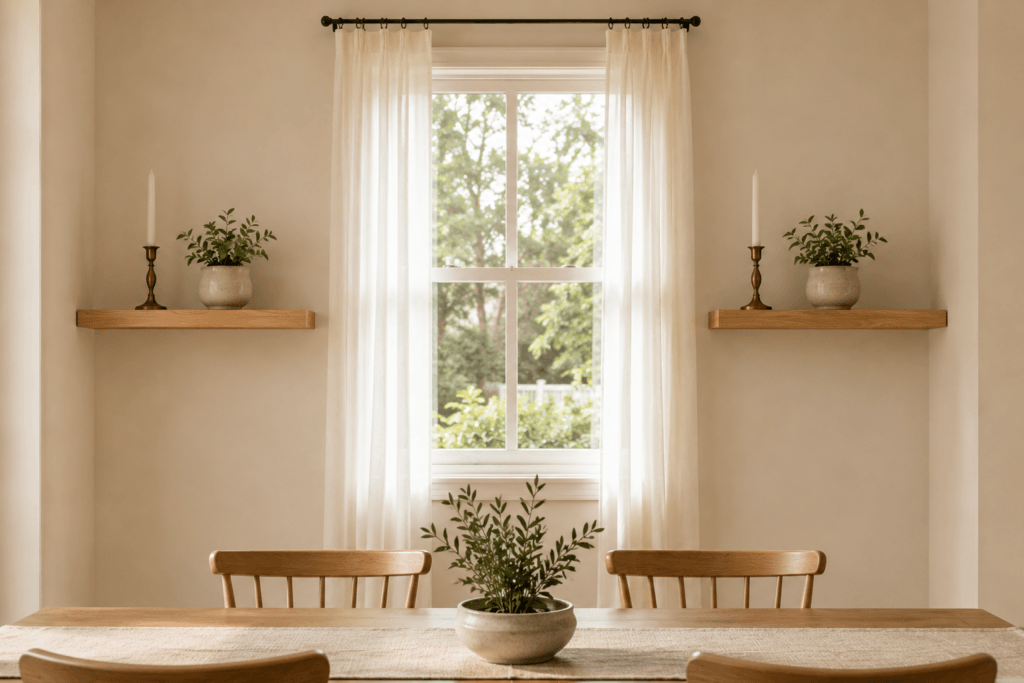
Placing identical shelves on either side of a dining room window creates symmetry without needing a full accent wall. Make sure both shelves are the same height and placed at least 6 inches from the window frame so you can move the curtains or blinds easily. This arrangement works well for candlesticks or small plants that get light from the window.
4. A low shelf for everyday china
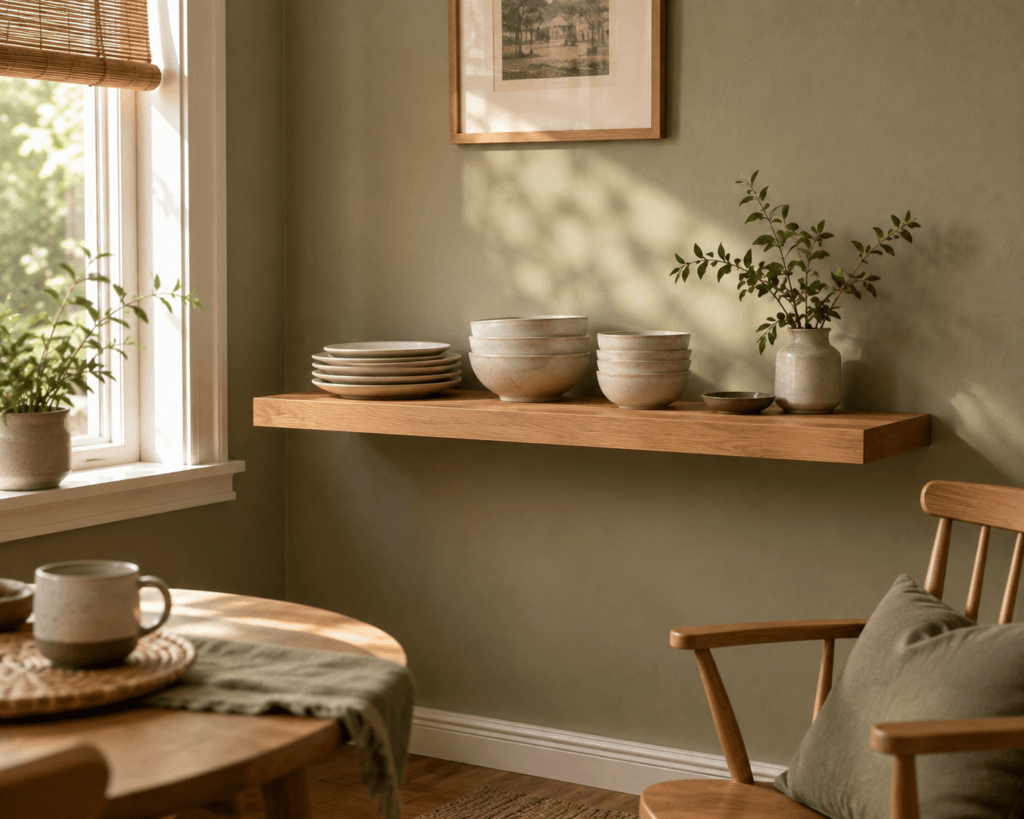
Using the same dishes each day, a shelf placed at 54 to 60 inches will keep them within easy reach, like open shelves in a kitchen, rather than acting as a display shelf. This is best for dining rooms that aren’t used as walkways, since the lower height could pose a tripping hazard in areas with heavy foot traffic.
5. Shelves made of thick timber for serving trays
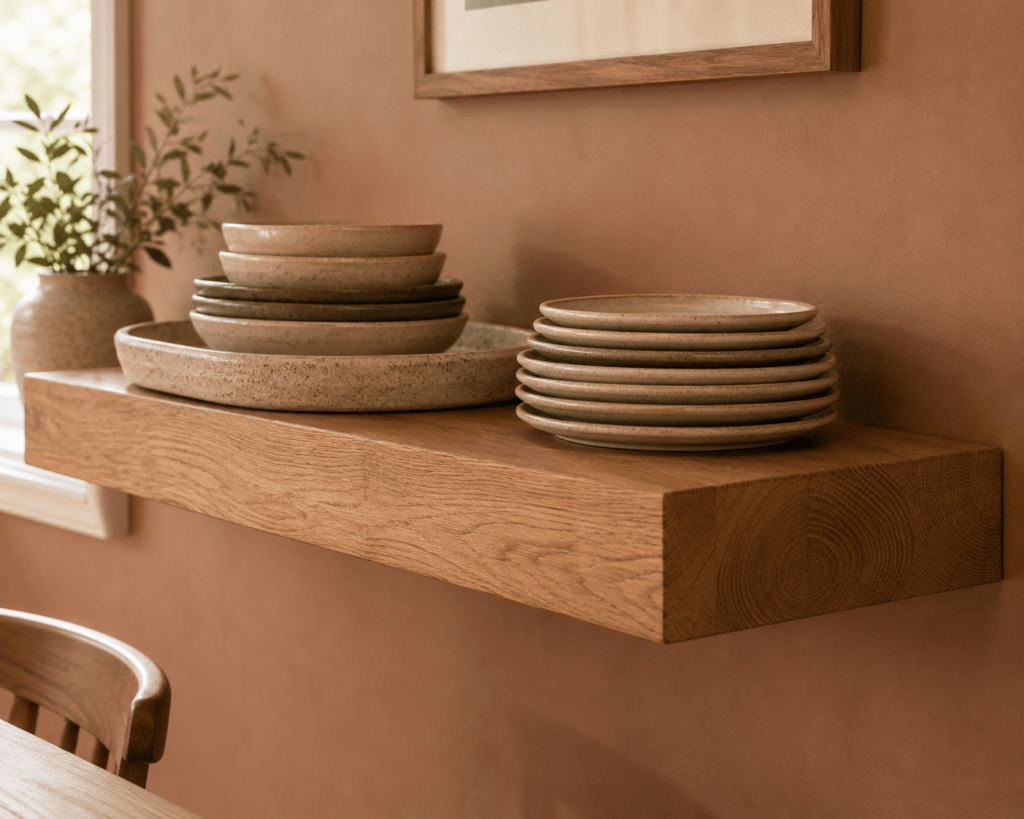
Standard floating shelves that are 1.5 inches thick can sag over time when serving trays and heavy platters are placed on them. A thicker shelf, ranging from 2.5 to 3 inches, fitted with internal steel rod supports, can carry the weight without visible brackets. The upgrade is worth it if the shelf’s main purpose is storage rather than styling.
6. A shelf above a built-in bench
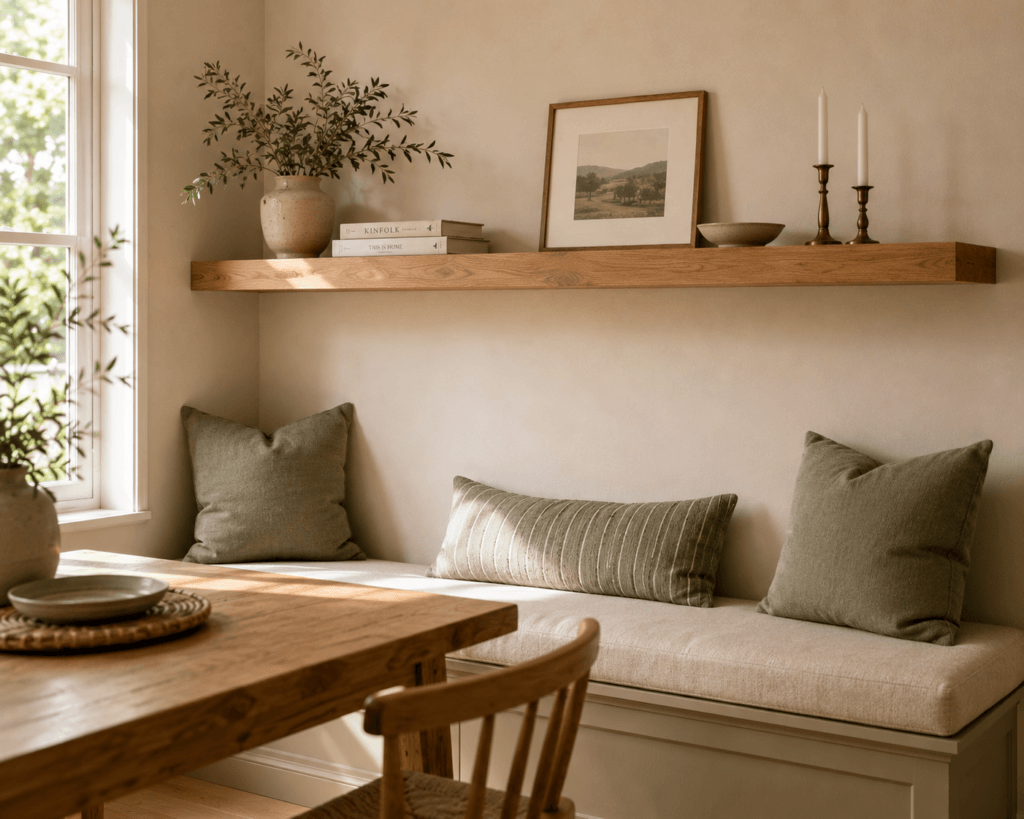
When you have a built-in bench or banquette in your dining area, a shelf above the seat back can serve as a spot to set things down without making the table look cluttered. The shelf should be at least 14 inches above the top of the seat back so people don’t hit their heads when leaning back after eating.
7. Staggered Shelves for a Gallery-Style Display
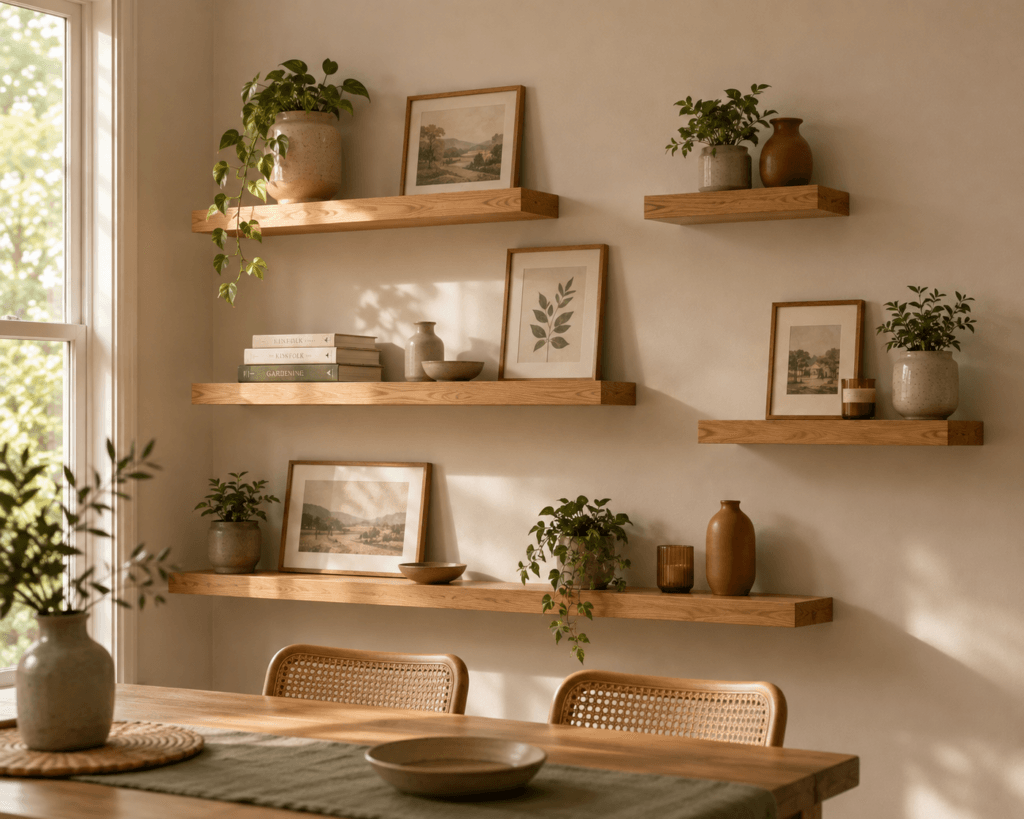
Use staggered shelves to set up a gallery-style display. Place shelves at different heights across the wall. This adds visual interest and lets you show off art, photos, or keepsakes. Vary the spacing and shelf lengths to keep the display fresh and unique.
If you use the dining room mainly for entertaining rather than everyday meals, shelves at varying heights will make the room look more interesting without feeling overly functional. Because these shelves aren’t meant for everyday use, you can be more flexible, but ensure the lowest shelf is over 68 inches high if it’s near a walkway.
FAQ
What height should floating shelves be in a dining room?
Where shelves are situated close to a walkway or behind chairs which are pushed back, the bottom edge should be at least 68 inches from the floor to avoid people hitting their heads; in the case of shelves that are placed directly above furniture with no foot traffic beneath them, for example, over a buffet, they can be lower, about 60 to 64 inches.
Can floating shelves safely hold everyday dishes?
Yes, but only if the brackets are rated for the actual weight of the stacked ceramic or stoneware, not just the shelf itself. Always refer to the manufacturer’s load rating and screw the shelf into the wall studs, not just the drywall, if it needs to hold everyday dishes.
What depth would you say is best for a floating shelf in a dining room?
Eight to ten inches is adequate for most purposes, including styling and light serving, without making the room feel crowded. In small dining areas where people walk close to the wall, use a shallower shelf, about 6 inches deep. Only make the shelf deeper—12 inches or more —if it’s meant to replace sideboard storage.
Should the floating shelves be placed either above or beside the dining table?
It is almost always better to choose beside. If anyone stands up suddenly, shelves situated directly above a dining table create both a visual and a physical hazard, and they also tend to be harder to arrange alongside a light fixture.
Wrapping Up
Floating shelves can be a good choice in a dining room, provided their height, depth, and weight capacity match how you actually use the space, not how it looks in photographs. The main takeaway: plan for real use first. When you’re renovating the rest of the room, look at more dining room suggestions on Ergontag for ideas regarding shelves, storage, and layouts that prioritize function.