
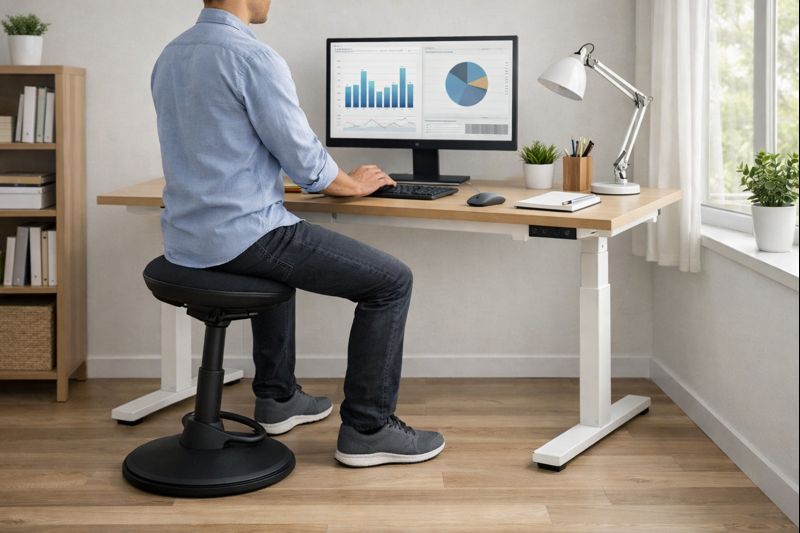
The popularity of standing desks has increased in recent years at home, in the office, and in the study. Lots of people transition to them to minimize long sitting hours and improve posture. But standing all day is hard, too. Legs begin to weary, feet ache, and attention flags as the hours pass. This is where stand-up desk stools are useful.
Traditional office chairs are intended for seated use, so they work well with standing desks. Too low and generally bad for posture when used with a high desk. Stand-up desk stools are different. They are sitting on posts, not a full chair.
These assist your body in the semi-standing position. They take pressure off the legs while keeping the spine in motion. They serve as an intermediate in desk ergonomics between sitting and standing. This guide explains exactly what stand-up desk stools are, why they exist, and how they contribute to a healthy, ergonomic desk setup — without selling you anything or stretching the truth.
Table of Contents
What Is a Stand-Up Desk Stool?
A stand-up desk stool is a specialized seat for standing or adjustable-height desks. It’s not designed to befit. It’s seated like an office chair. Instead, it encourages you to sit halfway and stand halfway in a body position commonly dubbed perching. This will relieve strain on your legs while giving you a more active, upright posture.
Stand-up desk stools are taller than traditional chairs and encourage a slight amount of motion. They get people to move from standing to resting, and stop desks from going down or attention wandering.
Simple Definition
A stand-up desk stool is a tall chair supporting perching, not deep sitting.
It’s not an office chair. It’s for use:
- Higher above the ground than a regular chair
- Generally, it does not have a backrest.
- It doesn’t constrict, but radoesn’trces you to stay open at the hips instead of bent.”
- It’s a ‘perching’ stool.” It’s not your fault; it’s just completely sitting down.
How Stand-Up Desk Stools Are Designed
By design, stand-up desk stools support dynamic sitting posture:
- Seat sling: rely upon the seat that tilts slightly ahead to allow your back to stay in a straight position
- No backrest (usually): This keeps the core muscles activating gently.”
- Adjustable in height: You can customize the stool to match your desk height
The key difference many competitors overlook is this: perching means not sitting. “Perching is very dynamic.” Your body’s engaged, and support’s the same time,” he says, whereas sitting mainly throws the burden on your lower back.
How do Stand-Up Desk Stools Support Desk Ergonomics?
Stand-up desk stools are designed to allow your body to relax more in balance with a standing working condition. Instead of encouraging you to sit or even stand all day, they keep your body active without leaving you feeling weary too soon.
Neutral Spine & Pelvic Position
The forward-tilting seat is one of the greatest ergonomic advantages. This subtle tilt rocks the pelvis forward slightly, which makes it easier for your spine to maintain its natural curves. With a straight spine, you put as little pressure on the lower back as when slouching in a chair or locking your knees when standing.
Keeping the pelvis open helps maintain spinal decompression during bowel movements and supports healthy posture during desk work.
Lower Body Engagement
Stand-up desk stools keep your body engaged, preventing you from slumping completely. Your core is engaged, and your legs help support some of your weight. It prevents the body from stiffening.
Because you’re not quite sitting, your posture changes as it normally would out of the chair. Tiny movements occur effortlessly, which can help to alleviate the tension of holding one position for too long.
Reduced Fatigue Compared to Standing All Day
Standing all day can cause sore feet, tired legs, and a lack of focus. A stool to perch on allows your legs to rest while keeping you upright. This balance works to minimize fatigue and makes long work sessions more bearable without harming posture.
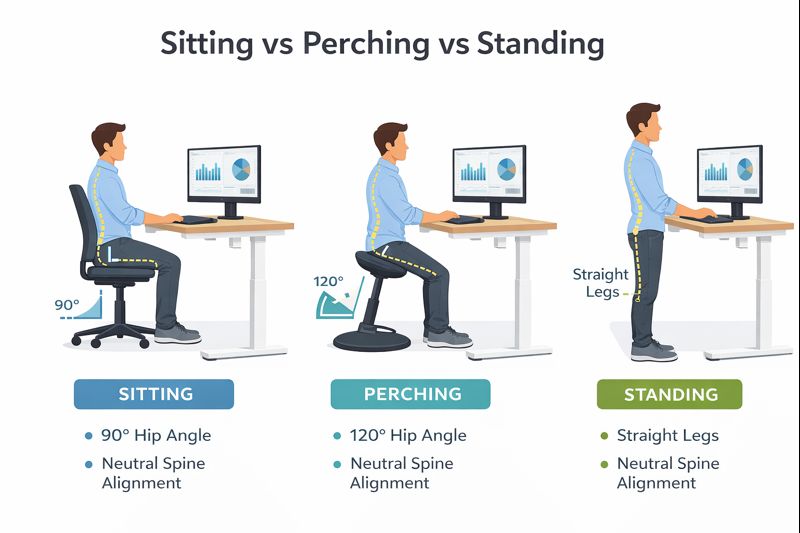
Sitting vs Perching vs Standing
Most people, when sitting at their desks, do so in one of three positions: sitting, perching, or standing. Each offers its own advantages and limitations. Knowing the differences helps you choose the healthiest option for long workdays.
Traditional Sitting (Office Chair)
Most will opt for the office chair. It is comfortable at first and has some body, making it supportive when fitted properly. But after a while, you get less active.
Pros:
- Feels relaxed and stable
- Back support when sitting upright
Cons:
- Encourages slouching over time
- Places more pressure upon the lower back
- May decrease blood circulation while being seated for extended periods
Problems typically arise from prolonged sitting, particularly when we maintain the same posture.
Perching (Stand-Up Desk Stool)
Perching is midway between standing and sitting. You support yourself more with the use of the stool, but your body remains straight.
When it works best:
- Short to medium work sessions
- Alternating between sitting and standing
Ideal duration:
- 20–40 minutes at a time
Perching activates muscles and relieves pressure on the legs and back.
Standing Only
Standing is dynamic, but it can have pitfalls when it’s misused.
Common mit’skes:
- Locking knees
- Leaning on one leg
Fatigue risks:
- Foot pain
- Leg and lower back tiredness
Feet that don’t get backed up don’t get achy.
Which Is Best for Long Workdays?
| Position | Best Use Case | Main Risk |
| Sitting | Focused tasks | Back strain if prolonged |
| Perching | Mixed desk work | Not for full-day use |
| Standing | Short active sessions | Leg and foot fatigue |
The best solution is to blend all three positions. Alternating your positioning not only helps you sit comfortably but also helps eliminate strain on hard surfaces.
Proper Posture When Using a Stand-Up Desk Stool
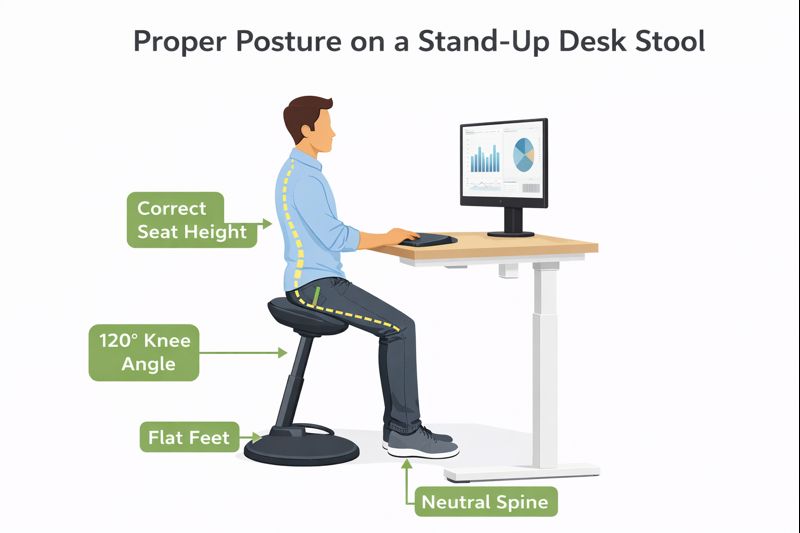
How to Properly Use a Stan:d-Up Desk Stool Maintain good posture to keep things comfortable and strain-free, and to allow the stool to do its proper job. If the posture’s off, it cuts into you.
Seat Height Setup (Critical)
The most important adjustment is for seat height. The stool should be adjusted so that your hips are slightly higher than your knees. It allows your pelvis to remain forwardly tilted and pushes it into the proper position with a new spine.
Your desk height has to match your stool height. When your arms are at rest on the desk, your elbows should have a natural bend of about 90 degrees. If the stool is too low, you will hunch down. If the seat is too high, you might feel wobbly in your legs.
Foot Placement & Balance
Keep both feet on the floor or on the fstool’s footrest. Closing the legs improves balance and relieves pressure from a single leg.
Keep your weight evenly distributed. Try not to favor one side. It’s great to be able to — however little you can manage — so make that happen, but your body should feel stable and relaxed, not clenched for dear life.
Desk & Monitor Alignment
The monitor should be at eye level, so you don’t have to bend your neck or look down. Your keyboard should be within reach so you can keep your elbows tucked in toward your body.
When the desk, stool, and screen are all level, your body stays upright with a lot less effort. The desk–stool is frequently overlooked, but it’s critical for comfort and good posture.
How Long Should You Use a Stand-Up Desk Stool?
Stand-up desk stools are useful, but not for all-day use. Using them for no more than the right amount of time will keep your body comfortable and safe.
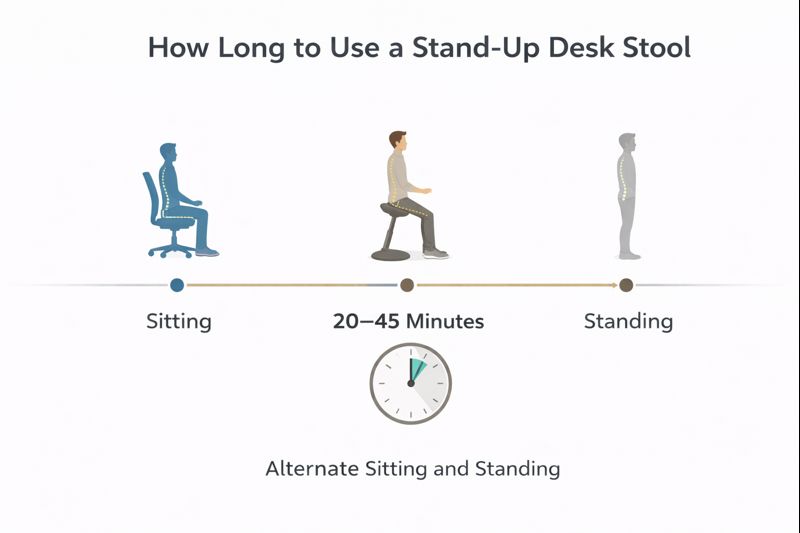
Most professionals agree on using a stand-up desk stool for brief time increments of 20 and 45 minutes. This allows your legs a respite from standing while also keeping your posture engaged. After that , stand or sit in a chair for a bit.”
It is important to change positions — the body does not like lying motionless for long periods. The transition between sitting, perching, and standing can reduce muscle fatigue and increase circulation.
Signs You May Be Overusing a Stool
Knee or leg discomfort
Feeling unsteady or tired
Lower back tightness
If you notice them, rest and change position. Listen to your body. The best stand-up desk stool is one of a rotation, not the only chair. So use it wisely to keep yourself comfortable, focused, and supported throughout the day.
Who Should Use a Stand-Up Desk Stool
A stand-up desk stool can be a big help — but it’s not for everyone. Unit’s standing who it works best for means you’re more likely to get the most from the experience, minimize discomfort, and use it in a way that makes sense.
Best For:
Standing desk users:
If you already have a standing desk (or riser), a stand-up desk stool integrates seamlessly into your workstation. It gives your legs a rest without requiring you to sit down fully.
Home offices:
Many employees who work from home switch tasks throughout the day. Short work sessions, emails, or quick focus tasks are ideal uses for a desk stool.
Light movement workflows:
If your work leaves room for small motions — stretching, leaning, or standing up frequently — a stool is in keeping with activity. It enables me to stay sharp without being stiff.
Not Ideal For:
Long static sitting:
Stand-up desk stools aren’t designed for hours of sitting. If your work is more of the long, concentrated sitter type, then a real office chair might be preferable.
Certain knee or balance issues:
The downside is that these types of stools require a little balance and support from your legs, which may be uncomfortable for some people. This is not medical advice, but sometimes safety and comfort should take precedence.
The key is honesty, not hype. The best stand-up desk stool for you is one that corresponds with your work style and bodily needs.
Stand-Up Desk Stool vs Ergonomic Chair
Stand-up desk stools and ergonomic chairs do two very different things, but understanding how one translates to the other can help you make better decisions when designing your ideal workstation.
When Stools Replace Chairs
A stand-up desk stool may serve as a substitute for a regular chair on shorter projects or more active workflows. For instance, if you spend most of the day at a standing desk, sitting tall on a stool lets you rest your legs without fully sitting down. It promotes a subtle forward tilt and an active posture while maintaining a neutral spine throughout the day, minimizing back pain and preventing fluctuations in your blood pressure.
When Stools Complement Chairs
In many arrangements, a stool is used alongside an ergonomic chair. You can switch between sitting back in a supportive chair and perching on a stool. This rotation eliminates strain from the neck area and increases blood flow in the head (which further diminishes cell activation). For example, you could use an ergonomic chair for concentrated work at a desk, then switch to a stool for brief tasks or calls.
For a deeper look at how desk ergonomics affects posture and comfort, check out our desk setup ergonomics guide.
Stools and chairs combined bring a dynamic workspace where posture, comfort, and productivity come in harmony. This difference is frequently overlooked, but it can enhance your desk ergonomics and well-being.
Common Mistakes When Using Stand-Up Desk Stools
It’s an active seat that comes with a stand-up desk to keep you moving all day. But if you use it wrong, you’ll feel pain or strain. If you avoid these common problems, you will reap the benefits without any issues.
Using It Like a Normal Chair
Stand-up desk stool. Ignoring your stand-up desk stool. The common mistake is to use a stand-up desk stool as if it were any other chair. These stools are intended for perching, not full-on sitting. So long periods of time in a full sitting position take all the benefits out of that posture and, after a while, can cause damage to your knees, hips, or lower back.
Wrong Desk Height
A stool with a desk that is too high or too low is another common mistake. That’s important because the height of your desk doesn’t suit the stool, and your shoulders and neck could end up in awkward positions that strain and tire you. Always make sure the stool feels fine. Also, adjust it so your elbows are close to 90 degrees, and the monitor is at eye level.
Explore how chair dimensions impact your seating comfort in this detailed guide on Desk Chair Dimensions Explained: Seat Height, Depth, and Ergonomic Fit.
Using It All Day
[Some people] assume they can sit on a stool all day without getting up. This is incorrect. Despite being less tiring than standing, prolonged sitting on a stool can strain the knees, shins, and lower back. Sit or stand in a perched position in a chair throughout the day.
With these mistakes out of the way, you can use a stand-up desk stool both safely and comfortably. A properly set up desk and a conscious rotation keep you aligned, minimize strain, and ensure your desk ergonomics stay effective.
Frequently Asked Questions (FAQ)
Here are some common questions about stand-up desk stools and how they fit into a healthy desk setup.
Q1: Are standing desk stools good for your back?
Yes, done correctly, it does in fact support a neutrally aligned spine by promoting forward tilt and an active position. This may help reduce lower back strain from prolonged standing.
Q2: Is it okay to sit all day on a standing desk stool?
No. These are stools for perching, not lounging. Wearing them all day can put stress on your knees, hips, and lower back. Best takes a break, standing up and using a good ergonomic chair.
Q3: Are stand-up desk stools substitutes for office chairs?
Sometimes, but not always. They can substitute for a chair in short tasks or active work areas, but when it comes to long, focused work efforts, place your bets on an office desk chair. For many users, the best results come from using both.
Q4: Are they beginner-friendly?
Yes, with guidance. Begin with short sessions to make sure your desk is at the right height, your feet are properly settled, and you’re balanced. As you gradually get to the perching position, you can use it more often.
Tip: The secret to using this is rotation and mindful posture. Stools are best used as part of a healthy desk setup, rather than as a total replacement for traditional office chairs.
Final Thoughts: Are Stand-Up Desk Stools Worth Using?
Stand-up desk stools are valuable tools for improving desk ergonomics. Still, they’re not all created equally. They are great for perching as you go back and forth between brief work sessions and light movement workflows, or when using a standing desk.
When you use them properly, they help promote a neutral spine, activated posture, and less tired legs over standing all day. But if you sit on the stool all day, your knees, hips, or lower back may get achy.
The trick is balance: Swap all three and sit in an ergonomic chair, stand, or perch on a stool. This rotation helps promote long-term comfort, improved posture, and the health of the desk.
Correctly, standing desks offer ergonomic advantages without feeling strained, which is why standing desk stools are a savvy choice for the right users and situations.
air your stool use with breaks and height adjustments using the standard desk height ergonomics guide to optimize comfort