
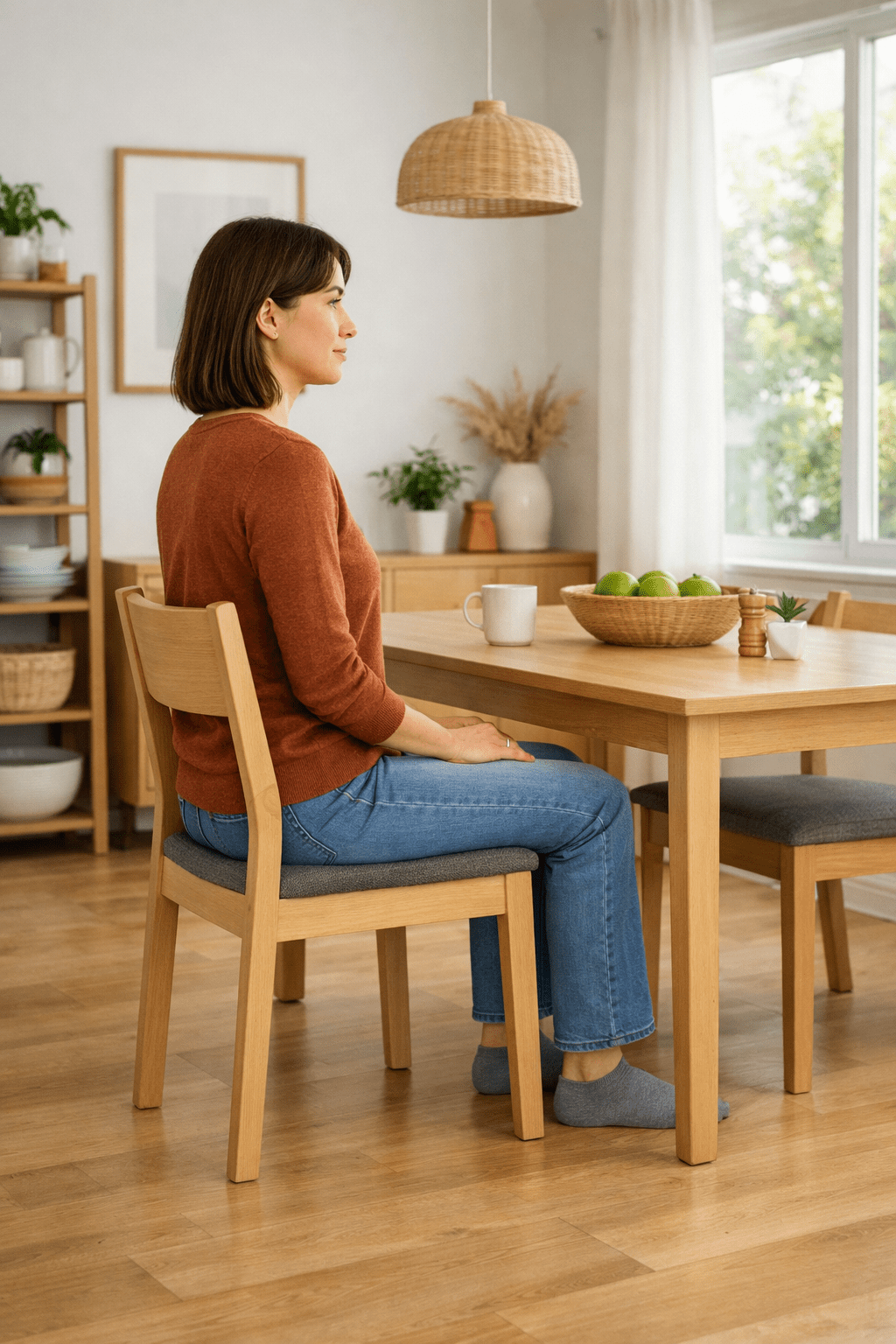
No longer only for eating, dining tables serve as spaces where everyone comes together. So many of us spend a portion of our days working, studying, or socializing for long hours in dining chairs. The thing is, most dining chairs were never intended for long periods of sitting, which can cause back, neck, and posture pain. Low seat height with no lumbar support, combined with hard surfaces that you don’t even remember hitting your backside hours after the fact. In this guide, you’ll discover why dining chair ergonomics are important and how some easy adjustments will have you sitting more comfortably at the table in no time, looking after your posture.
Table of Contents
What Is Dining Chair Ergonomics?
Dining chair ergonomics refers to how well a dining chair supports your body while sitting. It focuses on seat height, seat depth, back support, and overall comfort. Even though dining chairs are mainly designed for eating, their shape and size still affect posture, especially when you sit for extended periods.
Meaning of Ergonomics in Seating
Ergonomics of seating is the art and science of designing and using chairs so that the body fits in them. An ergonomic chair supports the natural curve of your spine while allowing your feet to rest flat on the floor and also keeping your shoulders relaxed. On the other hand, Non-ergonomic chairs are generally straight-backed; they have fixed heights and hard seats (which force you to sit in unnatural and uncomfortable positions). This may cause discomfort and bad posture over time.
Why Dining Chairs Are Often Overlooked
Dining chairs are selected based on style, size, or how well they go with the table — not very often for their comfort. Most of us think about dining chairs only in terms of a quick sit during mealtimes, so head and lumbar support are rarely a concern. But this presumption is undoubtedly less accurate in today’s world. As more people sit at the table to work or study, poorly aligned dining chairs can quietly cause back and neck problems. The more one knows about ergonomics, the closer pain-free design and comfortable everyday use become.
Why Dining Chair Ergonomics Matters More Than You Think
Many dining chairs are built for short meals, not extended sitting. When a chair lacks proper height or back support, it forces the body into awkward positions. Over time, this can lead to lower back discomfort, stiff shoulders, and poor posture.
Even minor issues, such as a seat that is too high or too deep, can increase strain on the lower back and legs. Paying attention to fundamental ergonomic factors can help reduce discomfort during longer meals, work-from-home sessions, or family gatherings.
Uncomfortable ergonomics in a dining chair also leads to muscle fatigue. “Hard seats, wrong seat height, and straight backrests make the body work to remain upright. This added effort will make you feel uncomfortably sore after sitting for long hours.
Who Is Most Affected?
- Remote workers who work at dining tables are particularly vulnerable as dining chairs aren’t suitable for long hours of working.
- The dining table is also homework or screen time for children and teens, and bad seating can influence posture during the critical years of growth.
- Elderly individuals suffering from a lack of support may have more joint stiffness and back aches.
Real-life cases like these illustrate how dining chair ergonomics need to have a place in today’s home.
Key Ergonomic Features of a Good Dining Chair
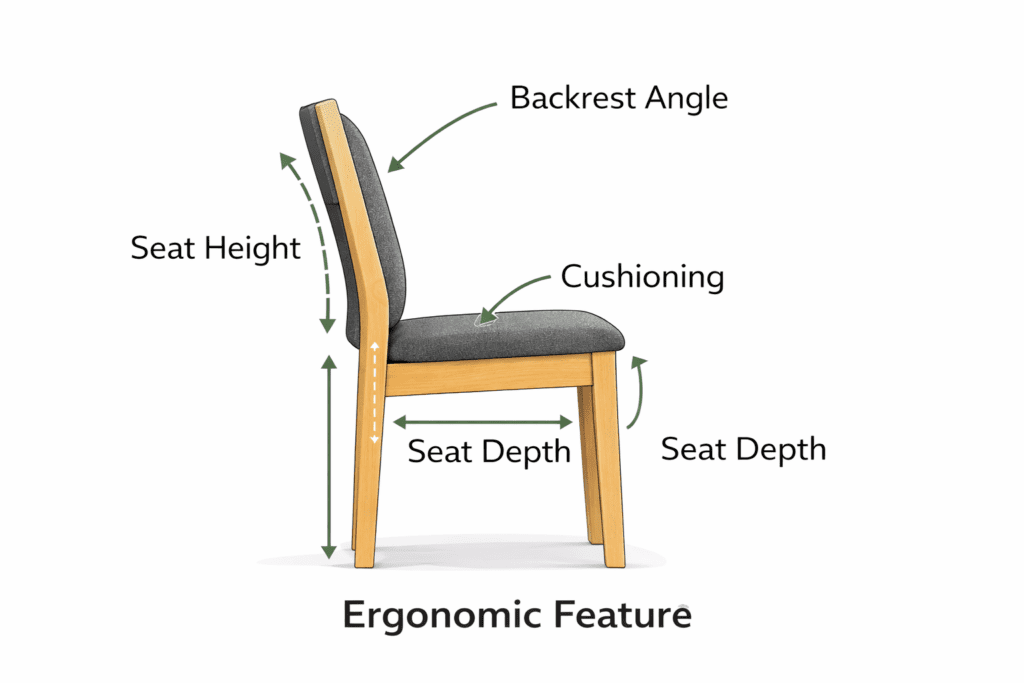
A great side dining chair should complement your existing furniture as well as further instances of kitchen chairs. It should fit the body comfortably as it whiles away meals, work, or lengthy conversations at the table. Knowing some of the fundamental ergonomic factors in a good dining chair can help you choose, or even hack together, a dining room solution that’s easy on the posture and fine with all-day sitting — without becoming bogged down by brand or product.
Seat Height (Most Important)
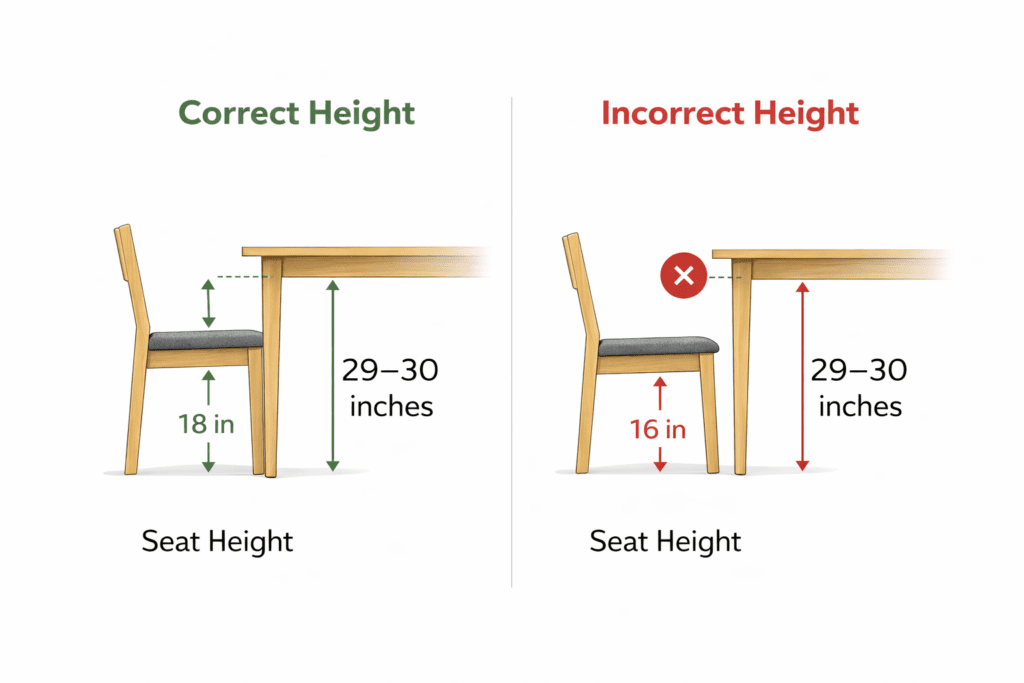
The seat, though, is what likely impacts the comfort of a dining chair most. Typically, the ideal seat height for a dining chair is 17 to 19 inches (43–48 cm) from the floor. This lets you plant your feet firmly on the ground but also keep your knees bent at a natural angle.
The seat height must also be proportional to the table height. If the chair is too low, the shoulders lift and pull on the neck. Too high, and pressure builds up under the thighs, cutting off circulation. An ergonomic design also makes it easy for your elbows to be at table height without hunching forward.
Seat Depth & Width
The bench seat also determines depth and how well the thighs are supported. You’ll know that a dining chair is deep enough if it supports most of your thigh while leaving a small gap (around two to three fingers) behind the backs of your knees. This ensures that there is no pressure against the blood vessels and nerves at the back of your legs.
The distance between the seats and back should be such that legs can slide freely forward and hips will not be forced out of line. If seats are too narrow, you can’t get comfortable; if they’re too wide, you don’t feel held in place. Slightly puffy width helps increase stable and relaxed sitting.
Backrest Height & Angle
Backrest design influences posture directly. An upright backrest sits up straight so you can eat, read, play, or enjoy company and food. The slightly reclined backrests provide a better sitting experience for hours.
Lower back support is critical, even for dining chairs. A full backrest isn’t always crucial, but a little curve in the lower portion helps.to keep your spine aligned, bigger shape sigh. Higher backrests allow more support to the mid-back, without pushing the shoulders forward.
Cushioning & Materials
Firm, but not luxurious or blunt-based cushioning. Very soft seats might feel nice at first, but when they’re too soft, you sink right in , and your posture is terrible. The firm filling offers more support and is suitable for distributing the weight of larger, long-term use.
Increases air circulation and keeps the Heat away while making it possible to sit longer. Seats with fabric or cushion can provide much more ventilation than hard, non-breathable surfaces that may cause you to sweat. Ideal for long-duration gaming.
Proper Sitting Posture on a Dining Chair
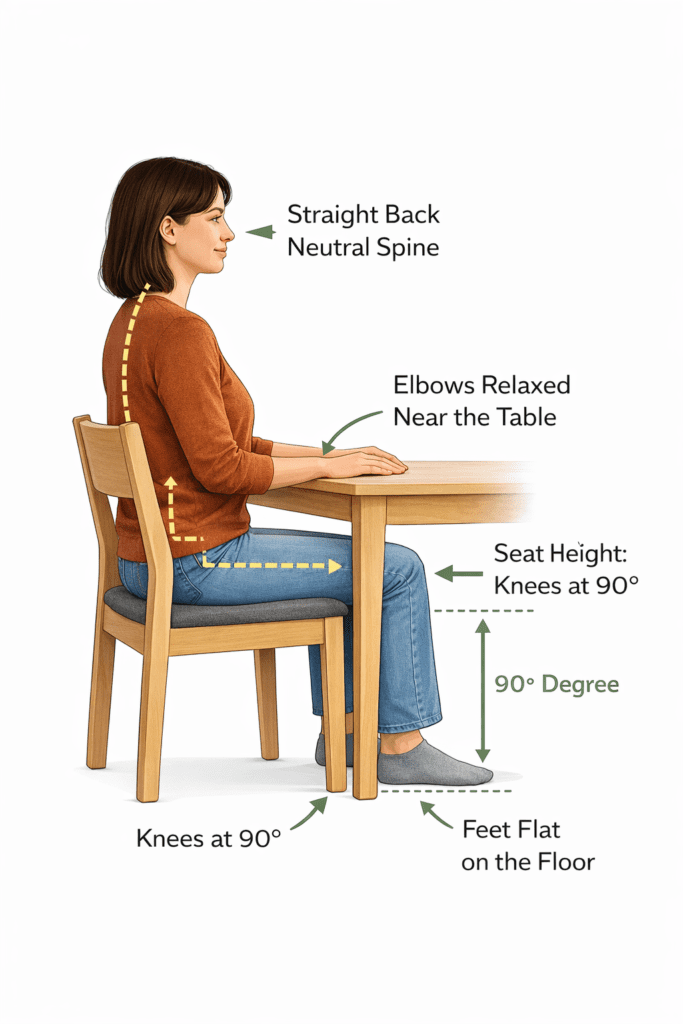
Proper posture on a dining chair starts with sitting fully back on the seat, with your feet flat on the floor. Your knees should be level with or slightly lower than your hips. Keep your back upright but relaxed, not stiff or forced.
If the chair has a backrest, use it for light support instead of leaning forward for long periods. Avoid crossing your legs for an extended time, as this can affect balance and posture.
Back alignment is key. Lean against the backrest, avoiding rigid support of the spine. The shoulders should remain down and back, not rounded forward. This was reducing the bad habit of slouching, even without strong lumbar support.
Maintain proper table distance. Don’t perch on the front edge; you shouldn’t lean forward, but also shouldn’t feel cramped. When placing them on a table, your elbows should rest easily.
Common Posture Mistakes at the Dining Table
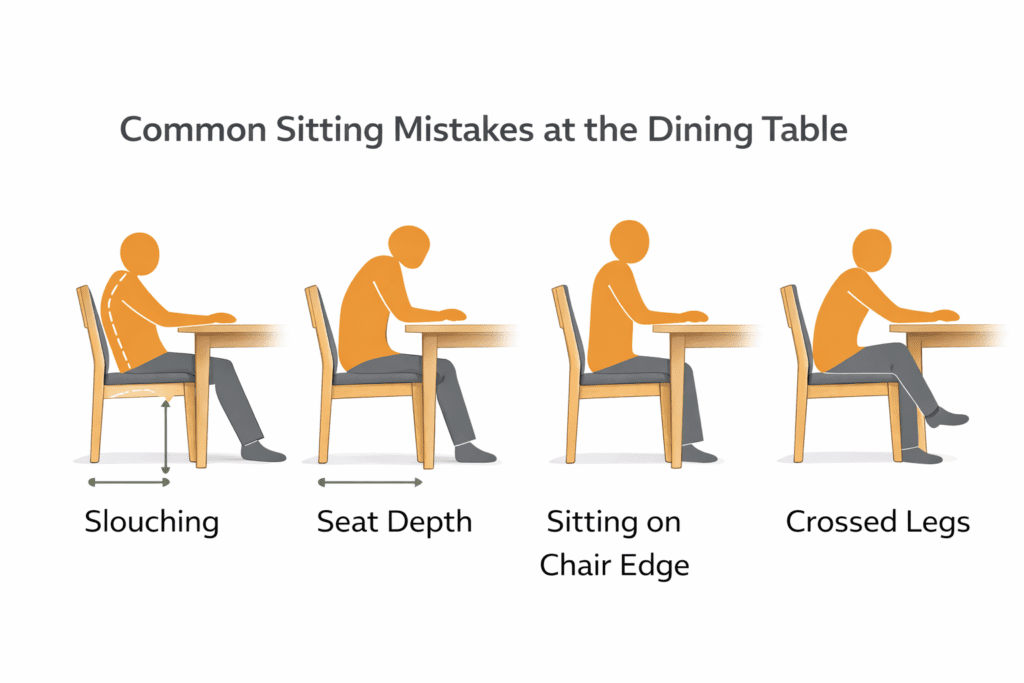
- It puts an added burden on the neck and upper back.
- The edge of the chair provides no back support and can lead to fatigue.
- When we slouch (be it from bad habits or not sitting/standing well), the natural curve of the spine is effectively flattened.
Ergonomic Dining Chair vs Regular Dining Chair
Ergonomic and standard dining chairs can appear like close relatives, but there is a difference in their design and comfort — it becomes evident when you sit on one for an extended period of time. Knowing such differences would provide members a good starting point for selecting seats, without having to look through the eyes of product marketing.
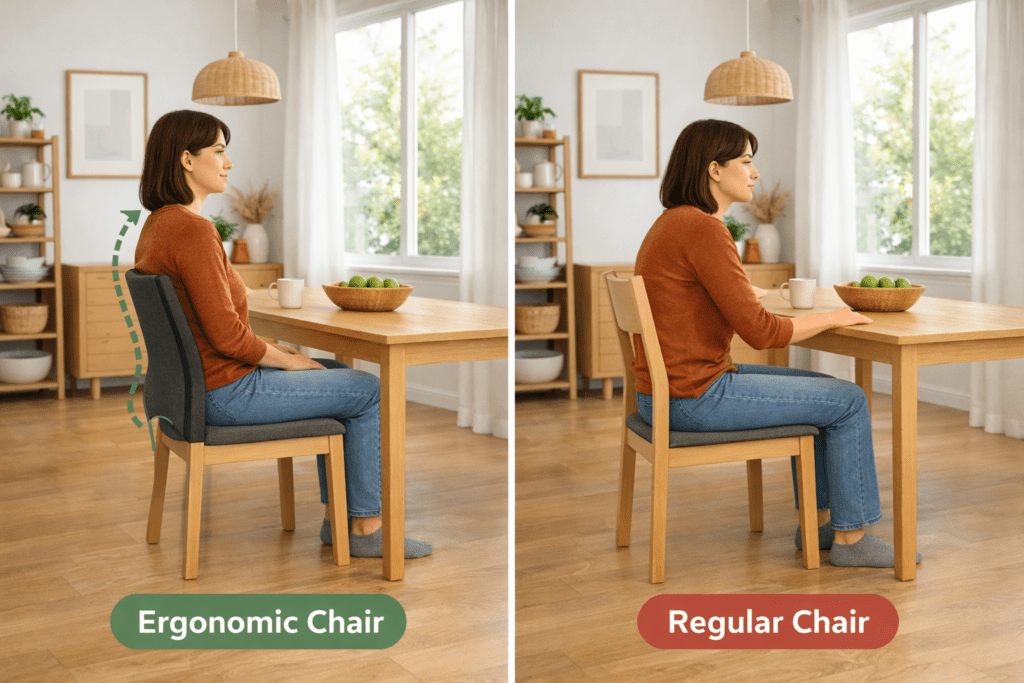
It’s all about the design discrepancies. Ergonomic kitchen chairs are curved and shaped to promote natural body alignment with a contoured back, supportive seat depth, and balanced seat height. The conventional dining chairs usually have straight backrests and fixed dimensions that are more about visual aesthetics than your comfort, in general.
Long-term comfort is where ergonomic chairs make their mark. Standard dining chairs might not feel bad for short breaks, but extended seating also results in rigidity and pressure points. Ergonomically shaped chair lends itself to more comfort for more prolonged use, such as work or study at the table.
Posture impact also varies. Ergonomic dining chairs Promote Sitting Posture – Modern style allows our dining chairs to fit fine lines and smooth curves that follow the body’s Shape For High-Efficiency Contouring Functions. Banana Leaf Dining Chair Ergonomic Design Back Cover Helps Us Resist Slumping By Providing Support to Your Lower Back. Non-ergonomic chairs may require the repeated user to engage conscious effort to sit up correctly, due to the long-term habituation of slouching down on regular chairs.
Comparison Table: Ergonomic vs Regular Dining Chair
| Feature | Ergonomic Dining Chair | Regular Dining Chair |
| Design Focus | Body support & alignment | Style & aesthetics |
| Comfort Duration | Suitable for long sitting | Best for short meals |
| Posture Support | Encourages neutral posture | Minimal posture support |
| Seat Design | Contoured & balanced | Flat and fixed |
This neutral comparison highlights why ergonomic dining chairs are better suited for modern, longer dining table use, while regular chairs remain adequate for brief sitting.
How to Choose an Ergonomic Dining Chair for Your Home
Selecting an ergonomic dining chair for your home is more about what you need, not the latest trends. The perfect model supports a comfortable time at the meal and also suits modern life, where tables can be used not just to eat but also as an area for work, studying, and fun family time.
Body height considerations come first. Sitting so that feet can lie flat, and knees are at hip height or a little lower. If the chair’s too high, it can create pressure behind the thighs; if it’s too low, it can lead to strain in your lower back. Always think about body fit, not average chair size.
It is also essential to match the table height. There is a range of standard heights for most dining tables, but chairs need to maintain space between your thighs and the tabletop. Try to find a happy medium that doesn’t constrain you and also prevents you from waving your arms around too much or shrugging.
How space is used and where a room is located means more than many people might think. Chubby chairs can be supportive, but they dominate little dining areas. Slick, properly shaped ergonomic chairs don’t take up much space but provide comfort without being a traffic jam.
Your use frequency is the determining factor. If the chair in question is one you will be using for long meals at your dining room table, you do not want comfortable upholstery and good support to be a luxury item.
For Eating Only vs Multi-Purpose Use
If it is simply for dining, basic ergonomic considerations — like appropriate seat height and a little bit of lower back support — are sufficient. For dining plus work or study, something with stronger back support and an even seating surface that tends to facilitate an upright posture during long stints. This use-case methodology guides you through the decision-making so you don’t overbuy.
Dining Chair Ergonomics for Different Users
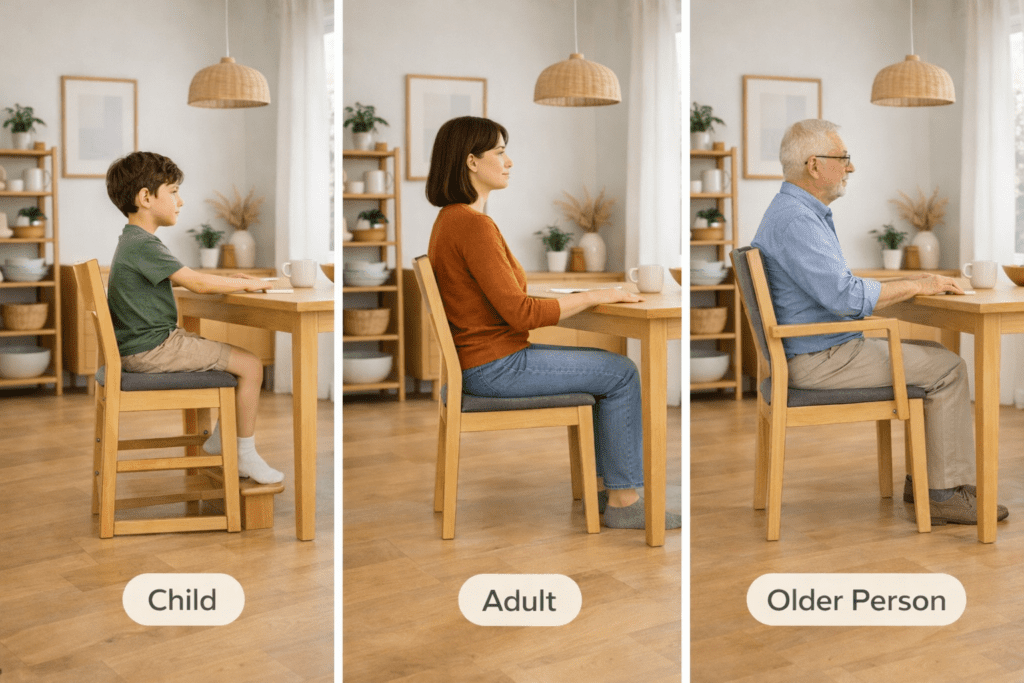
Ergonomics for eating chairs isn’t one-size-fits-all. User age, somatic constitution, and kinesthetic needs influence how the chair should support the user. A person-focused choice enhances comfort, protection, and long-term posture.
For Children
Children are still-growing bodies, so good seating is even more critical. A kitchen chair must enable them to touch their feet flat on the floor or a firm footrest. When their feet dangle, children often fidget, slouch, or sit on the edge of the chair, creating bad posture habits.
Seat height and depth should complement the child’s dimensions, so that their back can rest against the chair back without pressure at the back of the knees. Safety is also an obvious concern — and here chairs need to be stable, sturdy, and not feature sharp edges. Excellent ergonomic support early on ensures good sitting habits throughout adulthood.
For Adults & Seniors
Adults and older people usually require a little more reinforcement because of joint stiffness, decreased flexibility, or preexisting back pain. On the other hand, a dining chair with back support can keep you sitting upright and discourage lower-back pain. For seniors, the cushioning should be firm enough to support your body but soft enough to relieve pressure in the hips and joints.
The height of the seat is paramount, as “low chairs make us rise with difficulty and put stress on our knees.” Ergonomic Dining Chairs: The dining chairs with good design will help you sit more comfortably and longer, making an ideal task chair for adults to work long hours without a backache.
Common Dining Chair Ergonomics Mistakes to Avoid
A lot of people feel uncomfortable at the table, not because they’re there too long, but because they were dumb at the time when choosing the chair. By avoiding these common mistakes, one can make significant inroads into improved comfort and posture for the long term.
The leading cause of such fit failures is buying style over support. The back support may not correctly fill the stall, and, perhaps most importantly, the chair doesn’t let you adjust your seat height. A chair that is aesthetically pleasing but pushes you into a slouch or will make you constantly lean forward can cause back and neck strain over time. Never put design before your comfort.
Another common problem would be stepping over the table height. An improperly sized chair will produce uncomfortable arm and shoulder placement. The result is hunched shoulders, lower back rounding, and twisted spine — particularly for long dining or work sessions.
Many of us also take it for granted that hard chairs are okay, particularly during short meals. In fact, extra-hard seats put more pressure on the hips and tailbone. In time, there is a pain that develops, which causes an unsatisfactory sitting position, for example, weight shifting or sitting on the edge of the chair.
[Avoid making these experience-based mistakes in your dining area, and you can keep it comfortable and posture-friendly without overthinking the propaganda.]
FAQs About Dining Chair Ergonomics
Are chairs for dining ever ergonomic at all?
Yes, dining chairs do need to support some aspects of ergonomics, even if they aren’t considered “ergonomic.” An excellent dining chair should support your lower back and provide a space for your feet to rest flat on the floor while making sure you maintain an ideal place in which to slouch towards food. Now that dining tables double as desks and study halls, ergonomics matter more than ever.
What is the standard height for a dining chair?
Perfect Dining Chair Height : Typical dining chair seat height ranges from 17 to 19 inches from the floor. This height is ideal with a regular-size dining table, and your knees are bent at the right angle, and your feet stay flat on the floor! The right height takes weight off the thighs and lower back.
Do dining chairs cause back pain?
Indeed, poorly designed dining room chairs can cause back pain. Backless chairs, low seat heights, and hard surfaces can force poor posture. This can put long-term strain on the lower back, neck, and shoulders if you sit for too long.
What’s the longest you should sit in a dining chair?
The general idea is to avoid sitting for more than 30–60 minutes at a time without changing position so that your joints and muscles don’t freeze up. If you’ve taken to using your dining chair for work or study, taking frequent breaks and stretching during the day can help minimize stiffness and pain.
Are cushioned dining chairs better for your body posture-wise?
Padding on the chair can give some comfort, but also a position for balancing. You want medium-firm cushioning, which supports your hips without you sinking too far. If the cushions are too soft, they will feel comfortable in the beginning, but can this result in poor spine alignment with regular use?
Final Thoughts: Are Ergonomic Dining Chairs Worth It?
Good ergonomic dining chairs are a wise purchase anytime you sit at the table for more than an hour (be it working, eating, or pursuing your studies). They emphasize comfort and posture support rather than simply looking good, making it easier to prevent back and neck pain over the long haul. Yes, style is important — but your long-term sitting health should inform your decision. You can make an informed decision that will help keep your body comfortable, support good posture, and fit seamlessly into your home décor when you know what the capabilities are and how to use them effectively.
More guides you should like: