
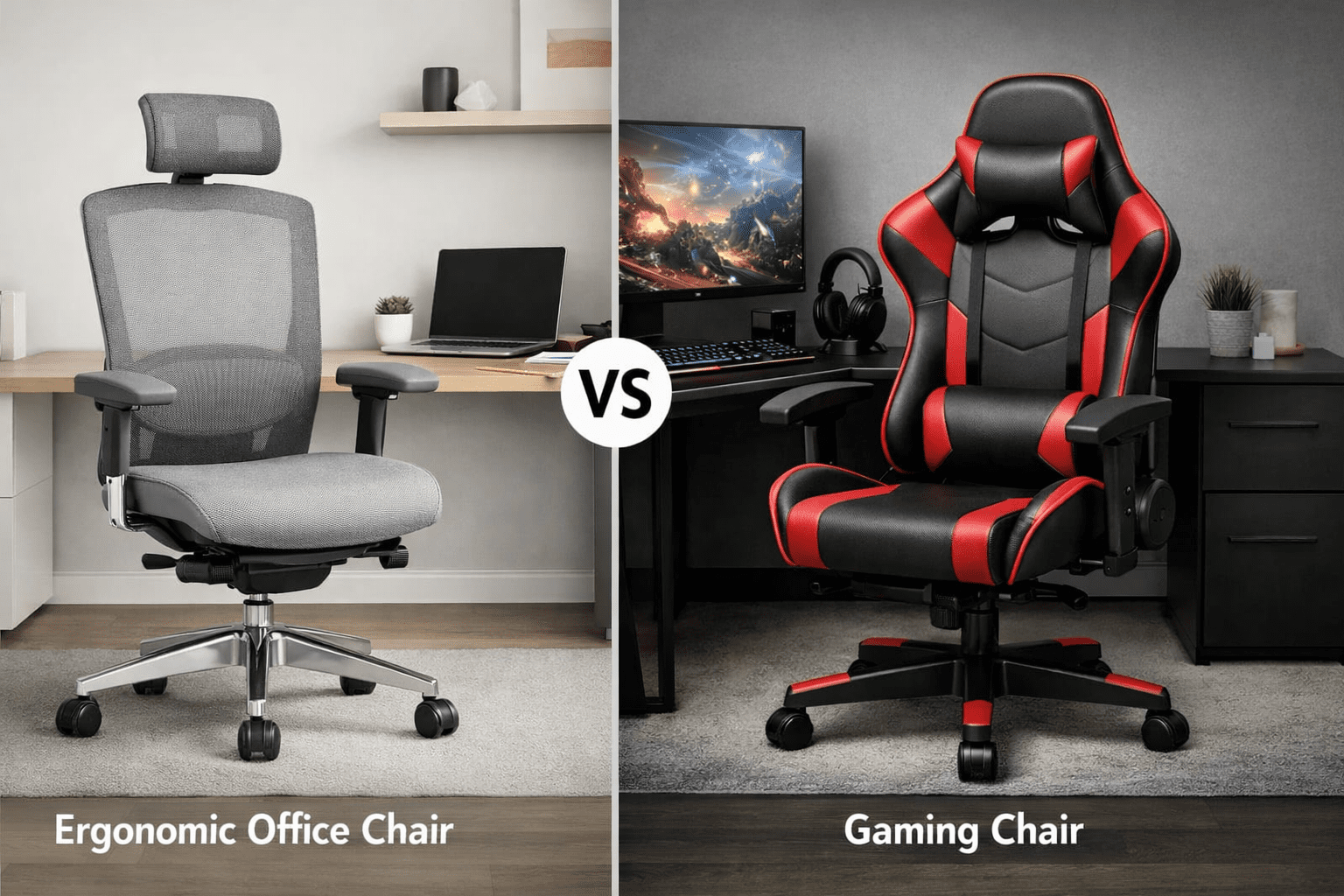
When deciding between an ergonomic chair vs gaming chair, it’s important to consider comfort, support, and the type of use. While ergonomic chairs are designed for long hours of work, gaming chairs focus on comfort for extended play. This comparison will help you determine which chair offers the best features for your needs.
Why Sitting for Long Hours Requires the Right Chair
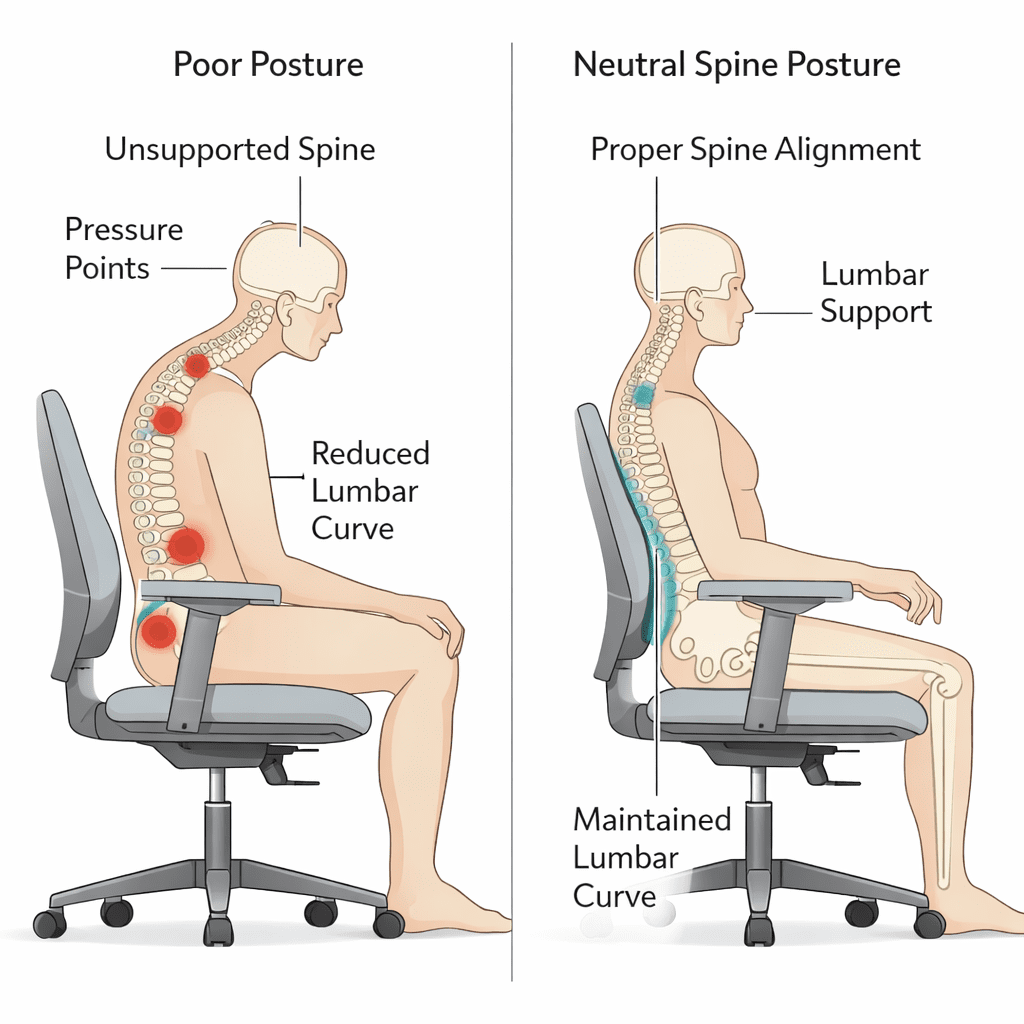
When you sit for hours on end, it may seem harmless, but you’re putting constant strain on your spine and muscles. Sitting or lying in one position for long periods can also slow blood flow and lead to stiff muscles. And over time, they can really do a number on your back and neck, not to mention create shoulder strain and make you feel fatigued overall—especially when that chair isn’t doing what it’s supposed to in terms of support.
The correct sitting position is assisted by using the right chair. Without proper lumbar and back support, the lower back becomes flatter, and the surrounding muscles have to work harder. This extra pressure is one of the main reasons many people feel after extended gaming or working sessions.
Chair choice also affects posture. Structurally unsound chairs lead to slouching, forward head posture , and rounded shoulders. While these may feel normal at first, they can lead to long-term problems—think chronic back pain and diminished mobility. A well-supported chair can help you sit more evenly, with your body relaxed and correctly aligned.
Another key factor is movement. Hours chairs typically support only small degrees of recline and postural shifts. This limits stationary sitting, which can lead to muscle fatigue. The right cushioning and breathable fabric can also help prevent pressure points and overheating, enhancing your overall comfort.
The right chair is not about pampering; it’s about protecting your spine, improving your posture, and reducing the physical discomfort that accrues from sitting for hours.
How prolonged sitting affects the spine & posture
In the long run, sitting exerts constant pressure on the back when in poor posture. Rounding your back and leaning forward also flattens the natural curve in the lower part of your spine, making the muscles work harder to stabilize it. The result over time is stiffness, rounded shoulders, and spinal misalignment. Alternatively, by employing a chair promoting proper alignment, alignmentplementsetOnClickListener(new OnClickListener() { public void on.
Common Causes of Sitting-Related Back Pain
Sitting back pain frequently results from improper posture or a lack of key support in the lower lumbar region. The spine will curve unnaturally if the chair does not meet the body’s needs, resulting in undue pressure on muscles and joints. Eventually, this results in stiffness and pain. Learning these causes will help you better choose a chair, reduce the burden of daily life, and protect your back when sitting for too long.
Role of chair support in reducing strain
Effects of Chair Support on Strain Side.Chair Features: The spine begins to lose its natural curve, and the local muscles work harder than they were designed to. This additional energy expenditure becomes tiring and painful, too. A good design chair can relieve your lower and upper back when you relax your muscles or sit on it, by evenly distributing your body weight. Correct seat support not only relieves strain but also promotes better posture, making long sitting periods easier to sustain.
What Is an Ergonomic Chair?
Ergonomic chairs are sculpted and designed to mimic the body’s natural posture, reducing stress on the body when sitting for extended hours. Unlike regular chairs, which concentrate on spinal support and distribute a person’s weight fairly evenly, ergonomic chairs help reduce muscle fatigue. These are especially helpful for office workers, digital nomads, and people who spend long hours sitting.
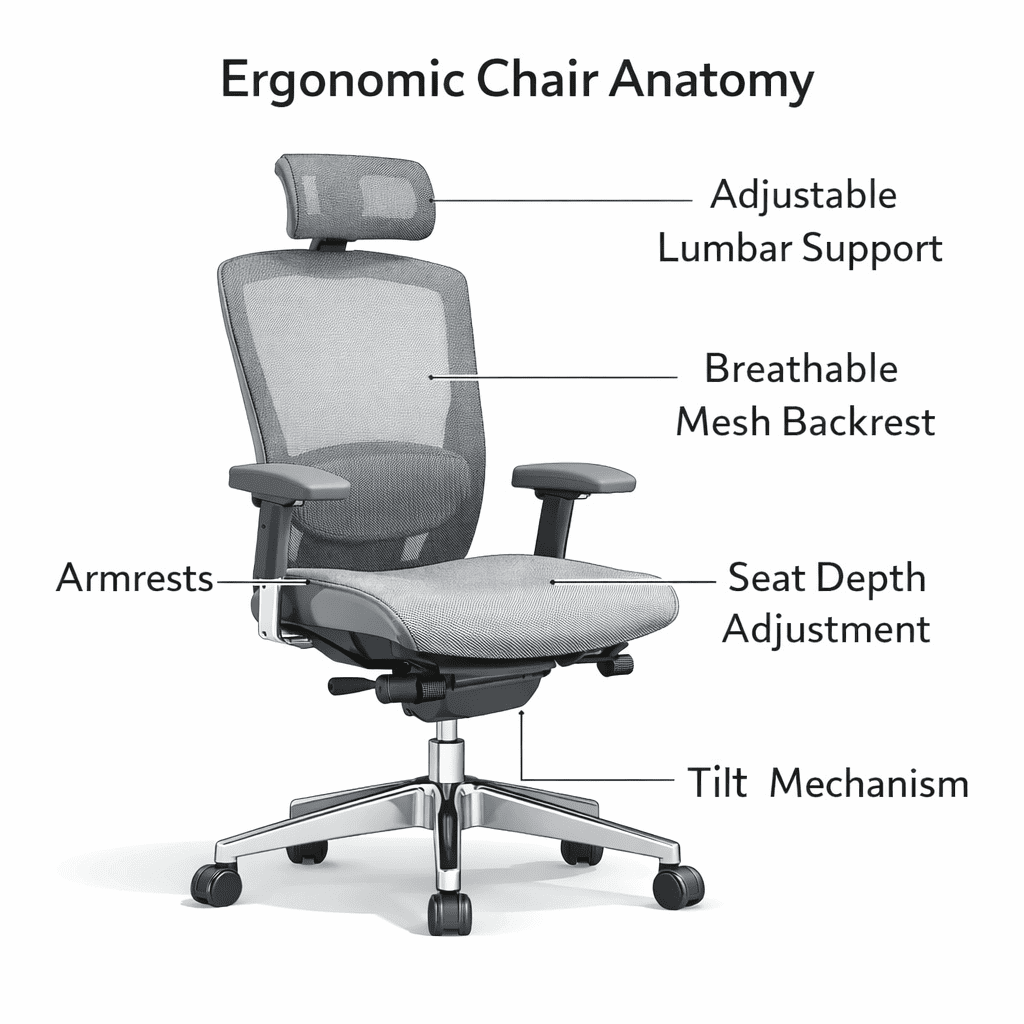
The primary purpose of any ergonomic chair is to ensure comfort and spinal health. Common elements include adjustable lumbar support, backrest tilt, seat height and depth adjustments, and armrests that support the shoulders and upper body. Some ergonomic chairs even feature materials and padding that help prevent overheating and pressure points, making extended sitting more comfortable.
Using an ergonomic chair correctly can help reduce health issues arising from poor posture, such as slouching, rounded shoulders, and lower back pain. For instance, a correctly positioned lumbar support supports the natural inward curve of the lower spine, reducing pressure on intervertebral discs. With 8 height positions, your feet will remain flat on the floor, which is good for improving circulation and for those with foot or leg-related issues.
The one-size-fits-all solution is not an ergonomic chair. Choosing the right chair involves considering body type, pain regions, and sitting habits. For example, if you have low back pain, a chair that allows individual lumbar support can be helpful; if you have shoulder tension, adjustable armrests and upper back support may be important.
Core design principles of ergonomic chairs
Ergonomic office chairs must be designed to support good posture. As the day goes on, they are supposed to help take pressure off your back and improve posture by allowing subtle movement and preventing stiffness. The chair is adjustable and can accommodate all body types and sitting habits.
Key Features
Lumbar Support: Support your lower back’s natural curve to help you sit up confidently and comfortably, reducing stress on your back from slouching.
Adjustable: Raise or lower the seat, rock back in your chair, and the lumbar support adapts to your posture.
Benefits for posture & long hours
Sitting in an ergonomic chair promotes good posture by keeping the spine neutral, reducing muscle fatigue and discomfort. Good support for the lower back means you can sit longer without pain and reduces your risk of developing chronic back and/or leg pain.
Who should use ergonomic chairs?
Your desk chair is not only a seat but also a tool. Ergonomic chairs are backed by science and designed for the way you work or study. Whether sitting at your home computer desk, on a portable, or working around the office, an ergonomic chair can support your back during long periods of static sitting. They are particularly helpful for individuals with back pain or for those seeking preventive care to maintain long-term spinal health. The right ergonomic chair can help users maintain good posture, minimize stress, and have a healthier, more comfortable sitting experience.
What Is a Gaming Chair?
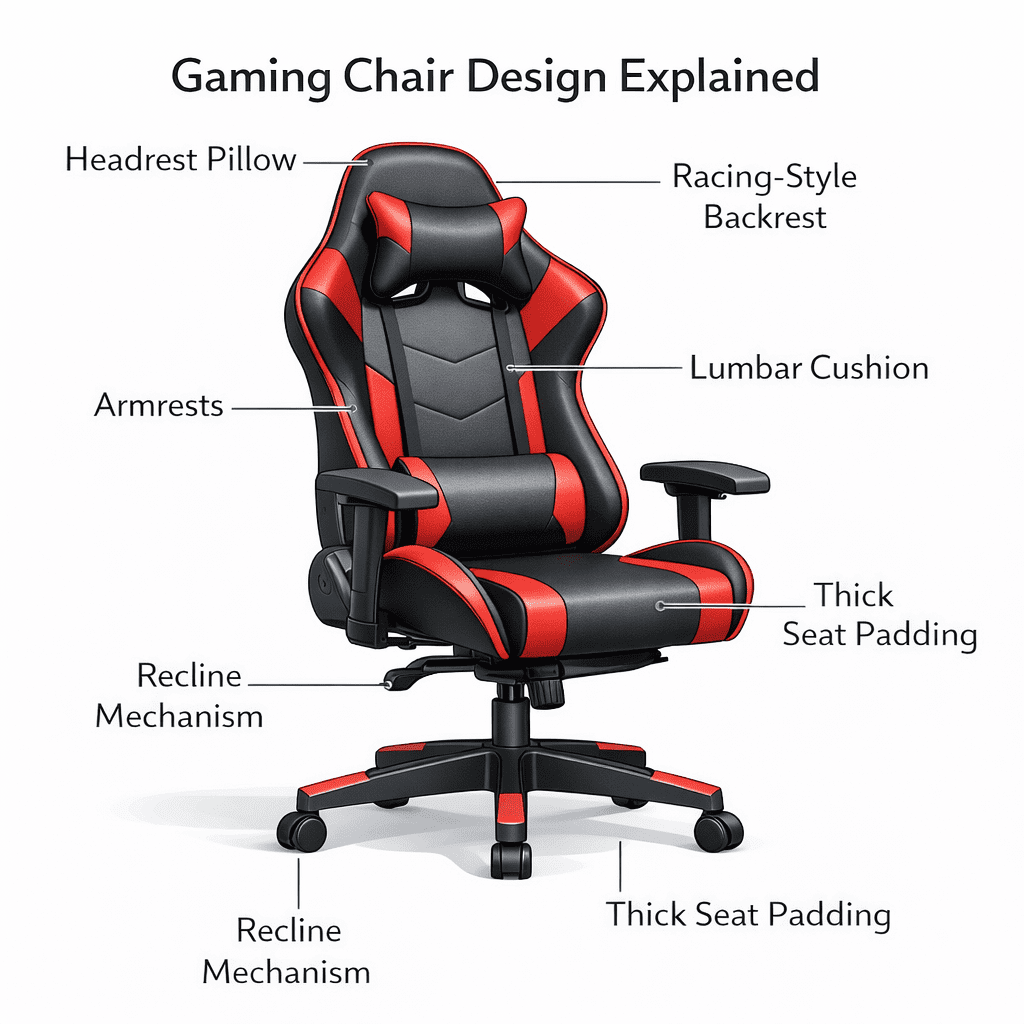
A gaming chair. It is a special chair comfort for video game players, especially during marathons. Unlike most regular office chairs, gaming chairs are designed with a sporty flair, featuring high backs and armrests in bold colours, in any combination from neon green to pastel pink. But more than just decorative appeal, their design is intended to enhance long-duration seated comfort.
Gaming chairs tend to have a high backrest that supports the lumbar and up to the shoulders; they also recline and feature adjustable armrests. Most gaming chairs even include adjustable lumbar and neck pillows so that you can adjust the support to your body size and sitting posture. It’s a machine. It’s actually that sort of thing, which can’t be said about rowers, and especially not cycles, at this price range. This also helps ease pressure on the lower back and neck, two spots that are frequently sore after (you guessed it) long hours in the saddle.
Gaming chairs generally feature a seat style similar to an office chair. Still, their shape is more like a car driver’s seat. They include unique headrest cushions and lumbar support to maintain good posture. Materials such as PU leather and mesh also offer comfort and durability, making them great for long-term use. Many higher-end models also feature rocker- or swivel-action for increased manoeuvrability.
Even with this, most gaming chairs may not support long-term sitting in a healthy posture the way many ergonomic office chairs do. Although they provide comfort and adjustability, the style can often trump spinal alignment, especially regarding lumbar support and seat depth. Feedback from users. Users with pre-existing back issues should consider the chair’s ergonomics more closely if it’s intended for long hours of use.
Origin & design philosophy
The notion of gaming chairs began as a racing car seat, designed to provide the right stability, comfort, and support during intense combat or racing. We aimed to design a chair that provides maximum support over extended periods, features an exciting, sporty style, and maintains the right balance between desired features and a reasonable price. The theory eventually evolved into a blend of form and function for long-term sitting comfort.
Common Features
- Racing-Style SeaRacing-Style Seasteeless with side bolsters helps keep your body in a seating position.
- Padding & Cushion positions: Thick cushion pad on the seat and back. This chair comes with a headrest and lumbar pillow for better use.
- Recline & Tilt Functions: You can adjust the backrest angle for resting, sit straight at work, and get a slight tilt with minimal pressure.
- Adjustable Arm Rests – Provide all-day support for the shoulders and arms when working or gaming!
Comfort vs support reality
And while gaming chairs have the comfort factor down pat, it’s really hard to say they’re ergonomic; you may actually be doing long-term damage with an improper sitting posture on one. Most offerings don’t provide full lumbar support or sufficient seat depth to keep one’s back supported during extended periods. Even with comfortable furniture, prolonged use without ergonomic support can cause discomfort.
Ideal Users & Limitations
Gaming chairs are great for /u, Gamers – or even us grown-up gamers who want to feel like a kid when we game, casual office users that like to multi-task (game for a few and work on the computer for a few), or for everyone else as well. They are best suited to the reclined position and to those who like a sporty seat. For people who suffer from chronic back pain and require precise ergonomic support, a gaming chair may have some limitations compared to fully adjustable office chairs. Be sure to select a model with adequate lumbar support and adjustable features to help protect your back from long-term pain while seated.
Ergonomic Chair vs Gaming Chair – Key Differences
Deciding between an ergonomic chair and a gaming chair. Patients who are trying to choose between an ergonomic chair and a gaming chair may be best off learning the differences between the two. We’ve had chairs and used each chair all day, every day, for months on end, though the concepts behind them differ, despite their high use in long-sit scenarios.
Comparison Table: Ergonomic Chair vs Gaming Chair
| Feature | Ergonomic Chair | Gaming Chair |
|---|---|---|
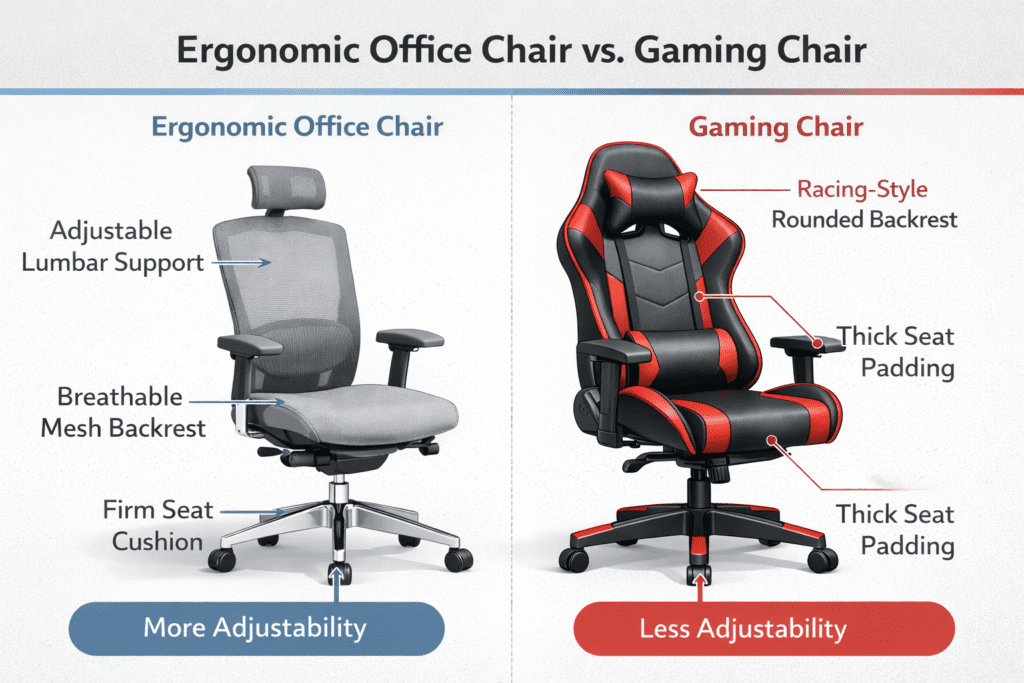
| Lumbar Support | Adjustable, aligns with natural spine curve | Usually comes with removable pillow; less precise alignment |
| Adjustability | Usually comes with a removable pillow; less precise alignment | Backrest recline, armrests; limited seat depth adjustment |
| Seat Comfort | Even cushioning, pressure distribution, and long-term support | Thick padding, bucket-style seat; comfort-focused |
| Breathability & Materials | Mesh or high-quality breathable fabric reduces heat | PU leather or faux leather; it can get warm over long sessions |
| Posture Support | Promotes neutral spine, reduces slouching | Helps maintain an upright posture, but less precise for spine alignment |
| Long-term Health Impact | Supports spine health, reduces fatigue, and chronic pain | Comfort for short-to-medium sessions; may not prevent chronic issues |
Lumbar Support.Quality
Ergonomic chairs provide lumbar support and customizable features to maintain the natural curve of the lower back. Many gaming chairs use a removable, adjustable back pillow that doesn’t work. Ergonomic chairs are more effective in minimizing long-term back strain.
Adjustability & Customization
Ergonomic chairs come with a wide range of adjustments — for seat height, depth, recline, armrests, and tilt — to fit the user. Gaming chairs do offer some adjustability in recline and armrests, but there is no seat depth adjustment, which can affect how you sit over time.
Seat Comfort for Long Sessions
Gaming chairs are padded and feature a bucket seat design, making them comfortable. Although comfortable at first, long-term use can create focal points of pressure. What Does Our Commitment To Comfort Mean For You? Ergonomic chairs balance cushioning and softness, eliminate pressure points, and cradle the body to ensure everything fits your unique shape perfectly without compromising spinal alignment.
Breathability & Materials
Ergonomic chairs are usually made of mesh or breathable fabric, which helps prevent heat buildup during extended sitting sessions. Game chairs are usually PU or faux leather, which is even hotter and can get sticky in the heat.
Posture Support
Ergonomic chairs are designed to minimize slouching and shoulder tension. Gaming chairs help with posture at a glance, but they may allow small deviations over time if lumbar or backrest support is not set just right.
Long-Term Health Impact
If you have a job that requires sitting or are a student who needs to spend hours in front of the books, then an ergonomic chair is just the right choice for all those times you need to think about your spine health and say goodbye to the risk of chronic back pain. Gaming chairs are more comfortable for short, intense sessions, but anyone with a history of back issues should carefully consider the support they provide.
Which Chair Is Better for Long Hours?
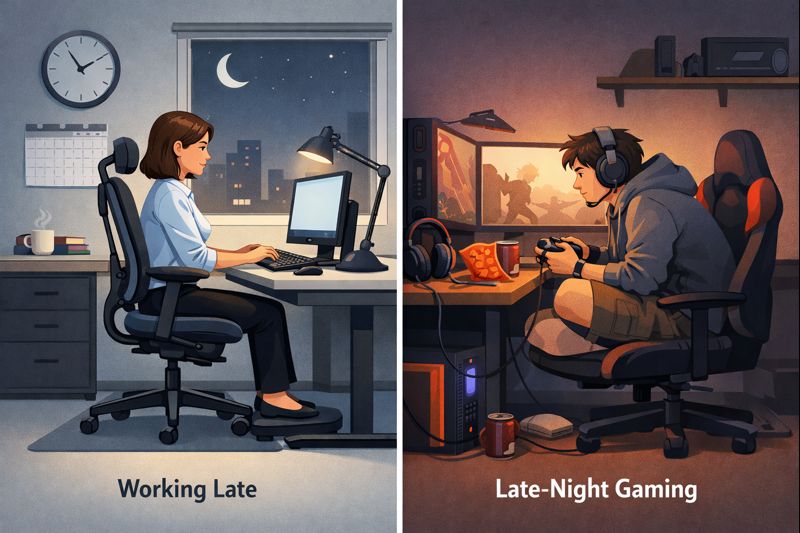
If you’re in the market for a home office chair, an ergonomic chair vs a gaming chair will come down to comfort, support, and long-term health. Both chairs have advantages, but for periods, set the ergonomic utility thus ultimately.
Ergonomic chairs are designed with the spine’s shape in mind. This chair can be customized to fit the way you sit!. Lumbar depth: 4 inches. Individualization reduces stress on the lower and upper back, discourages slouching, and promotes a healthy posture that lasts all day.
Gaming chairs, however, tend to focus on looks and immediate comfort. They tend to have a lot of padding, high backrests, and bucket seats. While these are comfortable for short periods, the chairs may not provide the most accurate spinal support over long hours of sitting. Gaming chairs sometimes have removable lumbar pillows, which can help — though they tend to lack adjustability, so you can’t perfectly match your lumbar curve. This can lead to fatigue and, over time,, over time, possible back pain.
Other things to consider are breathability and the type of material. Ergonomic chairs are usually made from mesh or breathable fabric that keeps you cool and allows air to flow through while sitting for long periods. Gaming chairs (typically made from PU or faux leather) can get quite warm and uncomfortable after a while.
Posture support is also another important distinction. Ergonomic seating promotes a neutral spine position, which helps reduce fatigue and tension in the neck, shoulders, and back. Gaming chairs can help posture, but misalignment is possible if you don’t adjust.
In sdon’ty, when used for long periods of work, study, or computer use, ergonomic chairs are the safer and more effective option. Gaming chairs can be fine for casual gaming or playing on your console for a bit, but the best office chairs offer great ergonomic support and help alleviate those issues over time.
📌 Pro Tip: Remember, always combine your chair use with regular movement breaks and proper desk height for the full benefits of long-hour sitting support.
Office work (8+ hours)
Ergonomic chairs suit professionals who spend 8+ hours a day behind a desk. You get adjustable lumbar support, seat depth, and armrests, which help keep the spine in a neutral position and minimize fatigue. Long-term comfort and spinal health are key, so ergonomic chairs are the closest you can get to a safe bet for daily office work.
Work-from-Home Users
Nowhere are remote workers ”parking” themselves to work for long periods of time. An adjustable ergonomic chair can help you maintain good posture, even when working in a small home office. Breathable fabric and reclining options help users stay cool during long work sessions, and the back features a tilt function that supports movement while working to help prevent stiffness.
Gamers & Streamers
Gamers and streamers like gaming chairs for their elevated back support, thick cushions, and racer-style look. Although they offer great support and style from the get-go, look for models with adjustable lumbar and armrests to help protect your lower back and spine after hours of gaming.
Mixed-Use Users
If you pack multiple uses into games, office work, and casual sitting, it’s best to go hybrid—ergonomic gaming-style Computer Chairs with features that are comfortable and luxurious, offering support whether working or gaming. With plush padding at many points of contact, users can stay and play while their bodies remain supported.
📌 Pro tip: whether you’re a user or an administrator, ensuring the right chair fit and taking regular movement breaks are crucial to avoid strain and maintain overall back health.
How to Choose the Right Chair for Your Needs
When it comes to spending long hours at your desk, choosing the right chair is more than just comfort—it’s essential to your health and productivity. The debate between ergonomic and gaming chairs is common, but understanding the differences can help you make an informed decision about which chair best suits your needs.
Check out our guide: How to Make a Chair More Comfortable (Without Buying a New One)
Identify your pain points.
Ergonomic chairs are designed to support your body’s natural posture. The body offers adjustable lumbar support, seat depth, armrests, and height options to accommodate a range of body types. This adaptability ensures that you maintain proper alignment throughout the day, reducing strain on your back and neck—crucial for those who work or study for extended periods.
Match chair to desk height
Gaming chairs often appeal with their bold designs and plush cushioning. At first glance, they may seem comfortable, but they prioritize aesthetics over long-term support. Some gaming chairs do offer ergonomic features, but they may not be scientifically designed or customizable, unlike ergonomic office chairs.
Match chair to desk height
If you’re serious about maintaining good posture and avoiding discomfort during long desk sessions, investing in an ergonomic chair is usually the smarter choice. Consider what matters most in your daily routine: adjustability, targeted support, and durability should top your list when choosing the right chair for your needs. Ultimately, prioritizing ergonomics will pay off in better focus and overall well-being.
When it comes to spending long hours at your desk, choosing the right chair is crucial for both your comfort and health. Many people find themselves torn between ergonomic chairs and gaming chairs, but understanding their differences can help you make an informed decision. Ergonomic chairs are specifically designed to support your posture and reduce strain during extended periods of sitting. They often feature adjustable lumbar support, seat height, armrests, and breathable materials—making them a top choice for prioritizing comfort and well-being.
Material & climate considerations
On the other hand, gaming chairs are built with style in mind and often feature bold designs, high backs, and extra cushioning. While they may look appealing and offer some adjustability, not all gaming chairs provide the same level of tailored support as ergonomic options.
So how do you choose the right chair for your needs? Consider how many hours you’ll spend seated eyou’lly. If you work or study for long stretches at a time, investing in an ergonomic chair is often better for your back and overall health. Look for features like adjustable seat depth, lumbar support, and tilt mechanisms that promote movement throughout the day.
Ultimately, both types of chairs have their merits—but if long-term comfort is your priority, an ergonomic chair is typically the smarter investment. Your body will thank you after those marathon sessions at your desk! Choosing the wrong chair can lead to discomfort and long-term back issues. Understanding common mistakes helps you make better decisions and protects your spine during extended sitting sessions.
Common Mistakes to Avoid When Choosing a Chair
Choosing aesthetics over support is one of the biggest errors. A chair may look stylish or match your office décor, but if it lacks proper lumbar support or adjustability, it can cause strain and poor posture over time.
Ignoring lumbar alignment is another common problem. Many people overlook whether the chair supports the natural curve of the lower back. Without proper lumbar support, the spine flattens, forcing muscles to work harder and increasing the risk of back pain.
Assuming “more padding = more comfort“ can also be misleading. Excessive cushioning may feel soft initially, but can fail to provide even weight distribution or proper spinal support. A balanced seat with ergonomic design is more important than thick padding alone.
By avoiding these mistakes, users can choose a chair that truly supports posture, reduces strain, and promotes long-term spinal health, building confidence in their selection.
FAQs – Ergonomic Chair vs Gaming Chair
Do ergonomic chairs actually prevent back pain?
Yes. Ergonomic chairs support the natural curve of your spine, promoting a proper posture and less strain on your muscles. It can be used to prevent or relieve any back discomfort while sitting for long periods.
Are gaming chairs worth it for long hours?
Gaming chairs are comfortable thanks to ample padding and high backrests, but they may not offer as much precise lumbar and seat-depth support. For long hours of work or study, an ergonomic chair is usually better at protecting your back.
Which chair is good for posture?
Ergonomic chairs are so much better than non-ergonomic ones for keeping the spine neutral. They promote good posture and reduce slouching. Gaming chairs can help support posture and look incredibly cool, but the alignment might still be off without mindful tweaking.
Which is better for long sitting: mesh or leather?
Mesh chairs are airy and don’t get hot when left unoccupied for a long time. Your PU leather gaming chairs are plush, but they can also get hot and less comfortable. Select based on your comfort requirements and climate.
Can we have a chair suitable for both work and playing games?
Yes, as long as that chair has an ergonomic design and offers comfort features. Seek out adjustable lumbar support that can also adjust reclining angles, seat depth, and armrests to accommodate both office work and gaming tasks.
Final Decree – Which One Should You Select?
For long hours at work or school, an ergonomic chair is usually the best bet. Customizable lumbar support, seat depth, and backrest help users maintain an upright posture at their desk while also helping minimize recurrence over time. Gaming chairs will keep you comfortable and, with the help of a black goodecise back, offer the portability needed for extended periods. Ask yourself what you’ll be doing in the chair, how you’ll feel pain, and how you like to work, then pick a seat that supports your body, keeps you comfortable, and allows good posture throughout your day.