
Your legs tingle. The meeting drags on. You shift, searching for relief from dull aches. If you are searching for the ideal chair height, something feels wrong.
Maybe your legs go numb, your lower back aches, or your shoulders tighten after just an hour.
Or maybe you keep adjusting and still can’t get comfortable.
You are not alone.
Many people blame their chair. Others blame their posture. In many cases, the real problem is simple:
Your chair height is wrong.
The right chair height supports your spine, boosts circulation, and reduces leg pressure. Improper height can cause pain even with a great chair.
Let’s fix that step by step.
What Is the Ideal Office Chair Height?
The ideal office chair height allows:
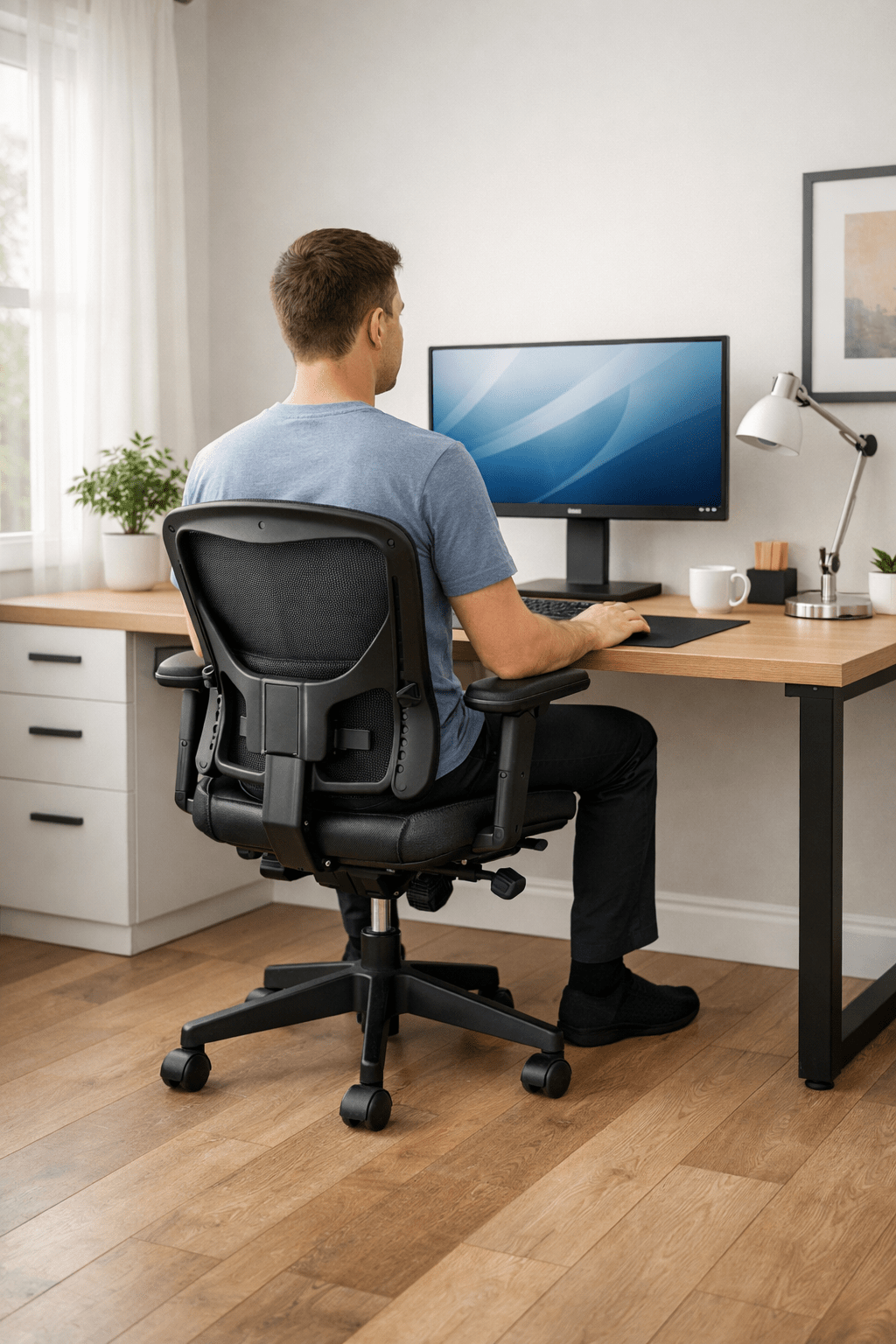
- Your feet should rest flat on the floor.
- Your knees should bend to about 90-100 degrees.
- Your thighs should stay parallel to the floor.
- Your hips should sit slightly higher than your knees.
For most adults, the standard seat height range is:
16 to 21 inches (40 to 53 cm) from the floor to the top.
But here’s the important part: There is no single perfect number.
Your body height, leg length, and desk height all matter.
Instead of focusing on numbers, focus on body position.
If your feet dangle or your knees lift higher than your hips, your chair height needs adjustment.
Table of Contents
Why Office Chair Height Causes Pain
Chair height affects your whole posture. When it’s wrong, your body compensates. That’s when discomfort begins.
Let’s look at what happens.
When the Chair Is Too High
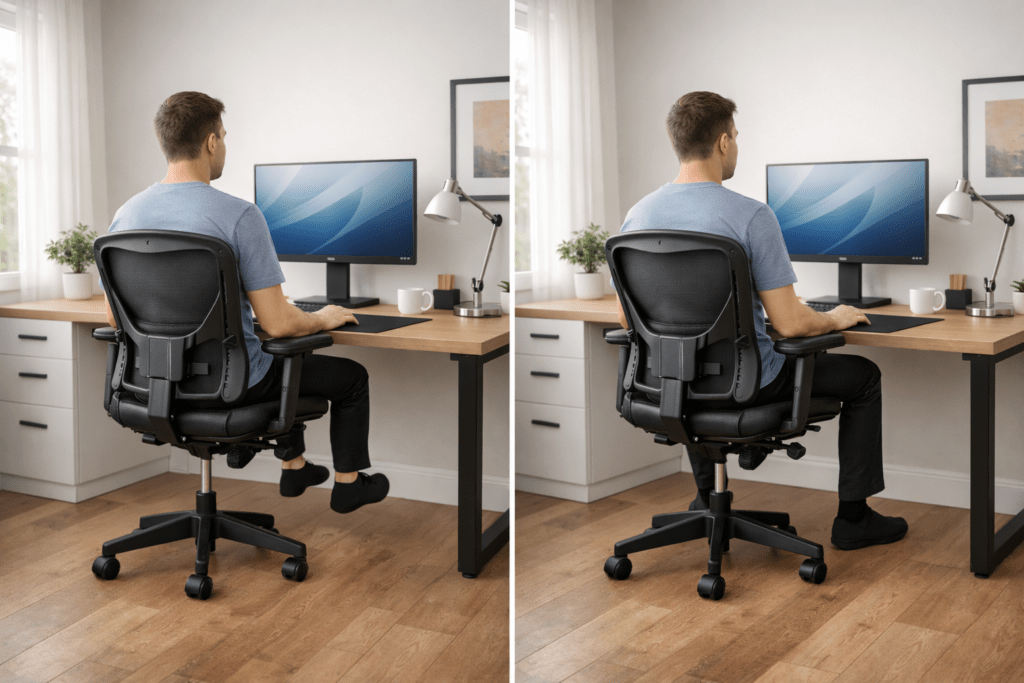
If your chair is too high:
- Your feet don’t fully touch the floor.
- Pressure builds under your thighs.
- Blood flow slows down.
- You feel tingling or numbness.
This often leads to thigh discomfort. If you experience that, read Thigh Pressure From Chair Edge for a deeper explanation of circulate. A high chair makes you lean forward, straining your back. our lower back.
When the Chair Is Too Low
If your chair is too low:
- Your knees rise above your hips.
- Your pelvis tilts backward.
- Your lower back rounds
- Your shoulders roll forward.
Over time, this can lead to discomfort similar to what we explained in the Ergonomic Chair. Low seating pushes your head forward, creating neck tension. See Ergonomic Chair Causes Neck Pain.
Why Discomfort Starts After 30 Minutes
Even small height mistakes become painful when you sit still.
After about 30 minutes:
- Muscles fatigue
- Pressure builds
- Circulation slows
- Posture collapses
This is why sitting often becomes uncomfortable. For a full breakdown, see Why Sitting Feels Uncomfortable After 30 Minutes.
Chair height plays a bigger role than people realise.
How to Set the Ideal Office Chair Height (Step-by-Step)
Let’s fix it now.
Follow this simple process.
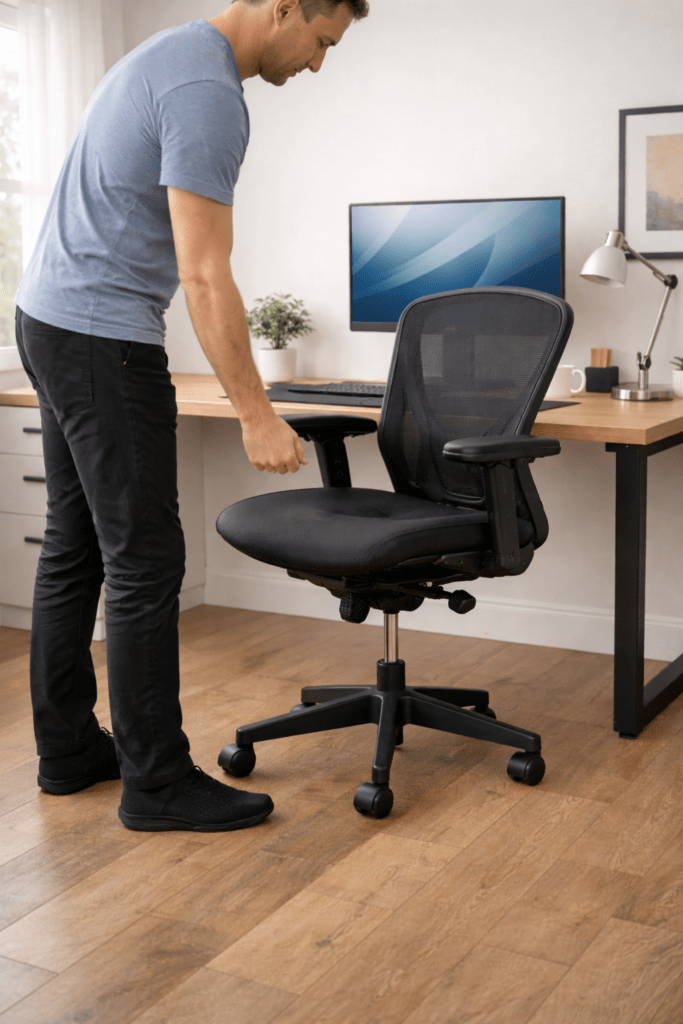
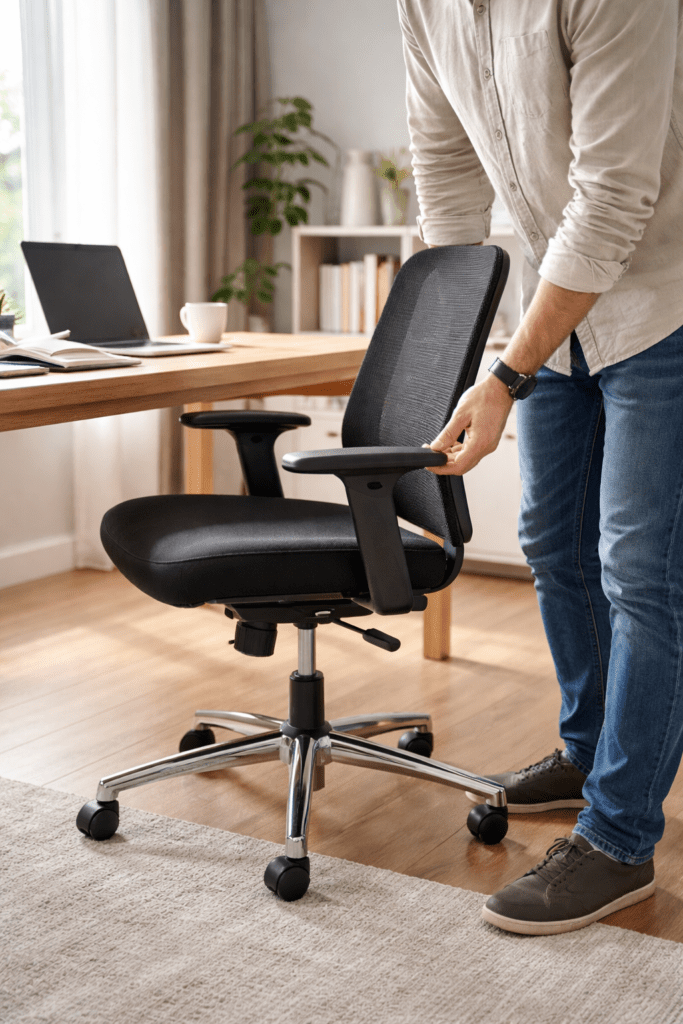
Step 1: Stand in Front of Your Chair
Adjust the seat so it roughly aligns with the bottom of your kneecap. For a visual guide, imagine slipping a standard soccer ball under your knee—the top of the ball is about the height your seat should reach.
This is your starting point.
Step 2: Sit All the Way Back
Sit fully against the backrest.
Do not sit on the Edge.
Place both feet flat on the floor.
If your feet don’t fully touch the ground, lower the chair.
Step 3: Check Your Knee Angle
Your knees should bend between 90 and 100 degrees.
If your knees are higher than your hips, raise the chair slightly.
If your knees hang downward sharply, lower them.
Step 4: Check Thigh Position
Your thighs should stay mostly parallel to the floor.
They should not slope sharply upward or downward.
If you feel pressure under your thighs, your seat may be too high or too deep.
Step 5: Adjust Your Desk Alignment
After adjusting chair height, check your desk.
Your elbows should bend at about 90 degrees while typing.
If your desk is too high, you may need to raise the chair and use a footrest.
If you adjust the chair height but ignore the monitor position, neck strain can persist. Review the Monitor Height to ensure your screen sits correctly.
If you use two screens, check the Dual Monitor Setup Desk to avoid twisting.
Ideal Chair Height by Body Height
Here’s a simple guide to help you estimate:
| 5’0”–5’4” | 16–17 inches |
| 5’5”–5’9” | 17–19 inches |
| 5’10”–6’2” | 19–21 inches |
| 6’3”+ | 20–22 inches |
Remember: this is a starting point.
Your leg length matters more than your overall height. Always adjust based on how you feel. The body feels.
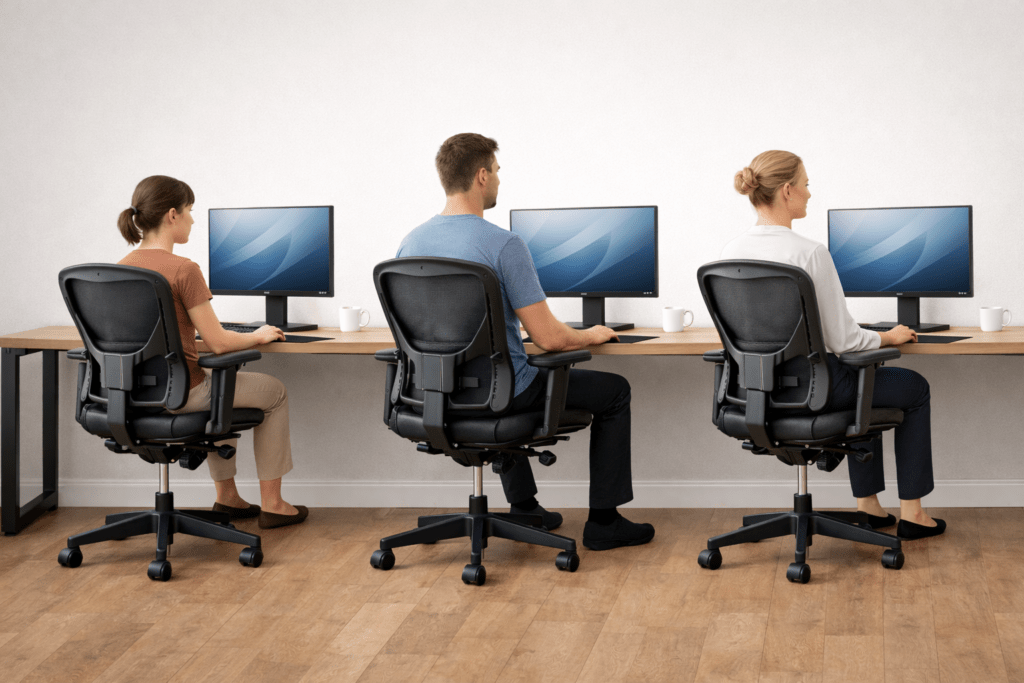
Common Office Chair Height Mistakes
Many people unknowingly create discomfort.
Here are common mistakes:
1. Matching Chair to Desk Without Checking Feet
People often raise the chair to match a tall desk.
Then their feet hang.
That increases thigh pressure and reduces stability.
If your desk is high, use a footrest instead of sacrificing leg support.
2. Sitting Too Low for Comfort
Some people lower the chair because it “feels relaxed.”
But when hips drop below knees, spinal pressure increases.
You may not notice pain immediately. It builds over time.
3. Ignoring Armrest Height
When chair height changes, armrests should change too.
If they stay too high:
- Shoulders lift
- Neck tightens
If too low:
- You lean forward
Alignment matters everywhere.
4. Not Adjusting Monitor After Changing Chair Height
Raise your chair without raising your monitor, and your neck bends downward.
Lower your chair without adjusting the screen height, and you look upward.
After every chair adjustment, recheck the monitor position.
5. Sitting on the Edge
Even with the correct height, sitting on the Edge removes back support.
Always sit fully back.
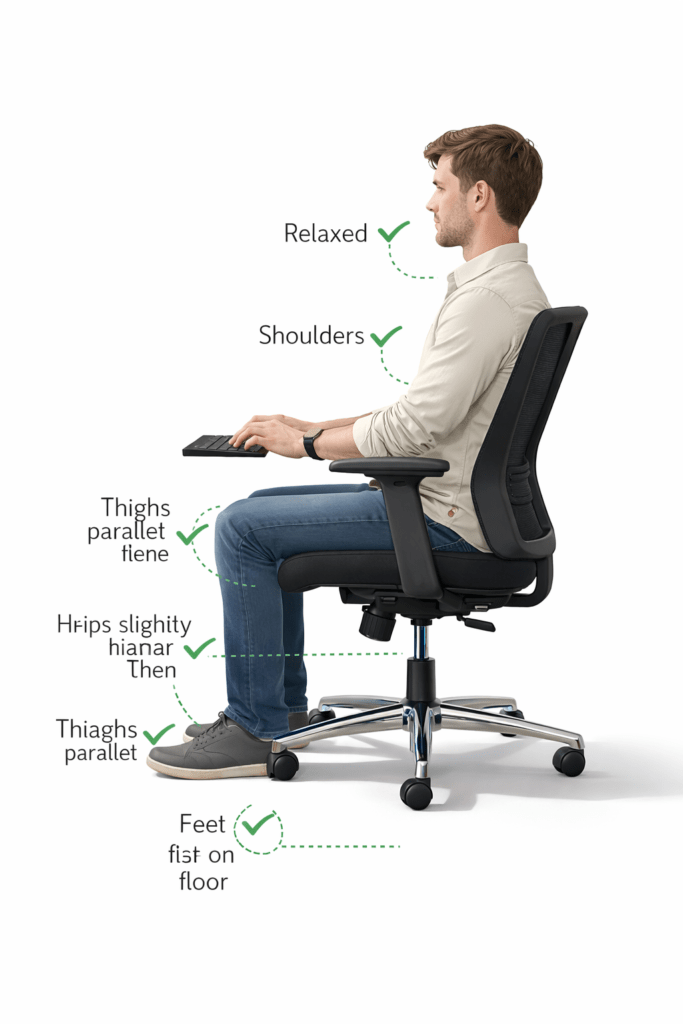
Quick 2-Minute Height Check
If you want a fast test, do this:
- Feet flat on the floor
- Knees level with or slightly below the hips
- Thighs parallel
- Elbows at 90 degrees
- Shoulders relaxed
- Screen at eye level
If any of these feel off, adjust slightly.
Small changes often solve discomfort.
When Chair Height Isn’t the Real Problem
Sometimes you adjust height perfectly and still feel uncomfortable.
That’s when you need to look deeper.
1. Seat Depth Is Wrong
If the seat is too long, it presses into your thighs.
If too short, you lose support.
This problem often feels like leg discomfort.
2. No Lumbar Support
Height alone cannot fix poor back support.
If your lower spine lacks support, review How to Make a Chair More Comfortable for practical fixes.
3. Desk Height Is the Issue
Some desks are too tall for your body.
If you constantly raise your chair and your feet lift off the floor, the desk may be the main problem.
4. You Sit Too Long Without Movement
Even the perfect height cannot replace movement.
Stand up every 30 minutes.
Stretch.
Walk.
Reset posture.
Movement keeps muscles active and reduces stiffness.
The Connection Between Chair Height and Comfort
Chair height is not just about legs.
It affects:
- Spine alignment
- Hip angle
- Shoulder position
- Neck posture
- Blood circulation
When height is correct:
- Align. Relax. Perform.
- Your weight is distributed evenly.
- Muscles work less. Pressure decreases.
- Comfort iComfort improves. Right is wrong:
- Your body compensates
- Muscles strain
- Circulation slows
- Discomfort builds
Comfort starts from the ground up.
What Users Really Want
Most people don’t search for the ideal office chair height because they love ergonomics.
They search because:
- Their back hurts
- Their legs tingle
- Their neck feels stiff.
- They feel tired from sitting.
They want relief.
They want to work without constant shifting.
They want to focus without discomfort.
The right chair height gives them that foundation.
It doesn’t solve everything. It removes one major stress point.
Adjustments Create Big Changes
You do not need pricey equipment.
You need:
- Proper seat height
- Feet flat support
- Balanced hip position
- Monitor alignment
- Regular movement
Start with height.
Then gradually adjust the rest of your setup.
Your body will tell you when it feels right.
Frequently Asked Questions
What is the ideal office chair height?
The ideal office chair height lets your feet rest flat on the floor, with your knees bent at about 90 to 100 degrees and your hips slightly higher than your knees.
How high should my office chair be compared to my desk?
Your elbows should rest at 90 degrees when typing. Adjust the chair first, then adjust the desk or footrest if needed.
Should my hips be higher than my knees?
Yes. Slightly higher hips reduce spinal pressure and support better posture.
Why do my legs go numb even at the right height?
Seat depth, pressure under the thighs, or poor circulation may still cause numbness.
Is 18 inches a good height for an office chair?
For many adults between 5’5” and 5’9”, yes. But personal leg length matters more than overall height.
What if my chair won’t go low enough?
Use a footrest to keep your feet stable and reduce pressure on your thighs.
Final Thoughts
The ideal office chair height is not just a measurement. It is a starting point for better posture and less pain.
If your chair feels uncomfortable, do not ignore it.
Small height adjustments can:
- Reduce back strain
- Improve circulation
- Decrease leg pressure
- Support better focus
Comfort is not about perfection.
It is about alignment.
Fix the height, honour your posture, and let movement keep you pain-free.
Your body will feel the difference.