

Blue light glasses are made to block some of the blue light that emanates from digital screens, including computers, tablets, and phones. Blue light naturally occurs in the visible light spectrum, but screens bombard us with it for hours on end every day. These glasses neither treat eye problems nor provide relief from discomfort. Instead, they may actually help reduce visual strain from those long hours in front of the screen.
If you work at a computer for long periods of time and/or primarily during the later part of the day, or if your eyes feel tired after using a computer screen. But they’re most effective when paired with good screen habits, the right monitor height, and regular breaks. Lenses alone can’t correct bad desk ergonomics.
What Is Blue Light?
Blue light is a color in the visible light spectrum that has a shorter wavelength and contains more energy. We see it every day. When it comes to finding the strongest source of blue light in nature, look no further than the sun. It keeps us from falling asleep, helps us feel awake, and lets us know when it’s daytime. This type of blue light is fine and part of a healthy daily existence.
Artificial blue light is emitted by man-made sources, such as computer monitors and smartphone screens, tablets and LED lights, and TVs. As one commenter was moved to sigh, we talk more about screens because they are what we look at from a very close distance for many hours. That’s quite different from sunlight, which saturates a large area and is not watched at close range for long periods.
Beyond that, timing is another factor driving interest in screens. Most people use screens well into the evening, when our bodies are primed for darkness. This can lead to eye fatigue after longer use. The blue light itself is not “bad,” but the fact that we expose our eyes to screens for extended durations without breaks is perhaps why it’s so often discussed now.
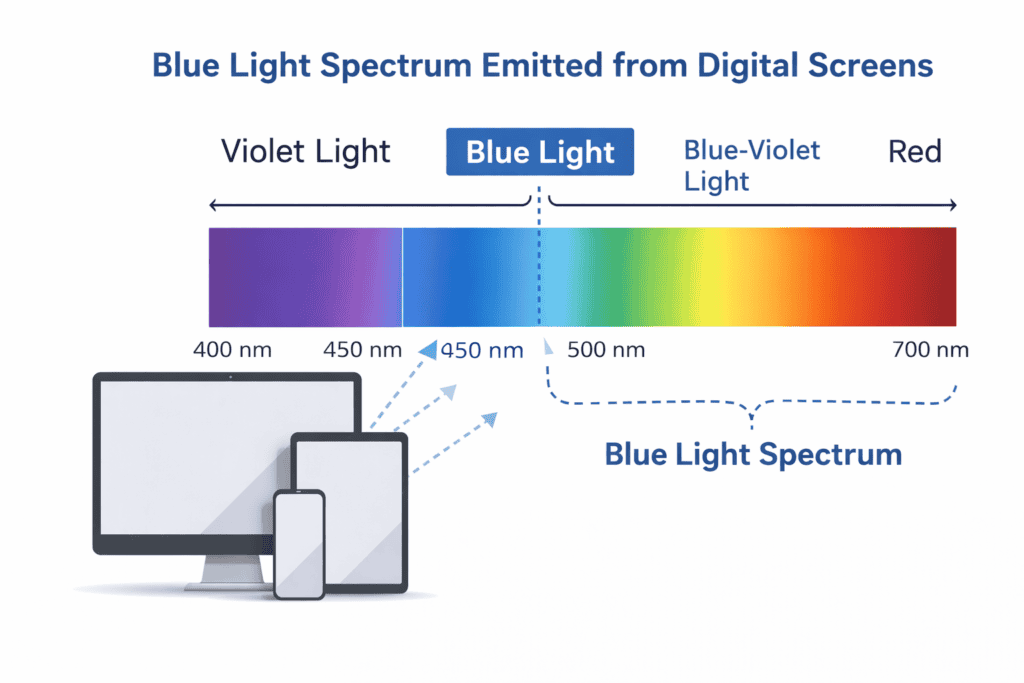
What Are Blue Light Glasses?
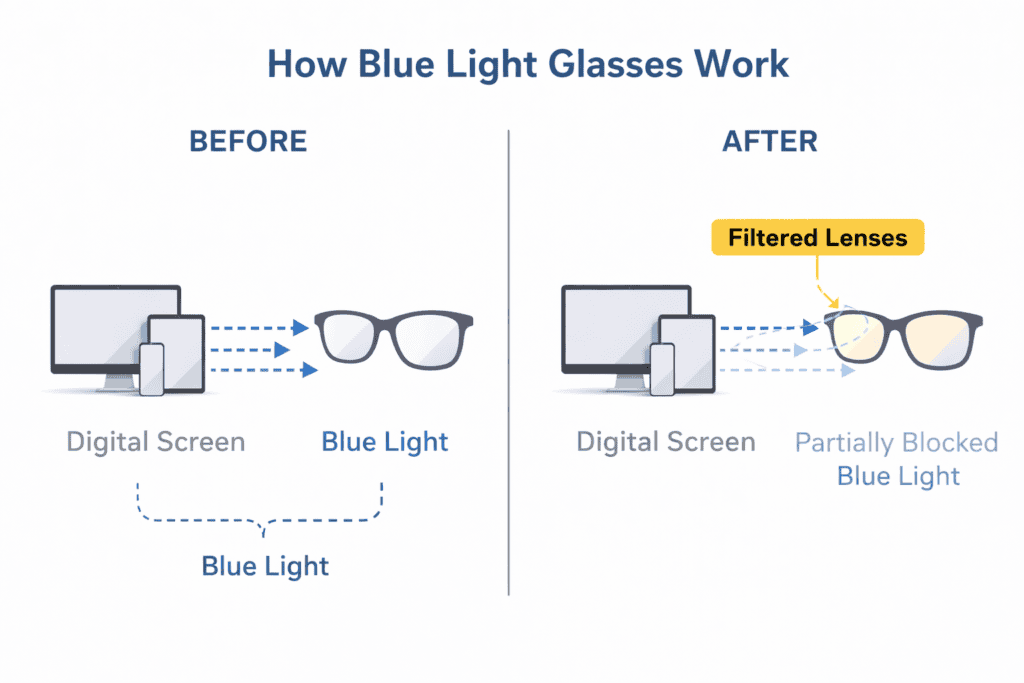
Blue light glasses are glasses that limit the blue light exposure your eyes receive from things like computer screens. They resemble ordinary glasses and can be worn while working, studying, or using a phone. Some are clear, and some have an extremely low yellow hue.
They work by using lens coatings or filters to block out some light wavelengths. They are not prescription glasses. Health Prescription glasses can fix vision problems like nearsightedness and farsightedness. Blue light glasses work on filtering light, not correcting vision.
You don’t have to have an issue with your eyes to wear blue light glasses. Many people use them just for comfort during extended screen time. They’re commonly worn by office workers, students, gamers, and remote employees who spend long hours in front of screens each day.
How Blue Light Glasses Work (Without the Hype)
Blue light glasses manage, rather than necessarily block outright, the amount of blue light that comes from screens. What filtering does is lessen the dose of exposure, not wipe it out. This is significant because blue light is a component of regular vision and daily life.
Some glasses feature a coating applied to the lens; others simply have a hint of tint. Coated lenses typically appear clear and are in vogue for office use. You can reduce even more blue light with tinted lenses, though they may alter the way colors appear on your screen.
“Blue light glasses are not going to make you have less dry eyes if you’re staring at a screen for 12 hours,” she said, “but what they can do is reduce visual stress looking at a screen throughout the day long-term.” What they can’t do is correct poor posture, replace a screen break, or cure an eye condition. They work best in combination with the appropriate theme of monitor height, adequate lighting, and frequent rest breaks.
Do Blue Light Glasses Help With Eye Strain & Fatigue?
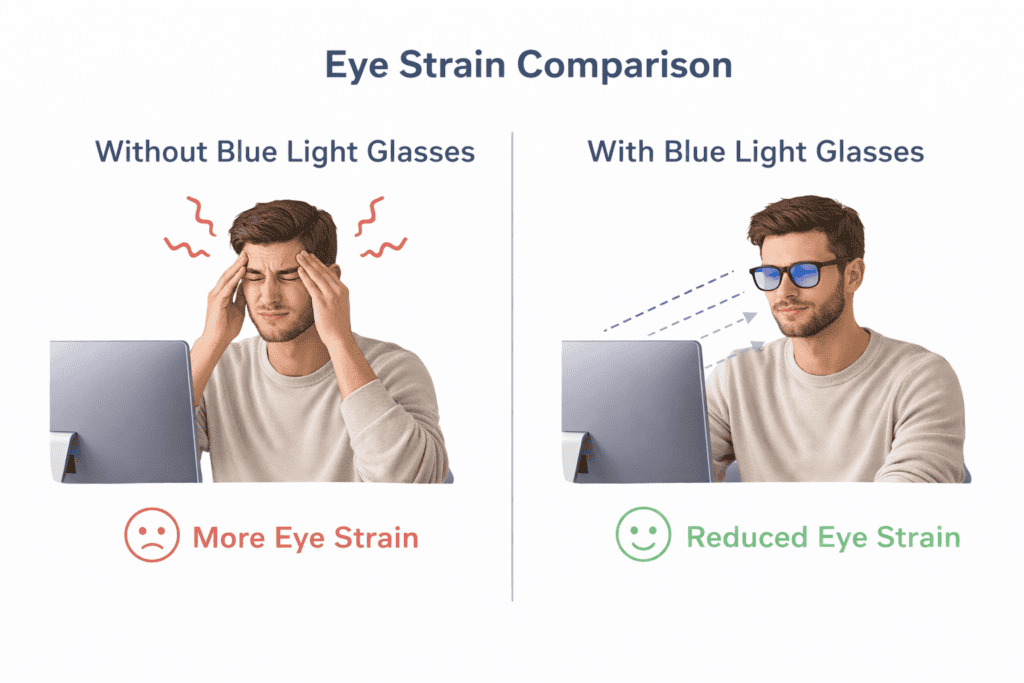
Blue light glasses are frequently pitched as an easy fix for tired eyes, but whether they’re actually beneficial depends on how you use screens. They can make some people feel better, particularly during long stretches of screen time. But they are not the magic answer.
What users report
Wearing blue light glasses helps a lot of people to feel like their eyes are less tired at the end of the day. Some notice having fewer headaches or less eye dryness after long computer sessions. These accounts are of comfort, rather than being medically treated. The glasses might simply cut down on glare and harsh light, which can make screens feel easier to look at.
Role of screen habits
More important than the glasses themselves is how you use the screen. No matter what kind of glasses you have, staring at a screen while barely blinking, working for hours without a break, or in front of very bright screens can cause fatigue. Bad habits can cancel out any slight benefit of wearing blue light glasses.
Why results vary by person
Not all of those people experience the same results. Eye sensitivity, time spent on the screen, lighting, and posture are factors. Someone with great ergonomics may perceive no distinction, whereas someone for whom discomfort is already an issue should experience relief. If you frequently have dry eye, headache & fatigue, glasses will help a little, but it is more important to change your screen habits.
Blue Light Glasses vs Proper Screen Ergonomics
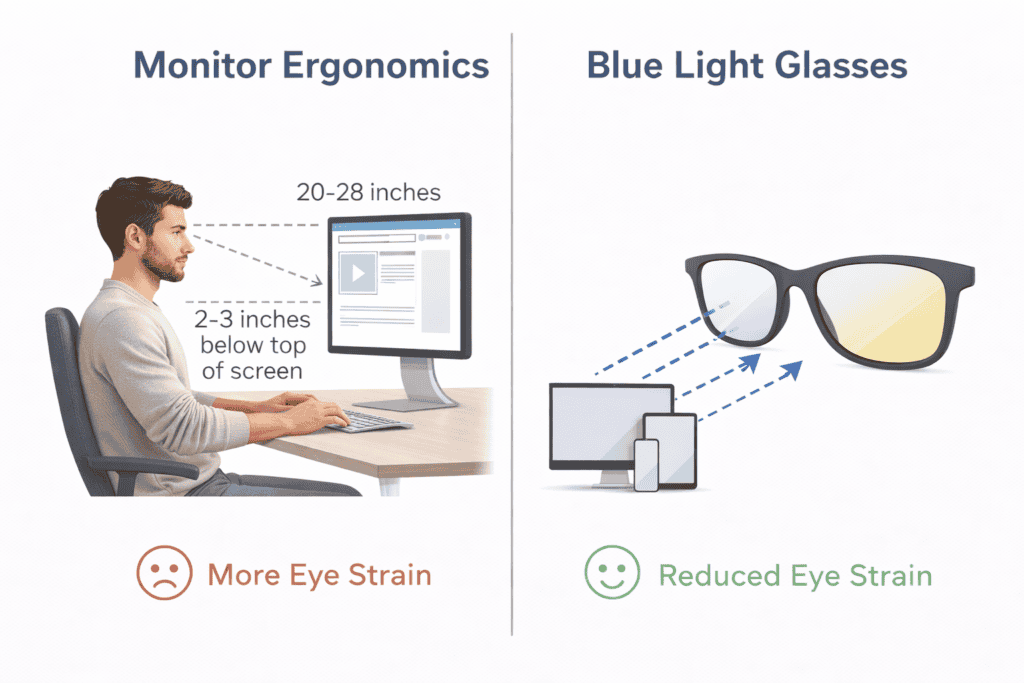
Blue light glasses can help with comfort, but screen ergonomics must come first. Glasses help your eyes adapt, and ergonomic shields against fatigue.
The most important ergonomic factors to consider:
- Monitor height: Your screen should be at or just below eye level. This keeps your neck relaxed.
- Screen distance: Sit too close, and your eyes have to work harder. And a safe distance is about an arm’s length.
- Brightness & contrast: A blooming image is distracting, as are overly dark or bright displays.
Comparison Table
| Feature | Blue Light Glasses | Proper Screen Ergonomics |
| Reduces light glare | Yes | Yes |
| Improves posture | No | Yes |
| Helps neck & shoulders | No | Yes |
| Long-term comfort | Limited | High |
| Prevents daily strain | Partially | Strongly |
If you have to pick one, go with ergonomics. An ideal computer monitor height cuts eyestrain by more than glasses can provide.
Who Should Consider Blue Light Glasses?
Blue light glasses aren’t necessary for everyone, but some may benefit more than others depending on daily screen time.
- Office staff of 6–8 hours looking at documents and emails may have less visual stress with glasses, especially in a bright office.
- Most commonly, gamers spend long, solitary attacks in front of screens. Glasses can help to prevent glare while playing for long periods, in the dark.
- Remote employees are jumping between video calls, documents, and browsers all day. (For end-of-day eye fatigue, glasses may help when combined with good ergonomics.)
- Users with heavier laptops are more prone to looking downward at the screen, which can place strain on the body. Glasses can offer some help, but lifting your laptop and straightening out your posture matters more.
Blue light glasses are most effective as a complementary measure, not as an alternative to a healthy screen setup.
When Blue Light Glasses May Not Be Necessary
Blue light glasses work for some, but they aren’t necessary for everyone. If you’re only occasionally using your screen while relying on it to take a few messages, quickly check the news, or watch something short, then your eyes typically get enough natural recovery time. In such situations, exposure to blue light is minimal, and special glasses won’t make a significant difference.
A proper ergonomic setup can also eliminate the need for blue light glasses. When you’re sitting up at the right height, your screen is an arm’s length away from you, and you are relaxed in position, then there should be less strain on your eyes. Good ergonomics and natural blinking mean one less thing to worry about when designing eye-wear add-on tools.
Most modern devices also have built-in screen filters and night modes. Those features gradually tweak the coloration and brightness of screens, especially as the evening goes on, so that they’re easier on the eyes. When combined with adequate room lighting, regular breaks, and proper monitor placement, these tools might offer just enough relief for everyday screen use. So, in this, you can consider wearing blue light glasses; if not, then it’s optional for sure.
Common Myths About Blue Light Glasses
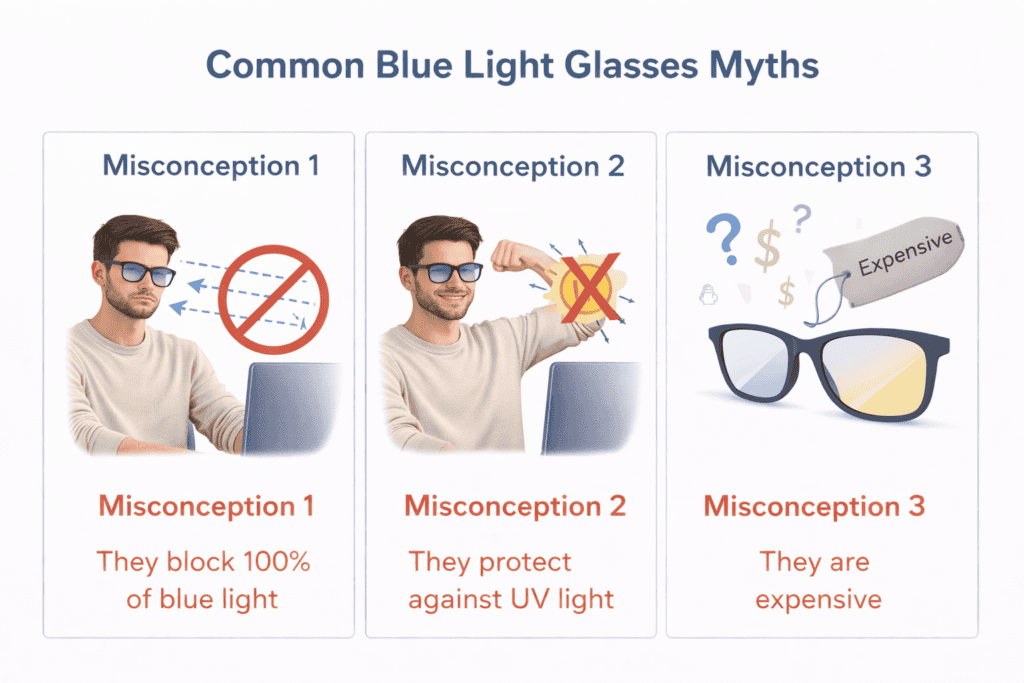
That blue light glasses can fix eye strain is one of the popular myths. Anyway, it’s all screen time/ A sore eye is due to long hours of staring at the monitor/ and how you are sitting/ wrong monitor height/ no breaks. Glasses may help make you feel more comfortable, but they won’t take the place of healthy screen behavior or the right ergonomics for your desk.
Another mistake is that darker, or more yellow, lenses work better. The darker the tint is synonymous with better the results. Lenses that are highly tinted can affect color perception and feel uncomfortable with extended use. Well-designed blue light glasses concentrate on providing gentle filtering, not extreme darkness.
A lot of people also aren’t convinced that blue light glasses work instantly. This is rarely true. Comfort is a function of how you’re using screens during the day. If you stare at a screen for hours on end with no breaks, the best pair of lenses in the world will only be so effective.
It’s this latter category you’ll find the blue light glasses, which are probably best thought of as a support tool rather than a magic solution. The true relief lies in how you combine them with ideal monitor height, correct screen distance, balanced brightness, and the right amount of rest for your eyes.
FAQs About Blue Light Glasses
How effective are blue light glasses?
For some people, blue light glasses can help ease discomfort during extended periods of screen use. They are intended to cut down on some blue light from screens. It would probably reduce glare for many users and could also allow screens to feel softer on the eyes. But individual results vary, depending on screen habits.
Do blue light glasses help with headaches?
They might help some people, particularly those who get uncomfortable after eyeballing screens for hours. Headaches may be related to eye strain, poor posture, or extended periods of focus. Glasses can make you more comfortable, but they’re not a one-size-fits-all solution for some people.
Are blue light glasses safe to use every day?
Yes, blue light glasses are safe to wear every day. They are not harmful to your eyes, and they do not change how your vision works. You can use them at work, for studies, or just for casual screen time without any trouble.
Do I want them if my monitor is calibrated correctly?
If your monitor height, distance, brightness, and lighting are already adjusted well, you don’t need blue light glasses. Eye strain is often minimal if you have a good ergonomic setup on its own. Tinted glasses become support, not a measure of default.
Will blue light glasses ever be a substitute for breaks?
No. Breaks are still important. Glancing away from screens, blinking naturally, and resting your eyes does more eye-trouble prevention than glasses. Blue light-blocking glasses are most effective when used in conjunction with healthy screen habits.
Final Thoughts: Glasses Help, Setup Matters More
Blue light glasses can help, but they are not the primary solution. The key to reducing discomfort during screen time begins with the fundamentals: correct monitor height, appropriate screen distance, correct brightness setting, and regular breaks. Once you have these, glasses can provide even more comfort, especially when it comes to workweeks.
Eye strain, fatigue, and discomfort are no strangers to today’s screen-heavy life — and these usually have to do with how we use screens, not fear-inspiring problems. First off, foon oonbetterter setup. When your desk and office ergonomics support your body and eyes, blue light glasses only need to be a supporting act, not a star.