
Introduction
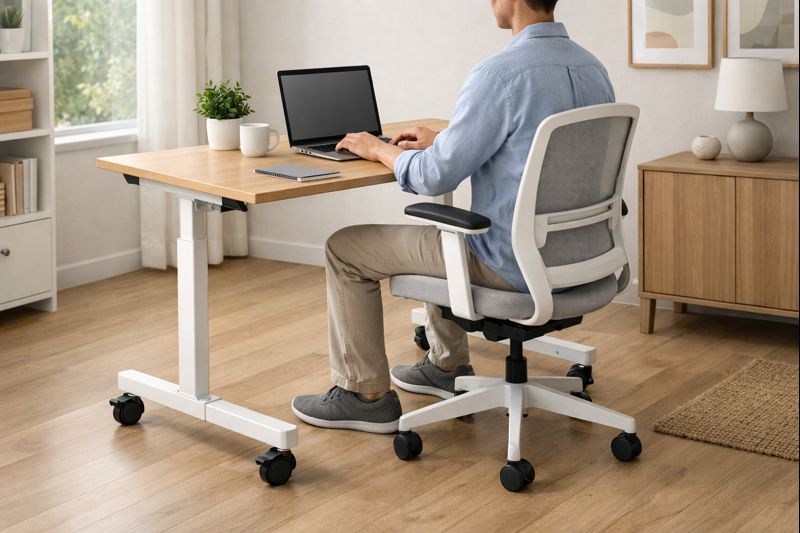
Workspaces are changing fast. With more people working, studying, and learning from home, many want desks that can be easily moved and adjusted to accommodate changing needs. Enter: adjustable height rolling desks. Whereas a stationary, fixed desk remains in one place and at a fixed height, the rolling desk is designed to glide around and accommodate both your body and the task at hand.
An adjustable-height rolling desk lets you adjust the desk’s height and roll it to another spot without lifting heavy furniture. This makes it great for small spaces, co-working, and all types of work styles.
This guide is for beginners, home office workers, and anyone else who uses a desk for light work and wants to know how these desks work, why they promote better ergonomics, and how to use them properly. It’s all laid out in plain, direct language — no technobabble, no sales pitch — plain talk to help you determine if this kind of desk will do the job for you.
Table of Contents
What Is an Adjustable Height Rolling Desk?
An adjustable-height rolling desk is easy to move and can be raised or lowered vertically to accommodate users of all sizes. It encapsulates a couple of big-picture ideas: flexibility and comfort. Instead of the other way around, where your body is shoe-horned into a desk forcing you to fit, this wooble-jointed table fits you. That’s what makes it great for work, study, light computer use, and communal spaces.
Unlike a traditional desk, which stays in one place and at one height, a rolling desk can be moved to where it’s needed and easily adjusted in seconds. It is also helpful for minimizing strain on the neck, shoulders, and back—especially useful when sitting or standing for long stretches of time (or both).
Simple Definition
Height-adjustable means the desk surface can be easily raised and lowered. It means you can also use the desk from a sitting or perched position, as well as standing, if it feels most comfortable for your task at hand.
The one note here is that when I say “rolling,” it means the desk has wheels (just another way to say “casters”) on the bottom. These wheels allow you to scoot the desk across the floor without lifting. This is a cliche, but most people don’t use their rolling desks as much as they could because they’re really settling in for the long haul, and who wants to deal with clunky furniture that slides and shakes?
Put simply, it’s a desk that moves and adjusts in height to allow better posture and flexibility.
Key Design Components
The average height-adjustable rolling desk has several common components:
- Height adjustment: Either manual (hand lever or knob) or gas-assisted for ease of height changes.
- Wheels/casters: Typically four for secure and easy transport, often with locks.
- Desktop size and stability: The surface is compact yet stable, so you can use it to hold your laptop, keyboard, or books without wobbling.
All of which makes the desk practical, versatile, and easy to use for beginners, every day.
How Adjustable Height Rolling Desks Support Ergonomics
The height-adjustable rolling desks promote better posture, helping you keep your body from spasming while working. Instead of being stuck in one position for hours, these desks allow you to adjust height and move around quickly. This eases the strain on your back, neck, and shoulders, making long hours far more comfortable.
Since the desk can be moved and adjusted, it is suitable for a range of work activities, body sizes, and work styles. It’s this versatility that makes these desks so popular for home offices, study spaces, or shared rooms.
Supporting Neutral Posture
A neutral posture is one in which the body remains balanced, not bent or twisted. An adjustable height rolling desk helps with this.
While you’re sitting, the desk can be lowered so that your elbows are near your body and at approximately right angles. Shoulders are relaxed and not lifted. The desk height also allows you to keep your monitor at eye level, helping prevent neck strain.
The desk goes up when you stand up, so you don’t have to reach forward. Your elbows can stay comfortably near your sides, and the screen remains at a height that doesn’t force you to crane your neck. This simple act of alignment can help safeguard your spine over time.
Encouraging Movement
There are so many ergonomic benefits, but one of the greatest is the ability to move. Sitting or standing in one position for too long can make muscles tired and stiff.
A rolling desk provides some daylight mobility. All the while, you can smoothly switch from sitting to standing, roll the desk closer or farther, and adjust your position without disrupting your workflow. These minor alterations can reduce static posture, a common trigger of discomfort.
Staying in regular, gentle motion keeps muscles active, improves circulation, and helps you feel less weary by the end of the day.
Adjustable Height Rolling Desk vs Fixed Desk
Deciding between the adjustable-height rolling desk and a fixed standing desk really comes down to how you work, how long you normally sit or stand, and just how much versatility your schedule requires. Both types of desks have their proponents, and both support the body in very different ways. Studying these differences will help you select more comfortable headgear.
Fixed Desk Limitations
A fixed desk is one height at all times. This is sometimes an issue, as people are of different heights and body shapes.
Wrist bend and hunched shoulders when the desk is too high. Too low, and you can find yourself reaching forward and straining your lower back and neck. Fixed desks can also make it difficult to alternate between sitting and standing, so you remain in the same position for hours on end.
This lack of movement over time can result in stiffness, fatigue, and poor posture habits — especially for those with long work hours.
Rolling Desk Advantages
An adjustable-height rolling desk solves many of these problems by offering adjustability.
The desk can be raised and lowered to meet your elbow at a sitting or standing height. This will help keep your back straight and your shoulders relaxed. Its wheels make it easy to move the desk around—great for small rooms, shared spaces, and multi-purpose uses.
Rolling desks also encourage movement. Simply by sitting in a slightly different position during the day, you can relieve muscle tightness and make your back feel better.
When a Fixed Desk Is Still Better
Fixed desks are still a great choice for some applications. If you work in a dedicated space, often sit for short periods, and already have a desk that fits your height well, a fixed desk can be just fine.
They’re also more sturdy for heavier machinery and generally refuse to budge unless you want them to. Simplicity can be a boon for users who don’t require flexibility.
Comparison Table: Adjustable Height Rolling Desk vs Fixed Desk
| Feature | Adjustable Height Rolling Desk | Fixed Desk |
| Height flexibility | Can be raised or lowered | One fixed height |
| Sitting & standing use | Supports both | Sitting only |
| Movement | Easy to reposition | Stays in one place |
| Posture support | Adapts to the user | Depends on desk fit |
| Best for | Flexible, long workdays | Short, simple use |
Bottom line: Rolling desks offer more ergonomic support for changing needs, while fixed desks work best when simplicity and stability are the priority.
Proper Setup for an Adjustable Height Rolling Desk
A rolling desk is ergonomic only when it is well adjusted. Many people purchase adjustable desks and still experience discomfort because the height, wheels, or screen is not at the right level. Your ability to sit and stand in the right position not only protects your back, neck, shoulders, and wrists.
Here’s a simple, step-by-step guide to set up your adjustable-height rolling desk correctly.
Correct Desk Height
For sitting:
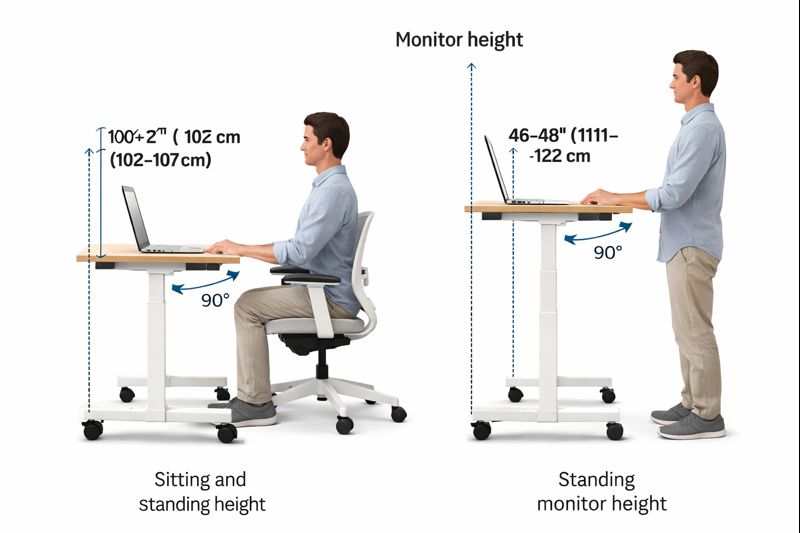
Lean back in your chair and let your feet rest flat on the floor. Raise the desk so your elbows are bent to approximately a right angle (90 degrees). Your forearms can lie unfettered upon the desktop, not floating at your side and holding the desk up to shoulder level.
Then, if the desk is too high, your shoulders hunch. If it’s too low, you will hunch forward and put strain on your back.
For standing:
Raise yourself so you are standing with weight in both feet. Lift the desk so that your elbows once again make a comfortable 90-degree angle. While typing, your wrists should remain straight — not bent up or down.
A good rule of thumb: your hands should be able to “float” naturally over the keyboard.
Wheel Locking & Stability
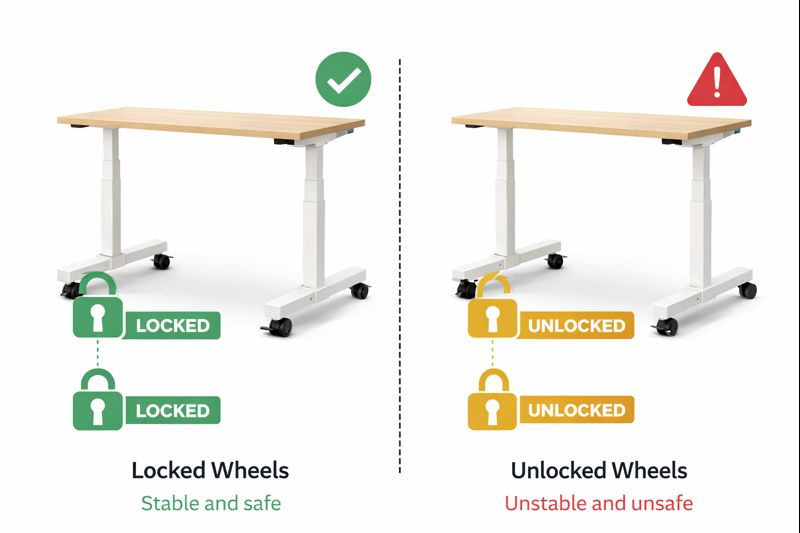
Rolling desks have wheels so they can move around, but you’ll need to lock those wheels when in use.
Why locking matters:
Unlocked wheels can cause the desk to move while you’re typing or writing on it. This results in bad posture and wrist cramping. It can also be unsafe, particularly for standing work.
Common mistakes to avoid:
Failing to “freeze” wheels before working.
Volitionally exerting body weight on an unlocked desk
Taking note of stability when working on uneven floors
Always lock all wheels before working.
Monitor, Keyboard & Chair Alignment
Your desk doesn’t stand on its own — it’s got to go with your chair and screen.
- Monitor: Your eyes should be level with the top of the screen or just below it. This keeps your neck straight.
- Keyboard and mouse: Keep them near so that you don’t have to lean forward. Wrists should stay neutral.
- Chair: Set chair height first, then set desk height to match the chair — not the other way around.
A rolling desk works best when your desk, chair, and monitor form a single system.
When adjusted correctly, a rolling adjustable-height desk promotes all-day comfort, movement, and better posture.
desk chair dimensionsBest Use Cases for Adjustable Height Rolling Desks
But adjustable height rolling desks are best in certain situations and shine there. So naturally, knowing when it’s best to use them against which pests will help you make a considered decision and avoid any discomfort or financial loss.
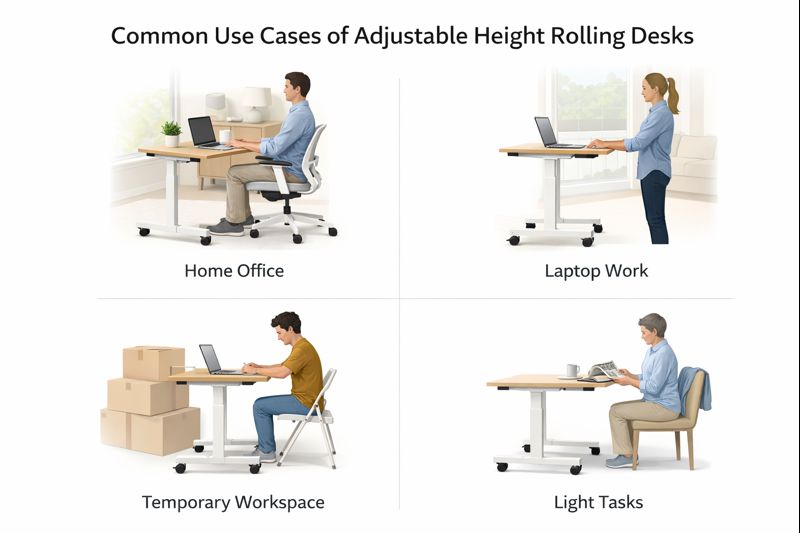
Home Offices
These desks are great for home offices because they adjust to your workspace and let you sit or stand. Change positions throughout the day to relieve tension, reduce fatigue, and improve focus.
Small Rooms
These rolling desks are great for small spaces. They are mobile, so you can move them about freely, freeing up floor space. They’re not locked into only one layout the way a fixed desk is, and can therefore be practical for multi-use spaces.
Laptop & Light Tasks
These are great desks for tasks that don’t require much heavy equipment. Also, it is easy to write, read, or work on a laptop, as the desk adjusts to the ideal height with ease. This adaptability allows for a neutral posture over the long term.
Temporary Workstations
Those in need of a desk for temporary arrangements, such as pop-up offices, guest workspaces, or occasional work on the go, will find a rolling desk highly accommodating. Its portable design makes it easy to set up and store away when you’re done for the day on the water.
In other words, adjustable-height rolling desks work best for versatile, lightweight, mobile work. The ergonomic support they offer is non-permanent, while still being very friendly to your posture and circulation – so if you need comfort and an option for long-term use in a home office or temporary workspace, they are definitely a wise pick.
When an Adjustable Height Rolling Desk Is NOT Ideal
Adjustable-height rolling desks are flexible—but they can’t work for everything. Own their limits and weaknesses, even at the expense of sounding less heroic, to help readers decide if they would make a better leader than themselves.
Heavy Equipment
These desks are used at a light to moderate level. If you have two or more monitors and/or need to support a large printer or other bulky equipment, a non-movable sturdy desk is probably safer. Rolling desks tend to wobble on occasion, and loading them up with extra weight is only going to put stress on the height mechanism.
Long Static Sessions
Even rolling desks, though promoting movement, are not intended for long spells of sitting in one position. If you spend hours in one spot, focused, without changing posture — working at a sewing table or stout deals ink at an antique desk or standing to work… it may be more comfortable for your body’s specifics.
Uneven Flooring
Rolling desks – on flat ground, without bumps! On rough or carpeted ground, movement may be limited, and footing can suffer. This makes the workbench or similar device more prone to tipping, thereby adversely affecting productivity and exposing employees to the risk of injury.
So to sum it up, adjustable height rolling desks are great for versatility and light work, that’s about it, not best-suited for heavy use or long-term stationary setup on uneven floors. Knowing this information will help you select a desk that is fully compatible with your particular way of working and supports ergonomic safety.
Adjustable Height Rolling Desk and Desk Posture
More than just versatile furniture, height-adjustable rolling desks are an important part of maintaining workplace health. They let you sit and stand, reducing the strain on your neck, back, and shoulders.
Sitting Posture
While sitting, move your desk so that your elbows are also at 90 degrees and your feet are flat on the floor. It’ll keep you from slouching and instead encourage your spine to be in the right position. The mobile desk also allows you to shift slightly, reducing static pressure on your hips and lower back.
Standing Posture
Your keyboard should sit at elbow height, and your monitor should be at eye level. This position reduces the tension in your shoulders and allows your spine to remain straight. Rolling desks let you easily switch between heights without exerting much energy, which promotes micro-movements and subtle posture changes throughout the day.
Movement Balance
The greatest ergonomic advantage of a roller desk is its balanced movement. You can sit, stand, or gently change positions every 30 to 45 minutes. This kinetic position reduces fatigue and improves blood circulation, helping you stay comfortable on long working days.
By correlating height adjustment with posture awareness, standing, and sitting, rolling desks can easily provide a sit-stand solution! This makes them an adjustable solution for healthier, more balanced working habits.
Common Mistakes to Avoid
Adjustable-height rolling desks are great for mobility, but they can miss the mark ergonomically if used incorrectly. Knowing what not to do keeps you safe and comfortable all day, every day.
Wrong Height Setup
Among the most common are positioning the desk too high or too low. Elbows resting at a height above or below table level will strain the shoulders and wrists; standing at the wrong height can lead to neck or back tension. Don’t forget to neutral posture – 90-degree elbows, monitor at eye level.
Unlocked Wheels
Lots of people forget to fix the casters. Rocking desks tend to sway, tip over, or plain make sense. The wheels can be locked, enabling stability to work, whether sitting or standing.
Treating It Like a Permanent Desk
Some think that once the desk is set, it stays that way all day. Rolling desks are meant to keep you moving. We know, we do such things, but spending too much time in one position — sitting and standing included — essentially negates any ergonomics. Sit-to-stand every 30-45 minutes to improve circulation and reduce fatigue.
By preventing these mistakes, you can help to ensure the adjustable height rolling desk’s intention – comfort, safety , and posture support- is achieved. Good setup and good use are the keys to long-term ergonomic happiness.
Frequently Asked Questions (FAQ)
Are adjustable height rolling desks ergonomic?
Yup, these desks do serve ergonomics well; however, it’s just about getting users up from a sitting position into a variety of positions by standing when using them properly. A desk that can be adjusted to your elbow and monitor height keeps your spine neutral while easing pressure on your back, neck, and shoulders.
Can you use a rolling desk as a standing desk?
Absolutely. Rolling Desks are a two-fer – they also serve as adjustable-height standing desks. Just raise the desk to an ergonomic standing position you are comfortable with, maintain your elbows at approximately 90 degrees, and your monitor at eye level. Sitting to standing height; get healthier and more productive.
Are rolling desks stable enough for work?
Nearly all rolling desks have caster wheels with locks to keep them from moving. Wheels lock to add stability for typing, writing, or using the laptop stand. Don’t use them on a bumpy world; they’ll take out the stability aspect and have an impact on your posture.”
Do rolling desks replace traditional desks?
Not entirely. 2STaminet Rolling desks are ideal for light work, home offices, or quick arrangements. They are a complement to traditional desks, not a full-blown replacement — particularly if you require a large and heavy workspace.
These FAQs address common concerns and help beginners understand how adjustable height rolling desks can fit safely and effectively into a modern workspace. Proper use ensures both comfort and productivity while supporting good posture.
Final Thoughts
Height-adjustable rolling desks are mobile workstations for the modern office, providing a versatile workspace that can be used in both sitting and standing positions, with smooth, quiet mobility. When designed properly, they promote good posture, minimize stress, and allow freedom of movement throughout the day.
But the advantages of these services depend on how you use them. Whether you’re sitting or standing, you’ll need to lock the wheels for stability, then adjust the desk to match your height, as well as your chair and monitor. You should not abuse a rolling desk, such as treating it as a fixed office or putting more weight on it than it can safely support, as this poses safety and comfort hazards.
For the home office, occasional task work, or temporary workspaces—think craft room—the rolling desk combines mobility and ergonomic comfort. Knowing their limitations and heeding the placement guidelines makes them part of a comfortable long-term choice that supports good posture and an efficient workspace, rather than putting too much weight on design alone.