
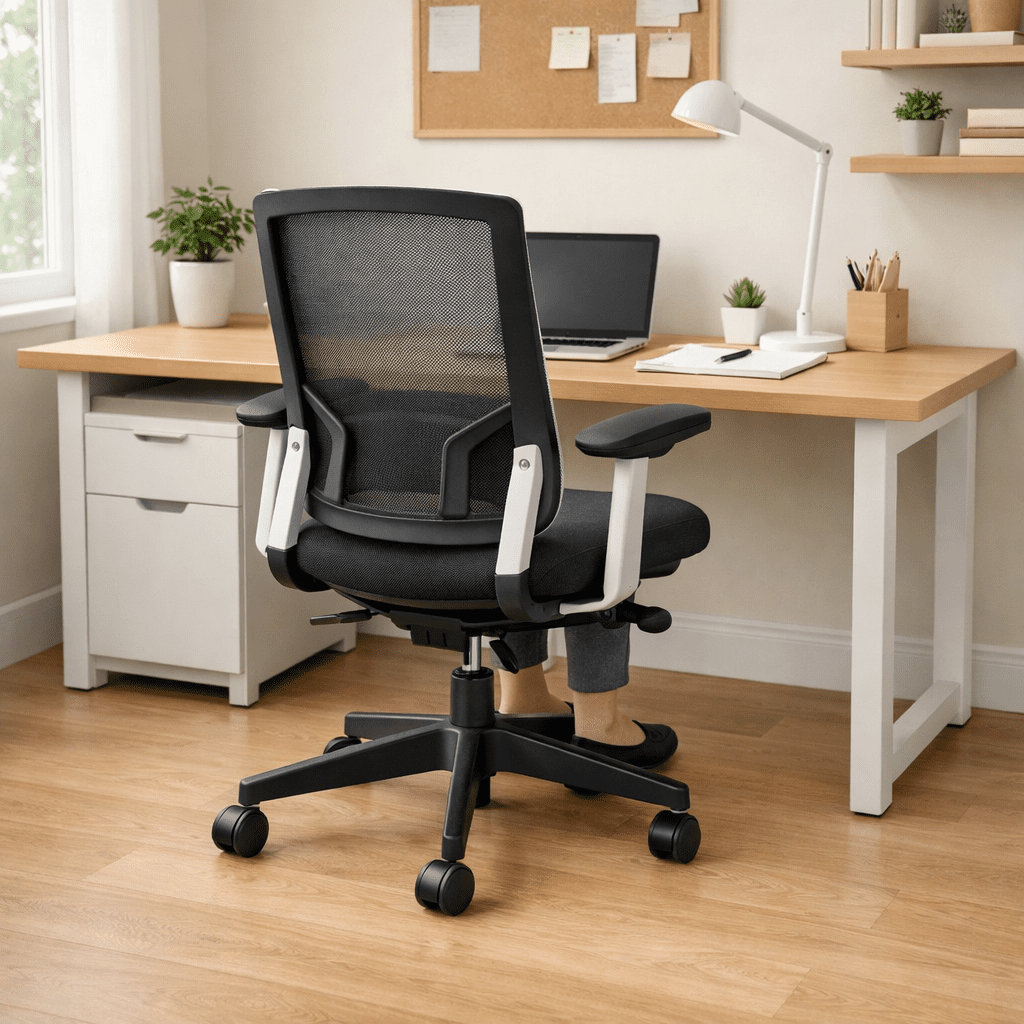
When it comes to choosing a desk chair, it’s not all about what the chair looks like — it’s also about how well the chair fits your body. A desk chair’s dimensions have a significant impact on how you sit, how you feel, and how long you can work comfortably. If a chair is too high, too deep, or poorly designed, it can lead to discomfort, including back pain, stiff shoulders, and tired legs.
For home office users who are absorbed with price or design, few consider the importance of chair dimensions. But the correct seat height, seat depth, and overall fit will make it easier for you to maintain a natural posture and keep your body supported. This also enhances how your chair fits with your desk, keyboard, and screen.
This guide will help you understand the desk chair dimensions that matter for Comfort and ergonomics. The mission is straightforward: guide you through the details of a chair and how to measure it, so that you can sit better, feel better, and work without pain — no branded products, just clear information.
For deeper posture insights, read Stand‑Up Desk Stools: Ergonomics & Best Use for Posture to see how alternate seating affects ergonomic fit.
Table of Contents
Why Desk Chair Dimensions Matter for Ergonomics
Desk chair measurements matter because your chair is how you control what your body looks like while sitting all day. When the chair has to compete with your body for space, it’s only natural that sitting will not feel comfortable. A seat that is too high, for instance, can cause your feet to dangle and push against your thighs. If the saddle is too low, you have to push your knees up — this will round out your lower back. Over time, these tiny posture problems can lead to back pain, neck strain, and tired muscles.
The chair’s size is also proportionate to the desk’s height. If your chair and desk don’t jive, you might find that as you type, your arms hover too high or too low. This can create tension in your shoulders, discomfort in your wrists, and misalignment of the elbows. Even with a great desk setup, the wrong chair dimensions can still make it feel uncomfortable.
Many focus on immediate Comfort, such as a cushy cushion, but neglect long-term fit. A chair could feel comfortable for 20 minutes but produce pain after a few hours. Correct seat height, depth, and back support help your spine maintain a healthy position for longer periods. And this is why ergonomics, like a good pair of shoes or comfortable pants, is about fit, not flash. The right desk chair helps you work better, and when your body feels good, you feel faster and healthier throughout the day.
Standard Desk Chair Dimensions
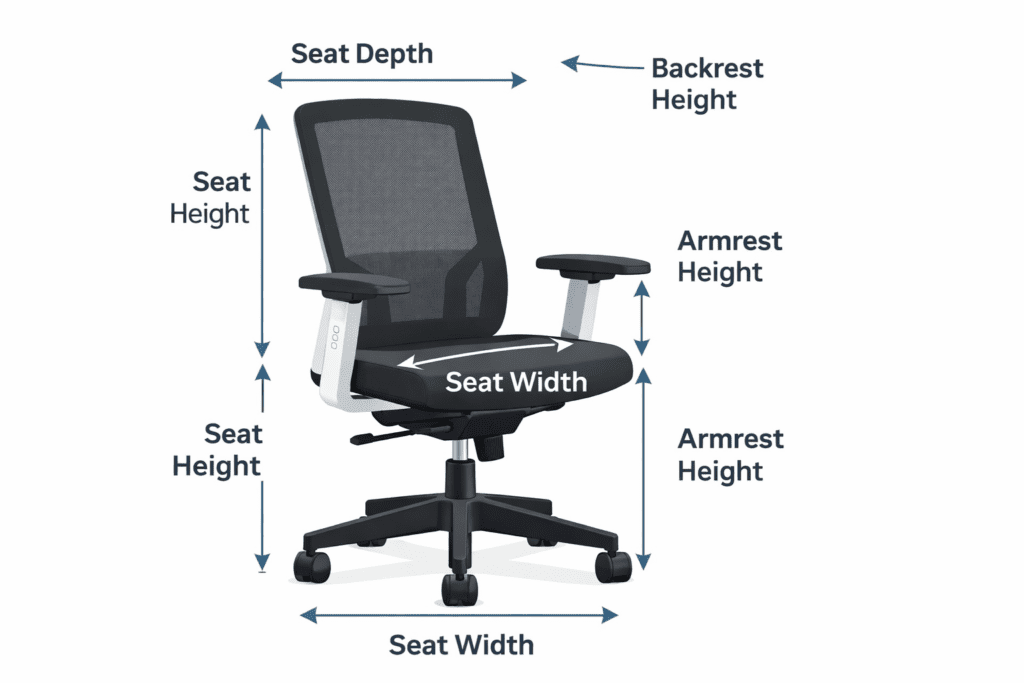
Knowing the standard desk chair dimensions will make it easier for you to find seating that fits your body, rather than just a good-looking piece of furniture. Those measurements are based on how people sit at desks to work, study, or use them in the home. These are generalizations; everyone is different, but it helps to have a range to start with to ensure Comfort and good posture.
Ideal Seat Height for All Body Types (Most Important)
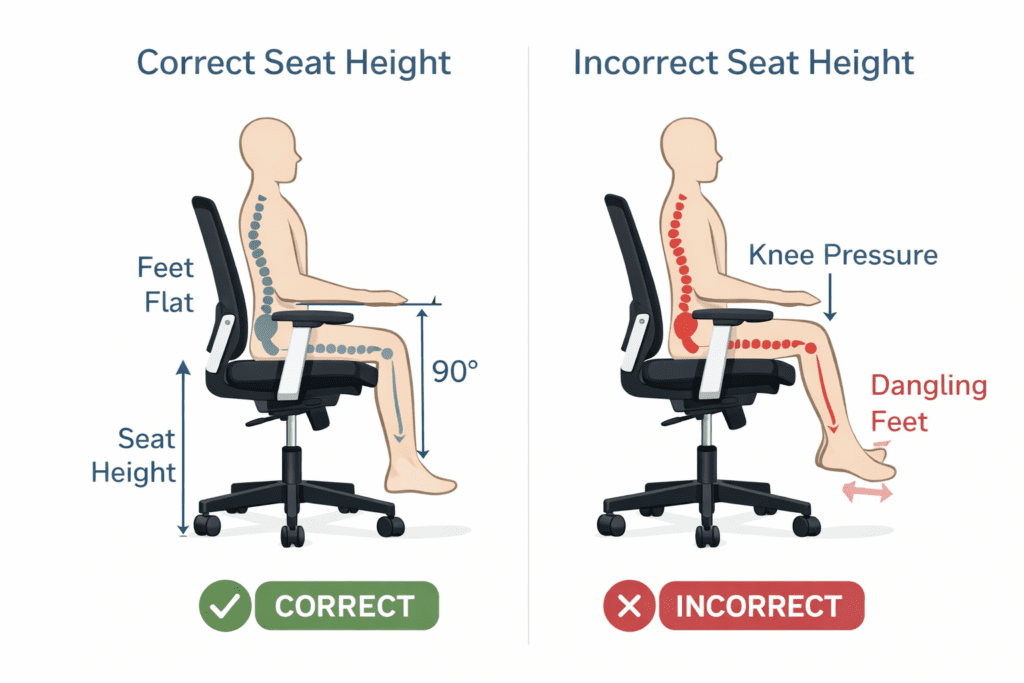
The most important dimension of a desk chair is seat height. In general, when you measure from the floor to the top of a seat, most desk chairs will have a seat height of 16 to 21 inches. This range is appropriate for normal desks, which are usually about 28 to 30 inches high.
One good rule of thumb is called the feet-on-floor rule. When sitting, you should be able to rest both feet flat on the floor and have your knees at or a little below hip level. The seat is too high; your feet are going to dangle, and your upper thighs are going to take pressure. If it is too low, your knees lift, which stresses your back.
The seat height should also ensure that your elbows extend in front of your body and out to either side, so they can line up with the desk surface while typing.
Learn how height integration works with your desk setup in Standard Desk Height Guide & Inches Explained.
Seat Depth: How it Affects Comfort
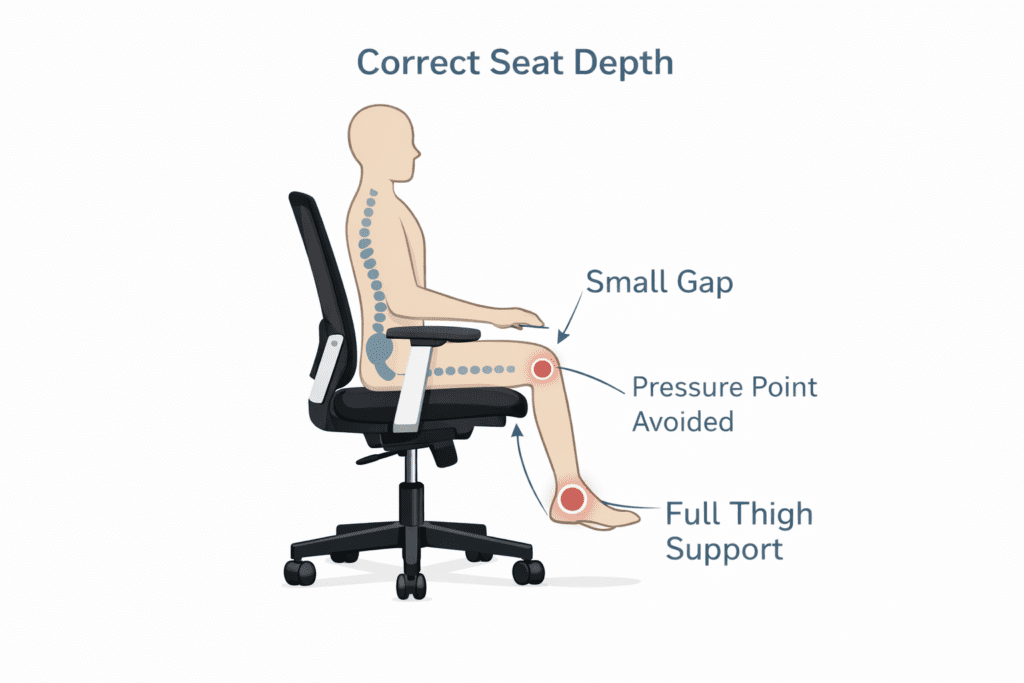
Seat depth: the length from the front of the seat to the back cushion. The standard seat depth ranges between 15 and 18 inches. The objective is to cushion your thighs without smushing the backs of your knees together.
There should be a space (approximately two to three fingers) between the front edge of the seat and the back of your knees when you’re sitting. Shorter people typically require a shallower seat, whereas taller individuals require a deeper seat. Incorrect seat depth may cut off circulation or force you to slouch.
Seat Width
The width is responsible for comfortable seating and maneuvering. The seat on most desk chairs is 17 to 20 inches wide. You can sit very comfortably without having to spread your legs too wide.
A seat that’s too narrow can feel cramped; one that’s too wide may limit your arms and back from receiving the support they need. Once you get the right width, it’s a matter of striking the balance between Comfort and posture.
Simple Desk Chair Measurement Table
| Chair Part | Standard Range (Inches) |
| Seat Height | 16 – 21 |
| Seat Depth | 15 – 18 |
| Seat Width | 17 – 20 |
These standard dimensions help create a healthier and more comfortable sitting setup for everyday desk use.
Adjustability Tips for Better Posture
The sizes of the backrest and armrests can impact how supported and rested your body feels in a seated position. Even with the appropriately sized seat, poor back or arm support will leave you feeling uncomfortable after a while. Knowing these measurements can help you pick a chair that actually fits your body.
Pair proper dimension choices with support features by reading What Ergonomic Chair Back Support Is? “
Backrest Curve & Lumbar Support
The backrest provides support for your lower back (in particular) and spine—Backrest height. On a typical desk chair, the top of the back is 12 to 22 inches above the seat. The most important is lumbar support, which should gently fit the natural curve of your lower back.
In most cases, lumbar support feels best when it’s located 6 to 10 inches above the chair seat. Too high and too low, and it whiffs on the curve, not helping much. That is why “one size fits all” so often doesn’t. Since people have different torso lengths, a stationary backrest won’t work for everyone. Chairs with adjustable backrests or lumbar support work better if others will be using the chair long-term.
Armrest Height & Wrist Alignment
Armrests aid in a relaxed posture for your shoulders while working. The recommended armrest height is around 7 to 10 inches above the seat. When positioned properly, your elbows (without scrunching!) should graze the armrests, and your shoulders should remain down—not hunched.
Armrest width also matters. There should be plenty of room for your arms to swing freely without being forced outward. Many chairs are set 18 to 22 inches apart at the armrests so that most average-sized people can sit comfortably.
Armrests: Your armrests should also be at the level of your desk. They keep running into the desk if they are too tall. They are either too low, because of which they won’t support your arms. The right-sized armrests, on the other hand, can help reduce your shoulder strain and even wrist pressure, making desk work more comfortable and sustainable.
How Desk Chair Dimensions Should Match Desk Height
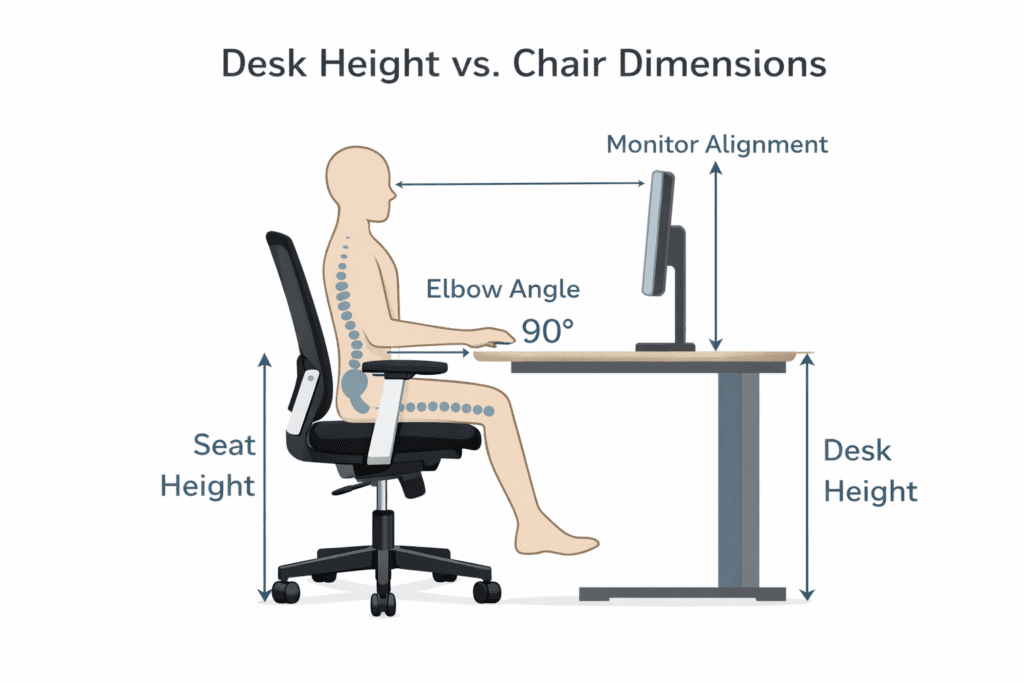
A desk chair and a desk partner sometimes taste like sloppy teamwork. Even a well-designed chair can be uncomfortable if it is not at the proper desk height. Your body remains in balance, relaxed, and supported whenever both are properly aligned when working or studying.
The most important relationship is seat height vs desk height. When seated, your feet should be flat on the floor, and your knees should be bent at a right angle. From there, your elbows will naturally fall to the same level as the desktop. You’ve got the best posture if your elbows use a 90- to 100-degree angle when they’re on the keyboard or table. If the chair is too low, you lift your shoulders. If it is too high, your wrists bend upward, and the strain accumulates over time.
The height of the desk also impacts how your monitor and keyboard will line up. You will know that you have the proper chair height when the keyboard is below elbow level. This prevents any straining on your wrists. The monitor should be positioned such that the top of the screen is at or just slightly below eye level. If the desk is too high or too low relative to your chair, you might find yourself tilting your head, leaning forward, or raising your shoulders without even realizing it.
Well, in a desk chair, matching eliminates some of the minor daily stress on your neck, back, and arms. Think of the chair as establishing your body’s base, and the desk as meeting you at the right level. When both match properly, sitting is more effortless and seems more natural, even after longer periods of work.
Desk Chair Dimensions for Different Body Types
Not all bodies are suited for the same chair. The size of the desk chair needs to be proportional to your height and body shape so you can maintain proper posture and feel comfortable. It’s too often overlooked, yet it can make a world of difference in how your back, legs, and shoulders feel over the long term.
For Shorter Users
For shorter users who sometimes find chairs too high or seats too deep. Seat height should be such that the feet can rest flatly on the ground without undue demand being made on the thighs. If the seat is too high, your legs will dangle and be uncomfortable. Seat depth matters, too — knees should be a few inches away from the edge of the seat. If the seat is deep, it can dig into your legs, forcing you to slouch.
For Taller Users
Taller people require more space and more support. A deeper seat is more effective at fully supporting longer thighs without blocking circulation. Backrest height also matters; if too low, the upper and lower back won’t be sufficiently supported. People also need to find a chair that is both higher and deeper to avoid leaning forward.
For Average Users
Standard desk chair dimensions are generally a better fit for average-height users. A standard adjustable chair at the right seat height, with a moderate seat depth and a supportive backrest, may be suitable. mall modifications, however, are still important for daily Comfort and proper posture.
Adjustable vs Fixed Desk Chair Dimensions
There are mainly two types of desk chairs: adjustable and fixed. The distinction is crucial for maintaining good posture and Comfort throughout your seated workday.
Why Adjustability Matters
Some of the chairs are adjustable, allowing the user to change seat height, seat depth, backrest height, and armrest location. Hiss adjustability allows the chair to accommodate your body proportions and support you properly, helping prevent lumbar pain and neck and shoulder strain. For instance, lowering the seat allows you to place your feet flat on the floor, taking pressure off your thighs and improving circulation.
The Most Important Adjustable Measurements
- Seat Height: Adjusts knees and hips correctly.
- Depth of seat: Keep thighs comfortably supported and avoid the back of the knees.
- Height of Back: Lower and upper back.
- Height & Width Adjustable Armrest: relieves shoulder pressure to provide the same sitting experience on all desk types.
When Fixed Chairs Cause Problems
It’s also very comfortable, unlike standard chairs, which have no adjustments. Hoses with various proportions can cause incorrect leg angles, an unsupported lower back, or jutting shoulders. In the long run, this can lead to discomfort, poor posture, and potentially musculoskeletal issues.
In other words, the dimensions of an adjustable office chair help tailor the fit to the individual and minimize stress & strain, thus improving posture; fixed desk chairs often work well only for users whose measurements align with the built-in dimensions.
Common Mistakes When Choosing Desk Chair Size
It’s not about style or color when choosing the ideal desk chair. Novices make some of the simplest sizing errors, and posture can suffer as a result, with the prospect of long-term back or even shoulder strain.
You never want to select a chair before the height of your desk.
A common mistake is purchasing a chair without considering the desk height. If the chair is too short or too tall for your desk, your elbows and wrists may not align properly, leading to shoulder tension or wrist issues.
Ignoring Seat Depth
Seat depth is often overlooked. If the chair is too deep, shorter users may struggle to sit back in it, while a shallow seat might not offer enough thigh support for taller people. Both can result in poor circulation and low back pressure.
Using the Wrong Armrest Height
Armrests that are too high raise the shoulders and create tension, while armrests that are too low won’t support your elbows. The correct height of armrests for typing, writing, and upper-body relaxation is important.
By steering clear of these tactics, you are better able to find a desk chair that fits your body, supports your posture, and plays well with your desk space. paying attention to dimensions, not just appearance, is a way to ensure both Comfort and long-term health.
Desk Chair Dimensions vs Alternative Seating
Turns out, traditional chairs aren’t the only consideration when it comes to desk ergonomics. Alternative seating, such as stand-up desk stools or perching stools, provides alternative support methods that can coordinate with or replace a traditional desk chair.
Chair vs Stand-Up Desk Stool
A typical office chair has three or more features: a full back, armrest height, and seat height. tand-up desk stools, on the other hand, promote a position partway between sitting and standing that fosters some active engagement and discourages static sitting. When it comes to seated work, chairs are great for long-term Comfort. Comfort tools are better suited for short bursts or more active workflows.
Chair vs Perching Stool
Sit on a perching stool that tilts your hips forward and puts your spine in a neutral position. They do well for tasks like drafting or working at a too-high desk.) Can do you all the sitting very well, but none of it better than a chair, which still gives your butt deeper seat support and is easier to keep up over time; those perching stools are really mostly for short tasks in healthy people.
When Alternatives Work Better
Alternative seating can reduce fatigue, alleviate discomfort, and even promote activity for a healthier lifestyle. A traditional desk chair combined with a perching or stand-up stool provides flexibility: sit for Comfort when you need to focus, perch for engagement, and stand to move.
You can base your selection on your work style and desk height, and sit comfortably with decent ergonomics.
Frequently Asked Questions (FAQ)
What is the standard desk chair height?
The general height of a desk chair is between 16 and 21 inches from the floor to the seat. This ensures that most users can sit with their feet flat on the ground and their knees at approximately 90 degrees, which supports long-term Comfort and proper posture.
How deep should a desk chair seat be?
A standard seat depth is 16 to 18 inches, which provides enough thigh support so your knees won’t hit the back of the chair. Shorter people may need a seat that is not as deep, whereas taller people may benefit from a deeper seat to maintain good back and leg alignment.
Do desk chair dimensions affect posture?
Yes. Being wrong can be attributed to improperly adjusted seat height, depth, or backrest, as well as to chairs that cause the user to slouch, sit at an angle, or put stress on the shoulders, leading to lower back pain. By adapting our chair’s dimensions to fit your body type and pairing it with a desk, you get an office chair that promotes neutral spine alignment, matches the angle of your hips for superior Comfort, and distributes 3/4 of the pressure on your lower back, thus offering hours of comfortable work.
Can one chair fit all desk heights?
Not always. A chair that offers a choice of seat height, seat depth , and back support is even better. Fixed-height chairs may not match properly with desks that are above or below the average desk height, and over the year, will create strain.
How important is a good fit in the chair?
Using the correct dimensions prevents common posture mistakes, supports circulation, and reduces the risk of long-term musculoskeletal problems. The ergonomic fit ensures Comfort and productivity, especially in home offices, study setups, or extended computer use.
Final Thoughts: How to Choose the Right Desk Chair Size
Selecting the right desk chair size is about more than picking a chair that looks good or has extra cushioning. The relationship between your chair, desk, and body is what really affects posture, Comfort, and health. Adjusting the seat height, depth, and backrest angle enables your spine to maintain a neutral curve, with optimal hip and knee alignment and shoulders and wrists relaxed.
Adjustable vvs.fixed -W whichg, whichwhichallyfor a wider range of adjustments and can make it easier to match your body wtothe to the of your desk, si while fixed need to be carefully selected ito avotostrato avoid straining youonomic fitit over extra bells and whistles – and keep in mind how long you’ll be working, the type of desk you’re using, and your dimensions. Choosing the right size ensures your Comfort and keeps you feeling well during long periods of desk work.
This ensures a counterweight that steadies your body and promotes healthy sitting habits.
till deciding? Browse our Ergonomic Chairs Category Overview for more guides.