
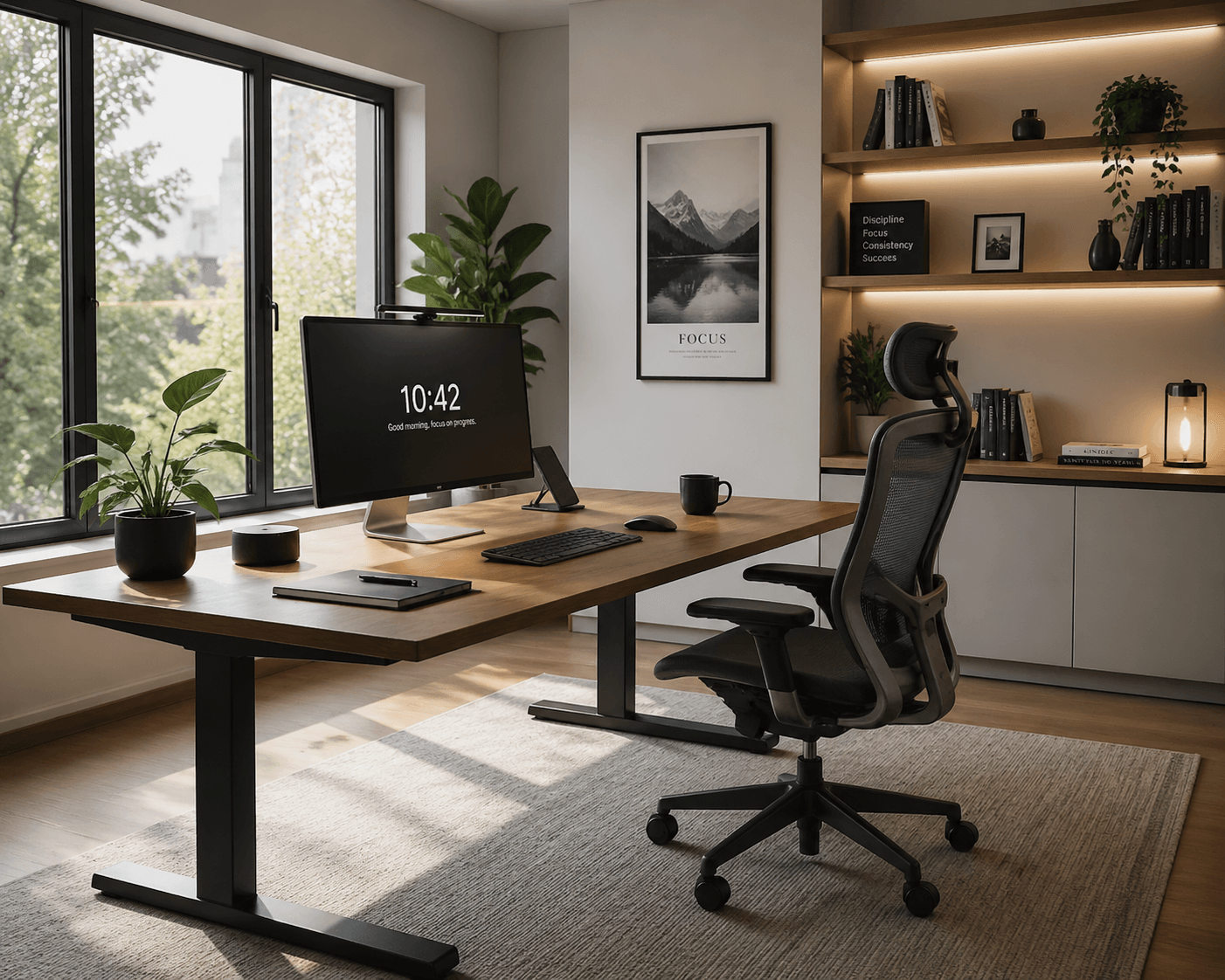
Introduction: Solving Your Desk Size Dilemma
Do you keep adjusting your chair or stretching for your keyboard because your desk is too small? Or does a large desk leave you overwhelmed? If you’re searching for the right desk, you want a workspace that fits just right.
Choosing the right desk is about more than looks. It’s about comfort and ergonomics, helping you work better and avoid discomfort. This guide explains which desk sizes to consider, how to choose the best one, and mistakes to avoid.
By the end of this article, you’ll know how to choose a desk that fits your space and helps you work comfortably and stay healthy.
Understanding Desk Size: Why It Matters for Office Workers
Why Does Desk Size Matter for Your Health and Productivity?
Selecting a desk of the correct size has a real impact on your comfort and productivity. Using a desk that is not suited to you can lead to discomfort, including back pain and neck strain.
A desk that’s too big can cause you to stretch, affecting your posture. One that’s too small can feel crowded and distract you.
The main goal is to find a desk that supports good ergonomics and helps you maintain a comfortable, natural posture throughout the day.
Common Desk Size Problems
- Desk Too Small: If your desk feels cramped, it can make working harder. Not having enough space for your computer, papers, and other items can be frustrating and slow you down.
- Desk Too Large: A desk that is too big can feel overwhelming and make it harder to focus. You might have trouble reaching everything you need, which wastes time and effort.
- Desk Not Ergonomically Designed: A desk that is the wrong height or depth can lead to poor posture. Over time, this increases the risk of back and neck pain and makes working more difficult.
Diagnosing the Right Desk Size for Your Needs
After understanding common problems, let’s look at the key factors that influence your ideal desk size.
Choosing the right desk is not just about picking any size. Several factors help determine which desk size will work best for you.
Your Workspace Size: Measure your office or workspace before choosing a desk. You don’t want a desk that takes up the whole room or leaves too much space.
Your Body Size: Desk height and depth should match your body size. Taller people often need a higher desk to sit comfortably. bly.
- Type of Work You Do: Think about whether you mostly use a computer or need space for papers, books, or extra monitors. The kind of work you do will help you decide how much desk space you need.
- How Many Screens Do You Use? If you use more than one monitor, you will need a larger desk. Make sure it is wide enough to fit all your screens comfortably.
Standard Desk Sizes: What You Need to Know
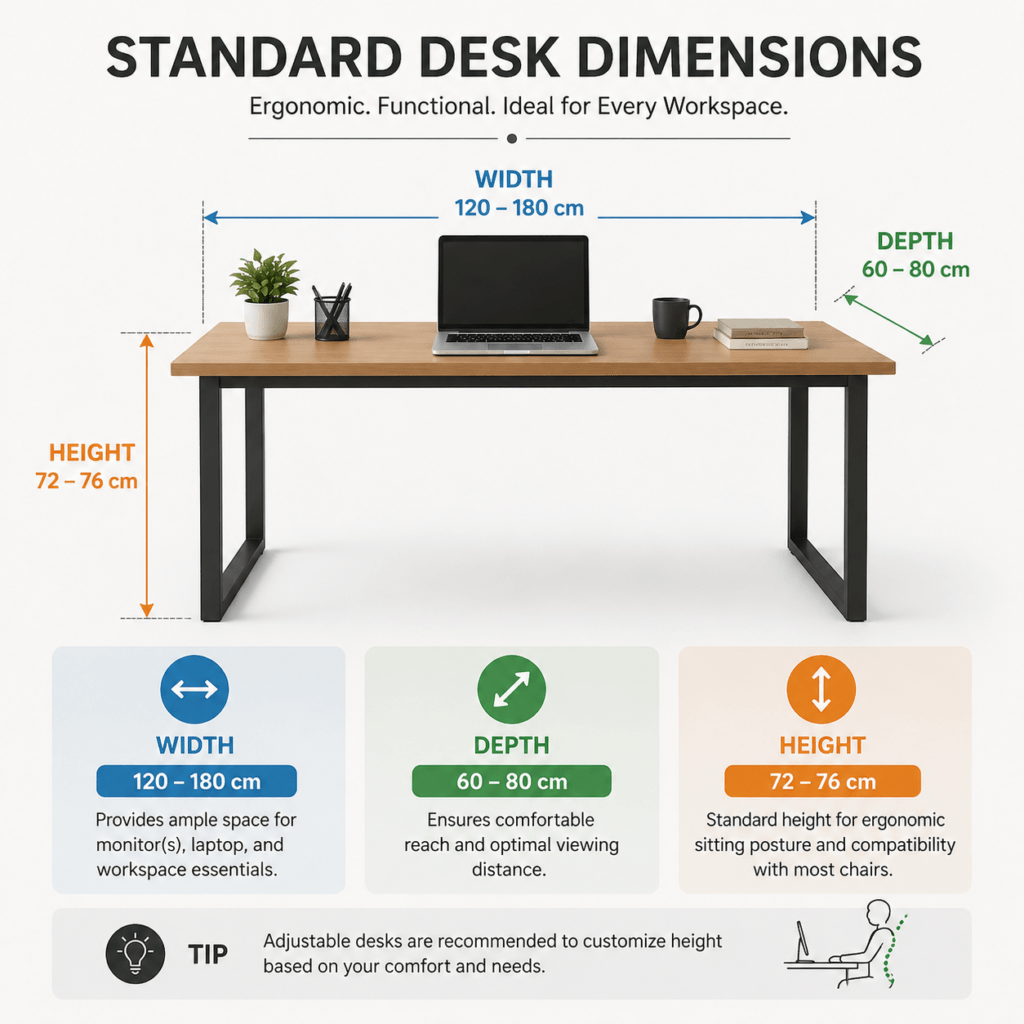
Desk sizes can vary, but these are the most common options:
- Width: Desks range from 48 to 72 inches, fitting different needs. Smaller desks (48″- 54″) suit compact spaces, while larger ones (60″- 72″) offer ample workspace.
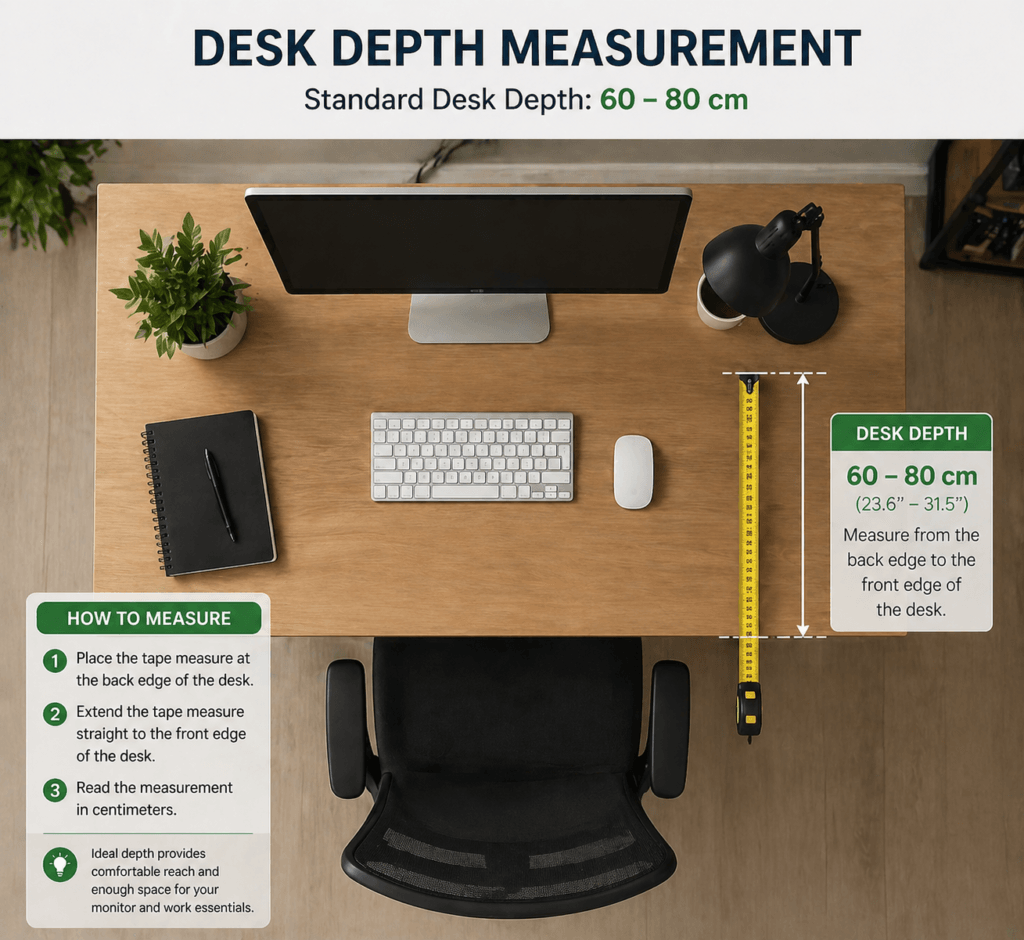
- Depth: Standard desk depth is 24 to 30 inches, giving enough space for you and your keyboard.
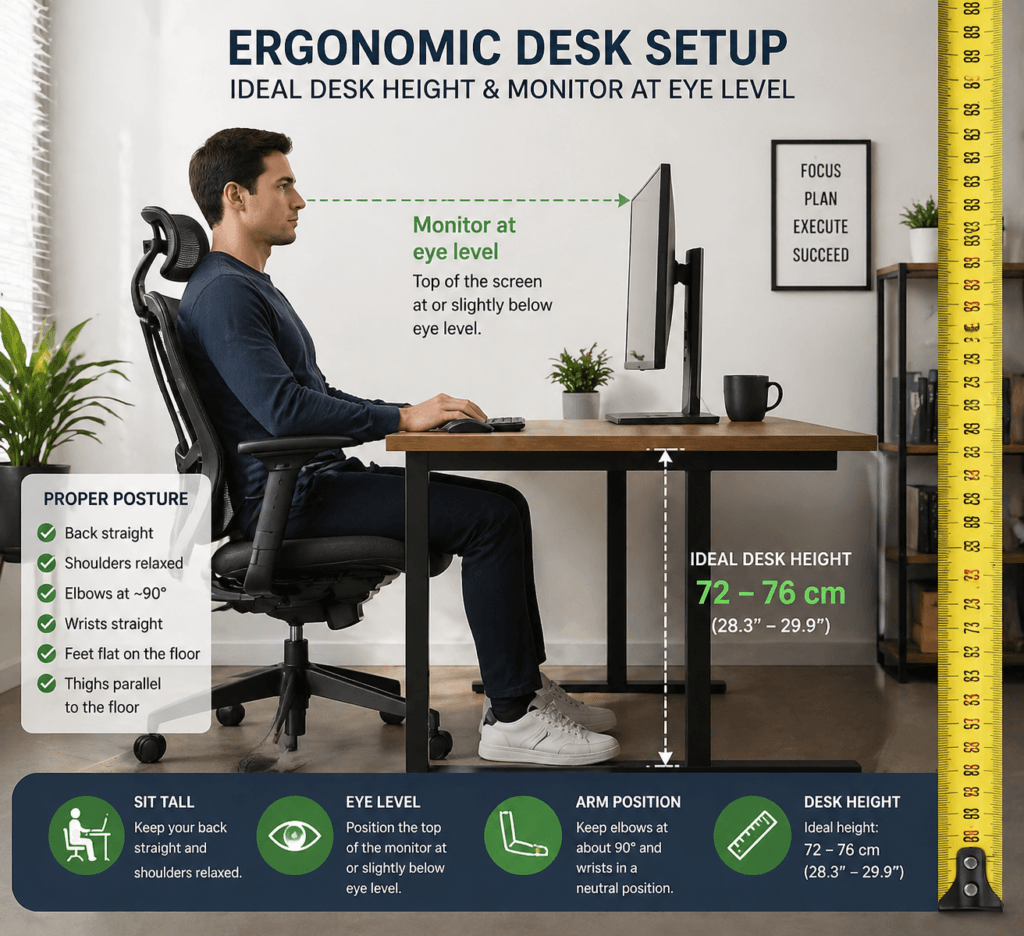
- Height: Most desks are 28 to 30 inches high. Adjustable desks can range from 24 to 50 inches for more flexibility.
Solution Options: Finding the Best Desk for You
Step 1: Measure Your Workspace
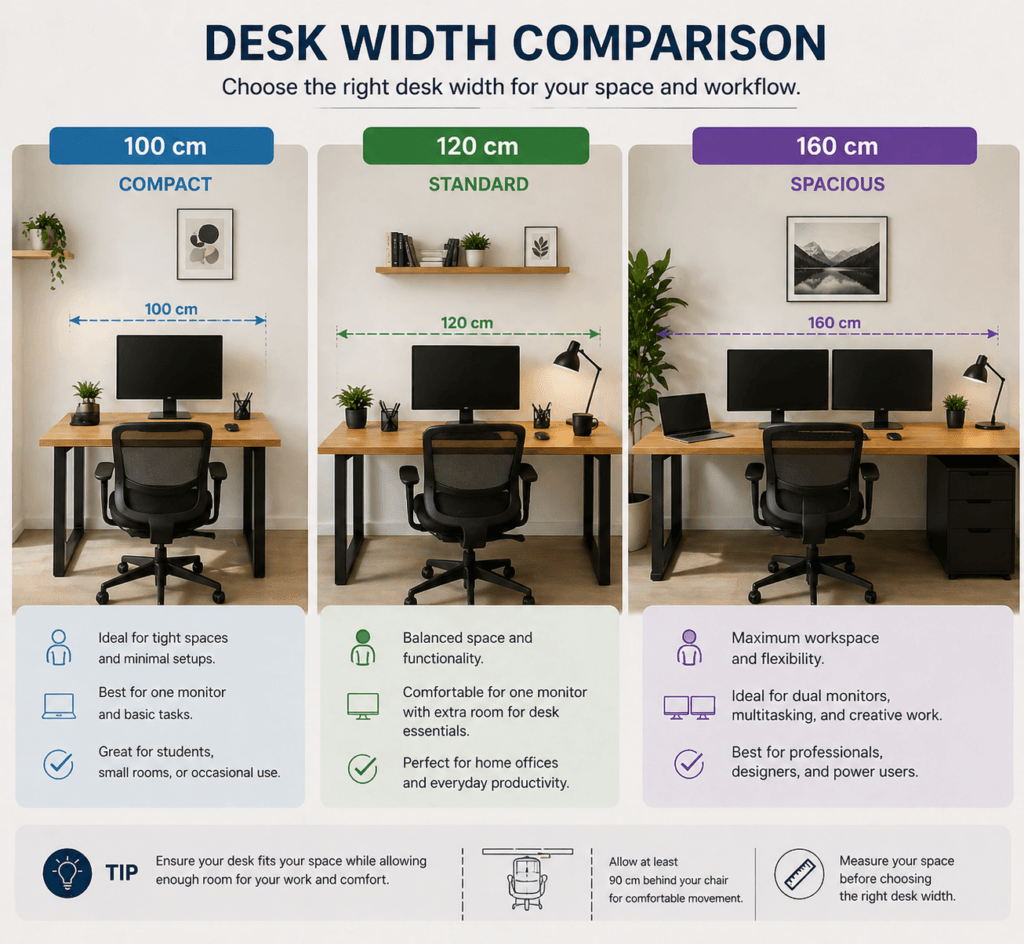
Before buying a desk, measure your space. Make sure you have room to move, and choose a desk that fits without crowding the area. This keeps your workspace organized.
Step 2: Consider Your Work Type and For Single-Monitor Users:
A standard 48- to 60-inch desk is enough for your monitor, keyboard, and a few items. If you only use one screen and need little room, a smaller desk should work.
- If you use two or more monitors, choose a desk 60 to 72 inches wide so your screens, arms, and keyboard all fit.
Step 3: Choosing the Right Desk Depth and Height
- Depth: If you use a monitor, make sure your desk is deep enough for a good viewing distance. A depth of 24-30 inches usually works well for this.
- Height: Your desk height should match your chair so your arms stay at a 90-degree angle while typing. Standard heights are about 28 to 30 inches.
Comparison: Standard Desk Dimensions vs. Ergonomic Options
| Desk Type | Width | Depth | Height | Best For |
|---|---|---|---|---|
| Standard Desk | 48 “-60” | 48″-60″ | 24″-30″ | Traditional single monitor setup |
| Adjustable Desk (Sit/Stand) | 28″-30″ | 48″-72″ | 24″-30″ | Those who switch between sitting/standing |
| Compact Desk | 24″-50″ | 36″-48″ | 20″-24″ | Small spaces or minimalist setups |
Choosing the Perfect Desk for Comfort and Productivity
Now that you know the options, consider these important aspects before deciding.
Considerations When Selecting Your Desk
- Space and Flexibility: In a small room, a compact or corner desk helps make the most of space. An adjustable sit-stand desk is recommended if you wish to alternate between sitting and standing.
- Material and Build Quality: Consider desk material. Wood is sturdy and classic, while metal or glass is modern but may not last as long.
- Desk Accessories and Features: Desks with adjustable height or built-in storage add functionality and keep your workspace useful.
FAQ Section: Addressing Your Desk Size Concerns
1. What is the ideal desk size for a home office?
Answer: The ideal desk size depends on your available space and the equipment you use. A desk that’s 48″- 60″ wide and 24″- 30″ deep is great for most home office setups. If you have a multi-monitor setup, you may need a wider desk (60″ -72″).
2. How high should my desk be?
The ideal desk height for sitting is 28 to 30 inches. For sit-to-stand use, choose an adjustable desk that ranges from 24 to 50 inches.
3. Can a small desk still be ergonomic?
Yes! A compact desk can still be ergonomic if the height is right and you have proper arm positioning. Accessories, such as a keyboard tray, increase comfort.
4. How do I measure if a desk is right for me?
Answer: Measure your workspace and consider your body size. Your desk should allow you to sit comfortably with your arms at 90 degrees. It should also leave enough room for your computer and other essentials.
Conclusion: Your Path to a Comfortable and Productive Workspace
Choosing the right desk size doesn’t have to be overwhelming. If you measure your workspace, consider how you work, and prioritize ergonomics, you’ll find the perfect desk.