
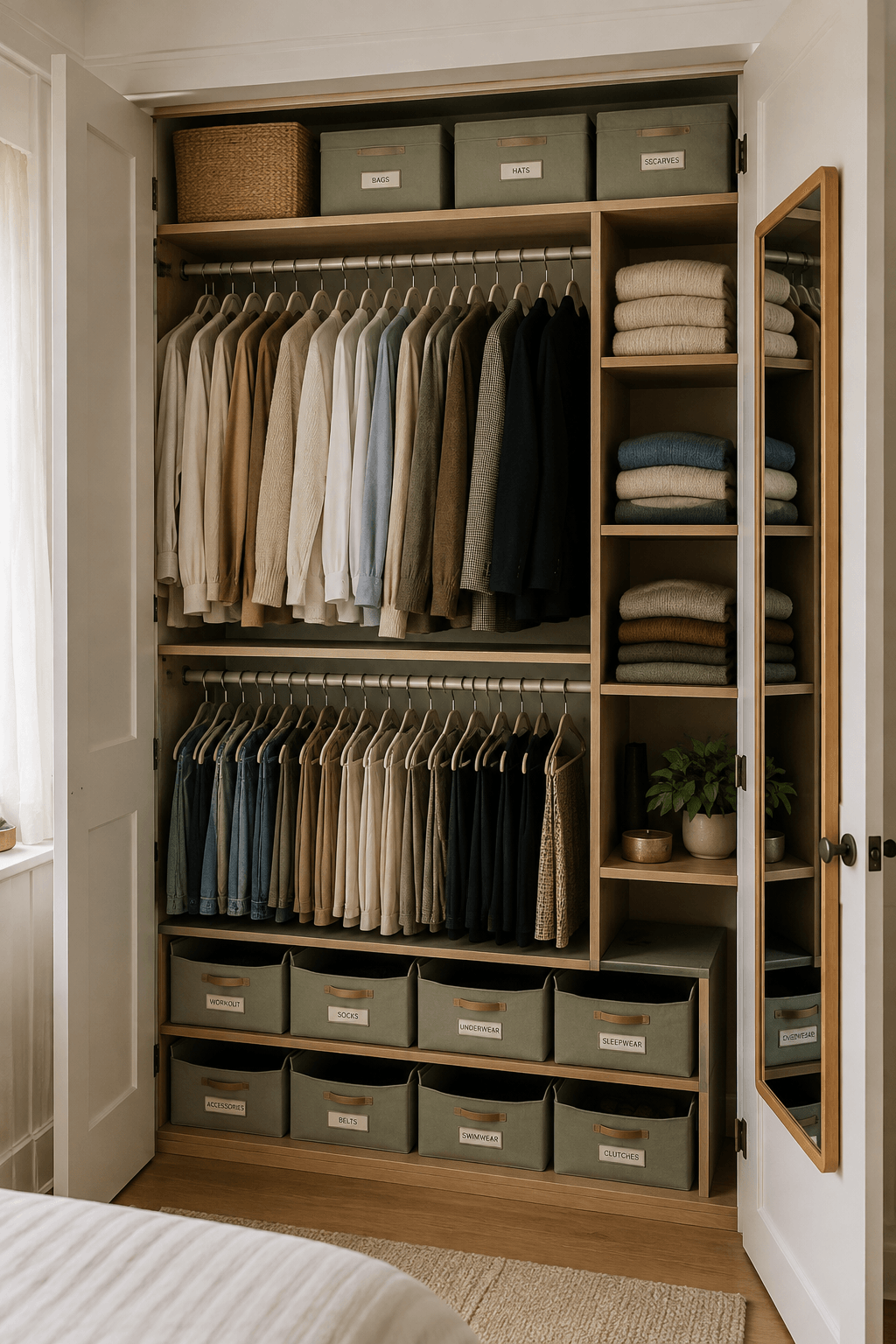
Small closet solutions often start with a Pinterest board and end with a rod so low it can only hold folded sweaters. Typical suggestions—such as adding shelves, using vertical space, or buying an organizer kit—treat the closet as decoration. The real issue is reach, clearance, and sightlines; ignore those, and you will be reorganizing the closet again in a few months.
This article shows what to measure before you buy anything, then gives a practical list of small closet storage improvements that actually work instead of merely looking good in photographs.
What to Check Before You Start
Most advice starts with bins and baskets, but three measurements come first: they determine whether your storage meets your needs, not just fits the space.
Rod height and reach zone. A single hanging rod should be 66 to 70 inches from the floor for full-length clothes. But if you’re shorter than 5’4″ or taller than 6’0″, that height makes you stretch or crouch every day. Double-hang rods (top at about 80 to 82 inches, bottom at about 40 inches) only work if the lower rod is below shoulder height for the shortest person using the closet. Otherwise, the lower rod becomes just as hard to reach.
The deeper a shelf is, the less you can see. Shelves deeper than 14 inches hide the back half in shadow, which is why people often forget what they have in small closets. Keep shelves between 12 and 14 inches deep, and illuminate the front edge or angle it forward. If a shelf must be deeper, use a pull-out tray instead of a fixed shelf.
The 24-inch clearance rule says that each drawer, bin, or door in a small closet needs at least 24 inches of open floor space to open fully. If you ignore that requirement, a drawer may open only a few inches, leaving half the storage space useless.
Small Closet Storage Ideas That Actually Work
1. Set the double-hang rods at the heights that correct the body’s posture.
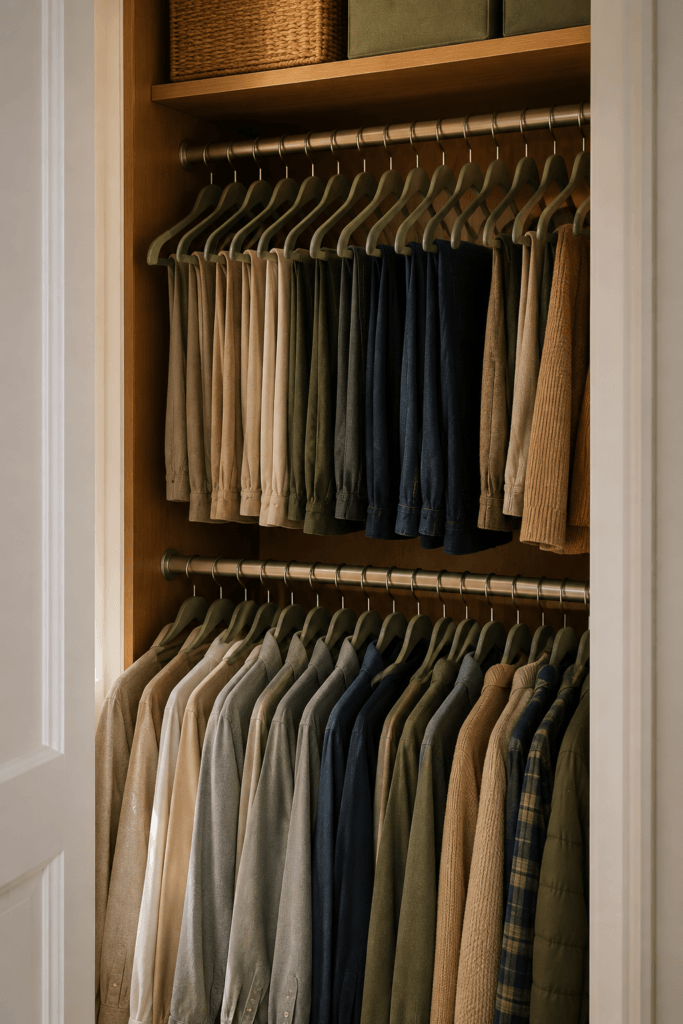
Dividing a single tall rod into two shorter ones will almost double the hanging space in that area. Set the top rod at a height the shortest person in your house can reach without a step stool, usually no more than 80 inches. Make sure shelves above it do not block the lower rod so jackets can hang properly.
2. Slim Velvet or Flocked Hangers
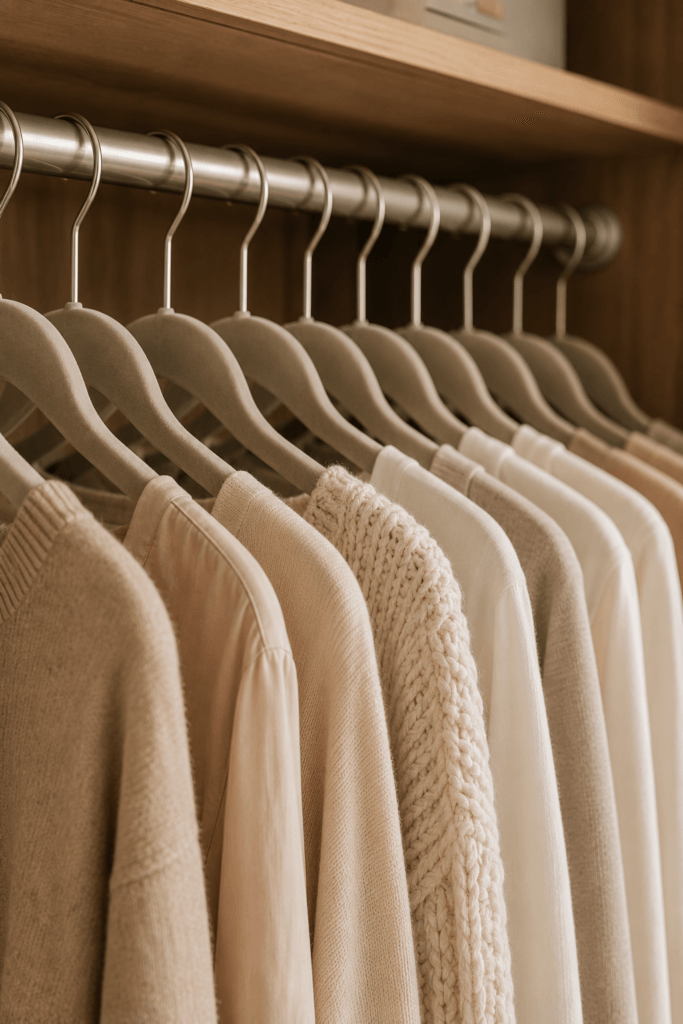
Replacing thick plastic hangers with slim velvet ones returns 2 to 3 inches of rod space per foot, which makes a significant difference in a small closet. The thin, grippy design also keeps clothes from slipping off and ending up on the floor, which is what wastes space.
3. Storage fitted into the door for flat objects
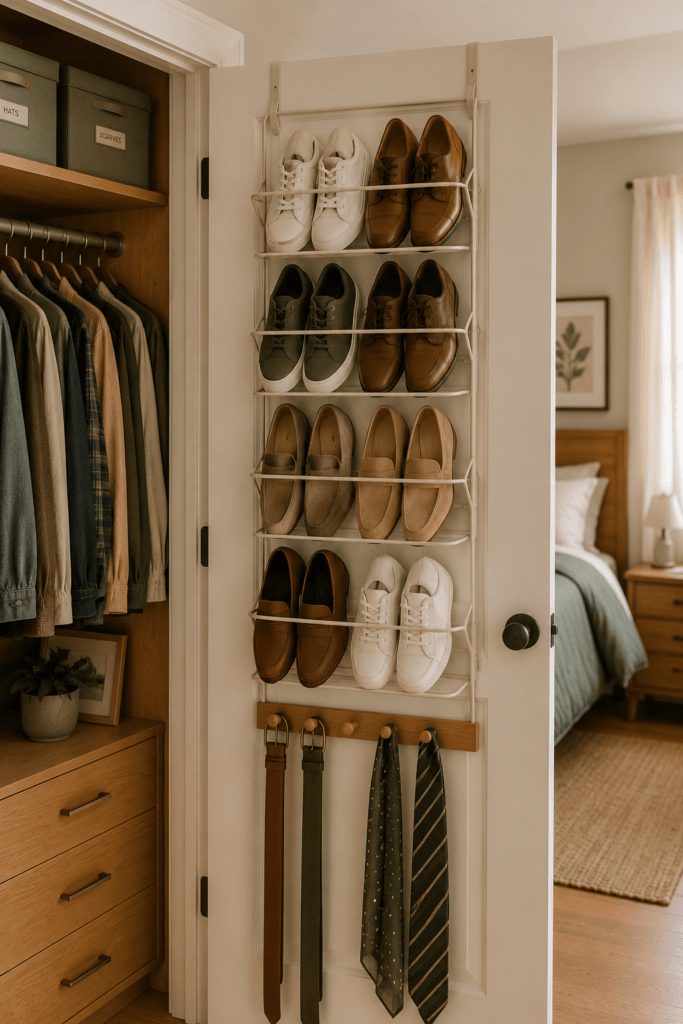
In most small closets, the back of the door is unused space, but it works well for shoe racks, hooks for ties or belts, or a narrow jewellery organizer. Install hooks or racks at a height you can see easily, level with the eyes of the tallest person using the closet. That way, you will not have to stretch or look behind the door.
4. Dividers for stacks of folded sheets
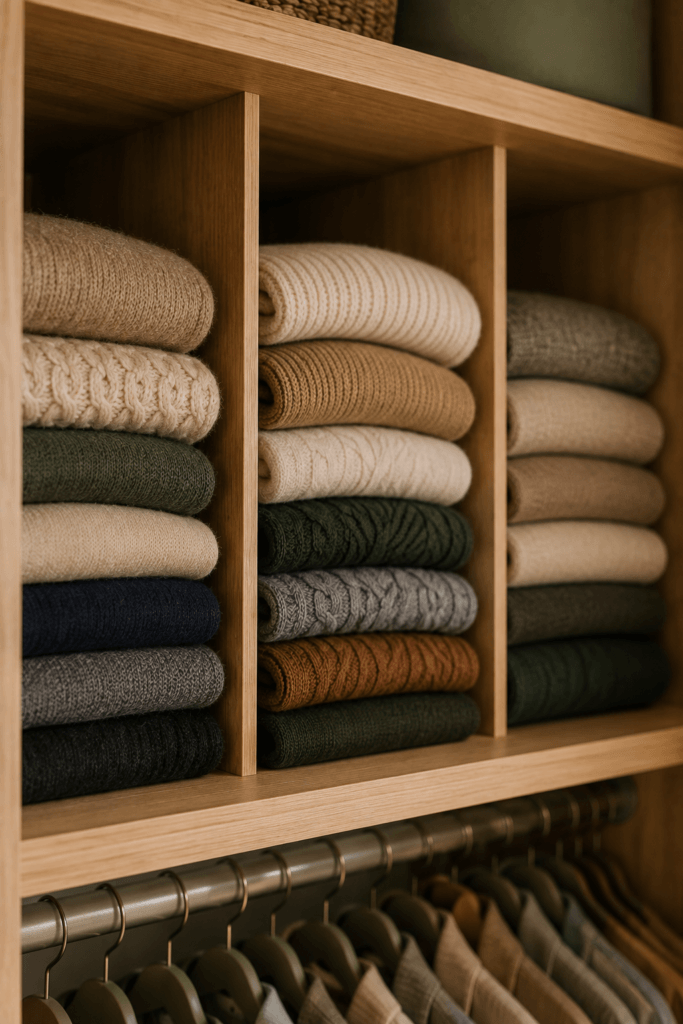
Stacks of sweaters higher than six or eight tend to topple over and turn into a mess, which defeats the point of folding them. Add vertical shelf dividers every 10 to 12 inches to keep the stacks standing and within easy reach, without moving the entire pile.
5. Instead, use pull-out baskets rather than deep bins.
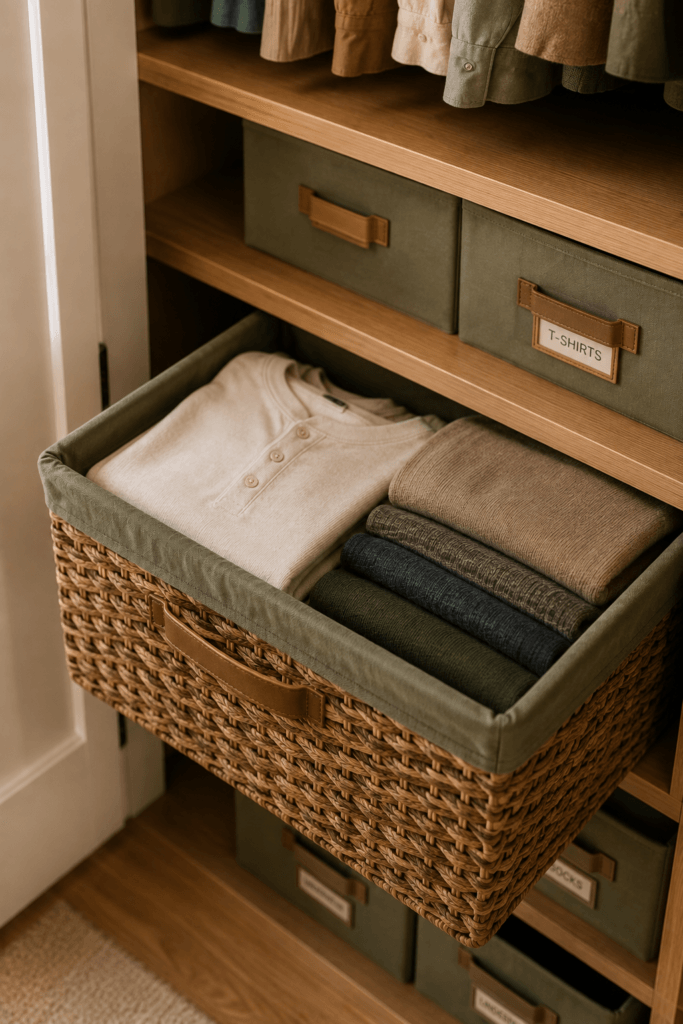
A shelf bin placed at the back often gets forgotten. Pull-out baskets made of wire or canvas, whether on slides or easy to pull forward, make the back section of the shelf as useful as the front. Most closets fail to use this space.
6. Corner Shelving for Odd Angles
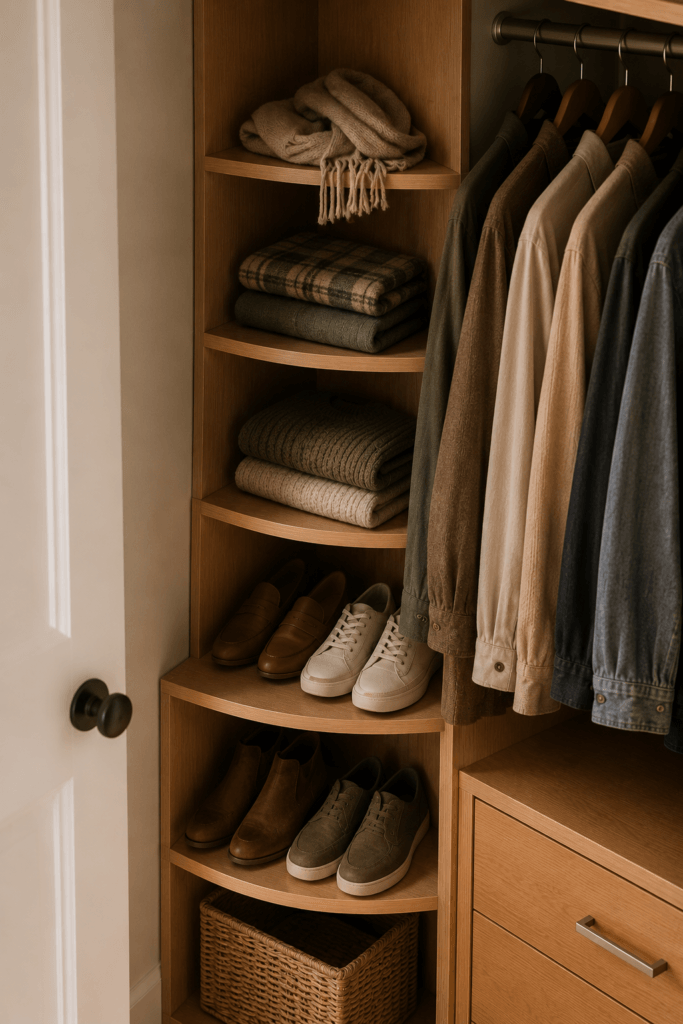
Small closets often have a corner that’s too shallow for a rod and too awkward for a full shelf. A triangular or angled corner shelf, about 8 to 10 inches on the short side, turns that spot into storage for shoes, folded scarves, or bins without blocking the door.
7. Overhead shelf for rotational storage
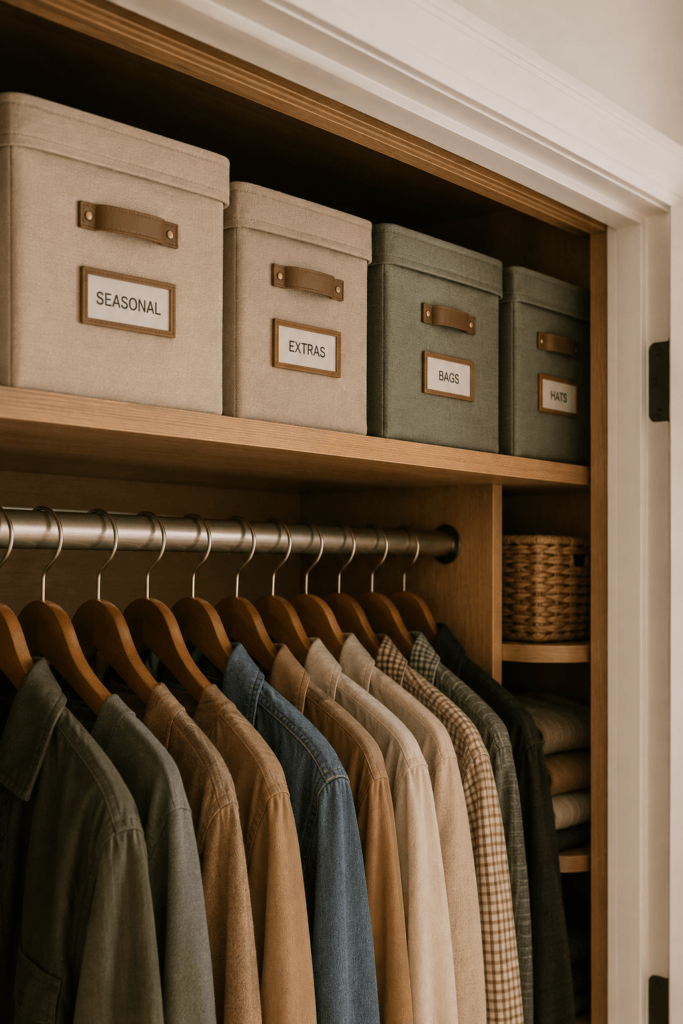
The area above the main rod works well for seasonal or infrequently used items, as long as you can reach it without a chair. Keep it about 84 inches high for the average adult. Use labeled bins instead of loose stacks, since anything above eye level should be found by reading the label, not searching.
8. Under-Shelf Hanging Baskets
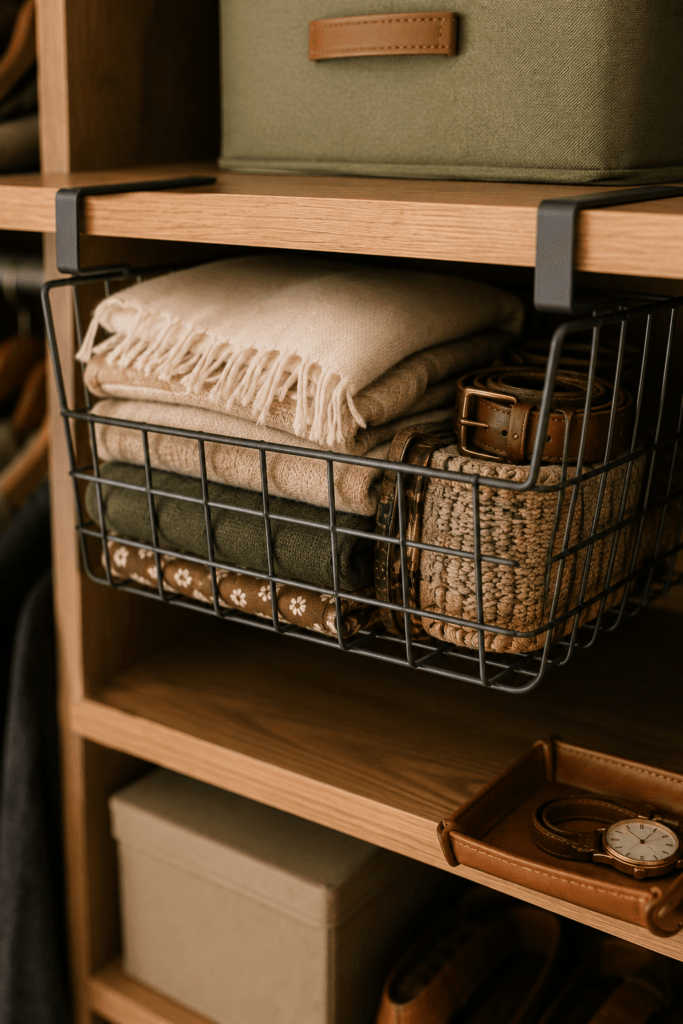
Attaching wire baskets beneath a shelf adds storage without taking more space. They work best for lightweight objects such as socks, scarves, or accessories, since heavier items could strain the clip and dangle into the area below.
9. There is a full-length mirror on the inside door.
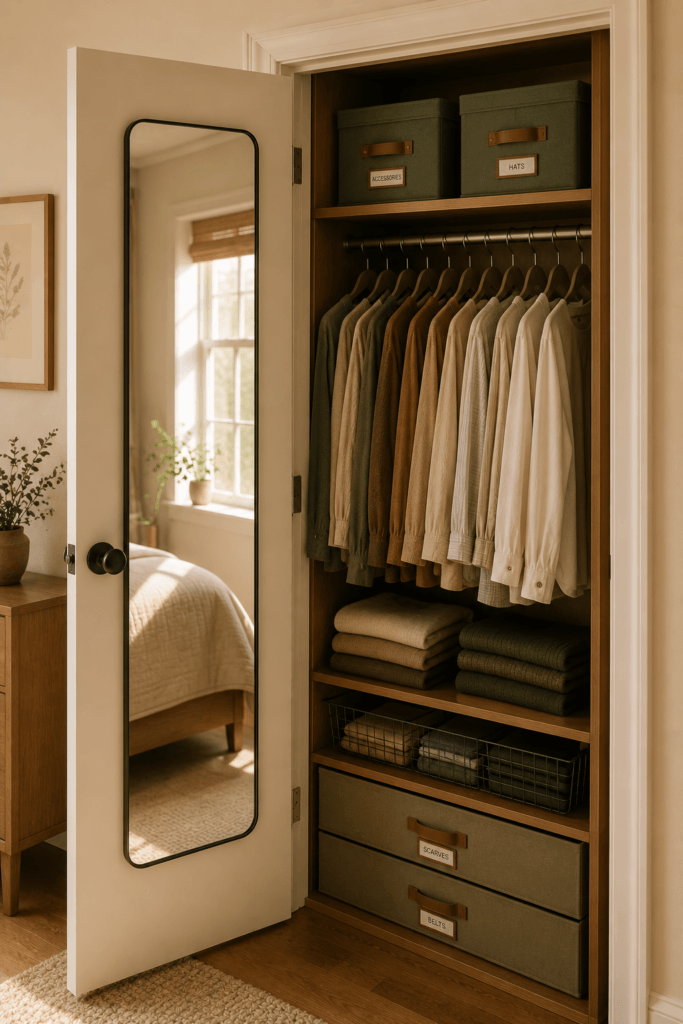
We are focusing on function, not decoration. A mirror on the closet door lets you check your clothes without leaving the room, and it also makes the closet appear larger. Place the mirror so the top edge sits above eye level and the bottom is only a few inches from the ground. If it is not centered, you will have to crouch or stretch to see your feet.
FAQ
How can I make the most of storage in a small closet?
Start by using vertical space with double-hang rods, over-door racks, and stacked shelves, then add bins. Since most small closets have more unused vertical space than floor space, adjusting the rod height usually makes the biggest difference, not adding more containers.
What should the height of a shelf be in a small closet?
For the main shelves, keep the depth between 12 and 14 inches and ensure that the top shelf is low enough so that the shortest person can reach it without having to use a step stool, typically below 84 inches. However, deeper or higher shelves can hold more items; people use them less because you can’t see or reach the back.
Whether I should use bins or open shelving in a small closet?
For items you use every day, use open shelves; for seasonal or rotating items, use bins or baskets. Bins on a shelf that you can’t see into only shift the clutter from one place to another. What is more important is having labels and easy access by pulling out the containers.
How much space should I leave between hanging rods?
When fitting a double-hung rod, leave at least 40 inches between the lower bar and the floor and about 42 inches between the two bars so that shirts and folded pants will not touch the shelf above or the one below.
Closing
A closet works only when storage considers your reach and line of sight, not just the space size. If you are looking at other small areas in your bedroom, check out practical, ergonomic design guides on Ergontag.