
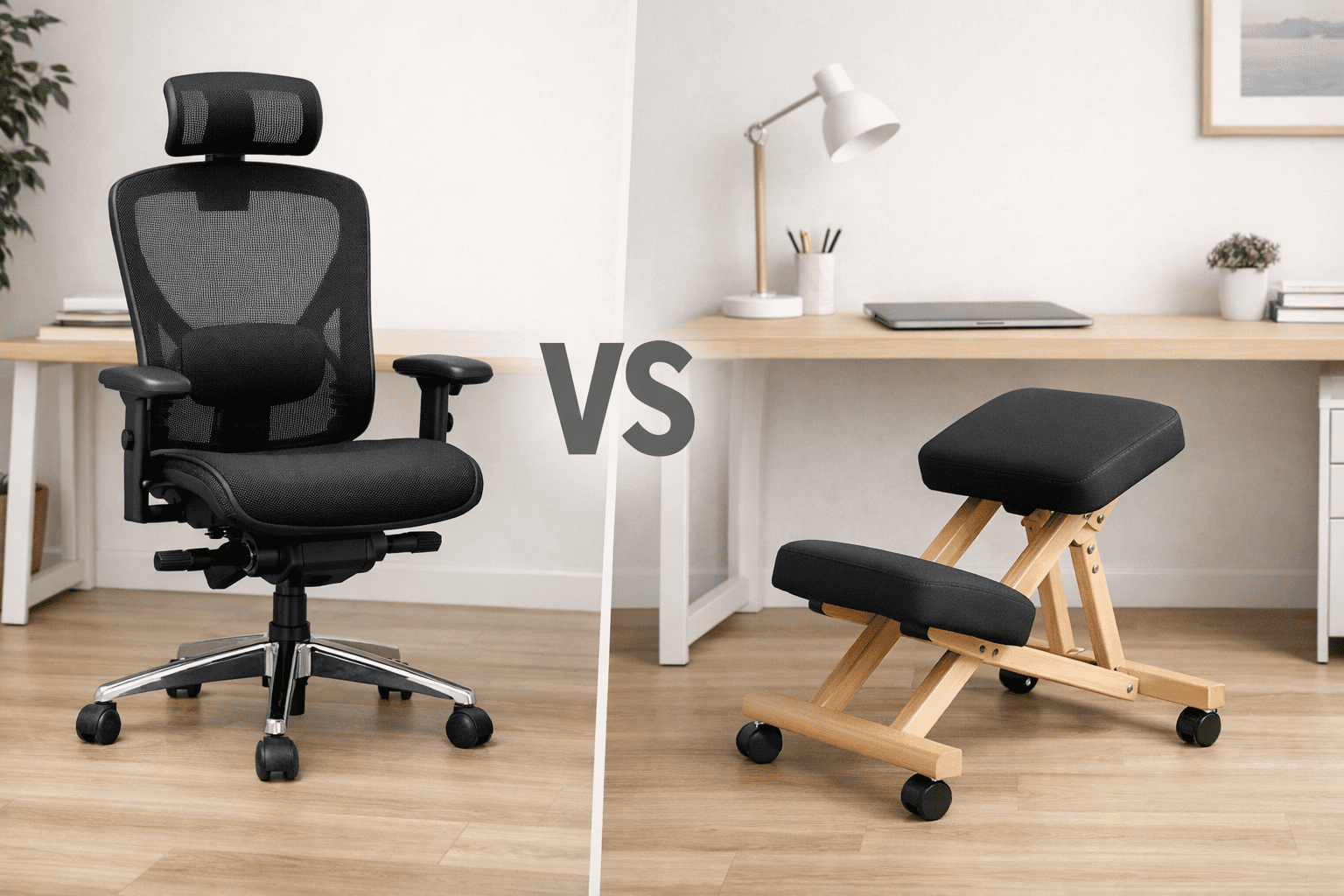
When the goal is better posture, both ergonomic and kneeling chairs are often recommended, but they operate in very different ways. An ergonomic chair will keep your body in a neutral position while you sit, and a kneeling chair will change how you sit altogether. Knowing the impact of each chair type on posture, comfort, and long-term use can help you select the option that best supports your spine during everyday sitting.
Table of Contents
Why Sitting Posture Matters More Than the Chair
Most people think that spending tons of money on a high-end chair will make posture issues magically go away, but how you sit is more important than what’s holding your rear. Posture, after all, cannot be outsourced to or bought from a chair. A basic understanding of posture helps beginners minimize pain by allowing them to sit for longer periods more comfortably.
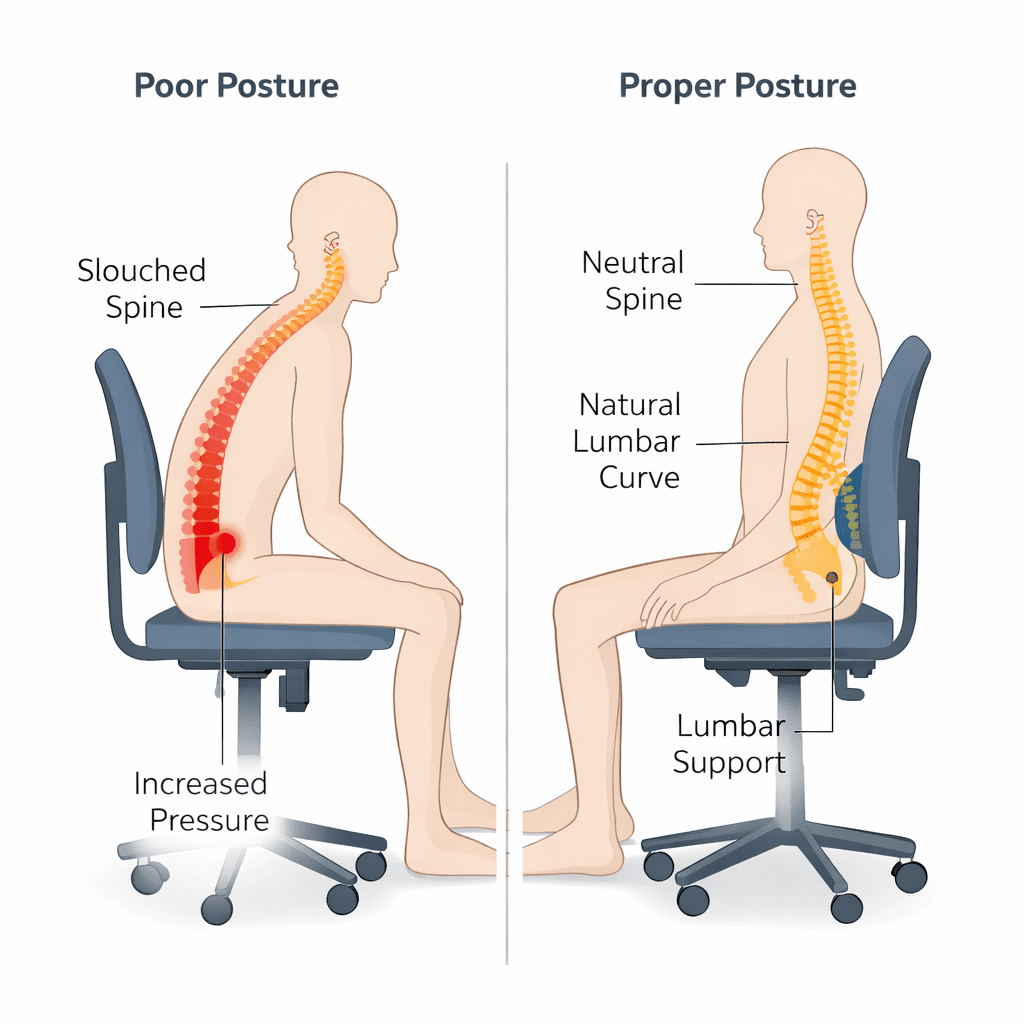
How poor posture affects the spine & joints
When you slouch or bend forward, your natural curve is distorted. This puts more pressure on the spinal discs and causes muscles to strain harder to support the body. Slumping over also contributes to stiff joints, muscle imbalances, and long-term neck pain and lower backache. The hips, shoulders, and knees are also impacted as the body’s weight is no longer evenly distributed.
Role of chair design in posture
Some of that magic lies in the chair’s design, which promotes better posture. High-end features such as lumbar support, backrest angle, and seat height help maintain the spine in a neutral position. While a well-designed seat can be hard to sit up in, it cannot force good posture on its own. But users will need to be mindful of setting up the chair correctly and maintaining a good sitting posture.
Why is active sitting discussed today?
Active sitting involves making small, natural movements rather than sitting perfectly still for hours. The point is to activate your core muscles, change positions, and avoid putting pressure on your spine for long periods. Chairs that offer slight movement support active sitting and are less tiring, such as those with a flexible backrest or a tilt mechanism. This practice shows that freedom of movement and awareness of posture are as crucial as chair design for long-term personal comfort and spinal health.
What Is an Ergonomic Chair?
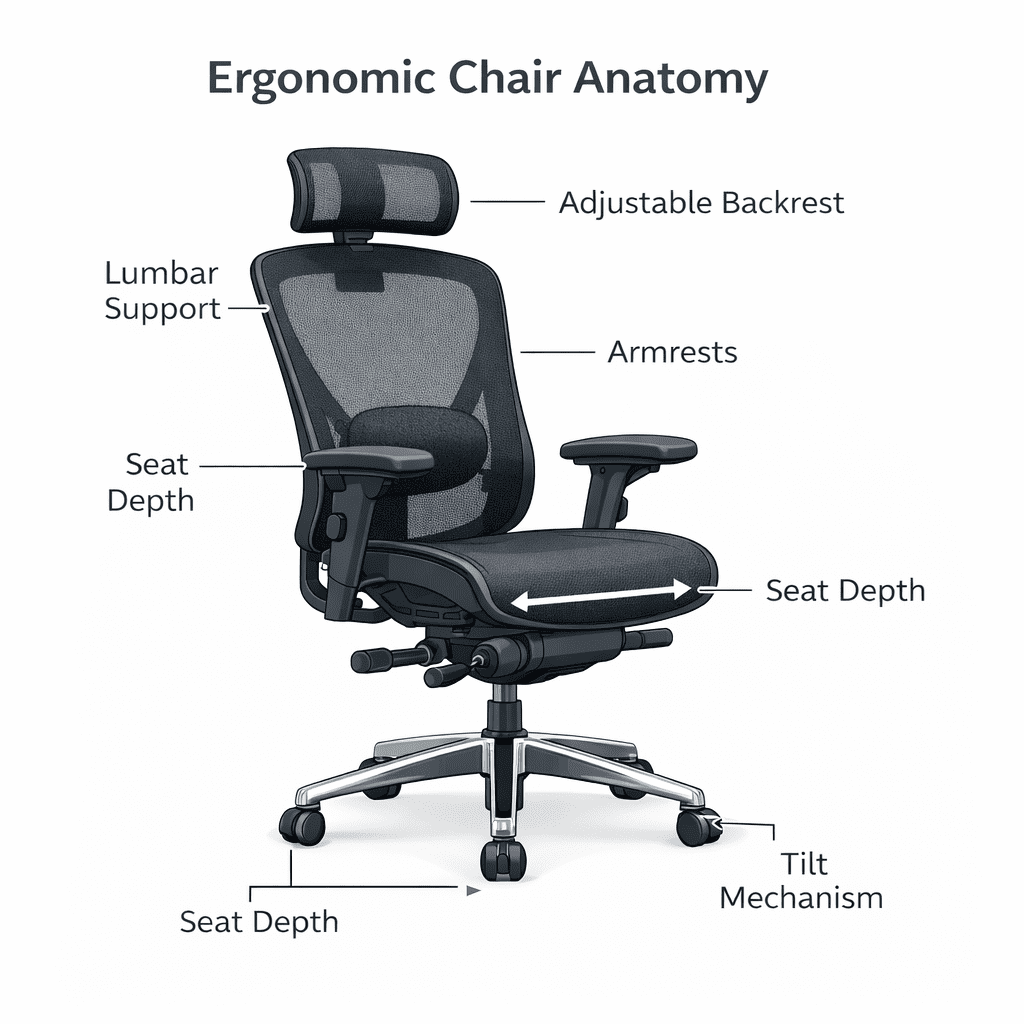
Ergonomic chair: An ergonomic chair helps support overall well-being for those who sit in it. Regular chairs provide only fixed seating positions, while ergonomic chairs adjust to individual body types and movement. The primary concern is to relieve physical strain, to increase comfort, and protect the spine –especially at work, dealing with computers.
Ergonomic chair design principles
Ergonomic chairs are designed on the premise that the human body is not meant to remain stagnant all day. Their shape is designed to help you sit more evenly, keeping your head, shoulders, spine, and back in a balanced position. Instead of forcing the body into a fixed position, these chairs allow people to make subtle movements to accommodate typical sitting behavior.
Lumbar support & adjustability
Lumbar Support – One of the Most Innovative Aspects of an Ergonomic Chair. The lower back naturally curves inward, and without support, it flattens against the chair while seated. Adjustable lumbar support fills in this gap and relieves pressure on spinal discs. Furthermore, ergonomic chairs often offer adjustable seat height, seat depth, armrests, and backrest angle to accommodate the user’s physique.
How ergonomic chairs support neutral posture
Neutral posture is sitting with the natural curves of the spine maintained, feet flat on the floor, and shoulders relaxed. Ergonomic seating encourages a position with the pelvis lightly tilted forward and back support. This will reduce muscle strain and prevent slouching.
For further guidance on the right adjustments and ergonomic features, refer to our post, What Is Ergonomic Chair Back Support?
Ideal users & environments
Ergonomic chairs are designed for office work, desk work, and for people who sit more than 4 hours a day. They are particularly advantageous in the workplace when concerns include productivity, comfort, and spinal health throughout the day.
What Is a Kneeling Chair?
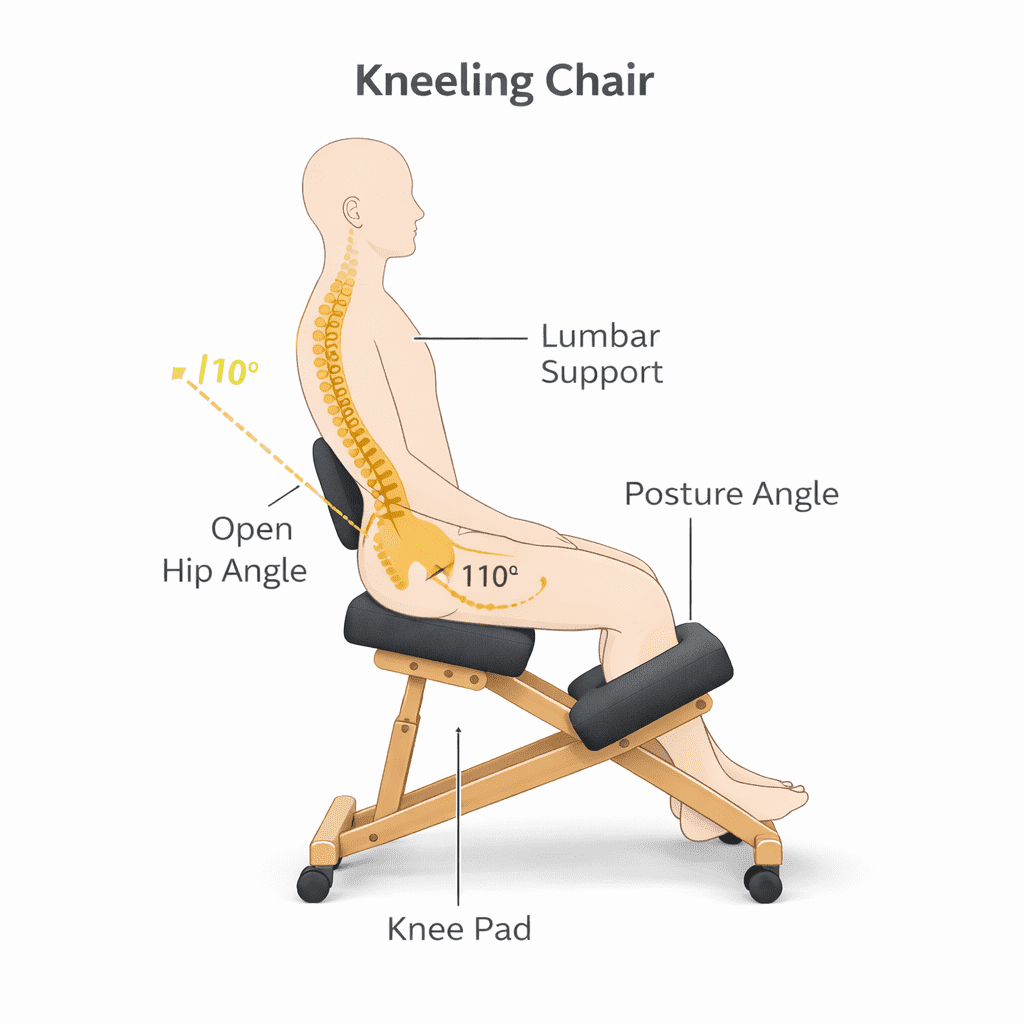
A kneeling chair is an alternative seating option that encourages you to sit differently (rather than promoting good regular sitting!). Rather than sitting with your feet flat on the floor, a kneeling chair slides your body forward so your shins and knees rest on padded supports, gently tilting your hips forward. The idea is to get them to stand up straighter and reduce pressure on their lower backs.
How Kneeling Chairs Work
Kneeling chairs transfer some of the body weight from the hips to the shins. This adjusts the sitting angle and automatically helps the user sit more upright. The pelvis is tilted forward, and the backrest provides little lumbar support. This model discourages slumping and promotes sitting upright for those who may have difficulty keeping their feet on the ground in upright chair positions.
Forward-tilted seat & open hip angle
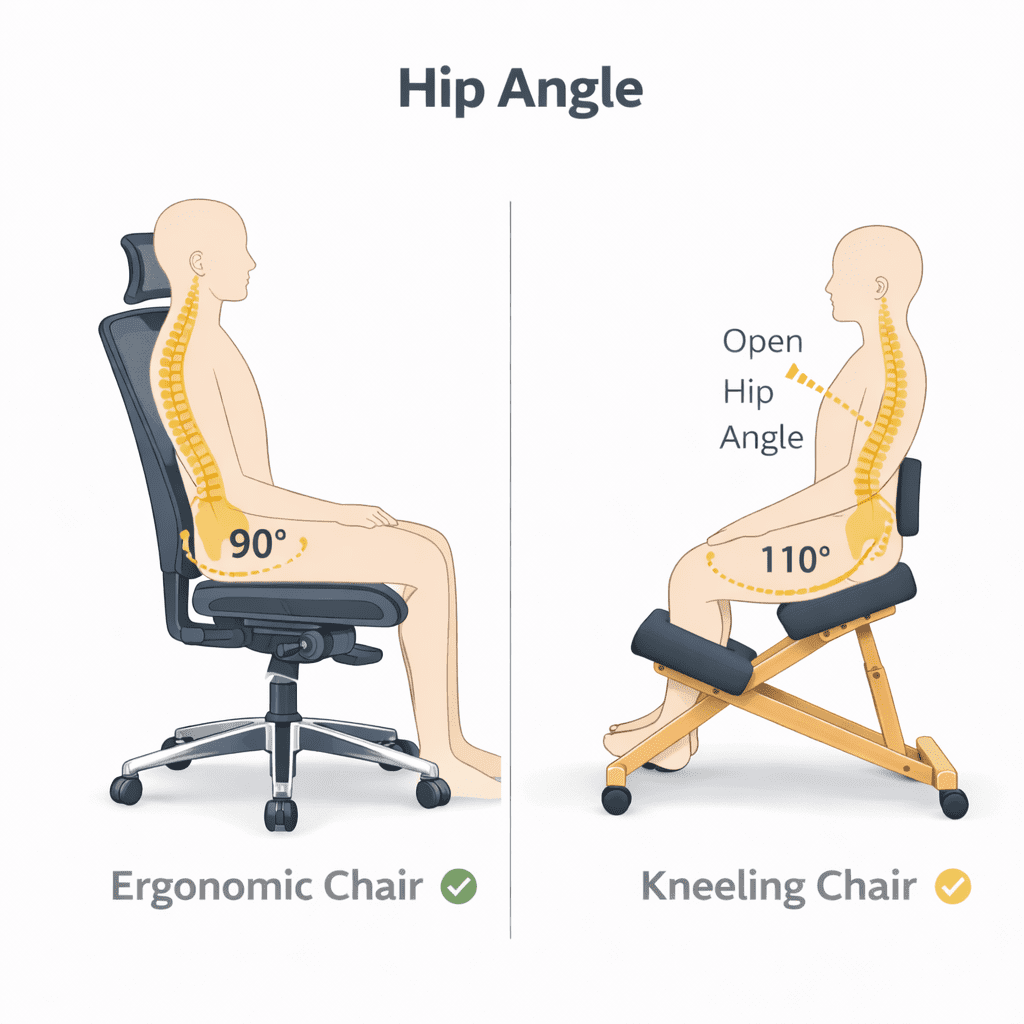
A forward-tilt feature is a characteristic of a kneeling chair. This creates an open hip angle, typically over 90 degrees, when you sit on a chair with second-hand arms. A good open hip angle means your lower back is less compressed and promotes better spinal alignment. But also because of this pose, knees and shins are pushed on; not everyone likes that.
Active Sitting Explained
Kneeling chairs encourage what’s often called active sitting. With little or no back support, the body’s core muscles are continuously lightly engaged to balance. Small shifts in posture occur automatically, which helps reduce static pressure. This can be helpful as a posture reminder, but it may also cause fatigue if you sit at your desk for long periods.
Intended Use Cases
Kneeling chairs are mainly for short- to medium-term sitting, tasks, or posture correction. They are generally not recommended for all-day seating, particularly for those with knee problems or anyone prone to mobility issues.
Ergonomic Chair vs Kneeling Chair – Key Differences
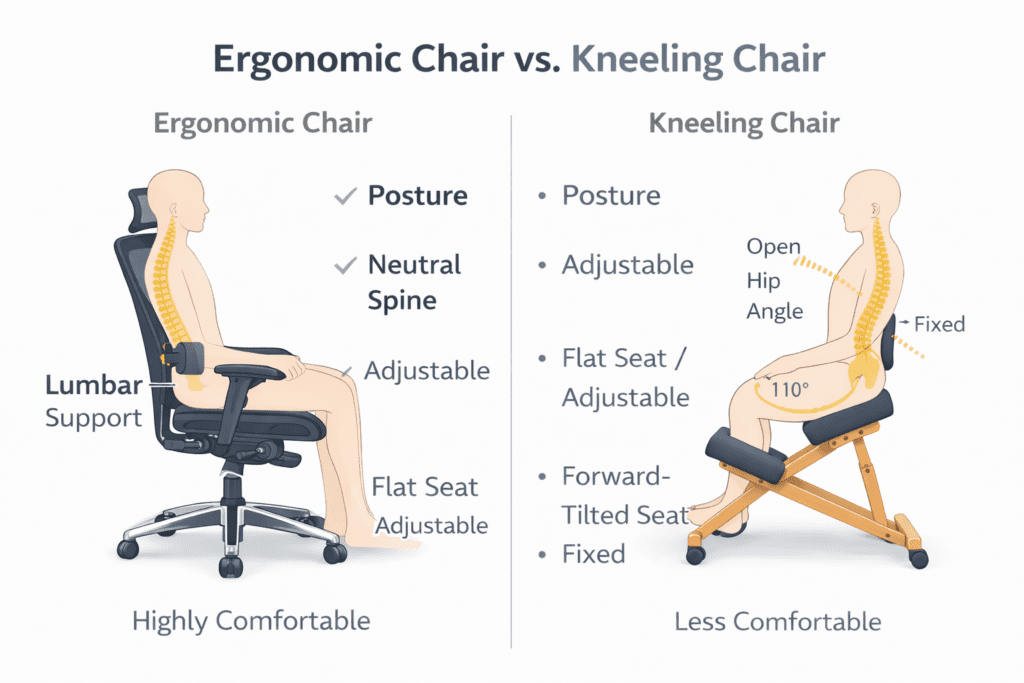
Choosing between an ergonomic chair and a kneeling chair depends on how you sit, how long you sit, and what your body needs. While both aim to improve posture, they work in very different ways. Understanding these differences helps users avoid discomfort and choose the right option for long-term health.
Comparison Table: Ergonomic Chair vs Kneeling Chair
| Feature | Ergonomic Chair | Kneeling Chair |
| Posture Alignment | Supports neutral spine with backrest | Encourages upright posture through hip angle |
| Lumbar Support | Built-in or adjustable lumbar support | No direct lumbar support |
| Hip Angle | Around 90–110 degrees | Open hip angle (120–135 degrees) |
| Pressure Distribution | Weight is shared between the hips and the shins | Weight is shared between the hips and shins |
| Comfort Over Time | Designed for long sitting hours | Better for short to moderate use |
| Adjustability | High (seat, lumbar, arms, recline) | Limited adjustability |
| Learning Curve | Minimal, easy to adapt | Moderate, requires posture adjustment |
| Suitability for Long Hours | Very suitable | Not ideal for all-day use |
Posture Alignment
Ergonomic chairs support posture by holding the spine in a neutral position using a backrest and lumbar support. Kneeling chairs rely on body positioning instead, encouraging upright posture by tilting the pelvis forward. This works well initially but requires more muscle engagement.
Lumbar Support
Ergonomic chairs actively support the lower back, reducing strain during long sitting sessions. Kneeling chairs lack lumbar support, assuming the forward tilt will maintain spinal alignment, which may not suit everyone.
Hip Angle & Pressure Distribution
Kneeling chairs create an open hip angle that reduces lower back compression but transfers pressure to the knees and shins. Ergonomic chairs distribute weight more evenly, making them more comfortable for extended use.
Comfort Over Time & Adjustability
Ergonomic chairs are built for long-term comfort and customization. Kneeling chairs can feel tiring over time due to limited movement options and pressure points.
Learning Curve & Long-Hour Suitability
Kneeling chairs require adjustment and body awareness, making them better as a supplement rather than a replacement. Ergonomic chairs are easier to use and more practical for long workdays.
Which Chair Is Better for Posture?
The answer depends on how much you sit, your level of experience, and what your body needs when the main goal is improved posture. This means that while both ergonomic and kneeling chairs can help with your posture, they do so in different ways. One supports posture through structure and adjustability, while the other promotes posture through body positioning and muscle engagement.
Desk Work (6–8 Hours)
For those who sit at a desk for most of the day, ergonomic chairs promote better posture. With lumbar support, these maintain the spine and back uninterrupted. It prevents muscle fatigue and keeps you sitting comfortably in a neutral position with minimal effort.
To ensure you have the best ergonomic setup, read our guide on Ideal Office Chair Height: How High Should It Be?
Short, Focused Work Sessions
Kneeling chairs are ideal for short, targeted activities such as writing, creative work, or reading. The front seat slopes slightly to promote an upright posture and discourage slouching. But since they depend on active muscle engagement, they work best as one of several seating options you switch to rather than as an all-day seating option.
Users with Lower Back Pain
Those suffering from lower back pain will find that ergonomic chairs are the best. Lumbar-padded adjustable arms alleviate pressure and add comfort; the large-angle back tilt is perfect for a variety of body shapes and sitting positions. Kneeling chairs encourage better spinal alignment but can exacerbate pain for people with knee sensitivity or pre-existing back issues.
For more insights on choosing the right ergonomic chair, check out our post on Ergonomic Office Chair for Back Pain: How to Choose
Beginners vs Experienced Users
Ergonomic chairs are generally easier for beginners to use as they do not require much posture training. Kneeling chairs are a bit of an adjustment and best for users who are already experienced with active sitting and posture-conscious.
Final Thought: Most people should use an ergonomic chair for safer, more consistent posture support, while kneeling chairs can be a helpful secondary option.
Learn more about how to maximize comfort and back support in ergonomic chairs by reading our detailed guide on Seat Depth & Hip Alignment: How Chair Design Affects Comfort
Can You Use a Kneeling Chair All Day
Can you sit in a kneeling chair all day? This is a popular question, particularly for people who want better posture. Kneeling chairs are ergonomic and offer posture benefits, but for most users, they are not suitable as a long-term, daily replacement chair. Learning what they do to your body helps manage expectations.
Fatigue & Knee Pressure
Kneeling chairs shift some of the weight from your butt to your shins and knees. This can lead to strain, numbness, and fatigue over time, especially if sensitive joints are involved. Good padding or not, your knees may eventually become sore if they’re constantly under that kind of pressure.
Muscle Engagement
Kneeling chairs promote active sitting by encouraging the core and back to engage. This might increase posture awareness, but it also means muscles work harder than they do in a supportive ergonomic chair. You know, when you sit under tension but never relax those chair muscles, and it feels more like active work than a rest?
Recommended Usage Duration
Most posture pros recommend a kneeling chair for short to moderate durations, typically 30 to 90 minutes at a time. It functions best when used with a regular ergonomic chair rather than as the sole option.
Importance of Switching Positions
No chair is designed to be used all day. Changing positions, sitting and standing intermittently, and changing chairs can all help to reduce discomfort and improve circulation. Kneeling chairs are best utilized as one element of a diversified sitting repertoire, not as a substitute for a whole day’s worth.
How to Choose the Right Chair for Your Body & Work Style
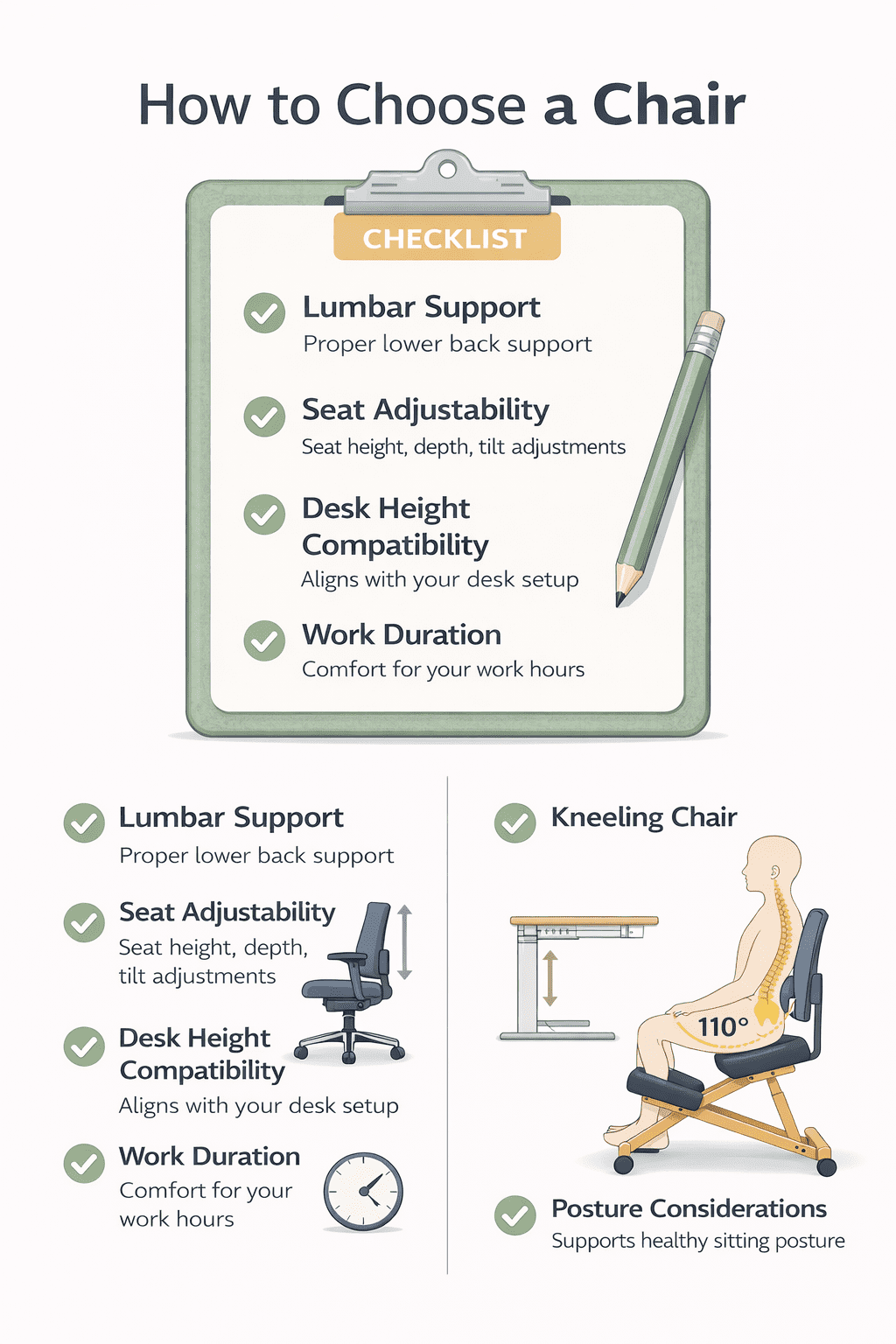
Picking the perfect chair is not a matter of trends or labels — it’s about how your body moves and how you work every single day. An individually fitted chair can provide relief from discomfort and support habits that help calibrate posture over the long term.
Body type considerations
Height, weight, and body proportions matter. Tall people need seats with adjustable seat depths and backrest heights; short people need seats that let their feet lie flat on the floor. The chair should support your lower back without putting you in an unnatural position.
Desk Height Compatibility
Also, a chair should complement your desk arrangement. Your elbows should rest comfortably on your desk, and the screen should be at eye level. Even if the chair is well-designed, if it’s too high or too low for your desk, you may find yourself leaning forward, which can create tension in your shoulders.
Work Duration
The total time you spend sitting each day is a big factor. Ergonomic, armless chairs suitable for long work sessions help you avoid fatigue. For shorter periods or creative endeavors, kneeling chairs can promote an upright posture, but should not replace full-time seating.
Pain History
If you have a history of lower back pain, neck tension, or joint pain, look for an adjustable option that provides lumbar support. Users with knee or circulation problems won’t be comfortable using a kneeling chair.
Mixing Chair Types
Many users have 2 chairs. Switching between an office chair, a kneeling chair, and a standing desk should work because it reduces non-static overload and promotes healthier movement throughout the rest of your day.
Common Myths About Kneeling Chairs
Kneeling chairs have their fair share of misconceptions. Myth-busting helps users make decisions and reveals expertise.
Myth 1: There is a magic chair that will cure back pain.
Although they may temporarily improve posture and reduce pressure on your lower back, kneeling chairs are not a panacea. It can also be effective in the long run when used properly, when one’s core isn’t forgotten, and when sitting is mixed up.
Myth 2: They are better for everybody.
Kneeling chairs aren’t for everyone. Knee problems, circulation issues , and sitting all day can make people uncomfortable. They work best for short to medium sitting and posture control.
Myth 3: More pain, better posture
“Stressing or straining is not a sign of correctness.” Kneeling chairs do require some muscle engagement, but being in pain is likely a sign that the chair isn’t being used properly or doesn’t fit well. Good posture and rest are important for health.
These myths are stripped away so that users recognize kneeling chairs as a tool, not magic, and realize that simply using the product is just part of good posture and supportive sitting.
FAQs – Ergonomic Chair vs Kneeling Chair
Do kneeling chairs improve posture more than Ergo chairs?
Kneeling chairs tilt the pelvis forward and encourage an upright posture, but ergonomic chairs provide consistent lumbar support and maintain a neutral spine. For long-term posture, I generally think ergonomic chairs are better.
Are kneeling chairs good for all-day use?
Kneeling chairs are not Ideal for short to medium sitting sessions. Long-term use can lead to discomfort in the knee or shin. It is combined with a non-ergonomic chair or a standing position.
What chair is best for lower back pain?
Ergonomic chairs with adjustable lumbar support are also well-suited for those with lower back pain. Kneeling chairs alleviate spinal compression in the short term but may exacerbate knee pain for those with sensitive knees.
Is a Kneeling Chair good for beginners?
Kneeling chairs take some getting used to, and you have to engage your core. They can be tiring at first for beginners, but ergonomic chairs are usually easier to work at for long periods.
Can I have a chair for an office that improves my posture?
Yes, as long as it has ergonomic and posture benefits. If your work often involves long hours on an ergonomic seat or short sessions in the kneeling position, you can relieve tension in your spine while adding a little comfort.
Bottom Line – Which is the Better Chair?
When comparing an ergonomic chair and a kneeling chair, consider your posture goals, how long you sit, and whether you need added comfort. With long-lasting, ergonomic features that keep you comfortable, adjustable chairs have become increasingly popular, offering options for lumbar support, seat depth, and backrest alignment to reduce the strain of sitting all day. Kneeling chairs are great for short periods, as a training tool to correct your posture, or for creative endeavors; however, they are not recommended for prolonged sitting. For the average user, a good ergonomic chair will provide safer, more consistent support. However, kneeling chairs can be a fine addition to your seating regimen for variety and posture awareness.