
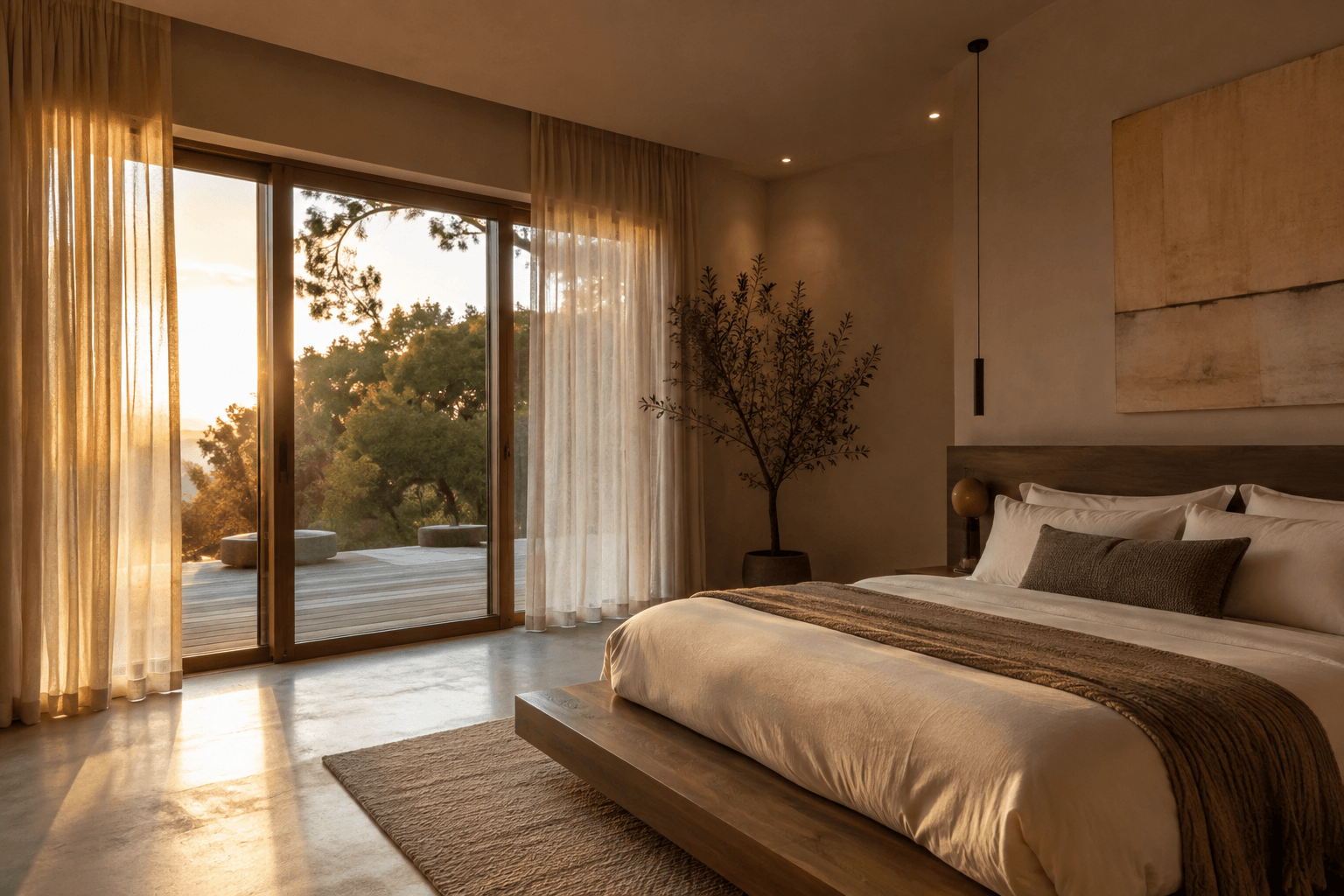
Many people choose a bedroom patio door mainly for how it looks. But later, sunlight may wake you early, or you may stub your toes on the track at night. I once helped a friend who placed her bed right next to a patio door. She loved the view at first, but after moving in, she realised the morning sun woke her up at 5 AM every day, and the glare made reading in bed uncomfortable. A patio door is more than just a style choice; it also affects light, temperature, sound, and how you move around the room. Most of these issues only become obvious after you’ve lived with the door for some time.
This post shares ten practical bedroom patio door ideas. You’ll also learn an important step most decor blogs skip: checking clearance and orientation before picking a style.
What to Check Before You Choose a Bedroom Patio Door
Before you pick a finish or curtain style, focus on three practical tradeoffs that decide whether your door will be useful or look nice. These checks help you move from style to function.
Swing and slide clearance: A hinged patio door needs at least 36 inches of clear space to open all the way without bumping into furniture or rugs. A sliding door also needs 36 inches of walking space in front of the track, not counting any furniture you might need to avoid. Measure this before you shop, since moving a bed later is often more annoying than you’d expect.
Distance from the bed to the glass: Glass brings in cold during winter and heat during summer, even with good double-pane doors. If your bed is less than three feet from the patio door, you’ll probably feel the temperature change at night, especially in spring and fall when the AC or heat isn’t always running. Try moving the bed back a foot or turning it away from the glass; this can help, and you won’t need to remodel. If moving the bed isn’t possible, insulation solutions like thermal or blackout curtains, insulated panels, or even weatherstripping around the door can reduce drafts and make the room more comfortable without changing your layout. Taken together, these options help the room stay comfortable.
Eye-level glare and sightlines: Lie down where your head will be and see what you can spot through the door glass—like streetlights, a neighbour’s porch light, or headlights from a driveway. Also, check what people can see from outside when your lights are on at night. This helps you decide if you need blackout curtains, frosted glass, or just a different curtain height. Together, these checks can make your room much more comfortable.
10 Bedroom Patio Door Ideas
1. French Doors with Interior Blackout Panels
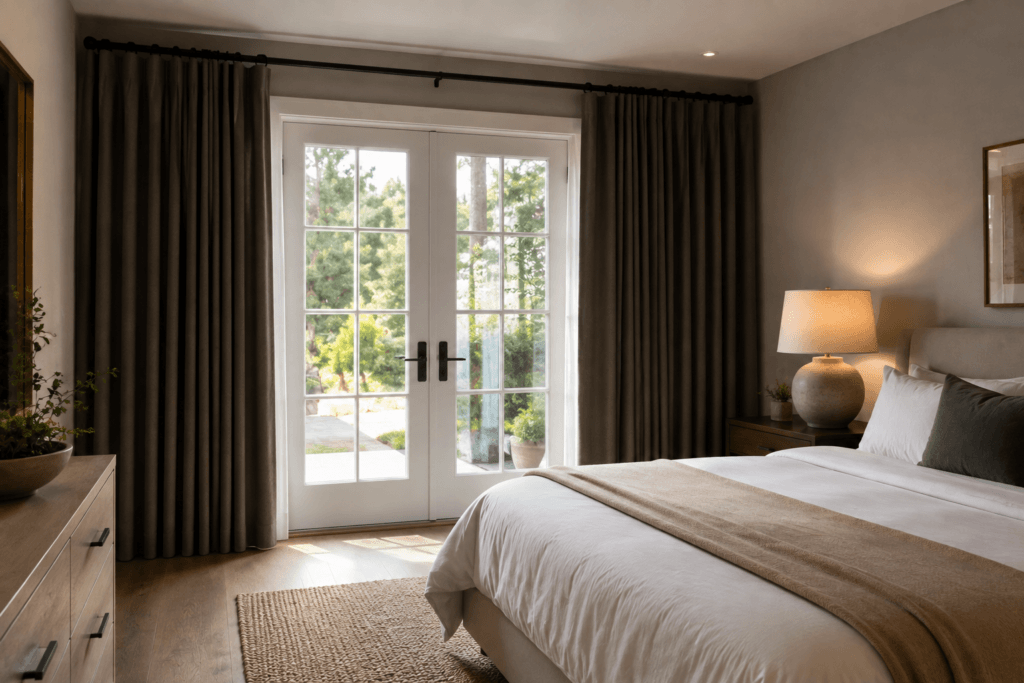
French doors have a classic look, but their glass panels need blackout coverage that seals at the edges, not just a curtain on a rod. Mount the rod 4 to 6 inches above the frame and make it wide enough so the panels stack fully off the glass when open. This keeps the style while preserving light control.
2. Sliding Glass Door with a Low-Profile Track
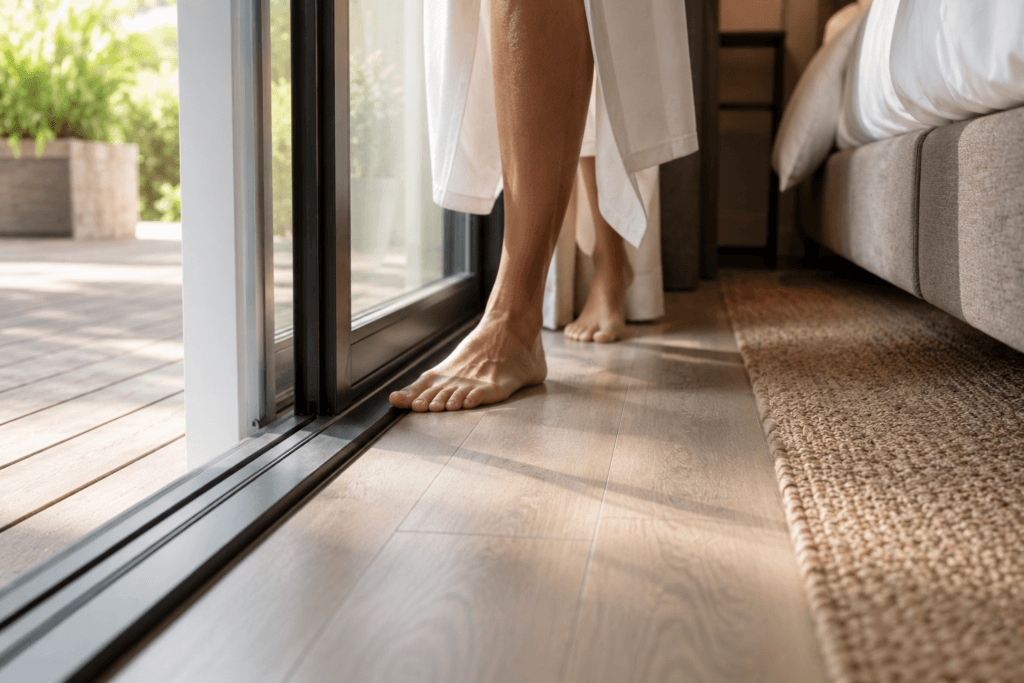
Standard sliding door tracks stick up from the floor and can be a tripping hazard, especially during late-night trips to the bathroom. To reduce that problem, pick a low-profile or flush-mounted track system, or add a slim transition strip to smooth out the gap. This matters in a bedroom, since you often cross that spot when you’re half-asleep.
3. Frosted or Reeded Glass for Ground-Floor Privacy
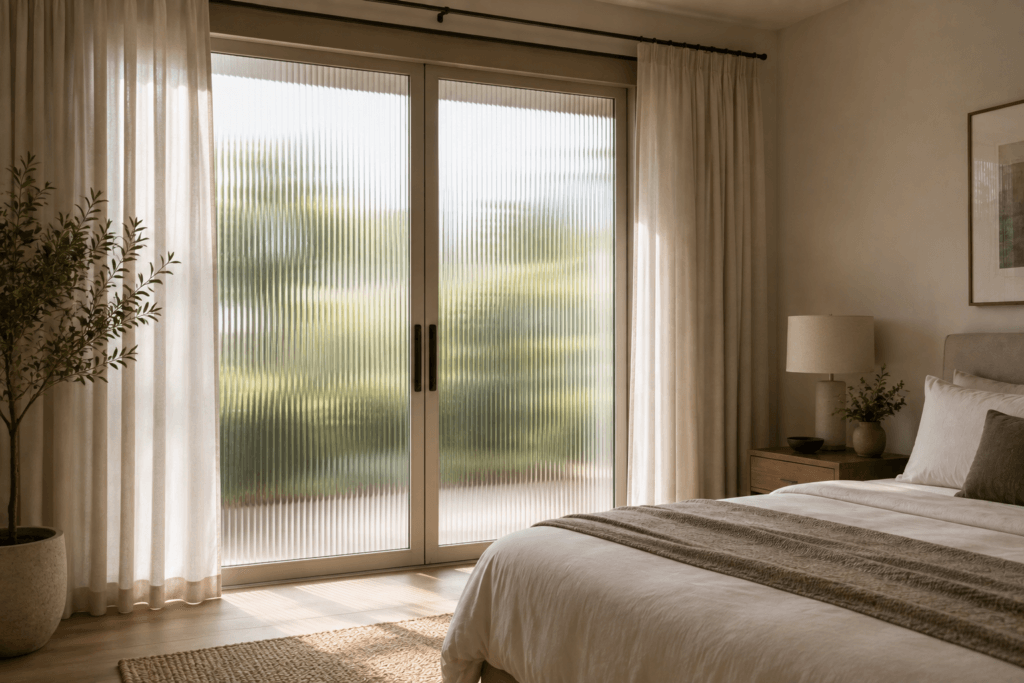
If your patio door faces a shared yard, sidewalk, or neighbour’s window, frosted or reeded glass keeps daylight coming in without turning your bed into a display case at night. As a result, you solve the privacy problem without blocking the door with heavy drapes you’d otherwise need full-time.
4. Sliding Barn-Style Door as a Secondary Layer
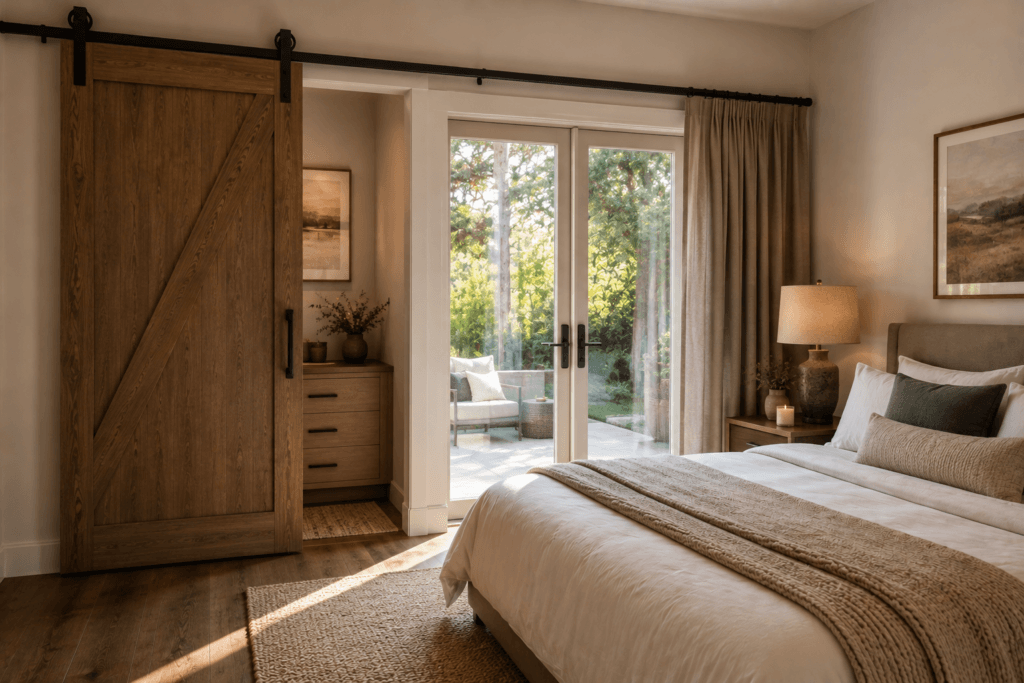
Some bedrooms add an interior sliding barn door along with the patio door for extra insulation and blackout. To make that work, you need at least three feet of clear wall space next to the opening for the door to slide into. Measure this before buying hardware, since barn door track kits are tough to shorten.
5. Motorised Blinds Between the Glass Panes
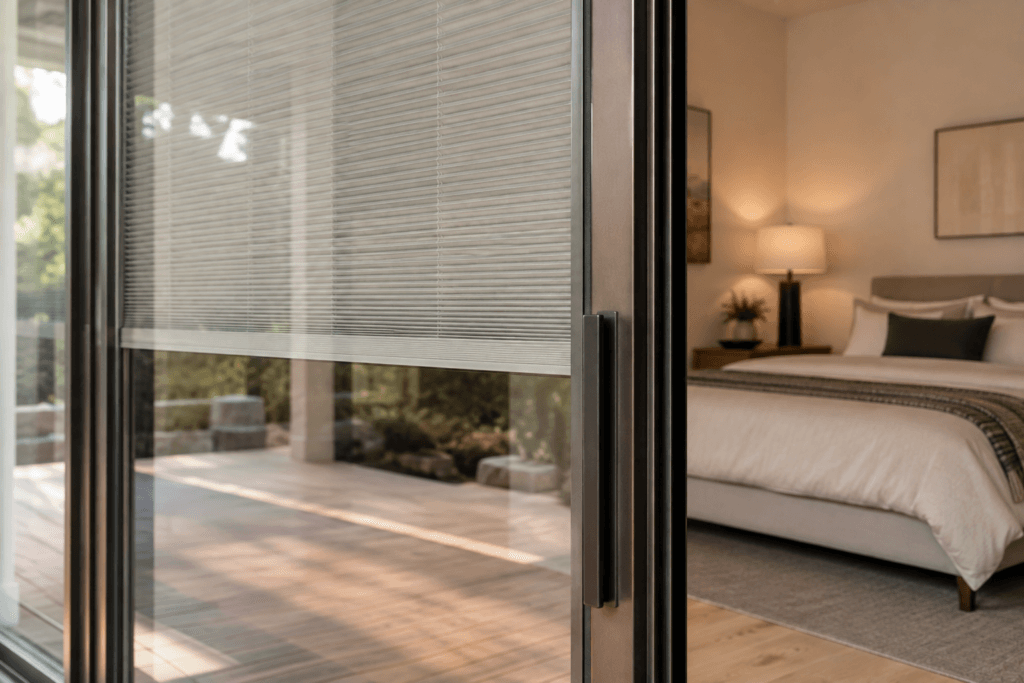
Built-in motorised blinds are inside a double-pane unit, so there’s no cord, no dust buildup, and no fabric touching the glass where condensation can form. For a patio door near the bed, that makes it easy to adjust light and privacy with a remote or your phone without getting up. Most built-in blind systems come as part of a new door, so they typically require replacing your existing patio door instead of retrofitting. If you’re planning a full door upgrade, this is an easy feature to include, but for existing doors, adding similar motorised options usually means installing exterior blinds or shades instead.
6. Bench Seat Positioned Outside the Swing Radius
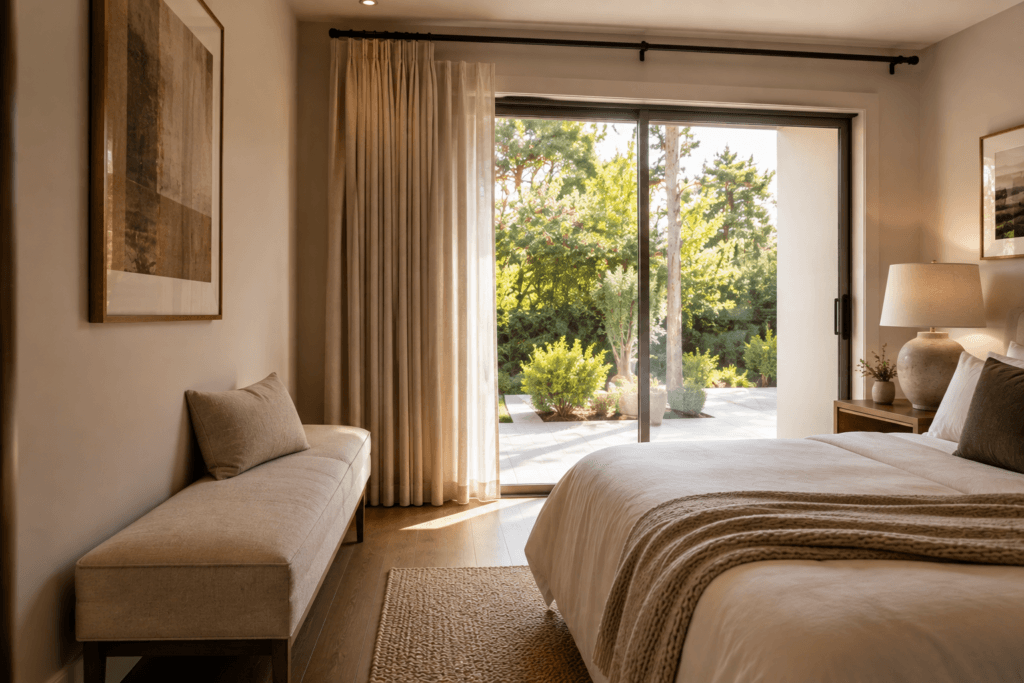
A window bench under or next to a patio door looks great in photos, but only put it where it won’t block the door’s swing or slide path. In other words, keep it at least 36 inches away from a sliding track, or completely outside the swing area of a hinged door. This way, the bench is a useful spot, not an obstacle.
7. Full-Height Curtains Mounted Above the Frame
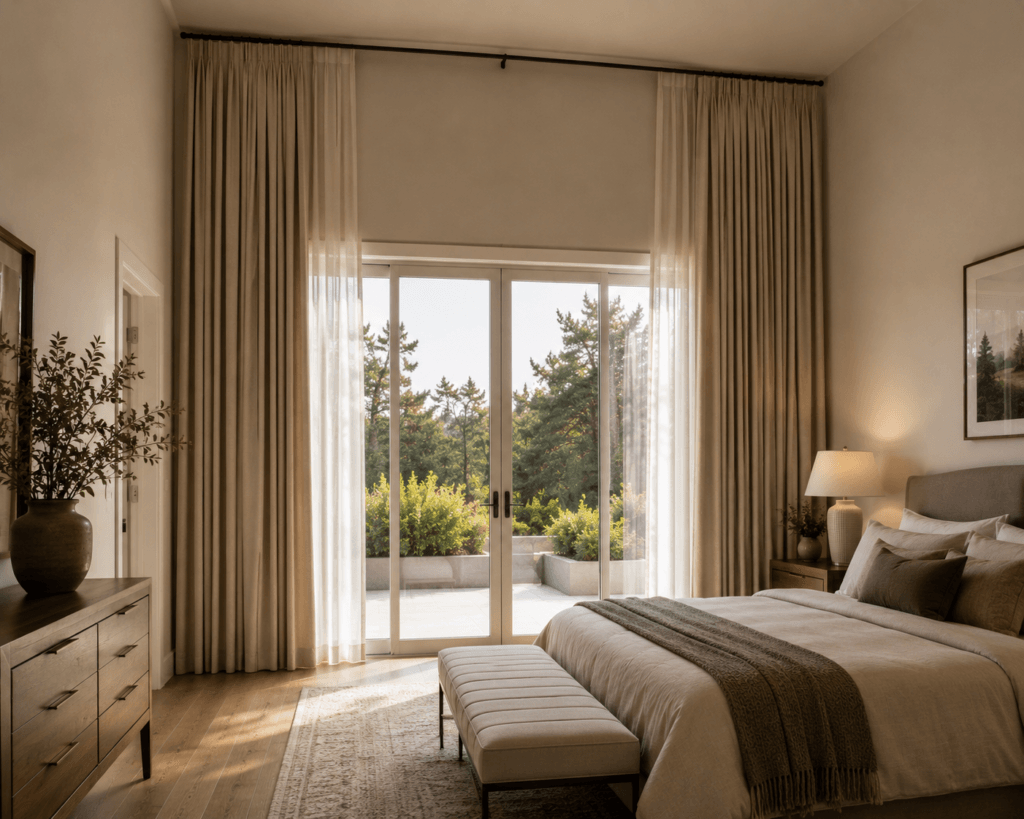
Hanging curtains from the ceiling instead of the frame makes the door look taller and helps block light that leaks in above the frame. To get that effect, mount the rod 4 to 8 inches above the door casing and extend it 8 to 12 inches past each side. This way, the panels clear the glass completely when open.
8. Sliding Door with a Built-In Screen for Cross-Ventilation
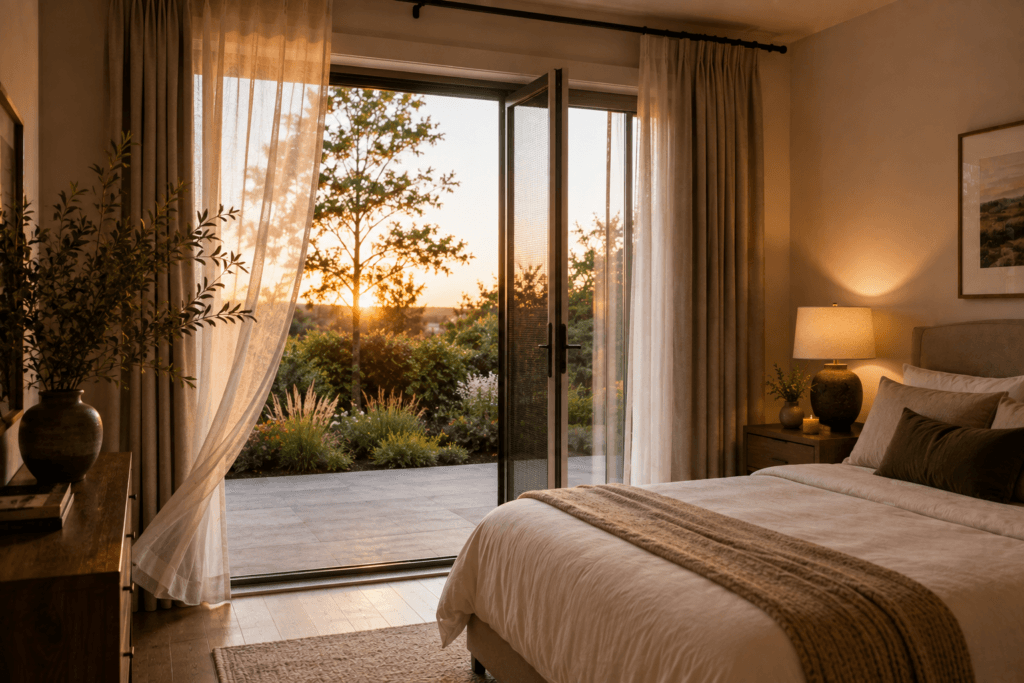
If you like sleeping with fresh air, a patio door with a built-in retractable screen lets you leave the door open a little without letting in bugs or risking security. To keep that comfort, put the bed so the airflow moves across the room, not right on you, since a direct draft all night can give you a stiff neck or sore throat.
9. Warm-Toned Interior Frame Finish
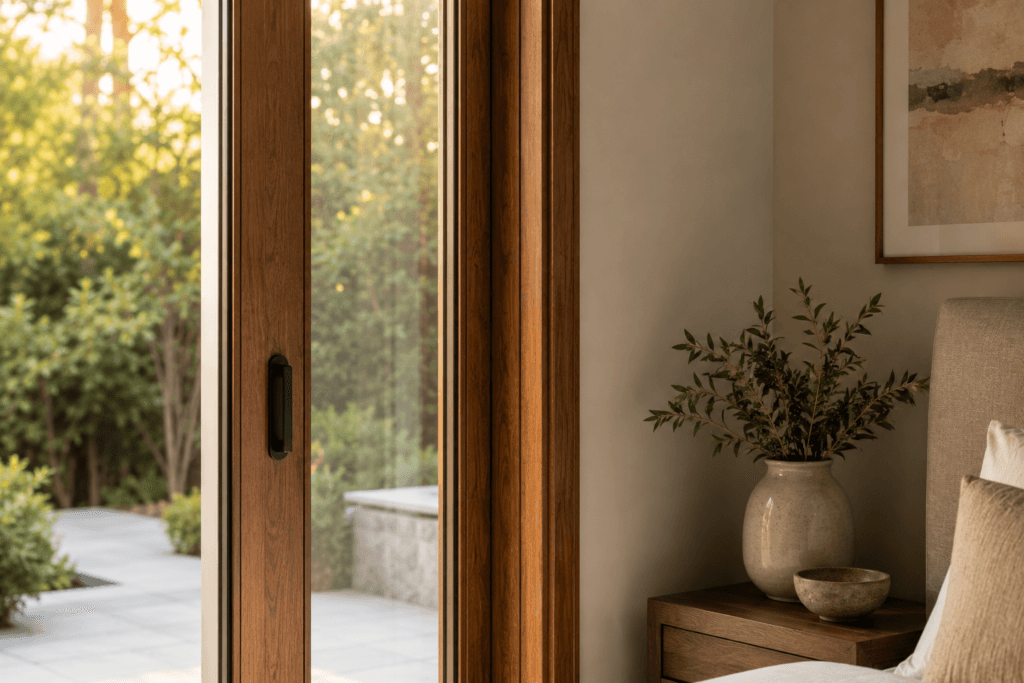
A black or dark bronze frame looks stylish in photos, but it tends to show dust, fingerprints, and glare from outdoor light much more than a warm wood-tone or matte white frame. For a bedroom, where you often see the door in low light, a lighter finish is easier to keep clean every day and does not highlight smudges and dust as much.
10. Dresser or Wardrobe Placed on the Opposite Wall
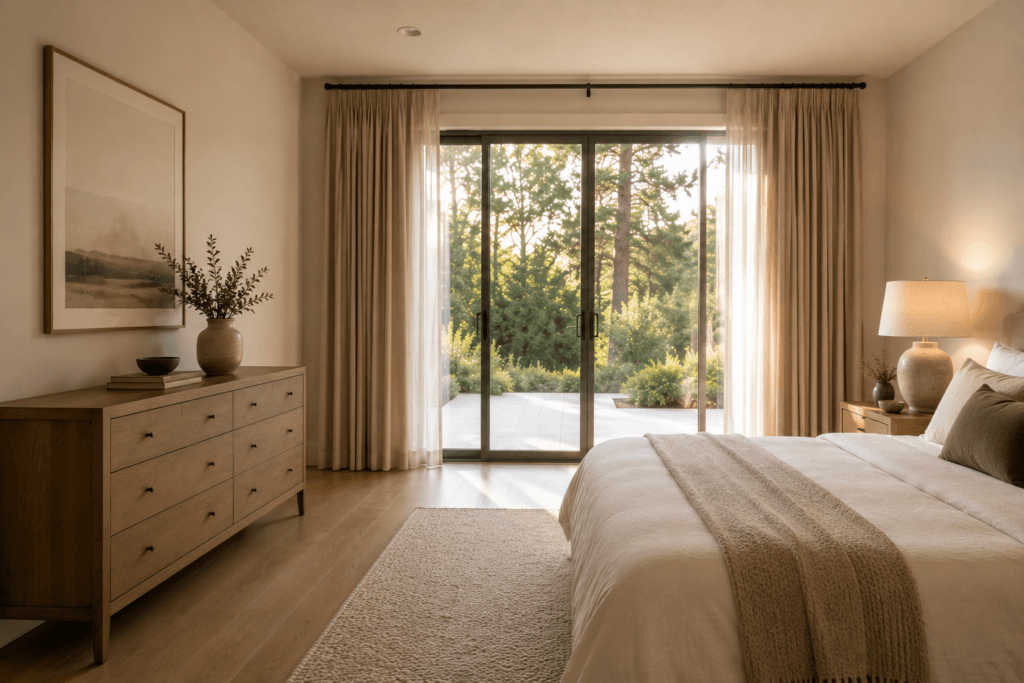
If floor space is tight, avoid placing tall furniture right next to the patio door just because there is an empty wall. When furniture is placed too close to the door, it can block part of the opening and reduce the swing or slide clearance below the 36-inch minimum. As a result, it becomes harder to open the door fully and can make everyday tasks, such as changing sheets or moving items in and out, more difficult.
FAQ
Do patio doors make a bedroom colder in winter?
Yes, glass loses heat faster than an insulated wall, so bedrooms with patio doors are often a few degrees cooler near the door. To reduce that effect, keep the bed at least three feet from the glass and use thermal-lined curtains.
How much clearance does a sliding patio door need in a bedroom?
Make sure you have at least 36 inches of clear floor space in front of the track for walking and for the door to slide all the way. This keeps furniture, rugs, or benches from blocking movement or the door.
Are French doors or sliding doors better for a bedroom?
It depends on your floor space. French doors need swing clearance on one side of the frame, while sliding doors need clear wall space for the door to slide into. The tradeoff is swing space versus wall space, and sliding doors often work better in smaller rooms because they don’t need extra open floor space.
What’s the best window treatment for a patio door near the bed?
Blackout curtains mounted above the frame or blinds built between the glass work best because they control both light and glare without taking up floor space. Between-the-glass blinds are worth the extra cost if the door is close to your bed.
Closing
A bedroom patio door works best when you think about clearance, glare, and temperature before focusing on style. After that, check out the rest of Ergontag’s bedroom guides for more tips on solving hidden problems in stylish rooms.