
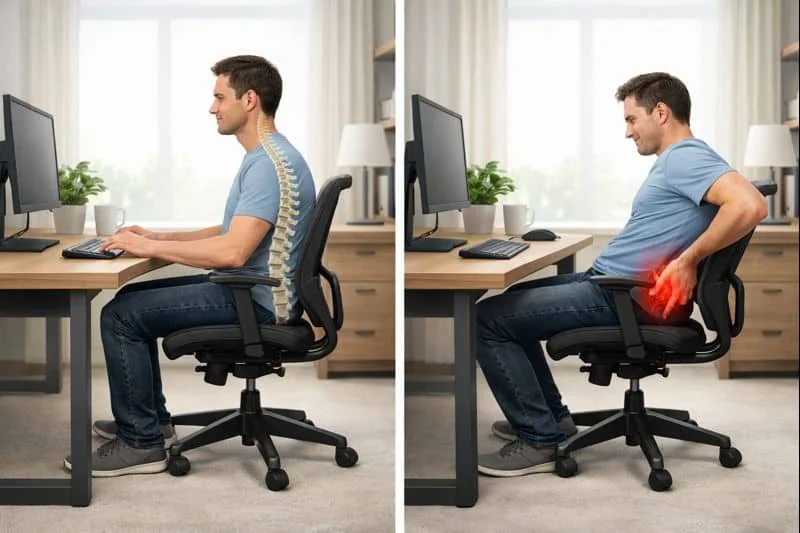
Imagine this: you’re sitting at your desk, shifting uncomfortably in your chair as the familiar ache at the base of your spine begins to set in. It’s a sensation you know all too well, one that persists through hours of work, study, or simply going about daily tasks. You are not alone. Many people experience pain at the base of their spine after prolonged sitting, and the discomfort can be confusing, annoying, and even scary when it recurs.
You may wonder:
- “Why does sitting hurt so much?”
- “Is my chair the problem?”
- “Is something wrong with my body?”
- “Why does the pain go away when I stand?”
These questions are normal. Tailbone pain from sitting is one of the most misunderstood comfort problems, especially for those who sit long hours.
Most tailbone pain from sitting can be relieved with simple, practical adjustments. You don’t need drastic posture rules or costly gadgets—just understanding the causes helps. Most people find that small daily changes make sitting comfortable again. Consistent recovery is common, so try the tips in this guide to see real results.
This guide gives you a straightforward approach to understanding and relieving tailbone pain caused by sitting.
Table of Contents
What is the tailbone, and Why Does Sitting Affect?
The tailbone, also called the coccyx, is the small bone at the very bottom of your spine. The coccyx sits just below your hips and helps support your body when you sit. When you sit correctly, ideally around 70% of your weight should rest on your hips and thighs, while about 30% is supported by your sit bones (the bony parts at the bottom of your pelvis that you feel when sitting). The tailbone should only help with balance. Poor sitting habits put more pressure on your tailbone than it should.
This is when pain starts.
Humans were not designed to sit for many hours every day. Long sitting, especially on poorly designed chairs, places stress on body parts meant for short support, not constant pressure.
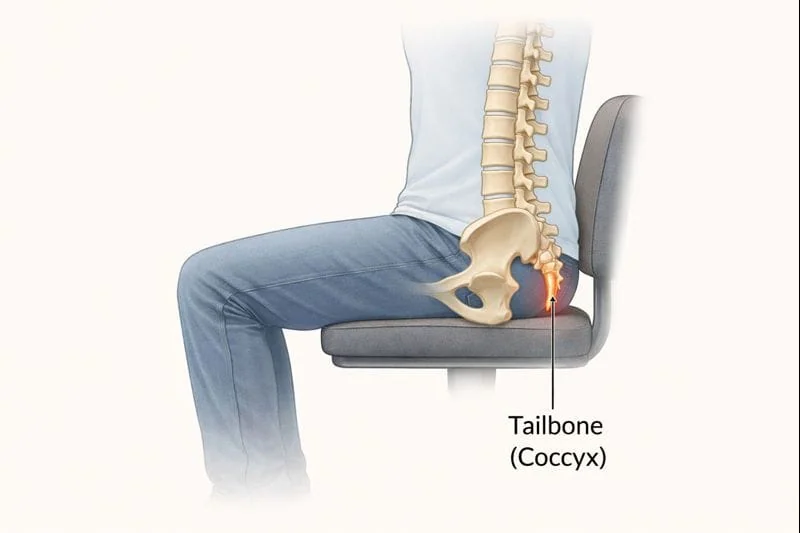
How Tailbone Pain From Sitting Usually Feels
Tailbone pain does not feel the same for everyone, but most people describe it in similar ways. Which of these sensations matches your experience right now? You may notice:
- A dull ache at the bottom of your spine
- Pressure that increases the longer you sit
- Pain when standing up from a chair
- Discomfort on hard or flat seats
- Relief when you stand, walk, or lie down
This pain often starts mild and gradually worsens. Many people ignore it at first, thinking it will go away. Over time, sitting becomes harder and less comfortable.
Why Sitting Causes Tailbone Pain
Tailbone pain from sitting usually comes from how pressure is applied, not from damage or injury. Here are the most common causes.
Sitting Too Long Without Moving
Your tailbone is not built for constant pressure. If you sit for long hours without standing or moving, muscles around your hips and lower spine tighten, and blood flow slows. Pressure builds up in one spot, making the area sensitive and sore.
This makes the tailbone sensitive and sore.
Even a supportive chair is not enough if you remain still for extended periods.
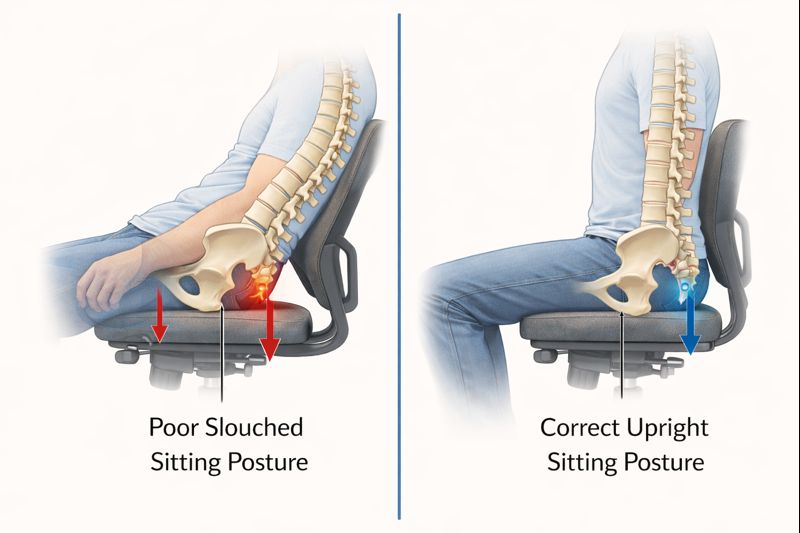
Slouching and Poor Sitting Posture
When you slouch, your pelvis tilts backward. This shifts your body weight away from your hips and toward your tailbone.
Uneven pressure from poor posture causes discomfort and pain over time.
Many people think leaning back feels relaxing, but too much backward lean increases pressure on the tailbone.
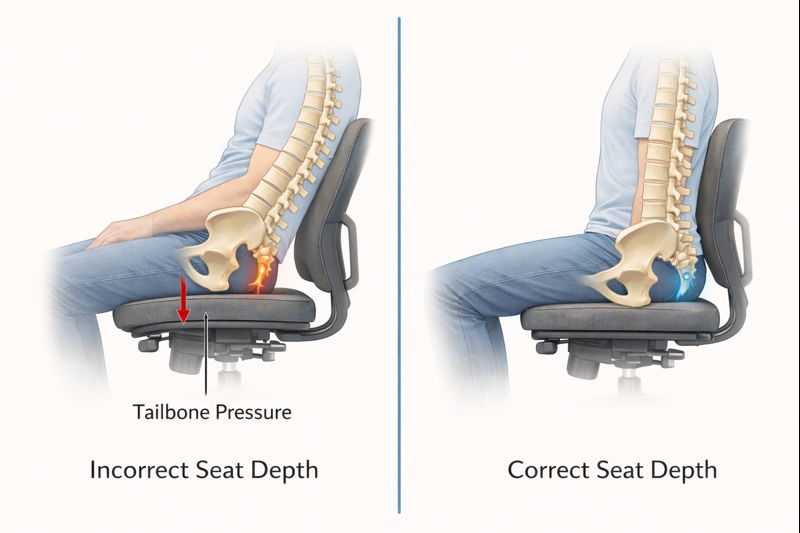
Seat Depth Problem, which means
- If the seat is too deep, you slide forward to reach the backrest. This collapses your posture and increases pressure on your tailbone.
- If the seat is too shallow, your thighs are not supported, and your hips lose balance.
Both situations make the tailbone work harder than it should.
Check out: seat depth vs hip alignment
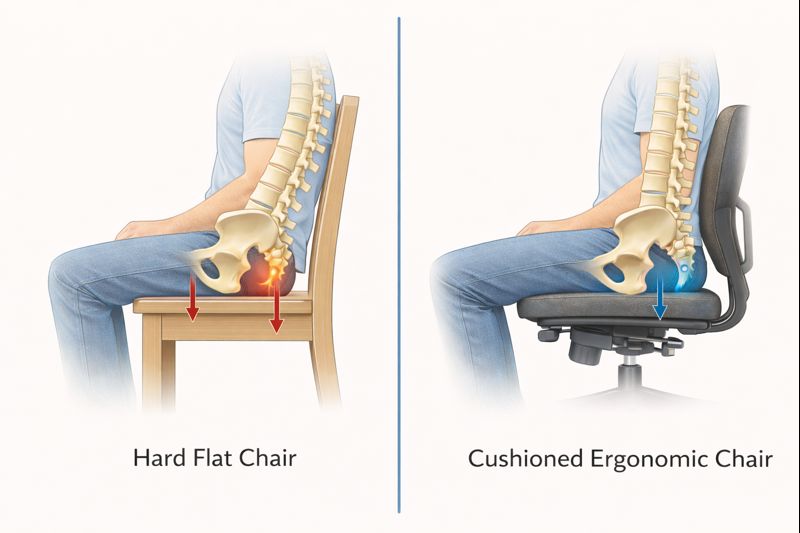
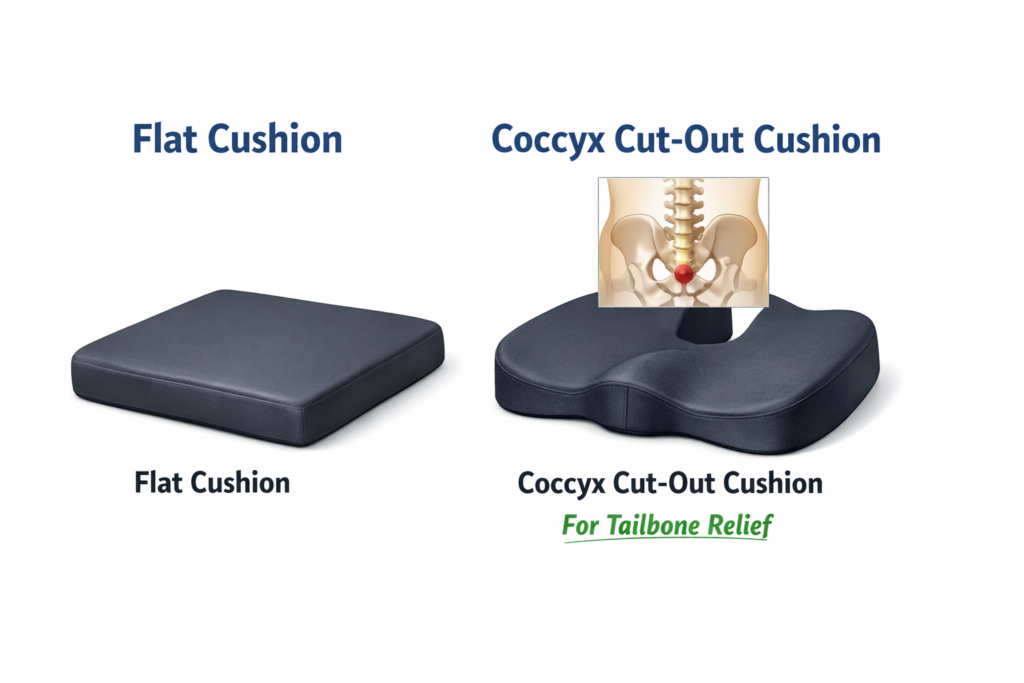
Hard or Flat Chair Seats
Hard chairs push pressure directly into the tailbone. Flat seats do not follow your body’s natural shape, making it harder to distribute weight evenly. Hardwood and plastic chairs add rigidity or lack adequate cushioning, while padded foam can sometimes cause sagging and poor posture. This is why dining, wooden, or basic office chairs often cause tailbone discomfort during long periods of sitting.
Poor Hip Support and Alignment
Your hips and tailbone work together. When your hips are not supported correctly, the tailbone takes extra load.
This is also why many people feel tailbone pain along with hip pain. The problem is not separate; it is connected.
Why Tailbone Pain Gets Worse the Longer You Sit
Tailbone pain usually builds slowly. At first, it feels like mild discomfort. As sitting continues, pressure increases, and muscles tighten.
Here’s what happens:
- Pressure stays in one spot.
- Muscles become stiff
- The nervous system becomes sensitive.
- Pain signals increase
This is why sitting a little longer often makes things worse. Pushing through pain rarely helps.
Is Your Chair the Problem or How You Sit?
Many people quickly blame the chair for their discomfort. While the chair’s design is important, your sitting habits are equally crucial. An ergonomic chair can still cause pain if:
- Seat height is wrong. Seat depth is not adjusted.
- You slouch or perch forward. You don’t move often.
Comfort comes from a good chair setup and healthy sitting habits.
Simple Fixes That Actually Reduce Tailbone Pain
You do not need extreme changes. Small adjustments can make a big difference.
Sit All the Way Back in the Chair
Make sure your hips touch the backrest. Sitting on the edge of the chair reduces thigh support and increases pressure on the tailbone.
Sit fully back and let the chair support your hips.
Adjust Seat Height and Depth
Your feet should rest flat on the floor. Your thighs should be supported without pressure behind your knees.
Correct seat depth helps:
- Balance your pelvis
- Reduce tailbone pressure
- Improve sitting comfort
👉check out: desk chair dimensions
Use Cushions Carefully
Cushions can help, but only if used properly.
Helpful cushions:
- Firm but not hard
- Thin enough to avoid sinking
- Stable on the seat
Cushions with tailbone cutouts may help some people, but thick, soft cushions often worsen posture.
Change Position Before Pain Starts
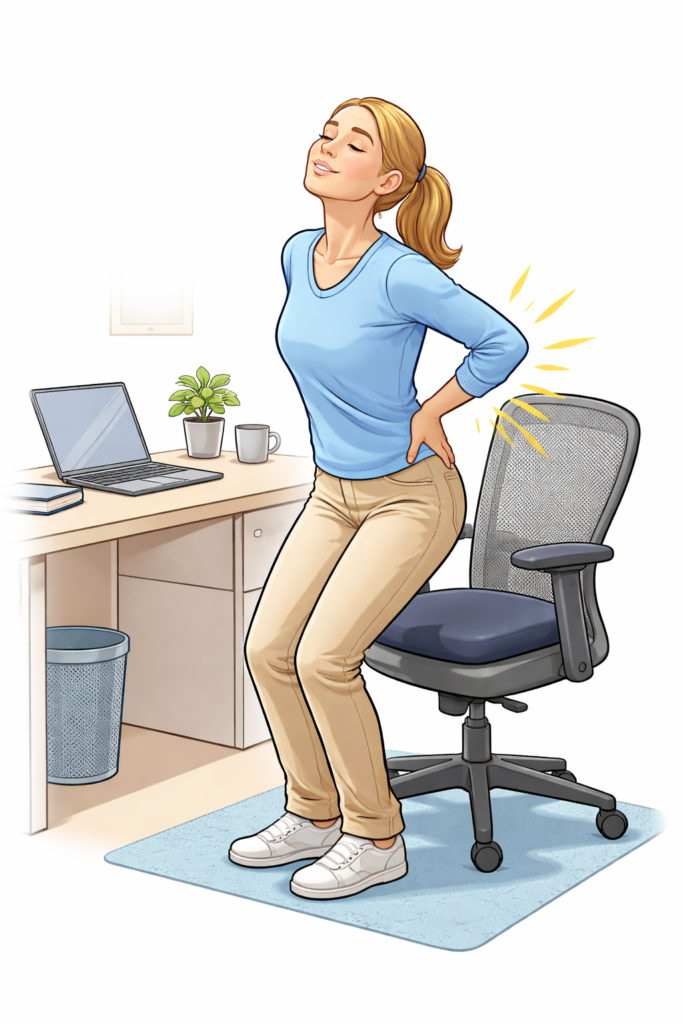
Movement helps reduce tailbone pain.
Try to:
- Stand every 30–45 minutes.
- Walk for a minute or two.
- Shift your sitting position gently.
Movement resets pressure and relaxes your muscles.
Tailbone Pain vs Lower Back Pain vs Hip Pain
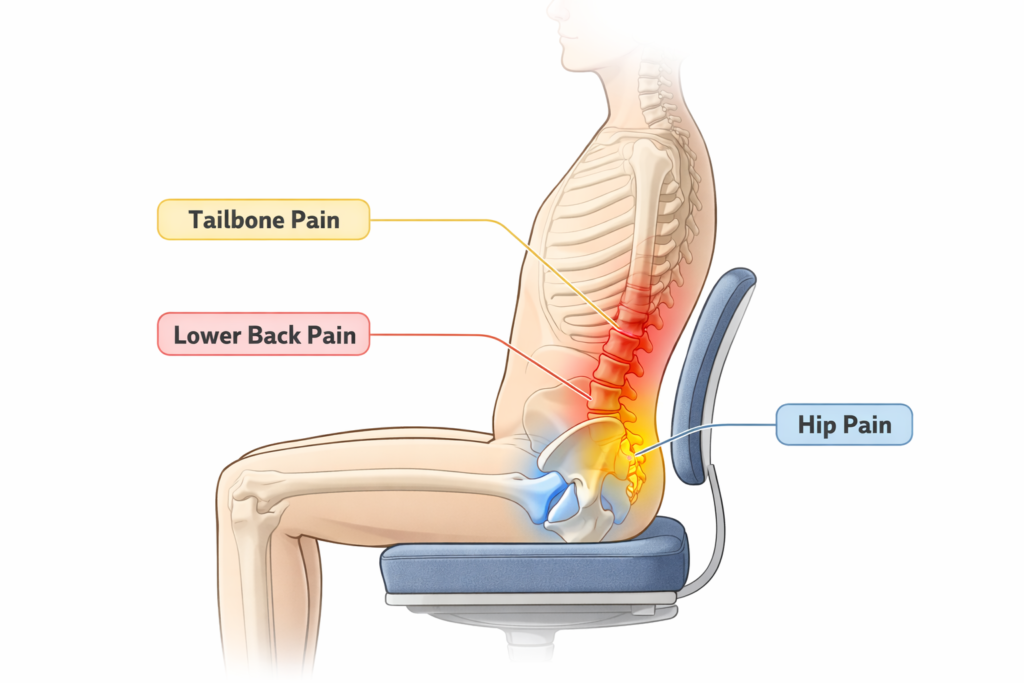
These pains often feel similar, but they are not the same.
- Tailbone pain feels localized at the bottom of the spine.
- Lower back pain spreads across the lumbar area.
- Hip pain often feels deeper or on the sides.
Many people think they have back pain, but it’s actually tailbone pressure. Internal link opportunity: Does lumbar support help lower back pain
When Tailbone Pain Is NOT Caused by Sitting
Most tailbone pain comes from sitting habits, but not always.
Other possible reasons include:
- Recent falls or injuries
- Pregnancy-related changes
- Long-term inflammation
Everyday Habits That Protect Your Tailbone
If pain is severe, constant, or not related to sitting, professional advice may be helpful. Look out for warning signs that indicate the need for medical attention, such as numbness, tingling, or loss of sensation in the legs; fever; or pain after a recent fall or injury. This article focuses on sitting-related discomfort, the most common case.
Simple daily habits help prevent pain from coming back.
- Sit fully back in the chair.
- Keep your feet flat on the floor.
- Avoid slouching for long periods.
- Take regular movement breaks.
- Use firm seating when possible.
Consistency matters more than perfection does.
Quick Self-Check: Is Sitting Causing Your Tailbone Pain?
Answer these questions:
- Does pain increase the longer you sit?
- Does standing bring relief?
- Is pain worse on hard chairs?
- Does movement help?
If you answered yes to most of these, sitting mechanics are likely the cause.
FAQS(Frequently Asked Questions)
Can sitting too much cause tailbone pain?
Yes. Sitting for long hours puts constant pressure on the tailbone, especially with poor posture or hard chairs. Over time, this pressure can cause pain and discomfort.
Why does my tailbone hurt more on hard chairs?
Hard chairs do not spread body weight evenly. This pushes pressure directly into the tailbone area, making sitting uncomfortable.
Does posture really affect tailbone pain?
Yes. Slouching or leaning back too much shifts weight onto the tailbone. Balanced posture helps move pressure to the hips instead.
Final Thoughts — You Don’t Have to Live With Tailbone Pain
Tailbone pain from sitting is frustrating, but it doesn’t have to be permanent. Most people feel better after adjusting how they sit. Try one tip for your next three sittings and see what changes. A small experiment could help you find the best improvement.
Lasting comfort is achieved by understanding pressure, support, and movement—more than by rigid posture or expensive chairs.
Simple, consistent daily changes can make sitting pain-free again.