
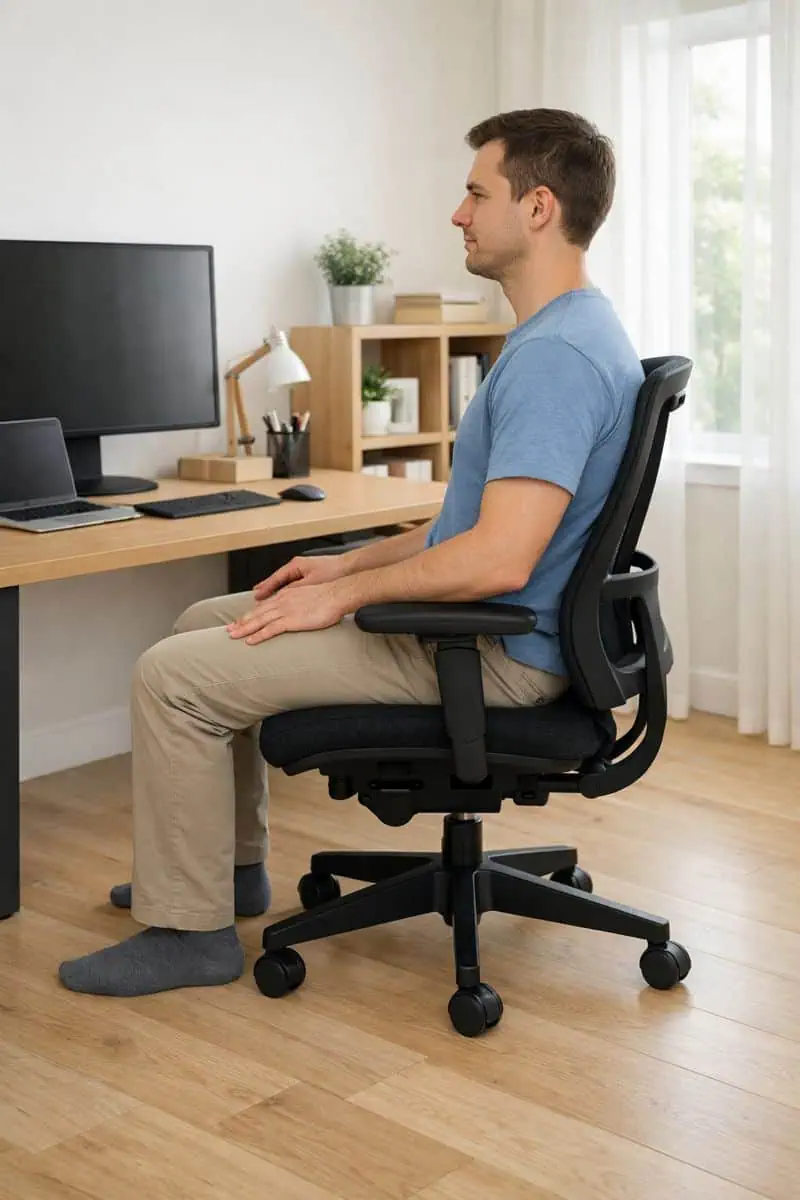
Seat depth and hip alignment play a major role in how your hips feel during long periods of sitting.
Even in high-end or ergonomic chairs, many people spend hours sitting but still feel hip tightness, pressure, or discomfort—despite adjusting height, adding cushions, or blaming posture.
The problem often hides in one simple place that most people ignore: seat depth (the distance from the backrest to the front of the seat).
Seat depth plays a quiet but powerful role in how your hips sit, move, and stay comfortable during the day. When seat depth is wrong, your hips are forced into positions they were not meant to hold for hours. Over time, this leads to stiffness, constant shifting, and frustration.
This article explains seat depth and hip alignment in simple terms, so you can finally understand why sitting feels wrong and what you can do about it.
Table of Contents
What Is Seat Depth? (Simple Explanation)
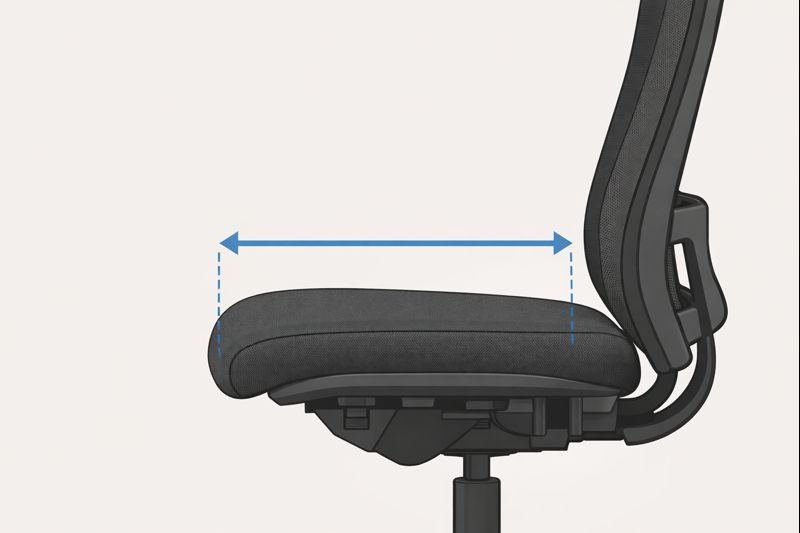
Seat depth is the distance from the front edge of the chair seat to the backrest.
In simple words, it tells you:
- How much of your thighs are supported
- How far back do you sit in the chair
- Many people confuse seat depth with seat height, but they are very different.
- Seat height controls how your feet touch the floor.
- Seat depth controls how your hips and thighs rest on the seat.
Both are important, but seat depth directly affects hip alignment.
What Does Proper Hip Alignment Mean When Sitting?
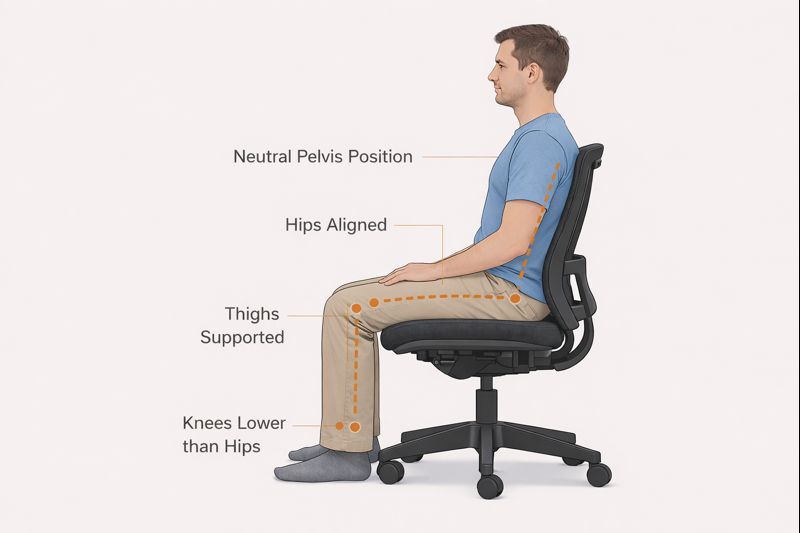
Hip alignment means your hips are sitting in a natural, balanced position—meaning your pelvic bones are not tipped forward or back unnaturally.
When your hips are aligned properly:
- Your pelvis stays neutral (not tilted)
- Your thighs feel supported but not squeezed.
- Your lower body feels stable.
- You don’t need to move or fidget constantly.
Good hip alignment allows your body to relax instead of fighting gravity all day.
Why Seat Depth Matters More Than People Think
Most chairs are built for “average” body sizes. But bodies are not average.
When the seat depth does not match your body:
- Your hips compensate
- Your posture breaks down.
- Discomfort slowly builds
This is why two people can sit in the same chair and have completely different experiences.
Seat depth is not just about comfort. It affects how your hips support your body weight. Small adjustments can lead to lasting comfort if you develop good habits and setup.
How Seat Depth Affects Hip Alignment (The Core Problem)
This is where most sitting issues begin.
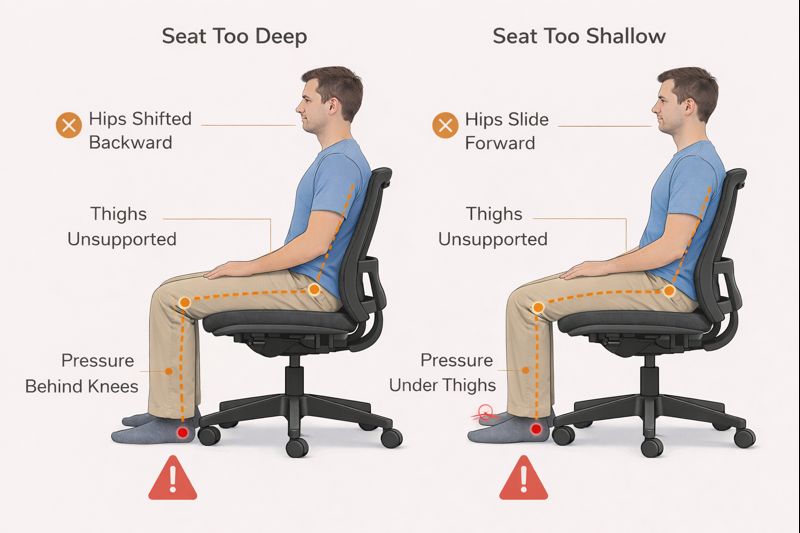
When the Seat Is Too Deep
If the seat depth is too long:
- The front edge presses into the back of your knees
- You cannot sit all the way back comfortably.
- Your hips slide forward.
- Your pelvis tilts backwards.
This position forces your hips out of alignment. Over time, it can lead to stiffness and discomfort, especially during prolonged sitting.
Many people respond by:
- Sitting on the edge of the chair
- Slouching
- Adding cushions incorrectly
These “fixes” usually make things worse.
When the Seat Is Too Shallow
If the seat depth is too short:
- Your thighs are not fully supported.
- Your hips carry too much pressure.
- You feel unstable while sitting.
This can cause constant shifting and uneven sitting habits, which affect hip balance.
Common Hip-Related Problems Caused by Wrong Seat Depth
Wrong seat depth does not always cause pain immediately. It often starts as a small discomfort that people ignore.
Common signs include:
- Tight hips after sitting
- Pressure on one side of the hips
- Feeling the need to sit cross-legged
- Sliding forward unconsciously
- Difficulty staying seated for long periods
Over time, these issues may connect with broader discomfort patterns, such as hip pain from sitting.
Why Sitting Feels Worse the Longer You Stay Still
Your hips are designed for movement, not stillness.
When the seat depth is wrong:
- Blood flow reduces
- Muscles stay contracted
- Joints remain compressed
Even a “good posture” becomes uncomfortable when hip alignment is off.
This is why people often say:
“My chair feels fine at first, but terrible after an hour.”
The chair did not change. Your hips reached their tolerance limit.
How to Tell If Your Chair’s Seat Depth Is Wrong
You do not need special tools. You can check this right now and take immediate action.
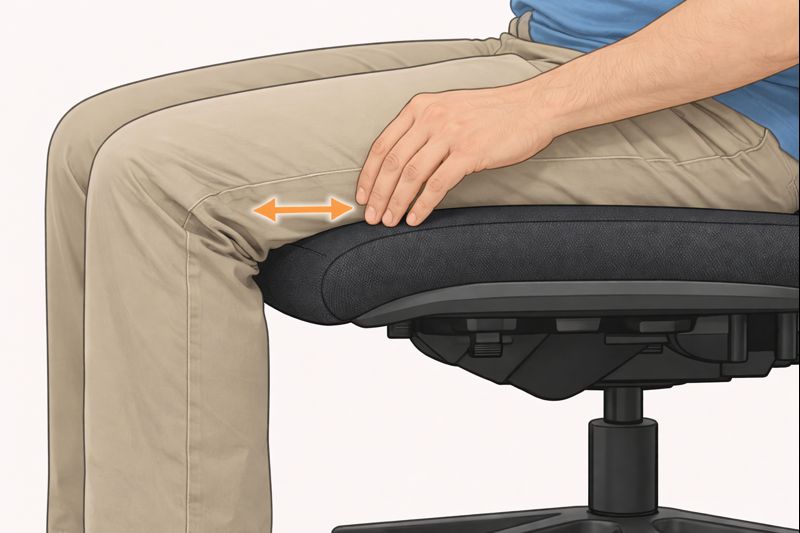
The Knee Gap Test
- Sit back fully in your chair.
- There should be 2–3 fingers of space between the seat edge and the back of your knees.
- No gap? The seat is too deep.
- Large gap? The seat may be too shallow.
The Sliding Test
If you keep sliding forward while working, your seat depth is likely pushing your hips out of alignment.
The Shifting Test
If you change positions every few minutes, your hips are trying to escape pressure.
Seat Depth and Different Body Types (Very Important)
This is something most articles never talk about.
Shorter Users
- Seat depth often feels too long.
- Knees get pressured first.
- Hips tilt backward quickly.
Taller Users
- Seat depth may feel too short.
- Thighs lack support
- Hips absorb extra load.
Shared Chairs (Home or Office)
When sharing a chair or dealing with different body sizes, seat depth becomes crucial. Adjustments are necessary to ensure each person maintains proper hip support and comfort. Use removable cushions to quickly adjust seat depth to individual needs. Another option is to establish a quick adjustment routine in which everyone checks and adjusts the seat settings before sitting. This ensures shared spaces are comfortable for everyone.
This is why adjustable chairs are important, but they only help when set up correctly.
How to Adjust Seat Depth for Better Hip Alignment
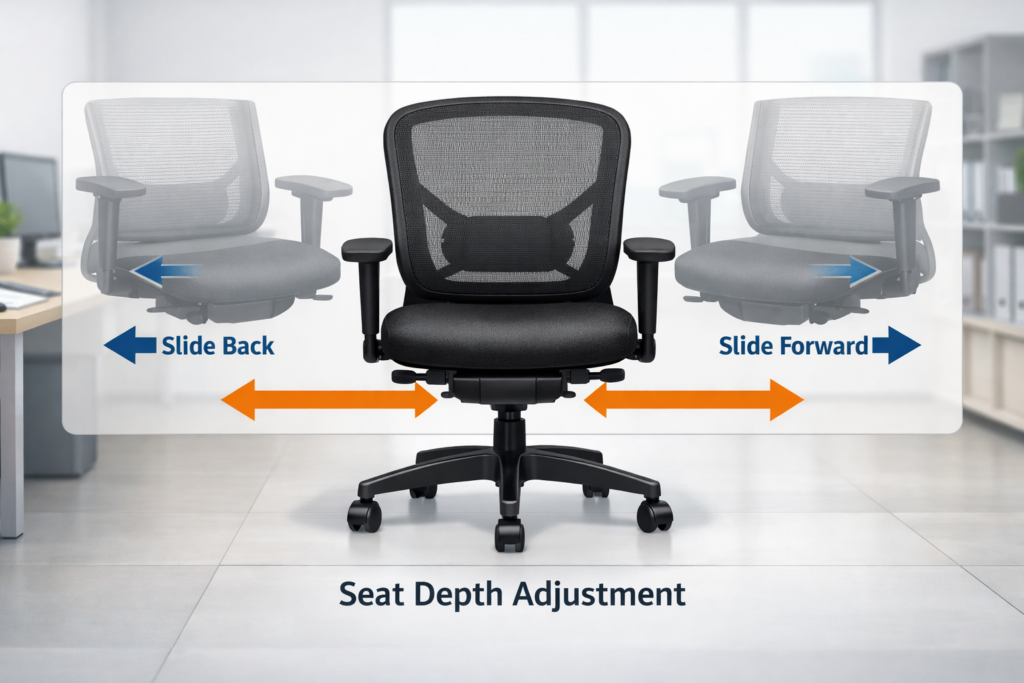
Chairs With Seat Depth Adjustment
If your chair has a sliding seat:
- Sit back fully
- Adjust depth until thighs are supported.
- Keep the knee gap visible.
- Lock the position
Chairs Without Seat Depth Adjustment
You still have options:
- Use a thin lumbar support to reduce depth.
- Avoid thick cushions that raise hip pressure.
- Adjust seat height carefully.
Consider using a seat wedge to adjust your sitting angle and relieve pressure on your hips. These can subtly prompt better posture by angling the pelvis forward, which might help alleviate discomfort.
For persistent issues, consulting a seating professional or ergonomist can provide guidance tailored to your specific needs and work environment.
Be careful. Adding random cushions can worsen hip alignment if done incorrectly.
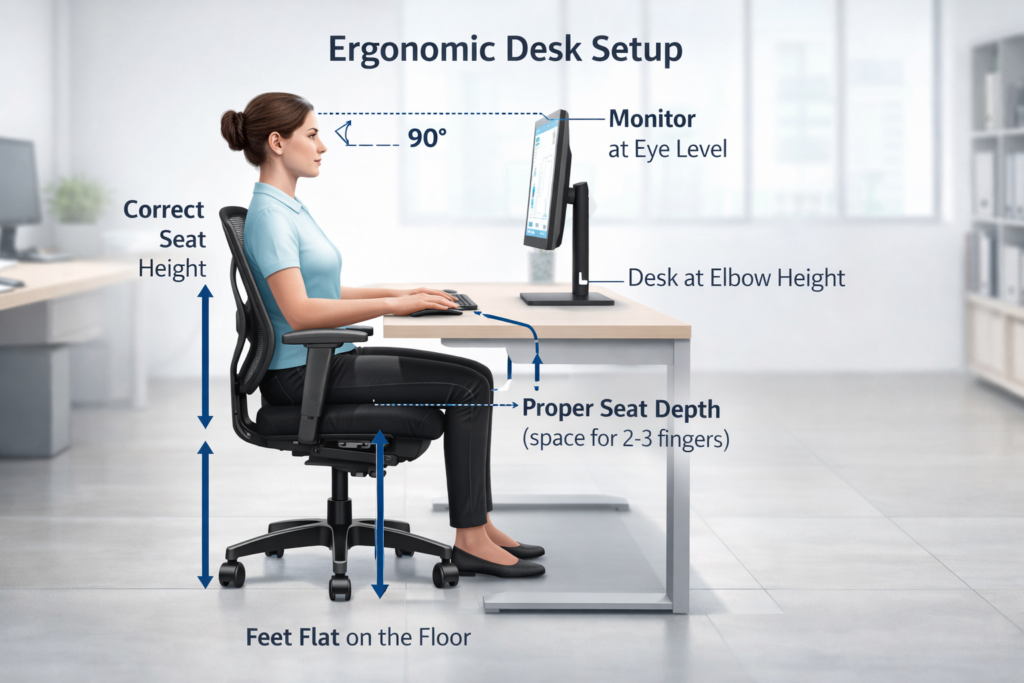
Seat Depth vs Seat Height: Why Both Must Work Together
Seat depth alone cannot fix everything.
If the seat height is wrong:
- Your hips still suffer.
- Pressure shifts incorrectly
- Seat depth and height must support each other.
How Seat Depth Connects to Back and Chair Issues
Hip alignment affects your entire sitting chain:
- Hips → pelvis
- Pelvis → lower back
- Lower back → upper posture
This is why people sometimes blame the chair itself.
In reality, the chair design may be fine, but the setup is not.
Can Wrong Seat Depth Contribute to Hip Discomfort Over Time?
Yes, especially if you sit for long periods.
Wrong seat depth may:
- Increase joint pressure.
- Reduce natural movement.
- Encourage poor sitting patterns.
It does not cause problems on its own, but it creates conditions that lead to discomfort.
This is why many people later seek solutions for hip pain caused by sitting.
When Seat Depth Is NOT the Main Issue
Seat depth is important, but it is not the only factor.
Other common contributors:
- Poor desk height.
- Slouched posture.
- No movement breaks.
- The monitor is placed too low or too high.
Ignoring these and focusing only on seat depth leads to frustration.
Simple Habits That Protect Hip Alignment While Sitting
Even with perfect seat depth, habits matter.
Helpful habits:
- Stand every 30–45 minutes.
- Avoid sitting cross-legged for long.
- Keep feet flat
- Sit back fully
- Let hips rest naturally.
These small actions reduce strain more than people expect.
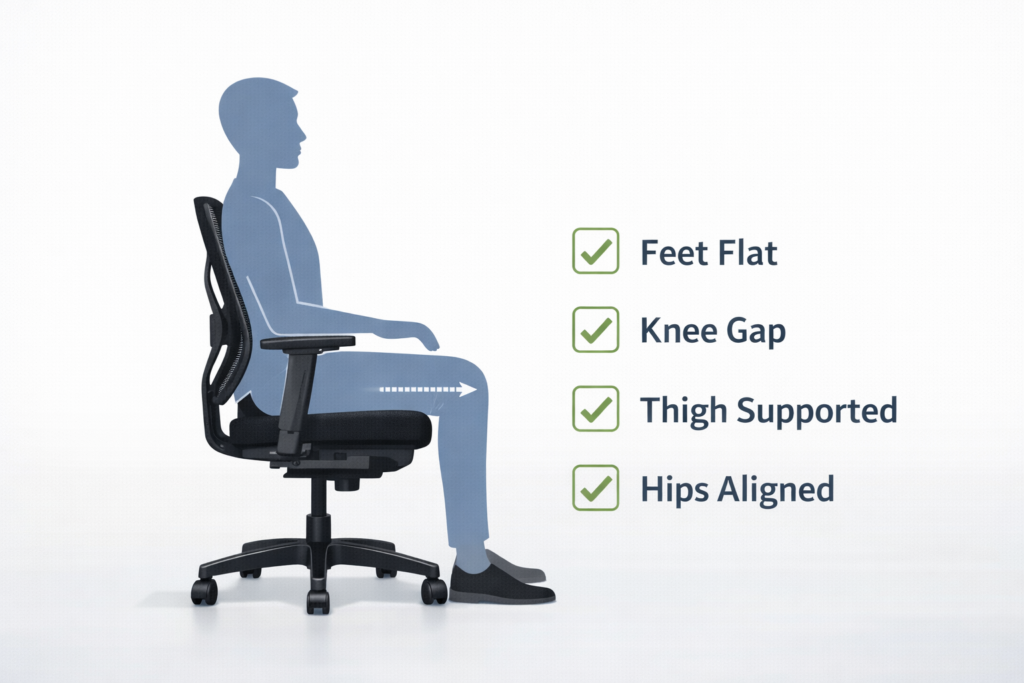
Quick Seat Depth and Hip Alignment Checklist
Before finishing, check this list:
✔ Feet flat on floor
✔ Small gap behind knees
✔ Thighs supported, not squeezed
✔ No forward sliding
✔ Hips feel balanced, not tilted
If you check most boxes, your seat depth likely supports your hips well. If not, try the adjustments above or consider a different chair.
Frequently Asked Questions
What is the seat depth in a chair?
Seat depth is the distance from the front edge of the chair seat to the backrest. It determines how much of your thighs are supported and how your hips rest while sitting.
How does seat depth affect hip alignment?
Seat depth affects the position of the hips on the chair. If the seat is too deep or too shallow, your hips may tilt forward or backward, reducing comfort during long sitting hours.
How do I know if my chair seat depth is correct?
A simple way is the knee gap test. When sitting back fully, there should be a small space (about two fingers) between the seat edge and the back of your knees.
Final Thoughts: Why Seat Depth and Hip Alignment Work Together
Seat depth is not a luxury feature. It is a foundation.
When seat depth matches your body:
- Your hips relax.
- Sitting feels lighter.
- Posture becomes easier.
- Discomfort reduces naturally.
Many people spend years blaming their chair, their body, or their posture, without realising that one simple adjustment could change everything.
Understanding seat depth and hip alignment gives you control over your sitting comfort, without expensive upgrades or complicated solutions.
Sometimes, better sitting starts with less force and more understanding.