
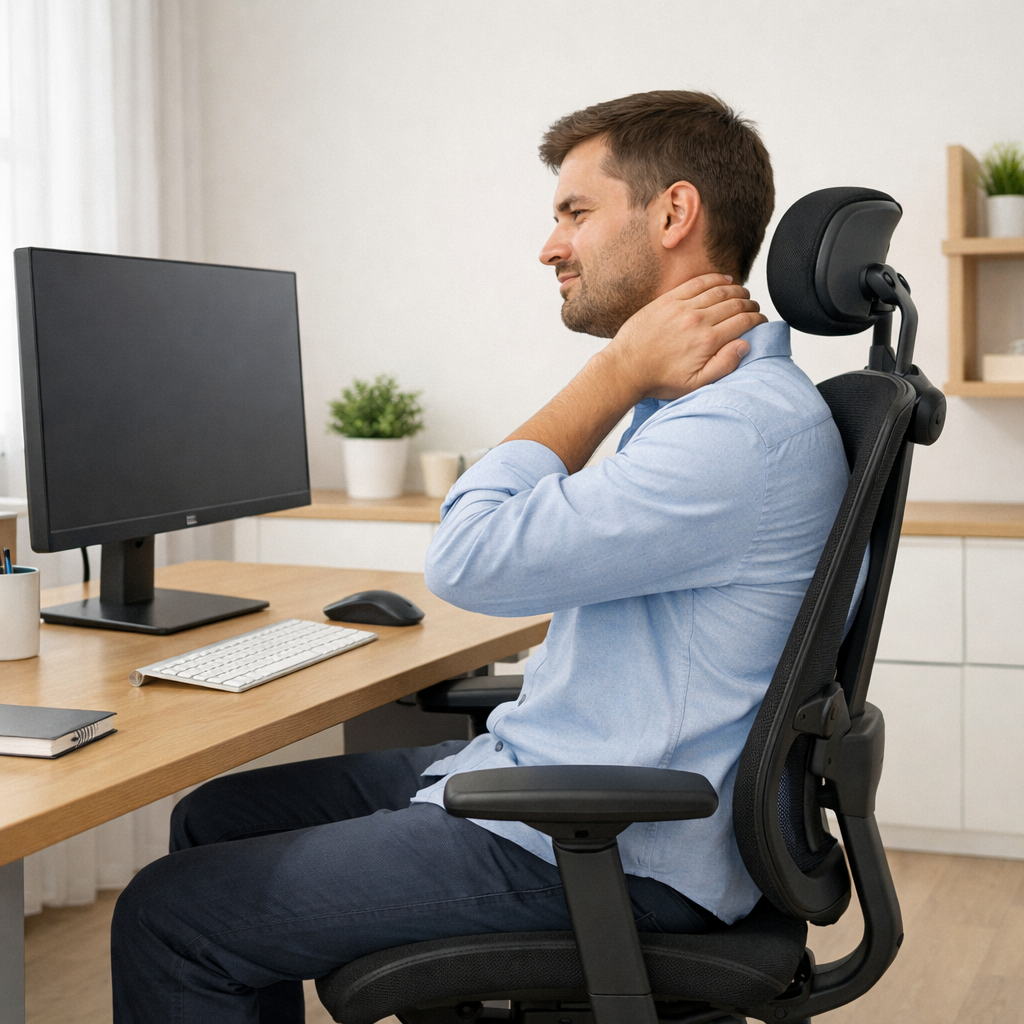
You bought a chair with a headrest, expecting comfort, but now your neck hurts.
If you’ve searched “headrest causes neck pain,” you’re not alone.
Many experience neck pain from headrests, which is frustrating since they’re meant to help.
In the next few sections, you’ll learn why headrests sometimes cause neck pain, how to tell when they help or hurt, and practical strategies so you can finish each workday pain-free.
Table of Contents
Why People Trust Headrests So Much
Most people believe three things about headrests:
- A headrest supports the neck.
- More chair features mean more comfort.
- If pain appears, the body is “weak.”
But none of these ideas is completely true.
Headrests were never designed to support the neck during active work like typing, reading, or using a mouse. They were designed for resting, not working.
This confusion is just the beginning. Next, let’s clarify what headrests really do for your posture.
Does a Headrest Really Support the Neck?
Let’s make this clear.
A headrest supports the head, not the neck.
Your neck is meant to:
- Hold your head upright.
- Make small movements
- Balance your head naturally.
If a headrest limits your head’s natural balance, your neck muscles may become tense and sore over time.
This is why using a headrest for long periods can worsen neck pain.
Headrest Causes Neck Pain — The Real Reasons Explained
This section is especially important.
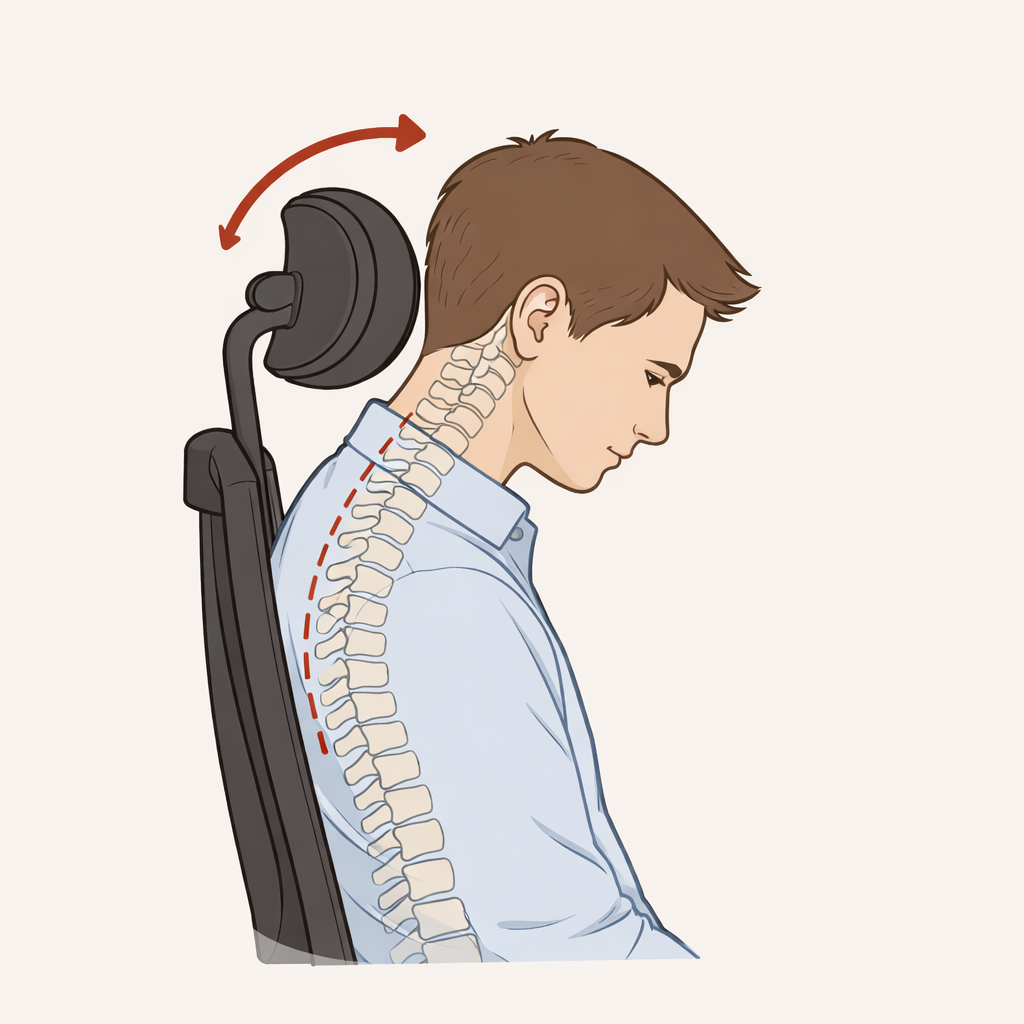
A headrest can cause neck pain, not because it’s broken, but because it often goes against your body’s natural sitting position. A study published in the Journal of Physical Therapy Science found that conventional headrests promote a forward head posture, which is when your head is positioned in front of your shoulders. This increases the angle that puts additional stress on the cervical spine—the part of your spine in your neck—by up to 30% more than sitting without head support. This clearly indicates that the spine’s natural alignment is disrupted, potentially leading to discomfort and neck pain over time.
Headrests Push the Head Forward
Many headrests sit slightly forward. When your head touches them:
- Your chin moves forward.
- Your neck bends slightly.
- Your head is no longer balanced over your shoulders.
This position is called forward head posture (the common ‘tech neck’). Forward head posture means your head juts out ahead of your shoulders, often due to screen use, and it puts constant strain on your neck muscles.
The longer you sit this way, the more your neck may hurt.
Headrests Are Not Designed for Active Sitting
When you work at a desk, you:
- Look at a screen
- Use your arms
- Stay alert
Your head needs freedom during these activities.
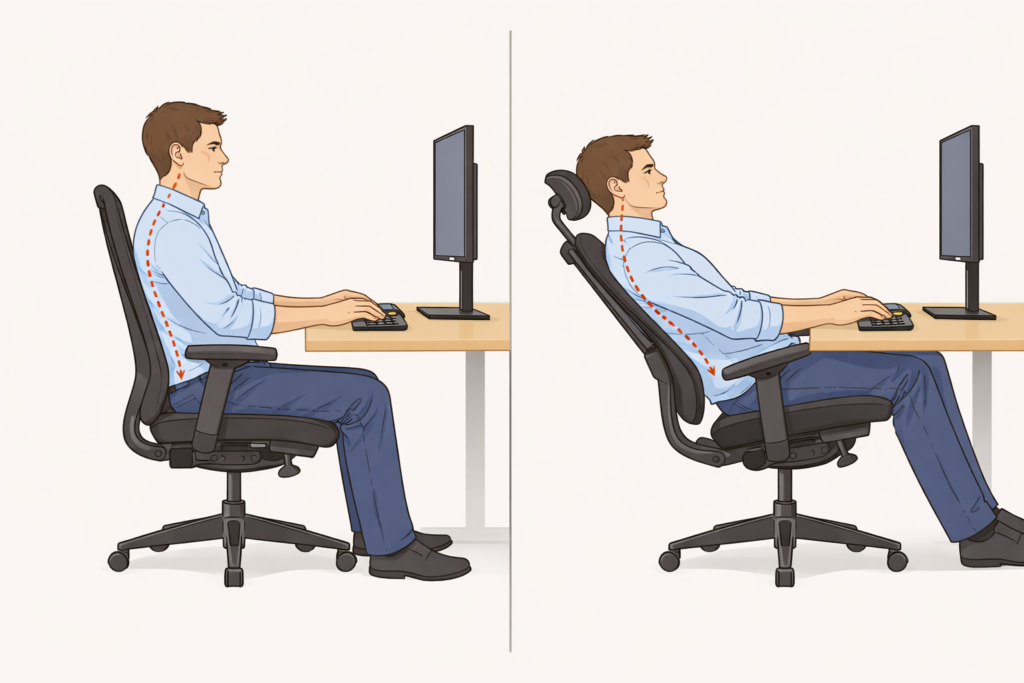
Headrests work best when:
- You recline
- You rest
- You relax completely
If you sit upright and keep your head against the headrest, your neck muscles have to work against it all day.
Fixed or Poorly Adjustable Headrests
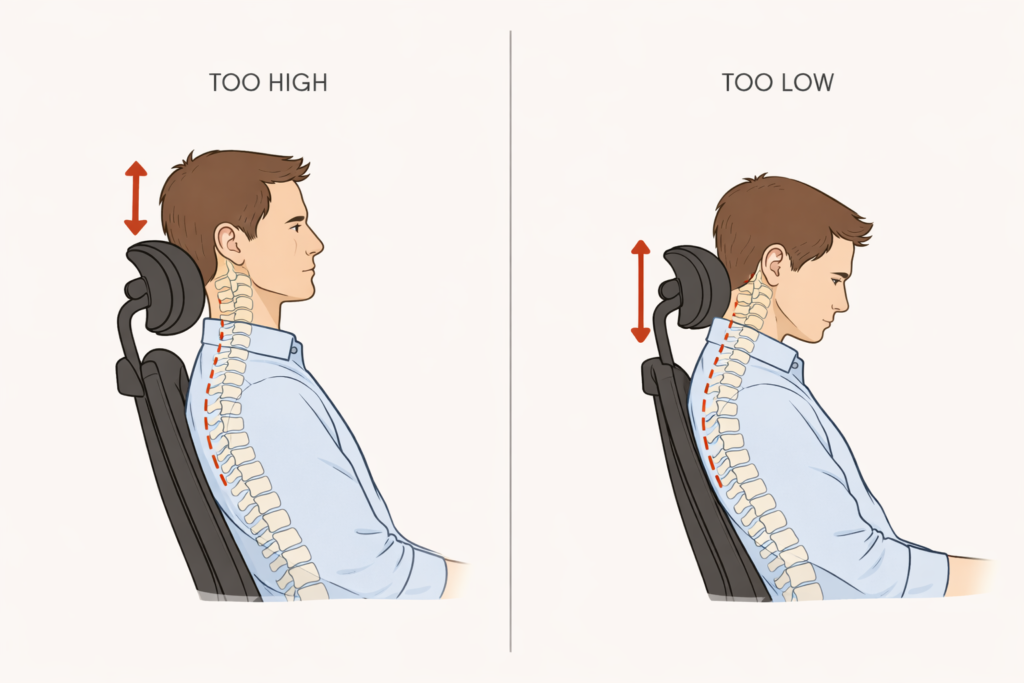
Many chairs have headrests that:
- Don’t move enough
- Sit too high or too low.
- It doesn’t match body height.
If the headrest doesn’t align with the back of your head properly, it either:
- Pushes your head forward
- Forces your neck into an awkward angle
This can slowly cause pain, and it’s often hard to notice what’s causing it.
Headrests Lock the Neck in One Position
Your neck is designed to move.
Even small movements:
- Improve blood flow
- Reduce stiffness
- Prevent muscle fatigue
A headrest can limit these small movements.
When your neck stays still for too long, muscles become tired and sore.
Pain can build up slowly.
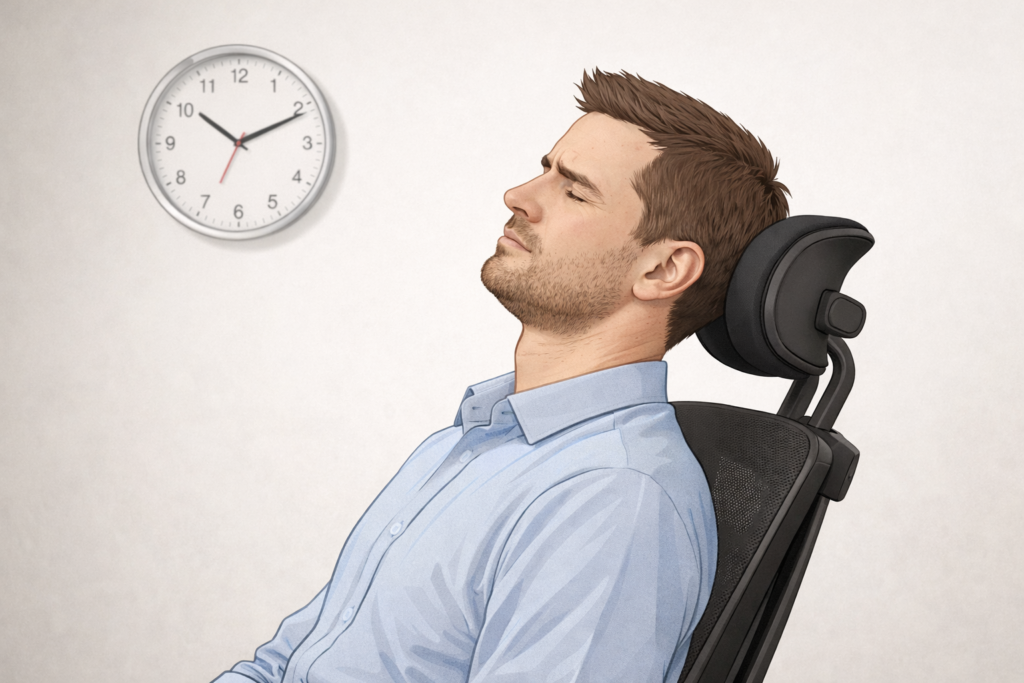
Headrests Only Work When Reclining
Many people misunderstand this.
Headrests are helpful when reclining, not when working upright.
Most people:
- Sit upright while working.
- Use the headrest anyway.
- Lean their head back slightly without noticing.
This position puts extra strain on your neck.
Why Neck Pain Often Starts After Using a Headrest
Many users say:
“My neck pain started only after I began using the headrest.”
Here’s why this happens.
Before the headrest:
- Your neck balanced your head naturally.
- You moved your head freely.
- Muscles shared the load.
After the headrest:
- Your head rests against the support.
- Neck muscles lose balance.
- Tension builds in one area.
The pain usually doesn’t start right away.
It often shows up after days or weeks, which can make the cause confusing.
👉Guide opportunity: ergonomic chair causes neck pain
Headrest vs No Headrest — Which Is Better?
There isn’t one answer that works for everyone.
A headrest may help if you:
- Recline often
- Take rest breaks in your chair.
- Use your chair for reading or relaxing.
A headrest may hurt if you:
- Sit upright most of the day.
- Work on a computer
- Feel pressure at the base of your skull.
Many people actually work better without using the headrest at all.
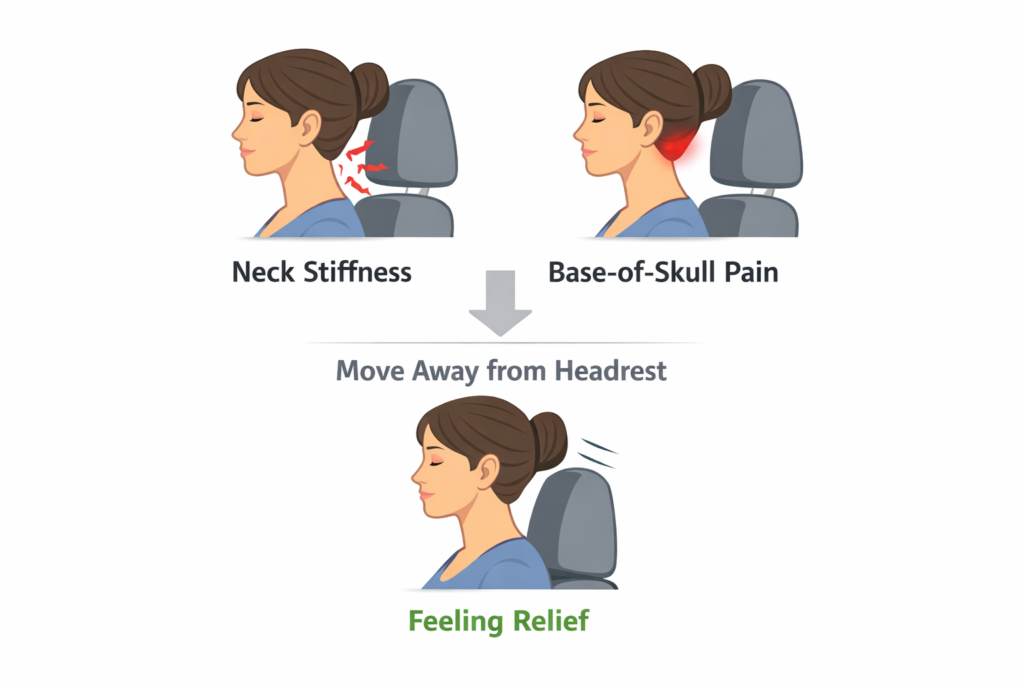
Signs Your Headrest Is Causing Neck Pain
Here are clear signs to watch for:
- Neck pain increases during the day.
- Pain sits at the base of the skull.
- The neck feels stiff after sitting.
- Pain reduces when you move away from the headrest.
- Pain disappears when you stop using the headrest.
If these signs sound familiar, your headrest is probably the cause.
How to Use a Headrest Without Hurting Your Neck
Here’s a quick checklist for effective headrest use at work, known as the ‘Recline Rule’:
Recline: Use the headrest when you lean back. Let it support your head as you relax your neck and take the pressure off your muscles.
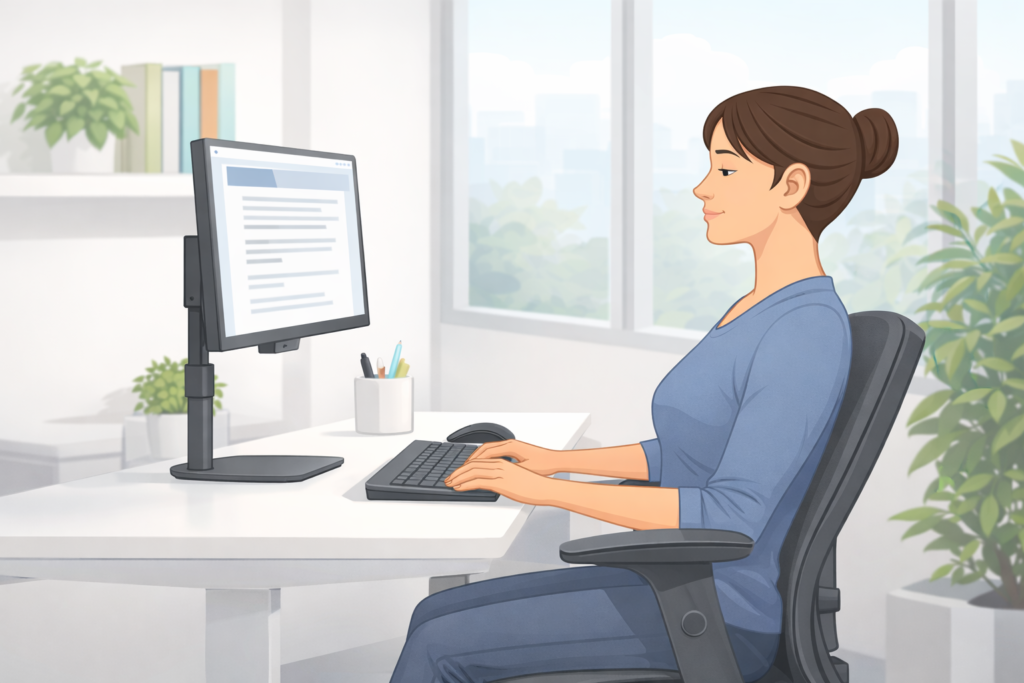
Relax: Keep your head away from the headrest when sitting upright. Allow your neck to balance naturally without added strain.
Return: When actively working, such as typing or focusing on a screen, return to maintaining free head movement to reduce pain.
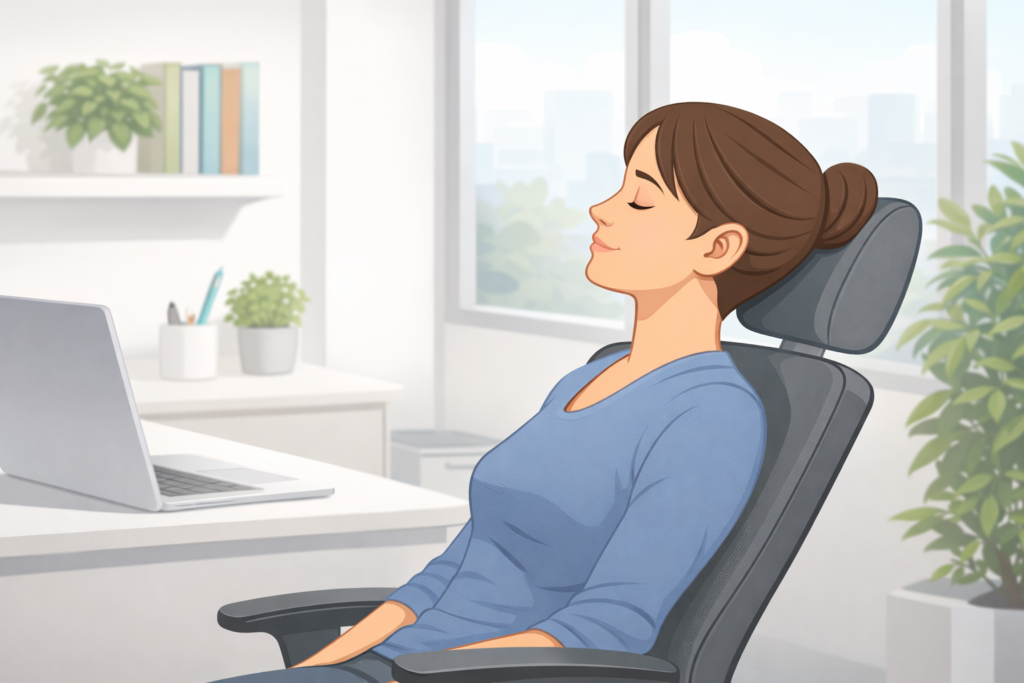
Adjust Height to Support, Not Push
The headrest should:
- Touch the back of your head lightly- Do not push your head forward
- Do not force your chin down. If you can’t adjust the headrest, try not to use it while working.
Keep Your Head Free While Working
While typing or focusing:
- Let your head balance naturally- Allow small movements
- Try not to lean back into the headrest for support. Freedom reduces pain.
Let the Neck Move Naturally
Small movements are healthy:- Looking slightly left or right.
- Adjusting posture- Standing up occasionally
If your neck can’t move, it’s more likely to become painful.
When the Headrest Is Not the Real Problem
Sometimes neck pain is blamed on the headrest, but the real cause is elsewhere.
Common hidden issues:
- Monitor too high or too low.
- Armrests lifting the shoulders
- Desk height mismatch
- Phone use during breaks
👉 Guide opportunity: Ideal monitor height
Fixing these issues often gets rid of neck pain, even if you still use a headrest.
What Users Really Want (And What Works)
Users don’t want:
- More features
- More adjustments
- More complicated setups
Users want:
- Comfort
- Relief
- Confidence that they’re sitting correctly
You get that comfort from understanding your body, not just from equipment.
Should You Remove the Headrest Completely?
For many people, yes, at least during work hours. If you’re hesitant, consider trying a one-week trial without the headrest. This approach encourages curiosity and lets you assess whether it makes a significant difference to your comfort.
You can:
- Remove it
- Lower it
- Ignore it
Headrests are optional, not required.
Comfort matters more than features.
FAQs: Headrest and Neck Pain
Can a headrest cause neck pain?
Yes, a headrest can cause neck pain if it pushes your head forward or keeps your neck in one position for too long. This often happens during long sitting hours.
Should I remove my headrest while working?
If you sit upright while working, removing or not using the headrest can help. Your neck usually feels better when it can move freely.
Is a headrest necessary for long sitting?
A headrest is not necessary for most desk work. It is more useful when reclining or resting, not while typing or focusing on a screen.
Are headrests bad for posture?
Headrests are not bad by default, but using them while sitting upright can affect posture. Poor use can push the head forward and strain the neck.
Final Thoughts: Headrests Are Not Always Helpful
A headrest is not bad.
It’s just misunderstood. Used at the wrong time, it creates neck pain. Used correctly, it supports rest. If your neck hurts: Stop blaming your body. Stop forcing posture. Adjust how and when you use the headrest. Your neck wants balance, movement, and freedom.
Imagine logging off each day without that familiar ache, feeling a sense of relief and ease as you go about your evening. By understanding how and when to use your headrest effectively, you can transform your work experience and end each day comfortably. Let this vision motivate you to take that first step toward a pain-free future.