
Table of Contents
What Is Ergonomic Chair Back Support?
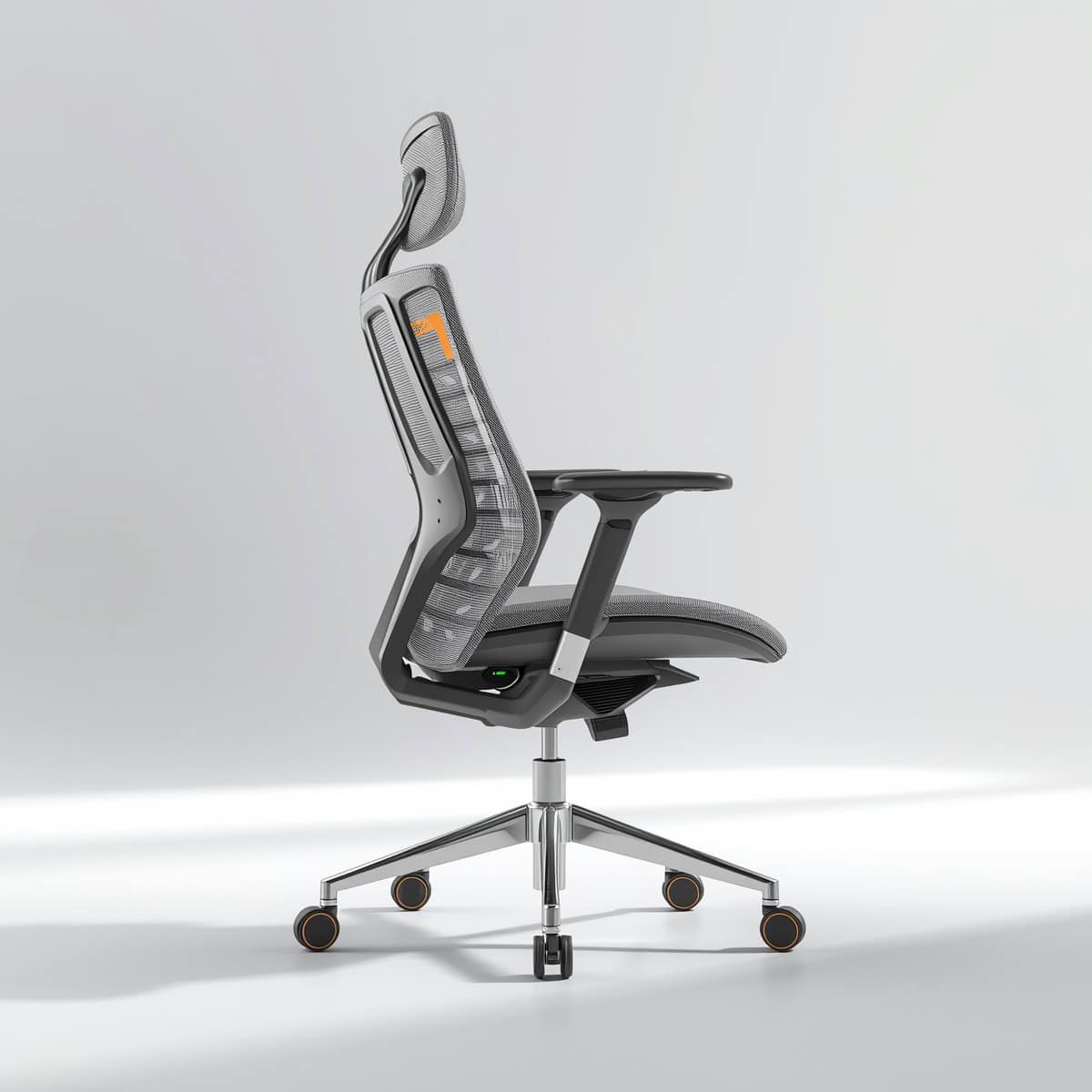
Ergonomic chair back support is a feature not to be underestimated; it supports the natural curve of your spine. It is primarily used for relieving back pain, correcting posture, and allowing you to sit more comfortably for lengthy periods—especially if you’re stuck at a desk, such as in an office environment.
How Ergonomic Chair Back Support Works
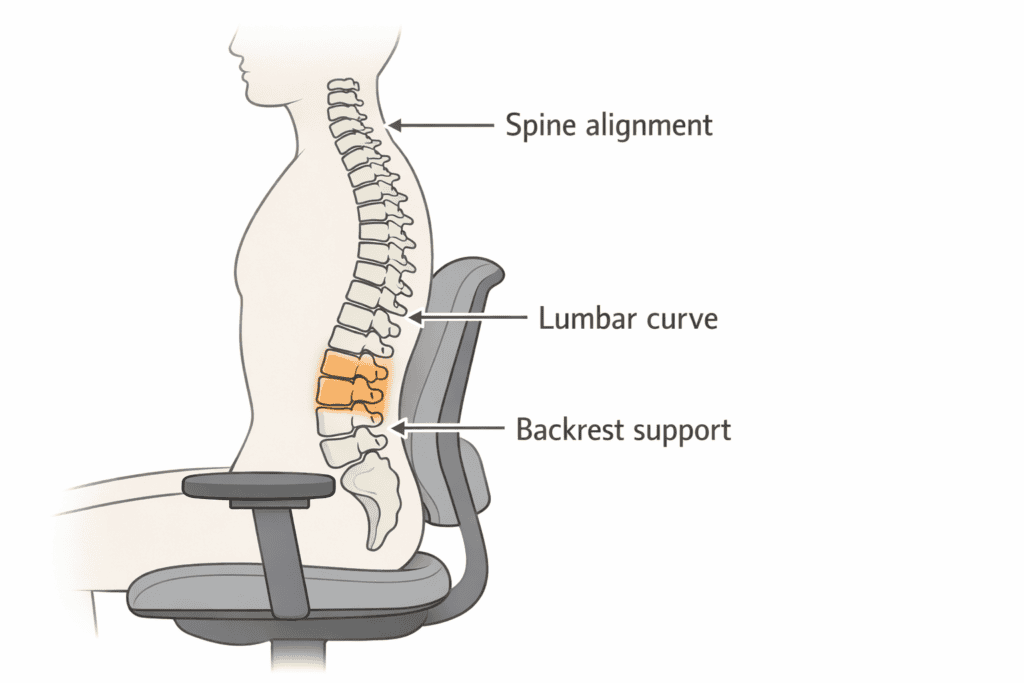
Your spine has a natural S-curve, but traditional chairs often lead it to be flat. Ergonomic lumbar support helps maintain your spine’s natural curvature and fills the gap between the lower back and a daily-used chair. It takes pressure off the muscles and helps hold yourself up, which can help avoid slouching, which is a leading cause of lower back pain.
Why Back Support Matters for Sitting Long Hours
Sitting for hours places excess pressure on your back, especially when your seat doesn’t have sufficient support. Ergonomic back support provides an arched back and body weight balance, prevents long-term pain, and also long sitting, so it can help ease pain in the spine.
Ergonomic chair back support is meant to help maintain natural posture, but it does not work in isolation. Many people experience discomfort because back support is used incorrectly or without proper seat height and movement. When back support is too firm or positioned incorrectly, it can increase pressure instead of reducing it.
Top Benefits of Supporting Your Back
Maintains the Natural Spine Curve
Good back support allows your spine to maintain its natural S shape, mostly in the lower back. This will keep the spine from being pressed and twisted while sitting for long periods of time.
Lessens Lower and Upper Back Strain
Unassisted, your back muscles are tasked with working harder to keep you upright. Back support relieves this strain by supporting your back muscles and acts as a preventative measure against any unwanted stiffness or soreness.
Improves Posture Automatically
Lumbar support softly molds your body to ensure you are sitting in the correct position. This gradual development of habit leaves you with an indefinitely better posture, without having to think about it constantly.
Prevents Fatigue During Long Sitting
Your muscles relax more easily when you have proper back support. This helps alleviate fatigue and keeps you comfortable during extended work or study sessions.
Helps Reduce Discomfort Over Time
Relaxaco Ergonomic Lumbar Support – support your lower back and spine, providing the comfort necessary when you need to sit for hours on end.
💡 Pro Tip:
For optimal comfort, position your back support so it snugly fits against your lower back. Combined with little breaks and a small amount of stretching here and there, it will make sure your spine is happy as you sit most of the day.
Key Components of Back Support in Ergonomic Chairs
What’s chapter clarifies what makes an ergonomic chair great, rather than comfortable. That’s why this section is so important; not only does it force readers into point of sale, but when beginners can grasp information from these parts of articles (parts that have nothing to do with selling the chair), they tend to understand what’s up because at a deeper level, topics will be something that doesn’t turn away your readers when you mention them without putting sales material in.
Lumbar Support Explained
Your lumbar curve means “your lower back has a natural inward curve that carries most of your upper body weight. When sitting for extended periods without the right lumbar support, this curve can lead to aching that increases pressure on discs and muscles.
It supports the lower back because this area must bear most of the sitting load. Without help, “muscles remain tense to support you standing upright, and over time that can lead to pain and stiffness.”
Types of Lumbar Support
There are two primary types of lumbar supports:
- There’s fixed lumbar support in the chair, which cannot be moved. It is great as a general-purpose dildo, but possibly not for everyone.
- You can adjust the lumbar support up and down or in and out for a more personalized fit. Great for long sitting, such as at shared workstations.
Backrest Height & Shape
- The backrest height determines how much of your spine can be supported.
- High full-back chairs will take care of the lower, middle, and upper back portions as well, so they can be used for long hours in an office.
- Mid-back chairs primarily support the lumbar region and are ideal for shorter sitting periods.
Shape also matters:
- Curved backrest follows the natural curve of the spine and promotes healthy posture.
- The flat backrest gives no support for the curve of your lower spine.
Upper Back & Thoracic Support
The upper back (thoracic spine) also stabilizes your shoulders and neck. With no assistance under this region, the body leans forward, resulting in greater stress through the neck and shoulders.
Bad thoracic support can also result in tightly packed shoulder muscles, neck tension, and headaches. Correct upper-back support helps the chest open and shoulders to stay relaxed, meaning better comfort and breathability for long hours of sitting.
Material & Cushioning
Material: The type of chair material is also critical—it affects how comfortable the chair is and if it will age well over time.
The mesh back design provides great breathability and heat dissipation, especially for hot weather.
Foam cushioning offers softer pressure distribution and a cushioned feel.
Great ergonomic chairs strike a balance between breathability and even pressure, so you can be comfortable no matter your sitting posture without developing pressure points.
Types of Ergonomic Chair Back Support
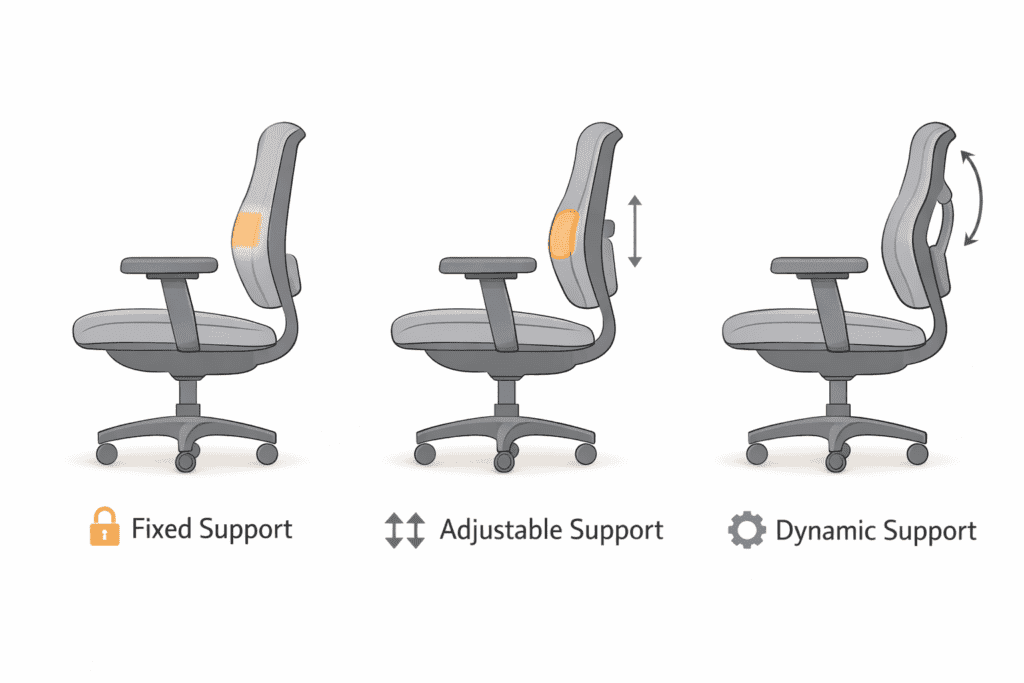
Ergonomic chair back support is available in different types, each one suitable for specific requirements when sitting. Knowing these types enables users to pick the right singing bowl according to comfort, flexibility, and daily use rather than concentrating on sales and products.
Fixed Back Support
The fixed backrest is integrated into the chair and cannot be adjusted. Its basic back support is ideal for average height and posture. It does provide good support for a seated position, but it’s also not great if you require specialized lumbar alignment.
Adjustable Lumbar Support
Lumbar support is adjustable; users can adjust the height, depth, and firmness of the lower back support. This type is good for long hours of sitting since it adjusts to the body shape and sitting habits. It can also be seen in ergonomic office chairs customized for stretch sitting.
Dynamic or Flexible Back Support
Responsive back support follows your body as you move in multiple directions. Instead of immobilizing the spine in a single position, it allows the body to move naturally, limiting aches and muscle fatigue. This category is particularly helpful for me. I switch positions throughout the day, sitting a lot.
Integrated vs Removable Cushion
- Back support is fixed into the chair (not removable) for a sleek look and stable positioning.
- The removable cushions can be easily added or removed whenever they are or aren’t needed, which is perfect in a corporate environment where chairs are typically used more frequently by different people.
Comparison of Ergonomic Back Support Types
| Type of Back Support | Adjustability | Best For | Comfort Level |
|---|---|---|---|
| Fixed Back Support | No | Short to moderate sitting | Basic |
| Adjustable Lumbar Support | Yes | Long sitting hours | High |
| Dynamic/Flexible Support | Partial movement | Achair’sitting | High |
| Removable Cushion | Manual placement | Versatile use | Medium |
Which type of ergonomic back support is best for you? It comes down to how long you sit, how frequently you move, and the amount of customization your body needs to be comfortable.
How isn’t Ergonomic Chair Back Support Correctly
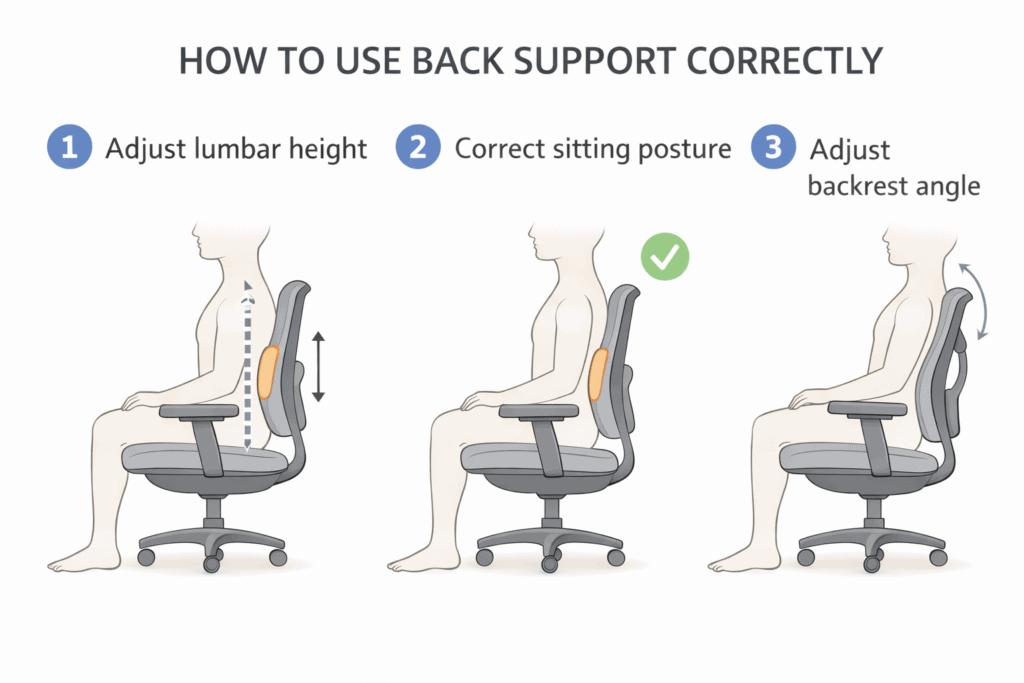
Utilizing the ergonomic chair back support properly is as crucial as possessing it. The finest chair in the world will do you little good if it isn’t adjusted properly. A proper setup can alleviate back strain and keep you comfortable throughout your hour.
Adjusting Lumbar Support Properly
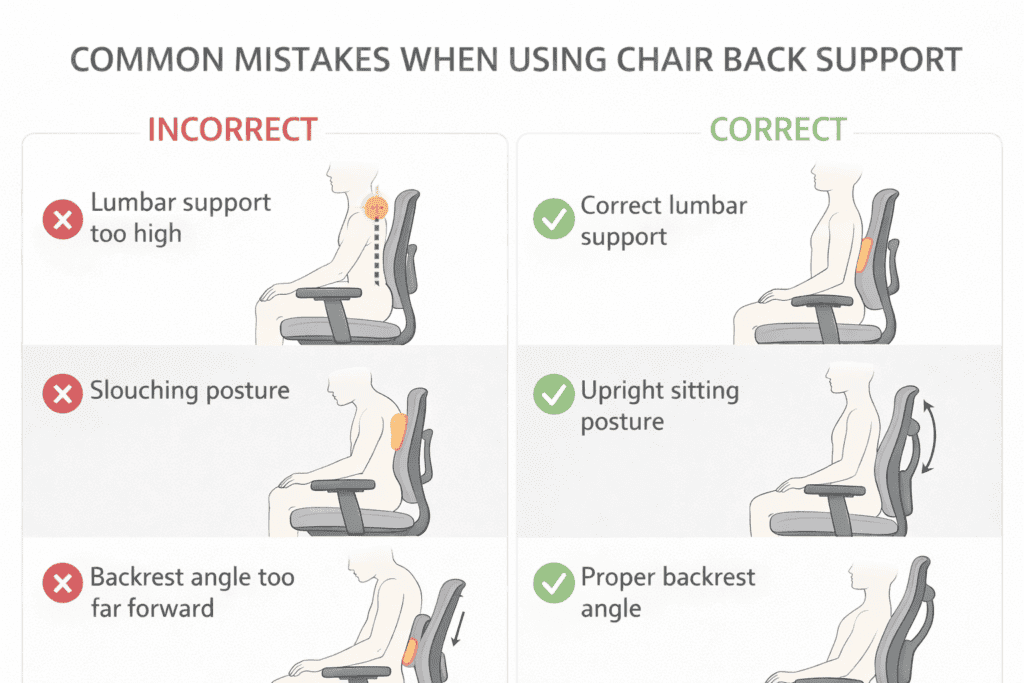
In general, the lumbar support should be placed on the natural curve of your lower back, not your hips or mid-back. When you’re sitting, your support should fit in the small space between your chair and your lower spine.
You’ll know that you’re adjusted correctly when:
- You feel like you’re being propped up from the small of your back, not thrust forward.
- You can sit straight without stressing your back.
- No feeling of pressure or discomfort within 20–30 min.
If you’re feeling too much ‘support’ or if the block feels as though it’s creating discomfort, back off from the angle of elevation or try setting it lower in your hips. The aim is gentle support, not brute force.
Backrest Angle & Sitting Position
It is healthier to lean slightly than to sit perfectly straight. The sto’l is designed with an inclination angle between 100-110 degrees for better posture, which reduces pressure on the spine and eases muscle relaxation.
Sitting perfectly perpendicular is not ideal because it adds a load, quite literally, to the spine and can cause stiffness over time. Gently tilt to the ‘apply levels with hands down’ position, which allows you to reproduce buttocks and spreading lthat’s an elevated form. A moderate recline relieves the natural movement of the waist and healthy blood circulation without sacrificing good posture.
Stay as you are on the seat, with your feet firmly on the floor, hips a bit higher than knees, and your shoulder relaxed over the back support.
Common Mistakes to Avoid
- One mistake that’s often made with this product is setting the lumbar support too high or too low, which can put undue pressure on your spine rather than relieving it. Ensure you always curve the lumbar spine.
- Then there is hunching, even if you have support. There’s never any real support with the back unless in combination with a bit of posture attention.
- And, finally, so many of us forget about posture habits altogether. Ergonomics aside, however, breaking every hour to stretch and change your position can make a world of difference in the long run.
- Ergonomic chair back support is the use of body contouring and region-specific lumbar support devices for encouraging anatomic seating postures while sitting, both at work and in the home.
Who Needs Ergonomic Chair Back Support the Most?
Anyone who sits for long periods can benefit from ergonomic chair back support, but some groups of people get the best benefits out of it because of their daily habits and needs for posture.
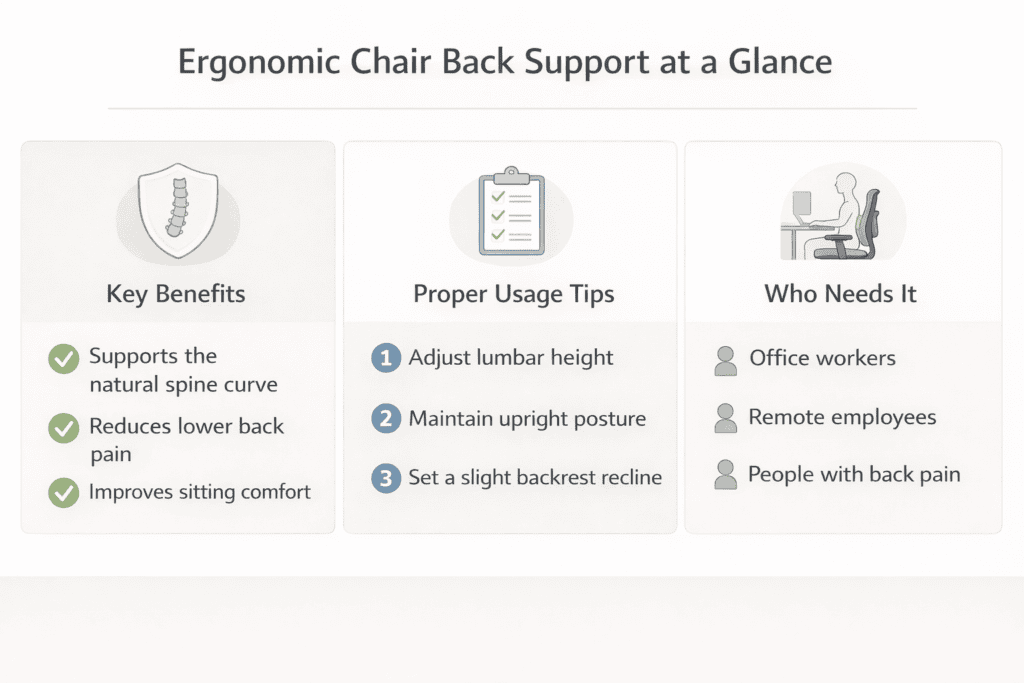
Sedentary office workers spend long hours in a sitting position, which can be bad for the lower and upper back. Good back support makes it easier to keep your spine in position all day long.
Thanks to the new normal of remote work, people are using non-office seating at home, which can lead to bad posture. Ergonomic backrest helps prevent gradual back strains and is comfortable to wear.
Online students, and even those who must sit for long periods, often become victims of poor posture. Lumbar support encourages better habits with posture early on.
The provided extra support will help reduce the pressure on your spine and alleviate muscle tension.
Designers, writers, programmers, and other long-sitting professionals work more from a chair than anything else. Their ergonomic support makes it comfortable for hours of focus and productivity.
In general, if you are sitting for several hours a day, then ergonomic chair back support also benefits, in addition to your work or study.
Back Support Tips Beyond the Chair
Ergonomic chair back support is all well and good, but it can’t address what you’re sitting on as well. Good sitting habits depend on the right setup and regular movement.
Taking sitting breaks is essential. Even though support is good, sitting too long can make you feel stiff. By standing every 30-60 minutes, you can increase your circulation and decrease the pressure on the spine.
There is also the issue of back comfort as it relates to desk height alignment. Your workstation needs to enable your elbows to lie naturally, with the screen at eye level. If the desk height is not optimal, you might lean too much forward, which then decreases the advantages of back support.
Gentle stretching during the day can relieve tight muscles. Easy neck rolls, shoulder stretches, and back extensions, standing to decrease the tension incurred from sitting for long periods.
But most of all, it helps to know why chairs are not magic.” The perfect ergonomic chair won’t save you if you have bad posture habits or are simply not moving throughout the day. And so far, back support works best when added to mindful sitting, combined with regular breaks and a whole-body active lifestyle.
And an approach like this is what will set you up for a lifetime of comfort and “good sitting” (far healthier than crossing your legs).
Frequently Asked Questions (FAQ)
How high should lumbar support be?
The right lumbar support height is placed where the small of your back curves inwards towards your waistline, typically a little bit above that. While seated, the support should fill — not pull you forward or press into — the space between your chair and your lower back.
Does back support help with back pain?
Yes, lumbar support can offer relief for back pain due to bad posture and long hours spent sitting. It does help to straighten the spine and ease muscle tension, but the effects are amplified if good posture is maintained while you move around.
Is the adjustable back support good?
Most of the time, adjustable back support is preferable because it can be adjusted to accommodate a wide variety of body types and sitting preferences. This results in an even more accurate alignment and increased comfort across longer sessions or when using multiple chairs.
How long can you sit in an ergonomic chair?
Even in an ergonomic chair, try to avoid sitting still for more than 30–60 minutes. Even brief pauses can decrease stiffness and enhance circulation.
Do ergonomic chairs permanently fix posture problems?
Chairs support better posture, but they don’t fix habits. Continual postural awareness, movement, and working using a good chair setup are crucial for long-term benefits.
Final Takeaway
Ergonomic chair back support is essential to maintain spinal alignment, minimize strain, and feel comfortable all day during seated times. When used as directed, it decoratively on the back of a chair, it supports and fits naturally into the curve of your spine, while promoting perfect posture and eliminating soreness from prolonged sitting. But the true benefits are found in proper fit, mindful sitting habits , and regular movement breaks. An ergonomic chair back support is most effective when used as one part of a comprehensive plan that includes the right chair settings, good posture, and active habits for hours of sitting comfort.