
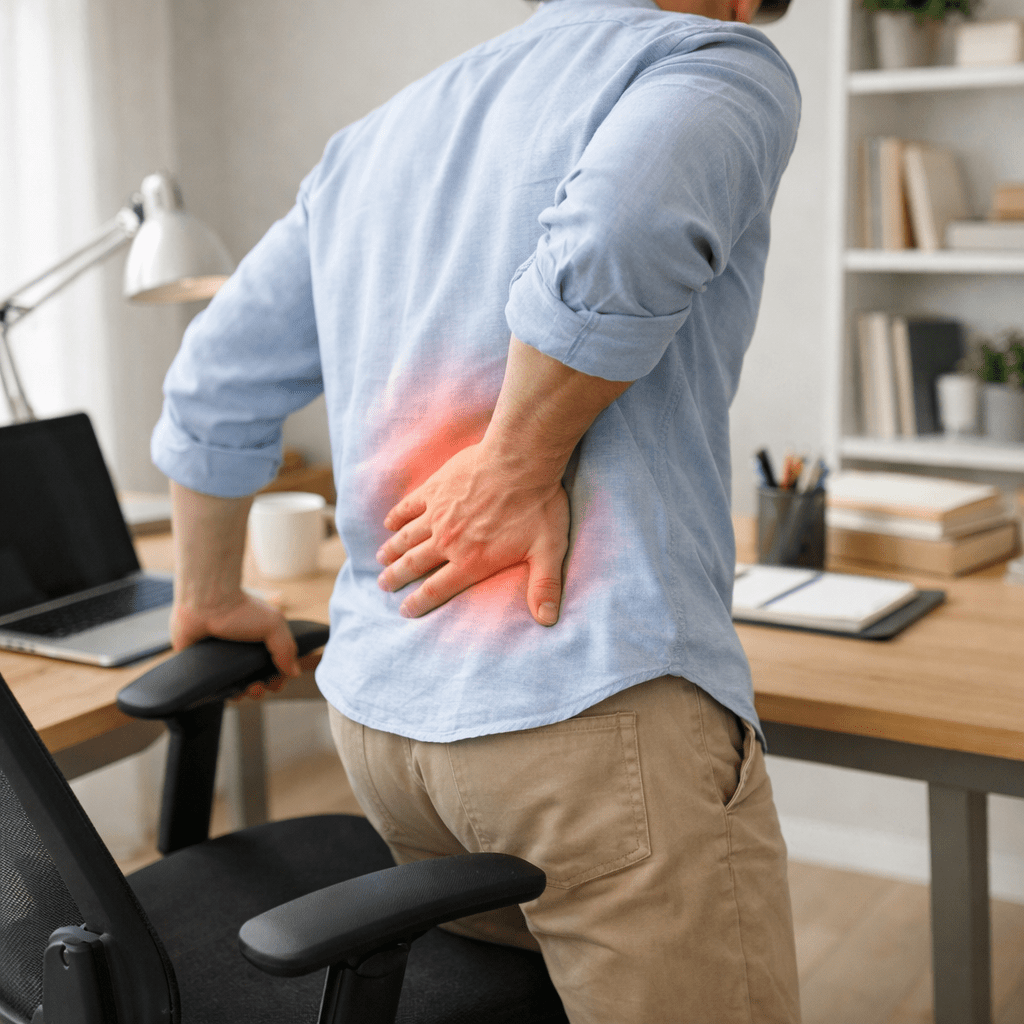
If you have back stiffness after desk work, you’re not alone. This guide explains the main causes, quick relief exercises, posture tips, and how your desk setup and habits contribute to the issue.
You finish work, stand up, and your back suddenly feels tight and hard to move.
That uncomfortable feeling is called back stiffness after desk work.
It is not sharp pain or an injury, but it feels uncomfortable and frustrating.
It is not an injury.
It is uncomfortable and frustrating.
You may feel:
- Tightness in your lower back
- Difficulty standing straight
- A need to stretch immediately
- Slow movement when you start walking
Many people think something is wrong with their spine.
But in most cases, your body is simply reacting to prolonged sitting.
The good news?
You can fix it.
This guide will help you understand:
- Why stiffness happens
- Why does it feel worse when you stand up
- What mistakes make it worse
- How to fix it quickly
- How to prevent it every day
Before diving in, let’s explore what’s really happening inside your body when stiffness sets in.
Table of Contents
Why Back Stiffness After Desk Work Happens
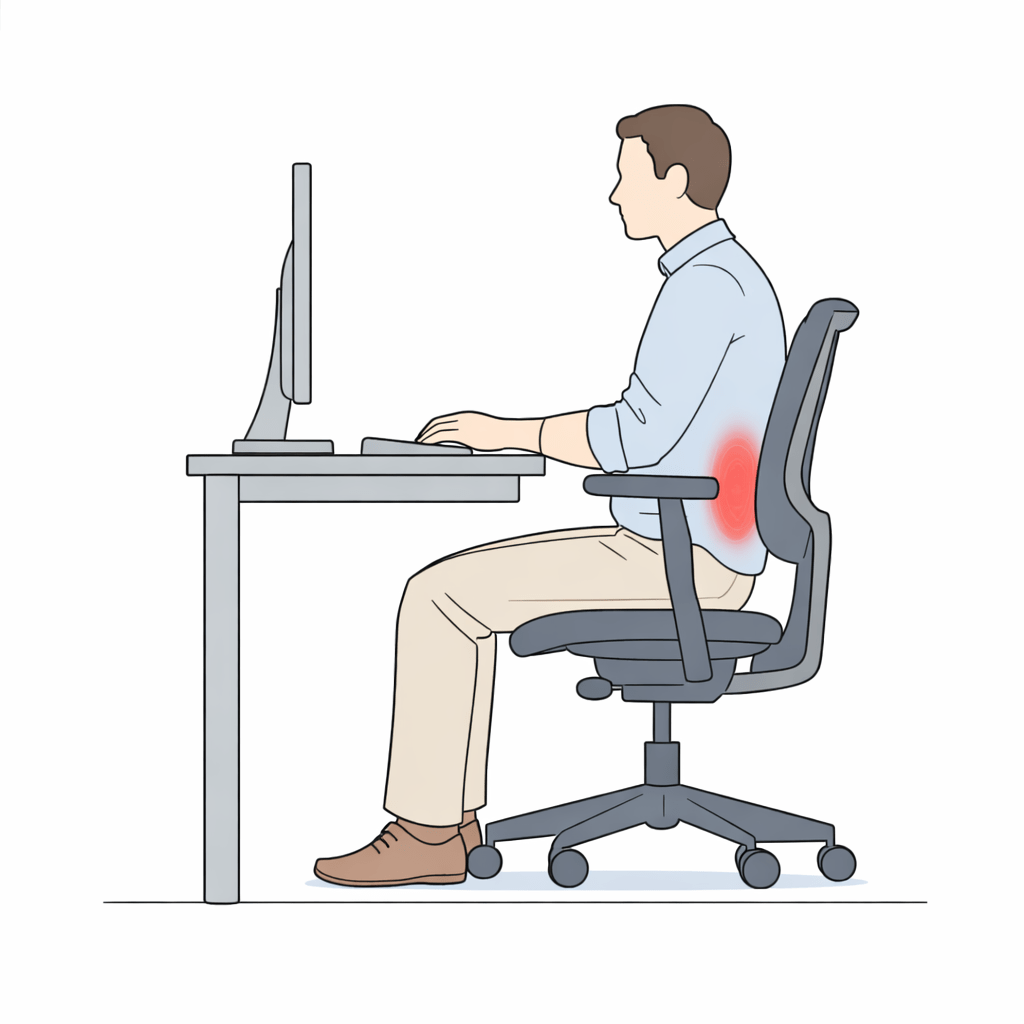
Back stiffness after desk work happens because your body stays still for too long. In fact, research from Cornell Ergonomics shows muscle activity drops 90 per cent within 30 minutes of sitting, which explains why stiffness sets in so quickly.
When you sit for hours:
- Your muscles stay inactive.
- Blood flow slows down.
- Your spine compresses slightly.
- Connective tissues tighten
Your body is designed to move.
When you stop moving, muscles shorten and contract—your hip flexors contract. Your lower back muscles support your upper body. Your spinal joints move less.
After 30 to 60 minutes, your body starts to feel less flexible.
After several hours, stiffness builds.
This is not usually damaged.
It is your body asking for movement.
Why Your Back Feels Stiff When You Stand Up
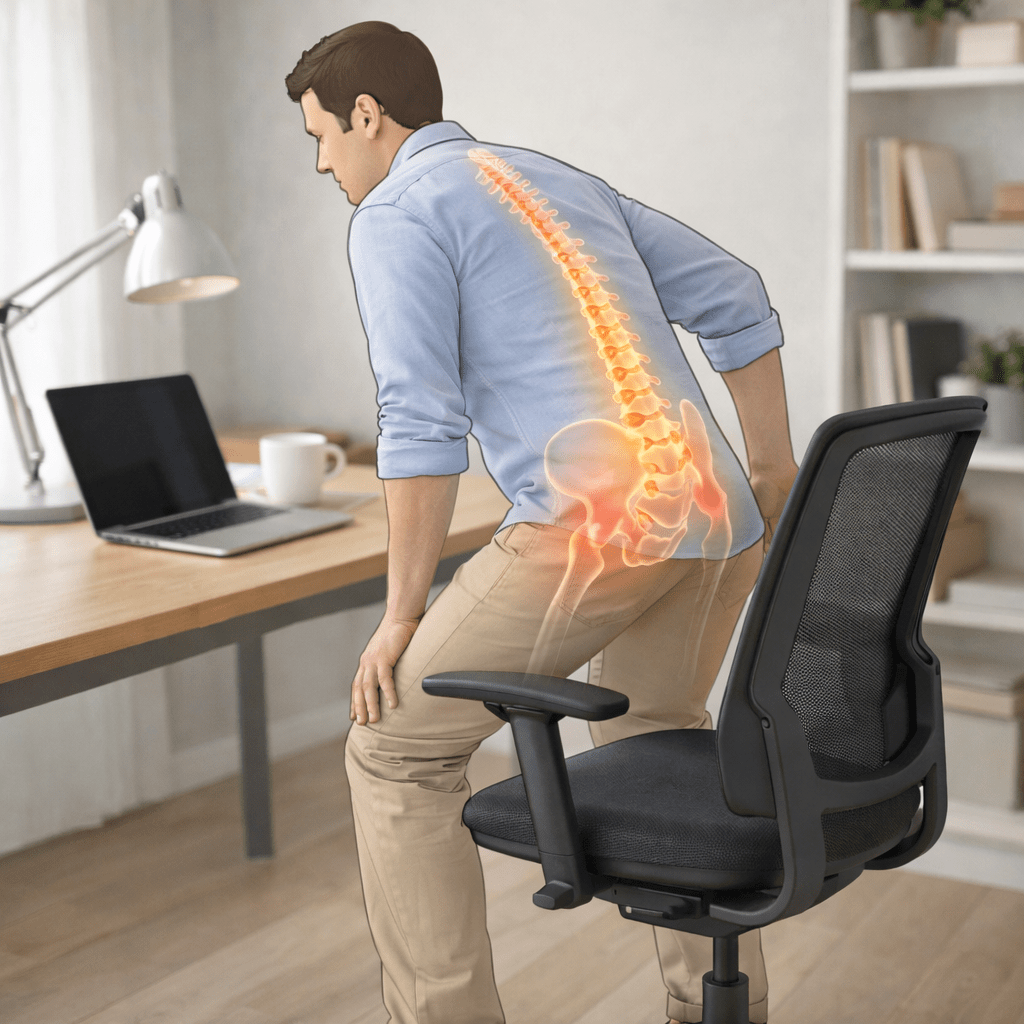
Many people say, “I feel fine while sitting. stiff.”
Here’s why.
When you sit:
- Your spine stays slightly bent.
- Your hip flexors stay shortened.
- Your lower back muscles stay lightly active.
When you suddenly stand:
- Your spine straightens quickly.
- Your hip muscles stretch.
- Your back muscles activate.
This quick change makes tight muscles feel stiff.
It is similar to waking up in the morning.
Your body needs a few seconds to adjust.
That is why the first few steps feel tight. After moving for a minute or two, it improves.
Is It Poor Posture or Just Sitting Too Long?
Many articles blame posture only.
Even perfect posture causes stiffness if you sit too long.
Posture matters, yes. Movement matters more than posture. Movement matters more than posture. Without moving, your muscles still become inactive.
The real problem is:
- Long periods of stillness
- Lack of small movements
- No standing breaks
Good posture helps reduce strain.
But movement prevents stiffness.
You need both.
5 Common Mistakes That Increase Back Stiffness
Let’s talk about daily habits that contribute to stiffness.
1. Sitting Without Breaks
Working for 2–3 hours nonstop is common.
But your body needs short breaks from movement.
2. Slouching
When you slouch:
- Your lower back rounds
- Your upper back stretches.
- Your neck moves forward.
This creates uneven muscle tension.
3. Chair Too Low
If your chair is too low:
- Your hips bend more
- Your lower back works harder.
This causes muscle fatigue.
4. Monitor Too Low
When your screen is too low:
- You look down
- Your upper back curves forward
Over time, this causes tightness.
If you need help with screen setup, read our guide on correct monitor height for desk work.
5. No Lumbar Support
Your lower back has a natural curve.
If your chair does not support that curve, muscles work harder to hold you upright.
Quick Relief for Back Stiffness (2–5 Minutes)

You do not need a long workout.
You need short, simple movement.
Here are quick fixes.
1. Stand and Walk
Stand up and walk for one minute.
Even walkingin your room restores blood flow.
2. Gentle Back Extension
Stand tall.
Place hands on hips.
Gently lean backward for 5–10 seconds.
This reverses the forward sitting position.
3. Hip Flexor Stretch
Take one step back.
Bend your front knee slightly.
Keep your back leg straight.
You will feel a stretch in the front of your hip.
Guide opportunity: Hip Pain From Sitting
4. Shoulder Roll
Roll your shoulders backward slowly 10 times.
This reduces upper back tightness.
5. Light Spinal Rotation
Stand and gently rotate your upper body left and right.
Slow movements work best.
After 2–3 minutes of movement, stiffness usually reduces.
How to Set Up Your Desk to Prevent Stiffness

Now let’s prevent the problem.
Small setup changes make a difference.
1. Adjust Chair Height
Your feet should rest flat on the floor.
Your knees should be around 90–100 degrees.
If your chair is too high or too low, your lower back has to work harder.
2. Use Proper Lumbar Support
Your lower back should feel supported.
If your chair does not provide support, use a small cushion.
3. Fix Monitor Height
Your screen should be at eye level.
If it is too low, your neck bends forward.
This creates upper and mid-back tightness.
4. Keep Keyboard and Mouse Close
If you reach forward constantly:
- Your shoulders tense
- Your upper back tightens.
Keep tools close to your body.
5. Avoid Sitting Too Far Forward
Sit fully back in your chair.
If you sit at the edge, your back muscles work more.
You might ask—can stiffness become pain? Let’s separate facts from fears.
Stiffness and pain are not the same.
Stiffness feels tight and restricted.
Pain feels sharp, deep, or intense.
If you ignore stiffness for months, it may lead to muscle strain.
But in most cases:
- Stiffness improves with movement.
- Pain lasts longer and may worsen.
See a professional if you experience:
- Sharp shooting pain
- Numbness in legs
- Pain that lasts several days
- Pain after injury
Most desk stiffness can be improved with simple changes.
Guide opportunity: Tailbone Pain
Why This Problem Feels So Frustrating
You want to focus.
You want to finish your tasks.
But instead, your back feels tight every time you stand.
You may think:
“Why does this keep happening?”
It feels unfair.
You are just sitting and working.
You are not lifting heavy objects.
But sitting is still stressful on your body.
Your body was built to move, not stay still for hours.
Once you understand that, the solution becomes clearer.
Movement is medicine.
Daily Routine to Prevent Back Stiffness
Let’s create a simple routine.
Every 30–45 Minutes:
- Stand up
- Walk for 1–2 minutes.
- Stretch lightly
Once in the Morning:
- Check chair height
- Check monitor height
- Sit fully back
Once in the Afternoon:
- Repeat a short stretch.
- Roll shoulders
- Do a gentle back extension.on
These small actions prevent stiffness from building.
Who Is Most at Risk?
Back stiffness after desk work is common among:
- Office workers
- Remote workers
- Students
- Gamers
- People are working long hours.
If you sit more than 4 hours a day, you need a movement routine.
Movement vs Perfect Posture

Many people chase perfect posture. They sit straight and rigid.
But being too stiff also causes tension. Posture is the cake, and movement is the icing—you need both for comfort. Focus on balance, not perfection.
Good posture is relaxed and supported. It allows small movements.
You should feel stable, not frozen. Your body needs small movements throughout the day.
The Role of Circulation
When you sit, circulation slows slightly. Less blood flow means:
- Less oxygen to the muscles.
- More stiffness.s
- More tightness. Standing restores circulation quickly. Studies show that after just 2 minutes of standing and moving, oxygen delivery to the lower back muscles can increase by 15%. This measurable boost helps loosen tight muscles and reduce that stiff feeling. That is why even 60 seconds of movement helps.
How This Connects to Other Sitting Problems
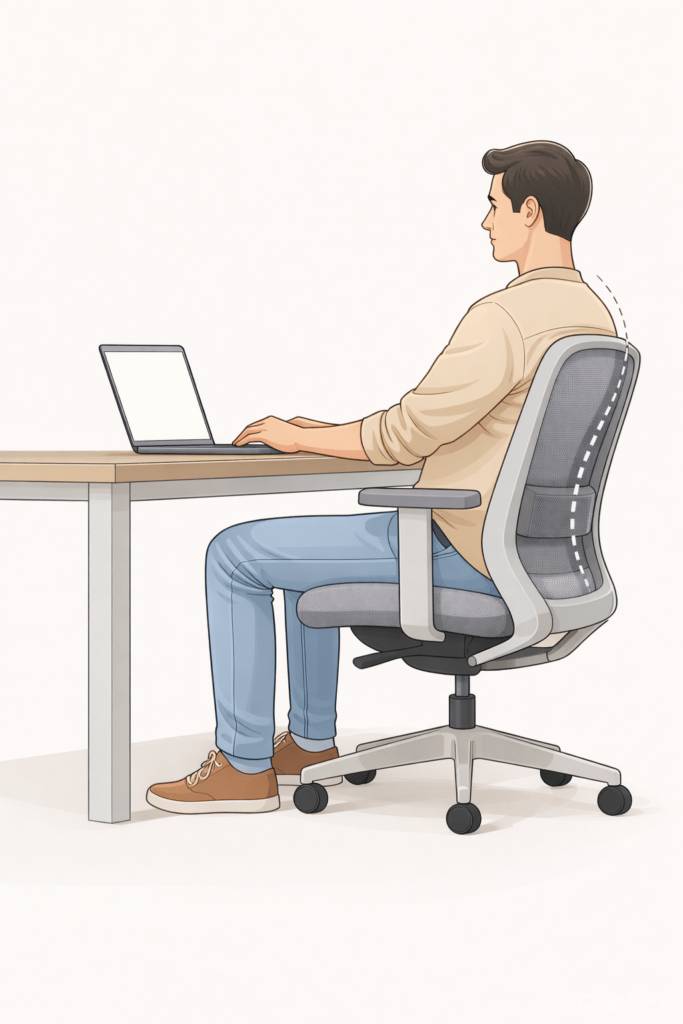
Back stiffness is part of a bigger pattern.
Sitting too long can also cause:
- Thigh pressure from the chair edge
- Leg numbness
- Tailbone discomfort
- Shoulder tension
All these problems share one root cause:
Prolonged sitting without adjustment.
You can connect this article internally to:
- Why does sitting feel uncomfortable after 30 minutes?
- Thigh pressure from the chair edge
- Leg numbness from sitting
- Ergonomic chair back pain
This strengthens your authority cluster.
When You Need Professional Help
Sometimes stiffness is not just from sitting.
See a professional if you notice:
- Pain that spreads down your leg
- Weakness
- Numbness that does not improve
- Recent injury
Most desk-related stiffness improves with better habits.
But listen to your body.
FAQ Section
Why does my back feel stiff after sitting at my desk?
Your muscles stay inactive for too long. Reduced movement causes tightness and reduced blood flow.
Is back stiffness after desk work normal?
Yes, it is common, especially if you sit for long hours without breaks.
How do I relieve back stiffness quickly?
Stand up, stretch gently, and walk for 2–3 minutes to restore circulation.
Can poor posture cause back stiffness?
Yes, but even good posture can cause stiffness if you sit too long without moving.
When should I worry about back stiffness?
If stiffness turns into sharp pain, numbness, or lasts several days, seek medical advice.
Final Thoughts
Back stiffness after desk work is common.
It happens because your body stays still too long.
It does not mean your spine is damaged; it just means your muscles need movement.
You can fix it by:
- Standing regularly
- Adjusting your chair
- Improving monitor height
- Stretching briefly
Make these small changes today and take control of your comfort.
You do not need expensive solutions.
You need awareness and consistency.
When your setup supports you, and you move often, your back feels normal again.
So start these habits now. Take the steps in this guide and make working comfortably—free from back stiffness—your new normal.