

You may not notice discomfort at first, but after a few hours, your shoulders can feel tight and sore. By day’s end, lifting your arms may hurt. Understanding how armrests meant for support can actually cause pain is important.
This pain develops slowly, often without clear warning. Many blame stress or age, but armrests are a frequent cause.
This article explains how armrests can cause shoulder pain, how to spot the signs, and what steps can help—without needing a new chair.
Table of Contents
Why Armrests Are Supposed to Help (But Often Don’t)
Armrests were designed with good intentions. Their purpose is simple: Support the arms.
- reduce strain on the shoulders
- Enhance sitting comfort
- In theory, armrests should increase comfort and reduce strain, but in practice, the results often differ.
Most people don’t sit still. They type, move a mouse, lean forward, and shift positions. Armrests often fail because they force the arms and shoulders into fixed positions, though the body wants to move.
If the armrests apply pressure to the shoulders, it can cause pain.
Can Armrests Really Cause Shoulder Pain?
Yes, armrests can cause shoulder pain, even on expensive or ergonomic chairs. For example, graphic designer Emily stopped her pain by lowering her armrests. The problem is the armrests’ impact on shoulder height and muscle tension.
Shoulders are designed to hang in a natural position. When armrests push the shoulders up or pull them down, the muscles remain active for long periods. Muscles that do not get rest will eventually become painful.
This pain doesn’t feel sharp. Instead, take this quick self-quiz to identify if you are experiencing armrest shoulder pain. Do you feel:
- Tightness?
- Heaviness?
- Fatigue?
- Worse discomfort in the evening?
If you answered yes to these, it could be a sign of armrest-related pain.
For this reason, many people do not notice the problem until it becomes more severe.
Armrest Shoulder Pain — The Real Reasons It Happens
This is the most important part of the article.
Shoulder pain from armrests usually comes from gradual posture changes. Here are the main reasons why.
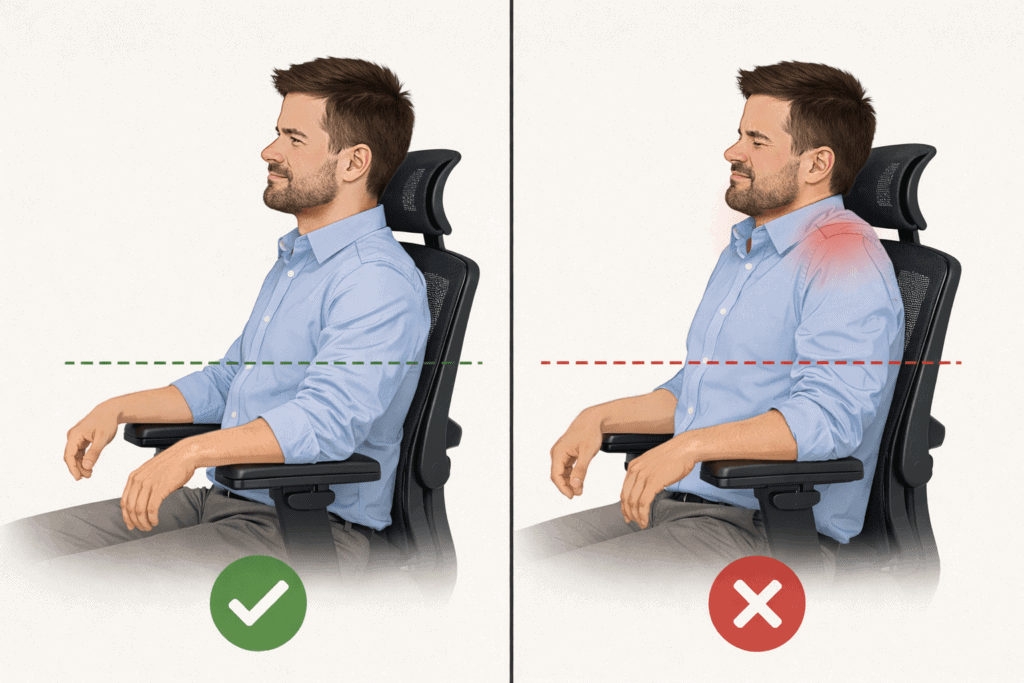
Armrests Lift the Shoulders Without You Noticing
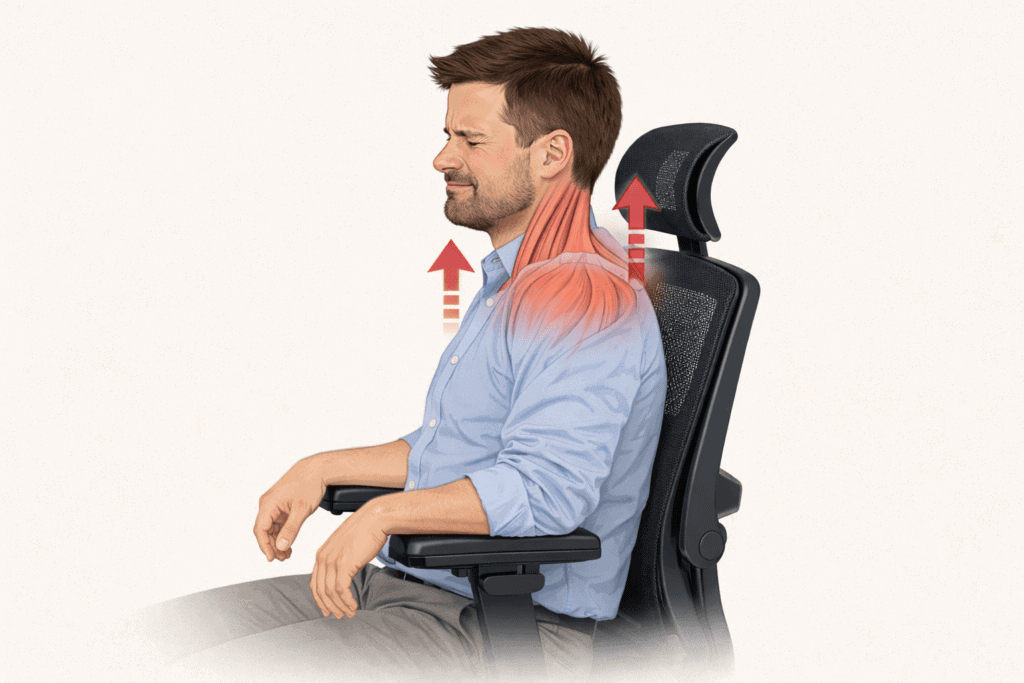
When armrests are set too high:
- Elbows rest high.
- Your shoulders lift slightly.
- Neck and shoulder muscles stay tense.
This isn’t noticeable right away, but after hours of sitting, muscles can become sore.
This is one of the most common causes of shoulder pain for office workers.
Armrests That Are Too Low Pull the Arms Down
Low armrests create a different problem.
When armrests sit too low:
- Your arms hang down
- Shoulder muscles stretch unnaturally.
- Upper back muscles compensate.
This often causes:
- Dull shoulder pain
- Upper back discomfort
- One-sided soreness
Pain may develop in only one shoulder, especially if you use your mouse more with one arm.
Fixed Armrests Don’t Match Your Body Width
Many chairs come with armrests that:
- Don’t move inward or outward.
- It doesn’t match the shoulder width.
- Force arms into awkward angles.
If the chair doesn’t match your shoulder width, your arms aren’t in a natural position. This leads to imbalance and pain over time.
A one-size-fits-all approach does not usually fit most people correctly.
Armrests Lock the Arms in One Position
Your arms move constantly during work.
When armrests lock them in place:
- Muscles lose their natural movement.
- Blood flow reduces
- Fatigue builds
Remaining in a static position for long periods can reduce comfort and increase the risk of pain.
Pause every 30 minutes to shrug and roll your shoulders. Also, try simple exercises like shoulder squeezes and neck stretches to reduce discomfort and keep muscles moving.
Armrests Affect the Neck and Upper Back Together
Shoulders don’t work alone.
When shoulder muscles stay tense:
- Neck muscles join in.
- Upper back tightens
- Pain spreads upward
Many believe their neck pain is unrelated, but armrests often are to blame.
Why Does Shoulder Pain Build Slowly During Long Sitting
One reason armrest shoulder pain is hard to detect is timing.
The pain:
- Doesn’t start immediately
- Builds hour by hour
- Feels worse at night
Slow-developing pain is often blamed on long hours, not on chair setup.
Muscles do not give a strong warning.
Instead, the discomfort increases gradually.
Armrest Height vs Desk Height (The Overlooked Problem)
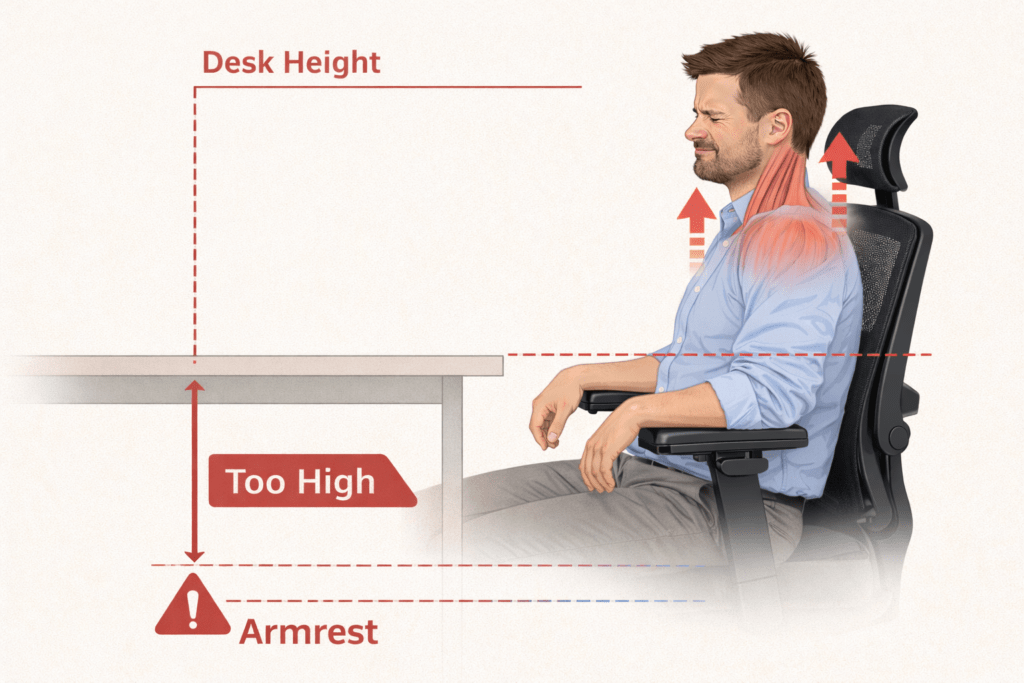
Many people adjust armrests without checking the desk height. This is a mistake.
If your desk is too high:
- Armrests rise to match it.
- Shoulders lift
- Neck tension increases
If your desk is too low:
- Armrests drop
- Arms hang
- Shoulders stretch
Armrests are sometimes adjusted to compensate for desk height problems, but this only shifts the pain rather than solving the underlying issue.
Signs Your Armrests Are Causing Shoulder Pain
Here’s a simple checklist. If these sound familiar, armrests are likely the issue:
- Shoulders feel tight by evening.
- Pain increases after desk work.
- Neck stiffness appears with shoulder pain.
- Relief comes when arms hang freely.
- One shoulder hurts more than the other.
If the pain reduces during weekends or days off, it is a strong indication that the problem is related to your work setup.

How to Use Armrests Without Hurting Your Shoulders
It is not always necessary to remove armrests completely. The important point is to use them correctly.
Lower Armrests Until Shoulders Relax
A good test: Sit upright
- Let shoulders drop naturally. Glide the armrests down until they barely kiss your elbows.
If the shoulders lift, the armrests are too high.
Support Elbows Lightly, Not Fully
Armrests should:
- Touch elbows softly
- Do not carry full arm weight.
- Allow movement
If you rest your arms heavily on the armrests, it can create tension in the shoulder muscles.
Let arms float while typing.
While typing or using a mouse, keep your arms moving and change positions often. Set reminders every 20 minutes to shift posture. These small changes help more than sticking to a single posture.
Remove or Ignore Armrests During Focused Work
Many people feel instant relief when they:
- Lower armrests fully
- Slide the chair slightly back
- Work without arm support
Armrests should be considered optional and are not required for all types of work.

When Armrests Are Actually Helpful
Armrests aren’t evil. They help in specific moments:
- During short breaks
- While reclining
- When resting between tasks
The important factor is when you use the armrests, not whether you use them all the time.
When Armrests Are Not the Real Problem
Sometimes armrests get blamed unfairly.
Other hidden causes include:
- Monitor placed too high or low.
- Desk height mismatch
- The keyboard is too far away.
- Phone use during breaks
👉 Guide opportunity: Ideal Monitor Height
By correcting these issues, you can reduce shoulder pain even if you continue to use the armrests.
What Users Really Want (And What Works)
Users don’t want:
- More adjustments
- More expensive chairs
- More complicated rules
Users want:
- Comfort
- Relief
- Confidence
If you understand the reasons for the pain, you can take steps to control and reduce it.
Should You Remove Armrests Completely?
If you can’t remove armrests during work, use cushions or change your posture to reduce strain. This helps with fixed armrests without needing removal.
Removing armrests:
- Free shoulder movement
- Reduces tension
- Improves comfort
You can reinstall the armrests when you need to rest.
FAQs: Armrests and Shoulder Pain
Can armrests cause shoulder pain?
Yes. Armrests can cause shoulder pain if they lift or pull the shoulders out of their natural position for long periods.
Should I remove my armrests if my shoulders hurt?
You don’t always need to remove them. Try lowering them or avoiding them while typing. Many people feel better without using armrests during work.
Are armrests necessary for desk work?
Armrests are not necessary for most desk work. They are more useful for resting than for active typing or mouse use.
Why does shoulder pain get worse by the end of the day?
Shoulder muscles get tired from holding tension all day. Armrests can quietly increase that tension without you noticing.
Final Thoughts — Armrests Are Optional, Not Essential
Armrests are not required for healthy sitting.
Used incorrectly, they cause shoulder pain.
Used at the right time, they offer comfort.
If your shoulders hurt:
- Stop forcing arm support.
- Let your shoulders relax.
- Adjust your setup slowly.
Comfort is achieved by maintaining a proper balance in your setup, not by relying on specific features.
Checklist for Reducing Armrest Shoulder Pain:
– Adjust armrests to a height where your shoulders can relax naturally.
– Check and match desk height to avoid lifting or dropping your shoulders.
– Incorporate regular breaks to move and stretch every 30 minutes.
– Monitor placements that prevent stretching or tension in the neck and shoulders.
– Consider using cushions or other modifications if fixed armrests cannot be removed.