
Have you ever bought a chair that looked perfect online, but felt uncomfortable once you tried it at home?
Maybe your feet did not touch the floor.
Maybe the seat pressed into your thighs.
Maybe your desk suddenly felt too high.
You are not alone.
Many people seek chair measurement standards to answer:
They want to feel safe buying a chair.
They want to avoid wasting money.
They want comfort without guesswork.
The single biggest thing you will learn from this guide: how to finally pick a chair that truly fits you and makes sitting comfortable every day.
This guide explains chair measurement standards in simple terms. Instead of complicated words or confusing charts, you’ll find clear answers that build on each point.
We will cover:
- What “chair measurement standard” really means
- Standard office chair sizes
- Standard dining chair sizes
- Desk and chair height compatibility
- Why does the standard not fit everyone?
- How to choose the right chair for your body
- Mistakes to avoid
Let’s keep things simple and practical as we answer these questions.
What Does “Chair Measurement Standard” Mean?
When people say “standard chair measurements,” they usually mean:
The most common size that works for most adults.
Furniture companies follow general guidelines when designing chairs. These guidelines are based on:
- Average adult height, Leg length
- Hip width Desk height
- Ergonomic research based on the latest BIFMA and ANSI anthropometric tables, which define standards for safe and comfortable office furniture.
Organisations like ANSI and BIFMA publish safety and performance guidelines for office furniture. You do not need to memorise those documents. The important thing to remember is this:
Manufacturers do not randomly choose sizes.
They use average human body measurements.
But here is something important:
Standard does not mean perfect for everyone. This is your chance to tailor your choice. Standards are just a launching point—now you can explore what works for you.
It means “fits most people.”
If you are taller, shorter, or have different body proportions, you may need something different.
Standards are only a starting point.
Standard Office Chair Measurements
Let’s break this down into simple numbers.
These are the most common measurements you will see for office chairs.
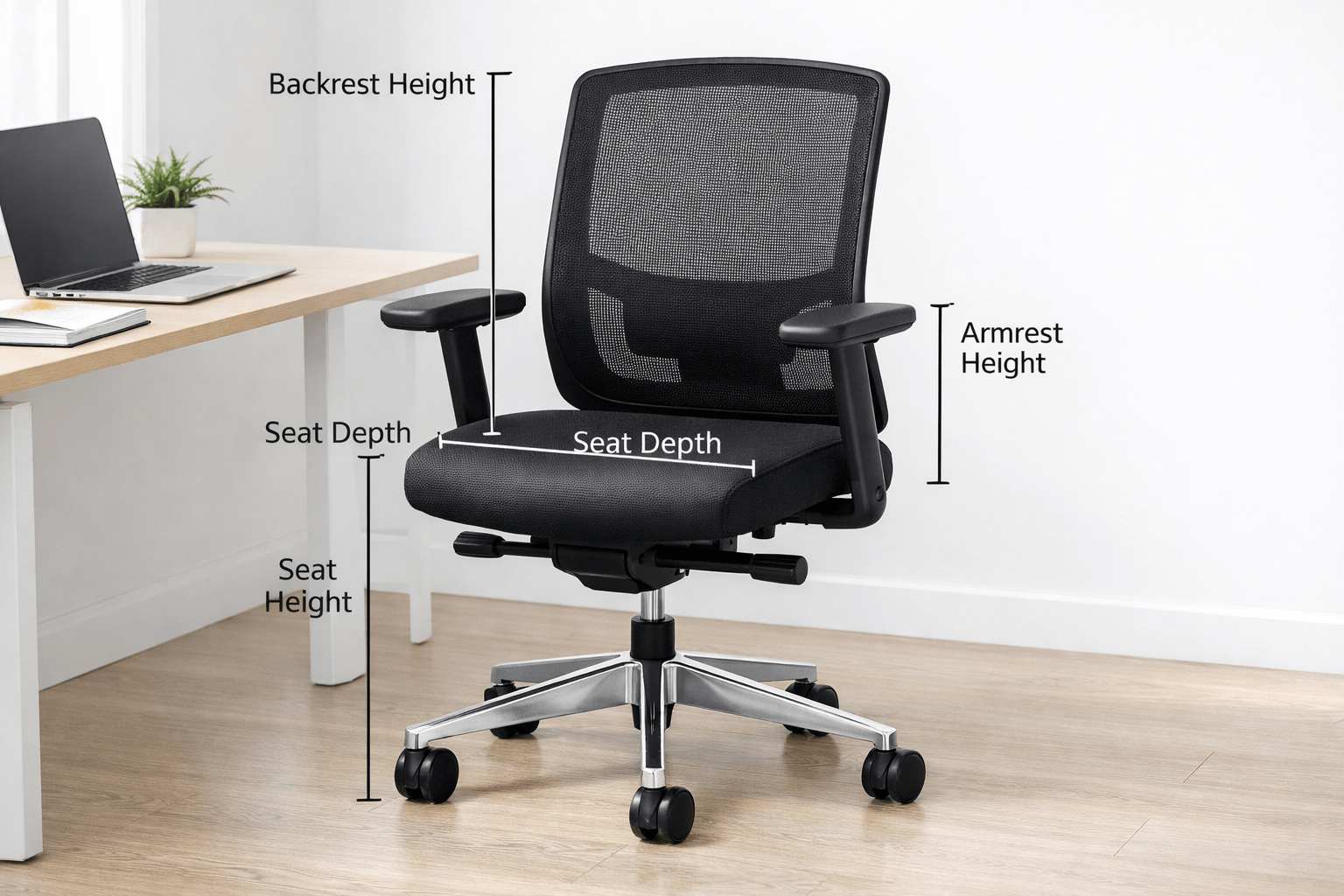
1. Standard Seat Height
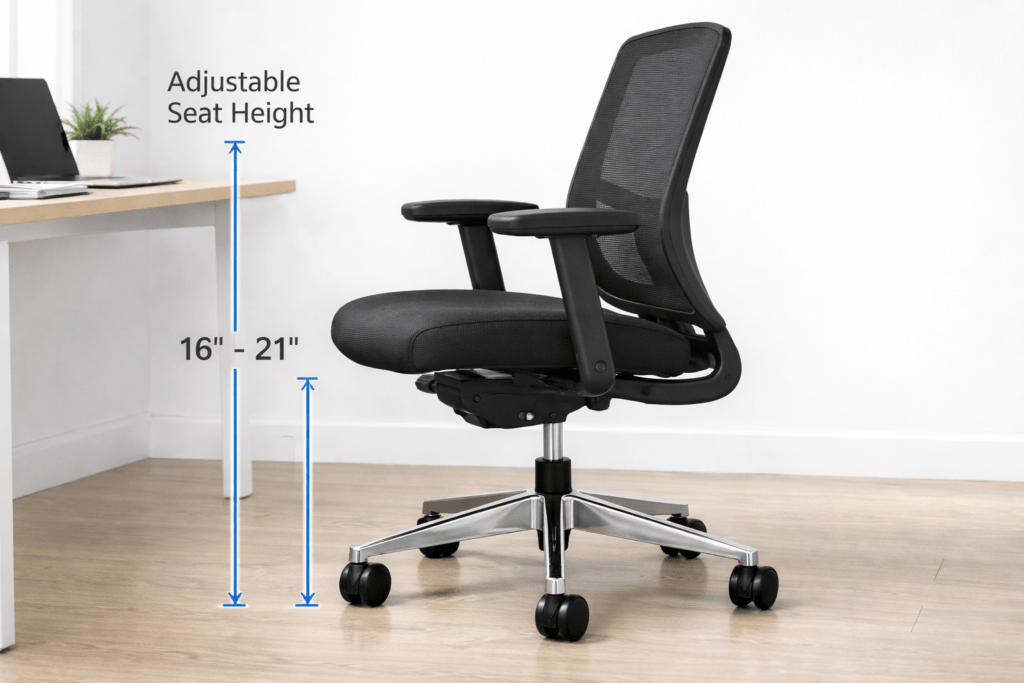
The most common adjustable office chair seat height range is:
16 to 21 inches from the floor
Why this range?
Because most adult lower leg lengths fall within this range, for example, according to recent anthropometric studies, a seat height of 16 to 21 inches typically accommodates people at the 5th and 95th percentiles for lower leg length. This means the vast majority of adults can sit with their feet flat on the ground and maintain a healthy posture for this period.
When the seat height is correct:
- Feet stay flat on the floor.
- Knees form about a 90-degree angle.
- Thighs stay parallel to the ground.
If the seat is too high:
- Your feet dangle
- Pressure builds under your thighs.
If the seat is too low:
- Knees rise too high
- Your hips tilt backward.
The standard range gives flexibility for many users.
2. Standard Seat Depth
Seat depth is the distance from the backrest to the seat’s front edge.
Standard office chair seat depth:
16 to 18 inches
Why does this matter?
If the seat is too deep:
- The edge presses into the back of your knees.
- You slide forward
- You lose back support.
If it is too shallow:
- Your thighs do not get enough support.
- You feel unstable
A good rule:
When you sit all the way back, there should be about two or three fingers of space between the seat edge and the back of your knees.
That small gap prevents pressure.
3. Standard Seat Width
Most office chairs have a seat width of:
17 to 20 inches
This works for most adults.
You should have:
- A little space on both sides of your hips
- Enough room to move slightly
If the seat is too narrow:
- You feel squeezed
- You cannot shift comfortably.
If it is too wide:
- Armrests may feel too far apart.
- Your arms may float without support.
Standard width supports comfort without feeling tight.
4. Standard Backrest Height
Backrests come in different styles:
- Mid-back chairs
- High-back chairs
Mid-back chairs usually support:
- Lower back
- Mid spine
High-back chairs extend to:
- Upper back
- Shoulders
There is no single “standard” backrest height because design varies.
What matters most is lumbar support.
Your lower back has a natural S-curve. The chair should support and maintain that natural S-curve for healthy sitting. Look for lumbar support that follows this S-shape—it’s a key ergonomic requirement for back comfort.
5. Standard Armrest Height
Armrests are usually:
7 to 10 inches above the seat
When adjusted correctly:
- Elbows stay at about 90 degrees.
- Shoulders remain relaxed
- Wrists stay neutral
Armrests that are too high lift your shoulders.
Armrests that are too low make you lean.
Adjustable armrests are always better than fixed ones.
Standard Dining Chair Measurements
Dining chairs follow different rules.
Why?
Because dining tables usually have fixed heights.
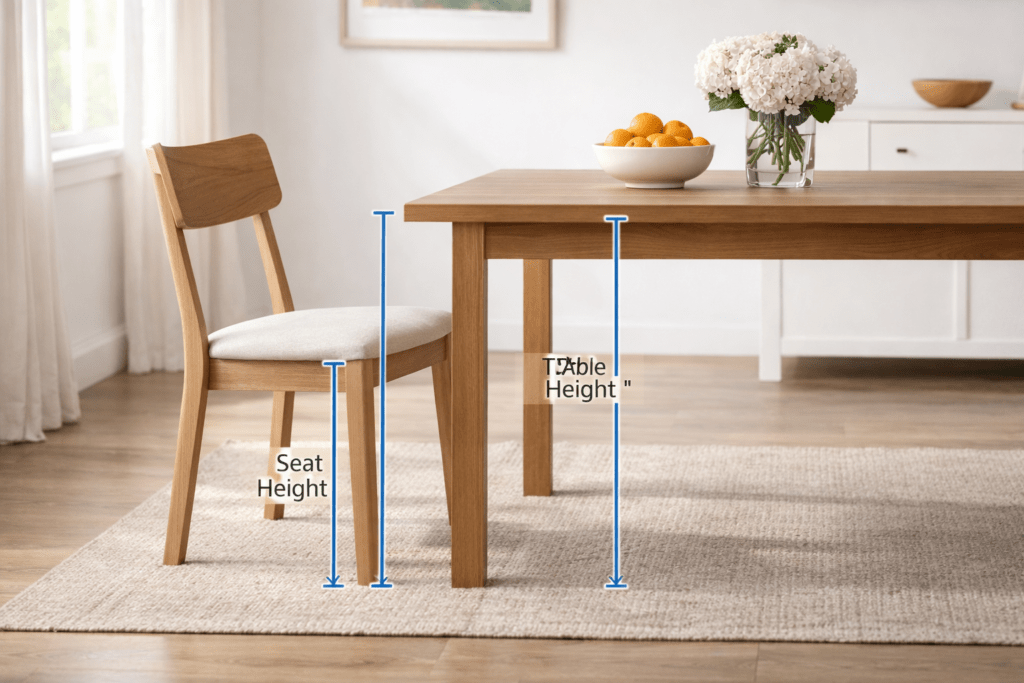
Standard Dining Chair Seat Height
Most dining chairs have a seat height of:
17 to 19 inches
This matches standard dining table heights.
Standard Dining Table Height
Most dining tables are:
28 to 30 inches high
The common rule:
There should be about 10 to 12 inches between the seat and the underside of the table.
This allows:
- Comfortable leg space
- Easy arm movement
- Natural eating posture
If the chair is too low:
- Your arms lift awkwardly.
If it is too high:
- Your knees hit the table.
Dining chairs are less adjustable than office chairs. That is why matching the table height matters more.
Standard Desk and Chair Height Compatibility
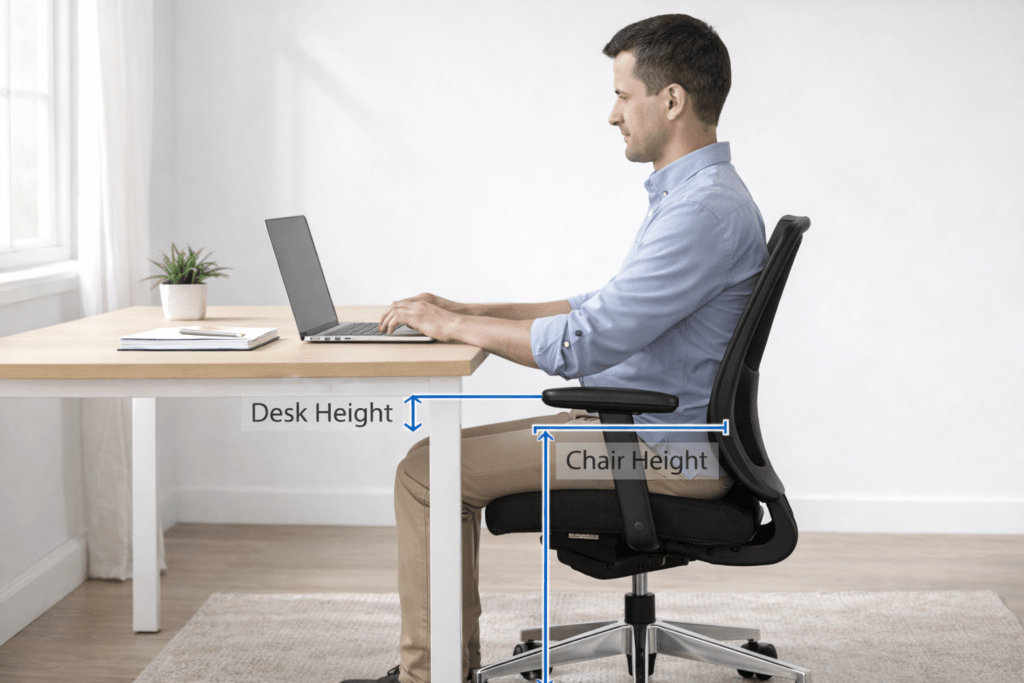
Most office desks are:
29 to 30 inches high
This number explains why adjustable chairs are important.
If your desk is 29 inches high:
Your chair must allow:
- Elbows at desk level
- Wrists straight while typing
- Shoulders relaxed
If your chair is too low:
- You bend your wrists upward.
If your chair is too high:
- Your feet may not touch the floor.
Good compatibility means:
Chair height + Desk height = Neutral posture
Standards are helpful, but being able to adjust your chair gives you more flexibility.
But do these standard measurements fit everyone? Let’s dig into where they might fall short.
This is where frustration begins.
You buy a “standard size” chair.
But it still feels wrong.
Why?
Because your body may not match the average.
Let’s look at common problems.
For Tall People
Tall users often experience:
- Seat height is too low
- Seat depth is too short.
- Backrest too low
Their knees may rise above their hips.
They need:
- Extended height range
- Deeper seat
- Higher backrest
Standard size may feel small.
For Short People
Short users often experience:
- Feet not touching the floor.
- Seat depth is too long.
- Armrests too high
They may slide forward to reach the backrest.
They need:
- Lower minimum seat height
- Shallower seat depth
- Adjustable armrests
Again, the standard may not be ideal.
For Different Body Types
Hip width and thigh length vary.
Even two people of the same height may need different seat depths or widths.
This is why:
Adjustability beats fixed standards.
Standards give you a baseline.
Your body decides the final fit.
Common Mistakes When Following “Standard” Sizes
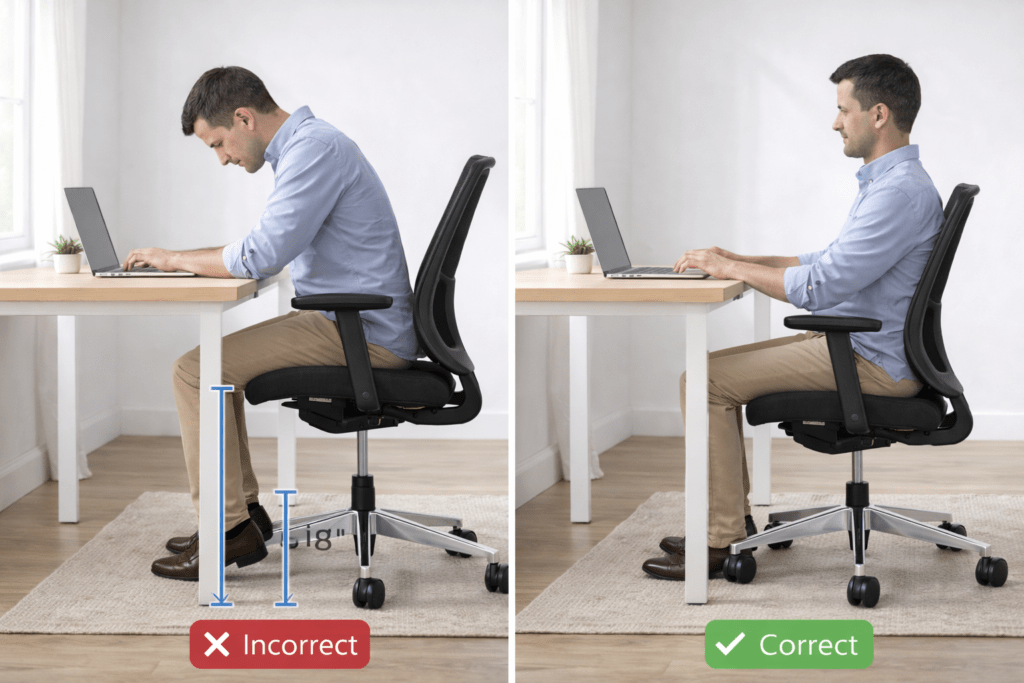
Many people misunderstand standards.
Here are common mistakes.
Mistake 1: Ignoring Seat Depth
People focus only on height.
But seat depth often causes thigh pressure and discomfort.
Mistake 2: Matching Someone Else’s Setup
Your friend’s chair works for them.
That does not mean it will work for you.
Bodies are different.
Mistake 3: Ignoring Desk Height
A standard chair with a non-standard desk creates problems.
Always measure both.
Mistake 4: Buying Fixed-Height Chairs
Fixed chairs leave no room for adjustment.
Small differences in body size require flexibility.
How to Choose the Right Chair Based on Standards
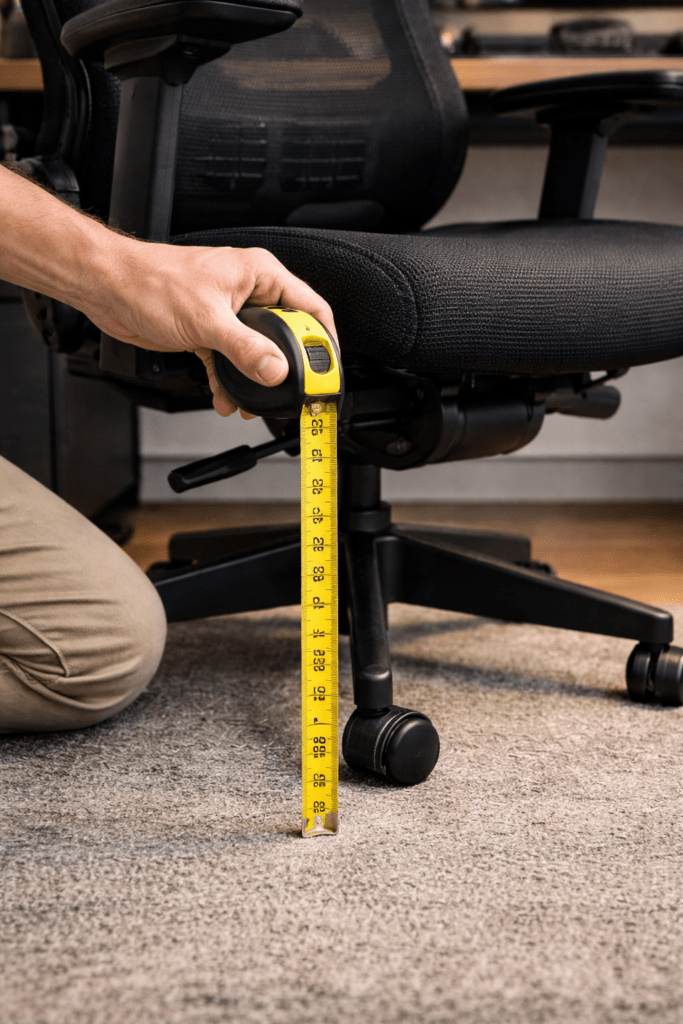
Now, let’s put this knowledge into action.
Here is a simple checklist.
Step 1: Measure Your Lower Leg Length
Sit straight.
Measure from the bottom of your foot to the back of your knee.
Your chair’s seat height should allow your feet to rest flat on the floor.
Step 2: Measure Your Thigh Length
Measure from the back of your hip to the back of your knee.
Your seat depth should be slightly shorter than this number.
Step 3: Check Your Desk Height
Measure from the floor to the desk surface.
Adjust the chair so that your elbows rest comfortably at the desk level.
Step 4: Compare With Standard Range
Check if your needs fall inside:
- 16–21 inch seat height
- 16–18 inch seat depth
- 17–20 inch seat width
If yes, a standard adjustable chair may work.
If not, look for extended size options. Some brands and specialty stores offer chairs designed for taller, shorter, or plus-size users. You can often find these by searching for terms like “big and tall chairs,” “petite office chairs,” or “ergonomic chairs for small/large body types.” Checking with office supply retailers or companies specialising in ergonomic furniture can also help you find a better fit.
Step 5: Prioritise Adjustability
Look for:
- Adjustable seat height
- Adjustable armrests
- Adjustable lumbar support
- Tilt function
Adjustable features let you find the right fit within the standard ranges.
Chair Standards for Multiple Monitor Workstations
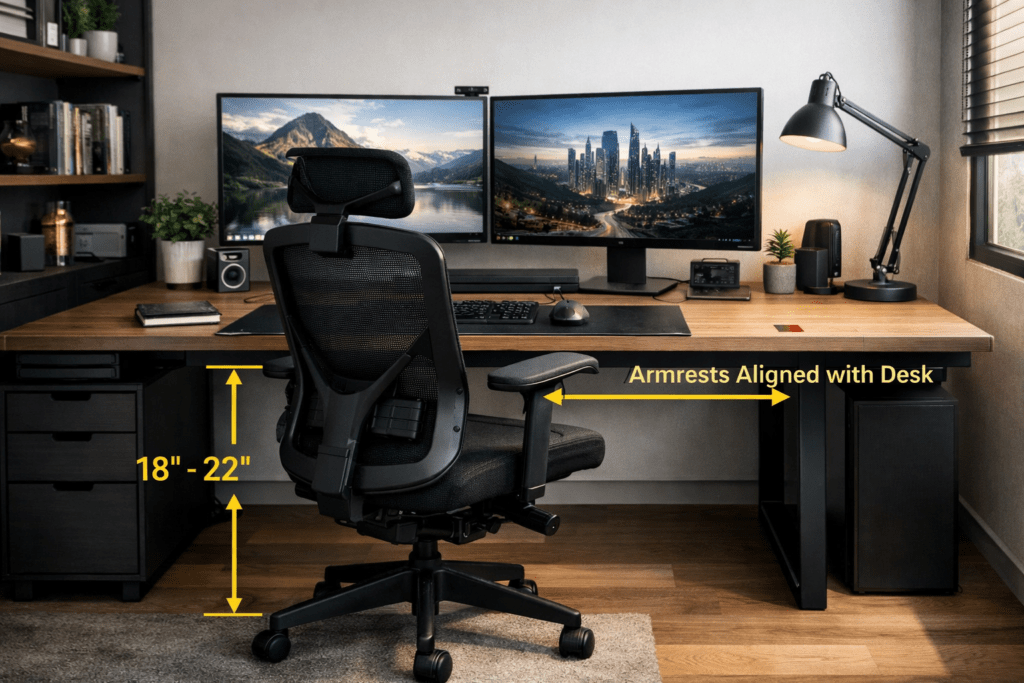
If you use multiple monitors, your setup changes.
Multiple screens often mean:
- Wider desk
- More arm movement
- Different keyboard position
This affects chair requirements.
You may need:
- Strong lumbar support
- Adjustable armrests for a wider typing position
- Deeper desk for correct monitor distance
If you plan to upgrade to:
- A multiple-monitor desk
- A standing desk for multiple monitors
- A larger workstation
In these cases, having flexibility in your chair becomes even more important.
Standard chair sizes still apply, but movement and adjustability matter more.
What You Really Want
To be honest,
You search for “chair measurement standard” because you want comfort, not just numbers.
You search because:
- Your back hurts
- Your legs feel numb
- You are tired of guessing.
- You do not want to waste money.
- You want comfort that lasts.
You want a chair that fits.
Standards give you confidence.
They reduce risk.
They give you a safe starting point.
But your body is the final judge.
Frequently Asked Questions
What is the standard chair seat height?
The standard chair seat height is usually between 16 and 21 inches from the floor. Most office chairs adjust within this range. Dining chairs are often around 17 to 19 inches. This height works well with desks and tables that measure about 29 to 30 inches tall.
What are standard office chair dimensions?
Standard office chair dimensions typically include a seat height of 16–21 inches, a seat depth of 16–18 inches, and a seat width of 17–20 inches. Armrests usually sit 7–10 inches above the seat. These measurements support a comfortable posture during long hours of work.
What is the difference between the dining chair and the office chair height?
Dining chairs usually have a fixed seat height of 17–19 inches to match standard dining tables. Office chairs are adjustable and range from 16 to 21 inches to fit different desk heights and body types. Office chairs also offer more ergonomic features for extended sitting.
How high should a chair be compared to a desk?
A chair should allow your elbows to bend to 90 degrees when your hands rest on the desk. Your feet should stay flat on the floor. Most desks are 29–30 inches high, so your chair height must be adjusted to match.
Are standard chair sizes suitable for tall people?
Standard chair sizes work for average-height people, but tall individuals may need a chair with a higher seat range and deeper seat depth. Adjustable features are important because fixed standard sizes may not provide enough leg support or proper posture alignment.
Final Thoughts
Chair measurement standards exist to help most people sit comfortably.
Common office chair standards include:
- Seat height: 16–21 inches
- Seat depth: 16–18 inches
- Seat width: 17–20 inches
Dining chair standards differ but follow similar logic.
These numbers are not random.
They are based on average human bodies.
But remember:
Standard does not mean perfect.
Measure your body.
Measure your desk.
Compare with standard ranges.
Choose adjustability whenever possible.
Comfort is not about luck.
It is about fit.
Now you know how chair measurement standards can help you make better choices, sit more comfortably, and feel better every day.