
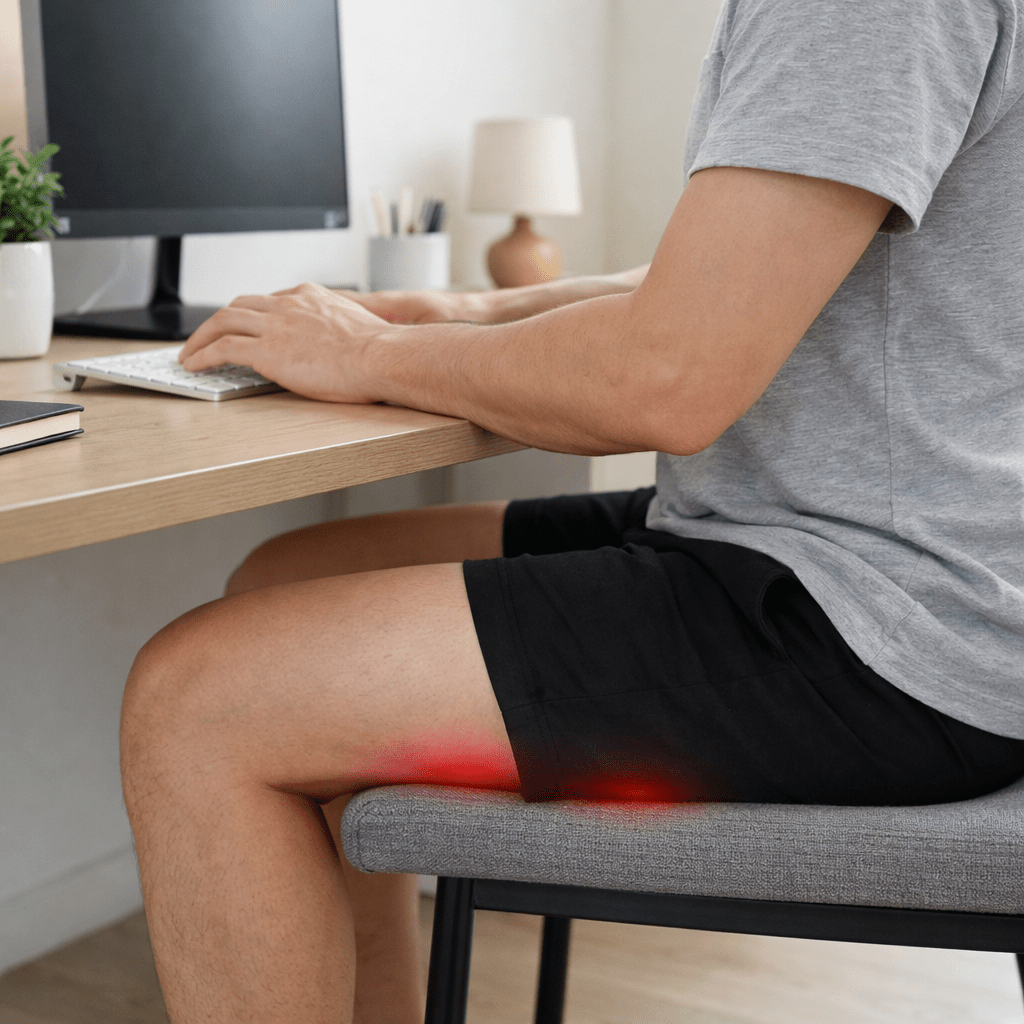
High pressure from the chair edge causes fixed seat depth, circulation, and sitting discomfort.
You sit down to work.
Everything feels fine at first.
After 20 or 30 minutes, your thighs start to hurt.
Maybe you feel pressure under your legs.
Maybe your legs tingle.
Maybe you feel uncomfortable and keep shifting around.
That uncomfortable feeling is often caused by pressure on the thighs from the chair edge.
It is more common than you think.
The good news?
It is also easy to fix.
In this guide, you’ll discover how to set up your chair and habits so you can sit comfortably for hours without thigh pain or distraction.
You will walk away with:
– A clear explanation of why the front of your chair hurts your thighs
- – The most common mistakes that make high pressure worse
- – Simple, step-by-step fixes you can use right away
- – How to recognize when your chair’s design is actually the cause of your discomfort
Let’s start with what is happening.
Table of Contents
Why Thigh Pressure from Chair Edge Happens
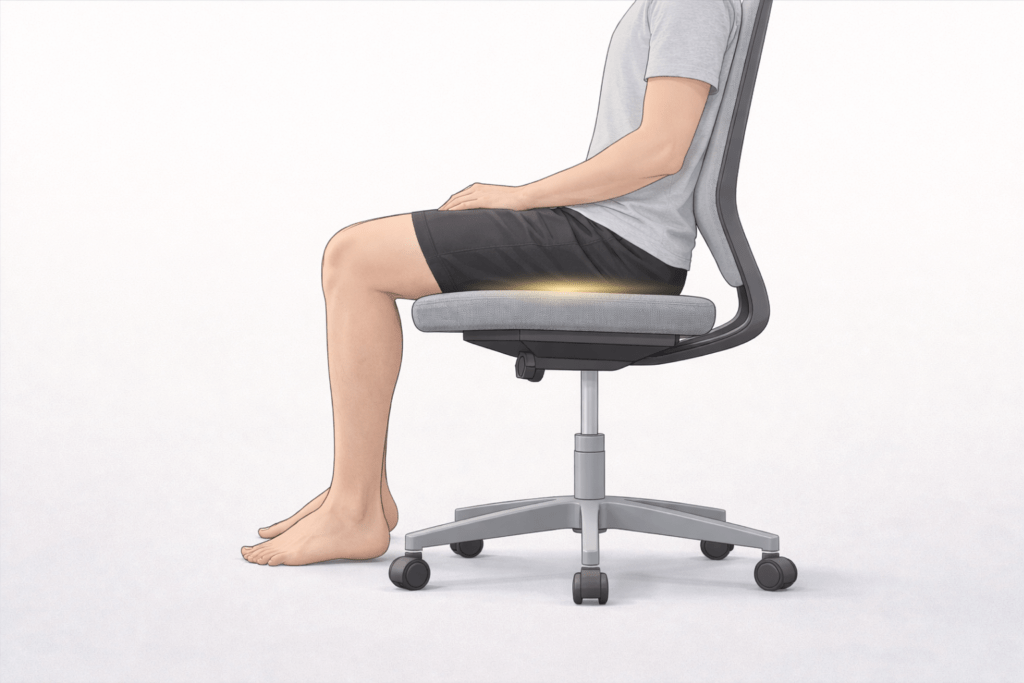
Thigh pressure from the chair edge happens when the front part of your seat presses into the soft tissue under your thighs.
When you sit, your body weight spreads across:
- Your hips
- Your buttocks
- The back of your thighs
If the chair edge feels as unyielding as a wooden bench or is shaped to dig into your thighs, it pushes into your legs instead of supporting them.
If discomfort spreads beyond your thighs, you may also experience hip pain from sitting, which requires a slightly different setup.
Here’s what that pressure can do:
1. It Compresses Soft Tissue
Your thighs have muscle and blood vessels. When the chair edge presses upward, it squeezes that tissue.
2. It Reduces Blood Flow
When blood flow slows down, your legs may feel:
- Heavy
- Warm
- Tingling
- Slightly numb
3. It Irritates Nerves
Prolonged pressure can irritate small nerves under your thighs. That is why you feel discomfort after 20–40 minutes.
Your body is smart. It is equipped with special nerve endings called nociceptors—your built-in seat-pressure sensors—that detect uncomfortable pressure and signal pain.
It sends pain signals to tell you:
“Change your position.”
If you sit for long hours every day, this small problem becomes a daily frustration.
Signs Your Chair Edge Is Causing the Problem
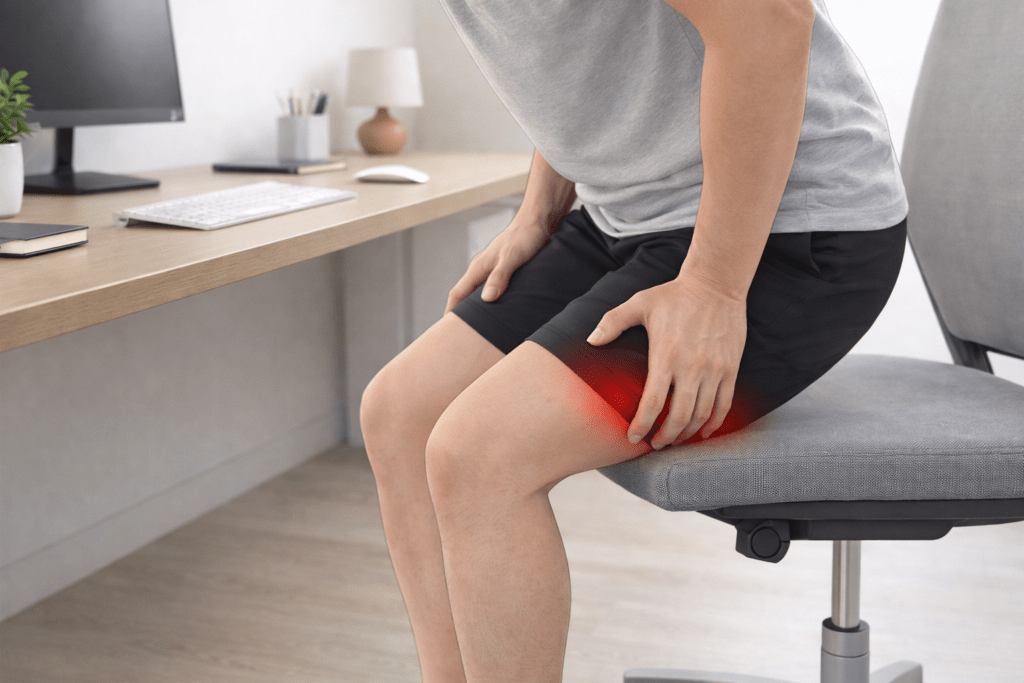
Many people think they have a serious medical issue.
But often, it is just the chair.
Look for these signs:
- Pain in the thighs
- Tingling after sitting
- Red marks when you stand up
- Relief when you walk around
- Discomfort that comes back when you sit again
If standing up resolves the problem, your chair setup is likely the cause.
How Chair Design Affects Thigh Pressure
Not all chairs are built the same way.
Some designs reduce pressure.
Some designs increase it.
Let’s look at the key parts.
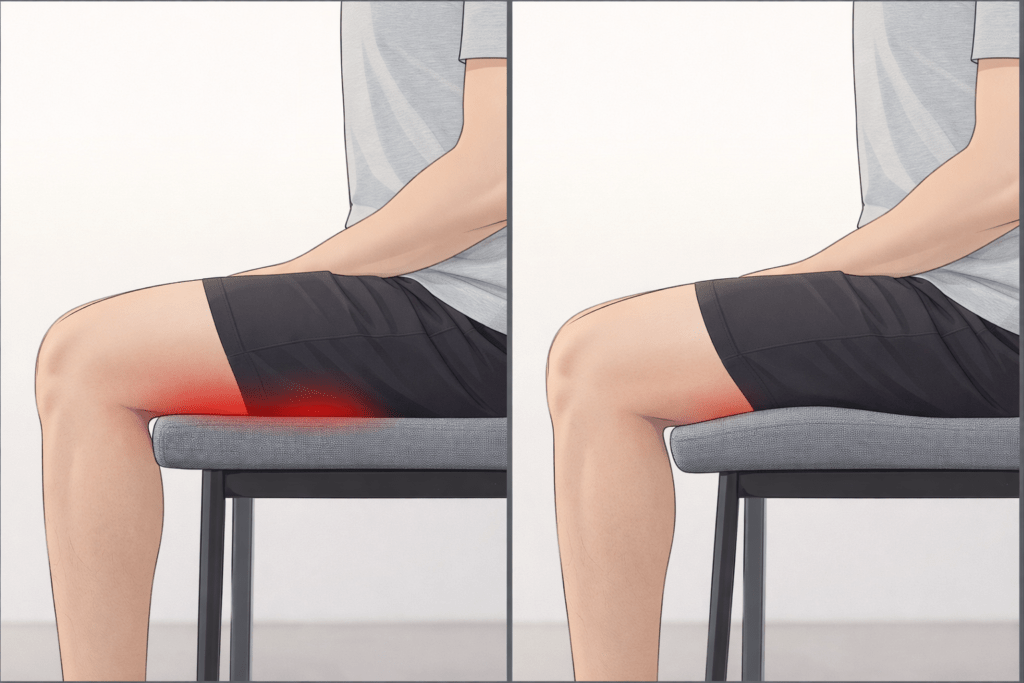
1. Flat Seat Edge vs Waterfall Edge
A flat, hard edge presses directly into your legs.
A waterfall edge slopes slightly downward at the front.
This reduces compression and improves circulation.
This design feature makes a huge difference.
2. Seat Depth
Seat depth is the distance from the back to the front of the seat.
If the seat is too long:
- It presses into your legs.
- You cannot sit fully back.
- Your lower back loses support.
Leave 2–3 fingers’ width between your chair edge and the backs of your knees. Sit and slide two fingers between the chair and your knee. If it’s too tight or too wide, adjust your seat depth. This quick check helps you spot problems quickly.
3. Seat Height
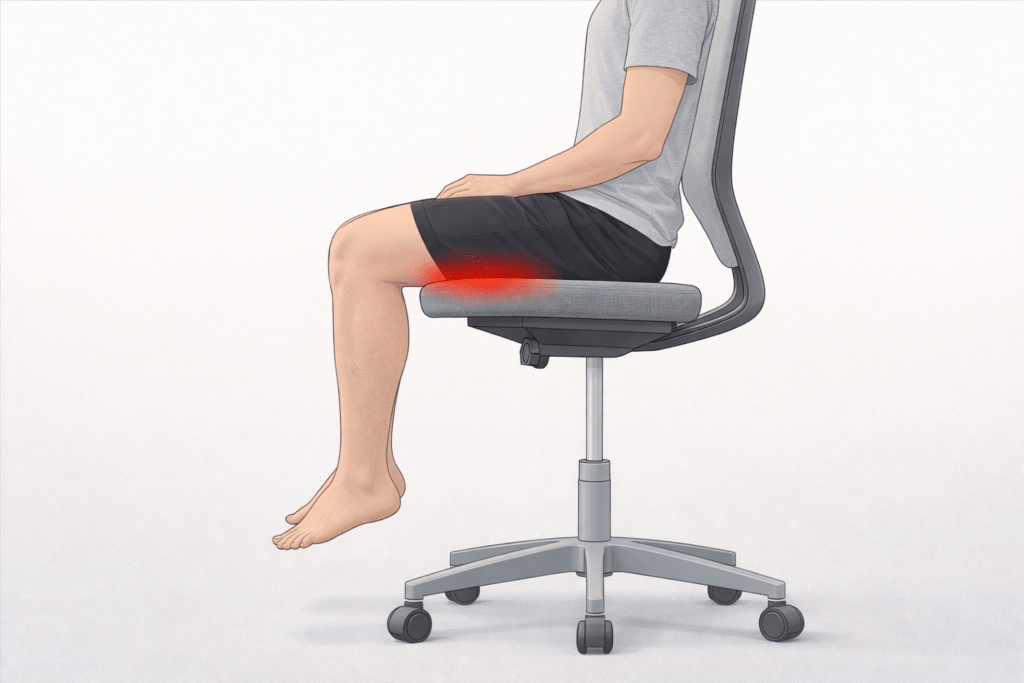
If your chair is too high:
- Your thighs tilt upward.
- The front edge digs into your legs.
- Your feet may dangle.
This increases pressure.
4. Cushion Quality
Cheap foam collapses.
When foam sinks, the plastic frame underneath becomes the real support and can press against your thighs.
- This is common in older office and dining chairs.
Common Sitting Mistakes That Make It Worse
Sometimes the chair is not the only problem.
Your sitting habit matters too.
Here are common mistakes:
Sitting Too Far Forward
When you sit near the edge, your thighs carry more weight.
Feet Not Flat on the Floor
If your feet hang:
- Your legs pull downward.
- The edge presses harder.
Using a Dining Chair for Desk Work
Dining chairs are not built for long sitting.
They usually have hard, flat edges.
Leaning Too Far Back
When you recline too far, your thighs press against the edge.
These small habits create daily discomfort. Even if your chair is decent, small mistakes in how you sit or move can build up and cause ongoing issues.
How to Fix Thigh Pressure from the Chair Edge (Step-by-Step)
Now let’s fix it. You do not need a new chair right away. Most people can improve comfort with a few simple adjustments to their current chair and sitting habits.
Start here.
Step 1: Adjust Your Seat Height
Your feet should rest flat on the floor.
Keep your knees at about 90–100 degrees.
If your chair is too high:
- Lower it
If it cannot go lower:
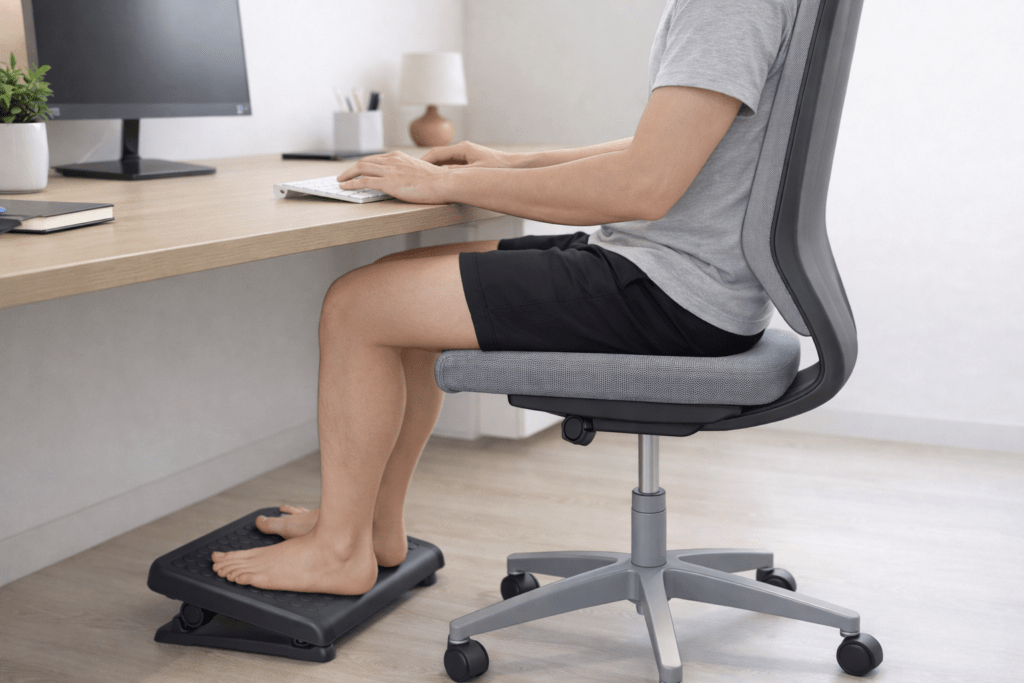
- Use a footrest
Step 2: Sit Fully Back
Push your hips to the backrest.
This spreads the weight across your hips rather than concentrating it on the front edge.
Step 3: Check Seat Depth
Make sure there is a small gap behind your knees.
If the seat is too long:
- Use a small back cushion. This shortens seat depth.
Getting the right fit matters—see our guide on desk chair dimensions for ergonomic fit to adjust your setup correctly.
Step 4: Add a Soft Cushion
If the front edge is hard:
Add a cushion that is both soft and firm enough to hold its shape. Choose one that is firm enough to provide support without flattening out too quickly. Some quick fixes include a memory foam seat cushion, a folded blanket, or even a rolled-up towel placed at the front edge for instant relief. Look for options labeled ‘ergonomic’ or ‘designed for office chairs’ if you want something that lasts longer. Avoid very thick cushions that raise you too high or overly soft cushions that collapse and increase pressure.
Step 5: Use a Footrest
A footrest reduces the downward pull on your thighs.
This is especially helpful if:
- You are shorter
- Your desk is high
Step 6: Take Micro Breaks
Stand every 30–45 minutes.
Even 60 seconds can improve circulation.
When the Chair Itself Is the Real Problem
Sometimes adjustments are not enough.
Your chair may not be designed for long periods of work.
Watch for these signs:
- Fixed height
- No seat depth adjustment
- Hard plastic front edge
- Thin padding
- Cheap foam collapse
Gaming chairs with thick raised edges can also cause thigh pressure if they are too tall.
If you work long hours, you need a chair with:
- Adjustable height
- Proper cushioning
- Waterfall edge
- Stable base
Comfort is not a luxury.
It is daily support.
Can Thigh Pressure Lead to Bigger Problems?
In most cases, thigh pressure is not dangerous.
But long-term compression may:
- Increase muscle fatigue
- Reduce comfort
- Irritate nerves
- Affects circulation slightly
It usually does not cause serious disease.
Ignoring discomfort for years is not wise.
Your body gives small warning signs first.
Listen to them early.
Thigh Pressure vs Leg Numbness — What’s the Difference?
These two are connected but different.
Thigh pressure:
- Local discomfort under the legs
- Caused by seat edge compression
Leg numbness:
- Tingling down the leg
- Can involve nerves
- May relate to posture or circulation
If you also feel tingling down your legs, check our guide on leg numbness from sitting to understand the difference.
Best Sitting Position to Reduce Lower Body Pressure
Here is a simple checklist:
✔ Feet flat
✔ Knees at 90–100 degrees
✔ Small gap behind knees
✔ Hips fully back
✔ Back supported
✔ Shoulders relaxed
Good sitting is not about sitting perfectly.
It is about reducing pressure.
Why This Problem Frustrates So Many People
You want to work.
You want to focus.
You want to study or finish tasks.
But instead, you keep shifting in your chair.
You stand up again and again.
You feel distracted.
That frustration builds over time.
Many people blame themselves.
They think:
“Maybe I just cannot sit properly.”
But often, the chair design is the real issue.
When you fix the setup, sitting feels normal again.
That is what you want:
Comfort without thinking about it.
Who Is Most at Risk?
- Students studying for hours
- Remote workers
- Office workers
- Gamers
- People using dining chairs as desk chairs
Sitting for long periods without adjustment increases risk.
Simple Daily Comfort Routine
Every workday:
- Adjust chair height
- Sit fully back
- Check knee gap
- Stand every 30–45 minutes.
- Stretch legs lightly
Your desk setup also plays a role—read about stand-up desk stool ergonomics for better positioning.
These actions prevent daily discomfort.
FAQs
Is thigh pressure from sitting dangerous?
Usually no. It is often caused by seat height or design. However, long pressure can reduce comfort and circulation.
Why do my thighs hurt after 30 minutes?
The chair edge may be compressing soft tissue and slowing blood flow.
How do I stop my chair from cutting into my legs?
Lower the seat height, sit fully back, and make sure there is space behind your knees.
What is a waterfall seat edge?
A waterfall edge slopes downward at the front, reducing pressure on the thighs.
Can a gaming chair cause pressure on the thighs?
Yes. If the seat is too high or has thick, raised edges, it can increase pressure on the front thigh.
Final Thought
Thigh pressure from the chair edge is a minor issue that causes daily frustration. You do not need extreme solutions.
You need:
- Correct height, Proper seat depth
- Balanced posture, small daily breaks
When your chair supports your body correctly, sitting feels natural again.
And that is what you truly want:
Comfort without distraction
Adjust, support, stand, repeat. Make this your sitting mantra for daily comfort.