
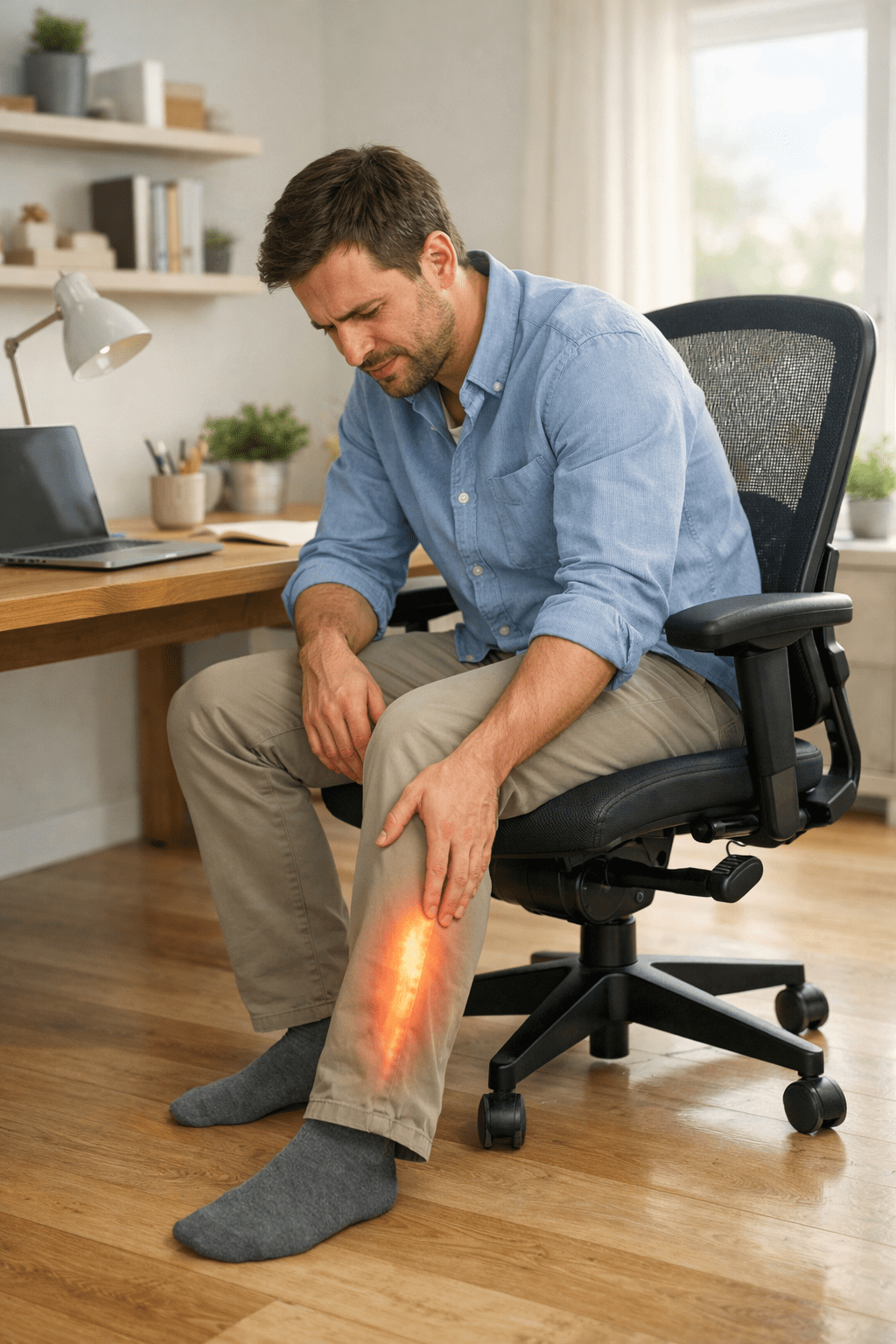
Have you ever been sitting at your desk, watching a video or working, and suddenly your legs feel strange? Maybe they feel heavy. Maybe they tingle. Maybe they go completely numb.
If you’re dealing with leg numbness from sitting, you’re not alone. Many people experience this every day. It can feel scary. It can feel uncomfortable. It can even make you worry that something serious is wrong. Fortunately, most fixes are simple and within your reach.
You might be asking yourself questions like:
- People often wonder if this is dangerous.
- Many also suspect their chair may contribute to numbness.
- The main goal is to identify how to stop it.
This guide will explain everything in simple words. You’ll gain a clear understanding of what is happening in your body, why, and how to fix it without panic. We’ll focus on real-life solutions, such as taking regular movement breaks or adjusting your chair for better support, that you can use at your desk today. First, let’s explore the causes, then try quick fixes, and finally discuss long-term habits for lasting comfort and health.
Table of Contents
Why Leg Numbness From Sitting Happens
Leg numbness from sitting usually happens because your body is under pressure in the wrong places for too long. Imagine pinching a garden hose. When you pinch it, the water flow is restricted or stopped altogether. Similarly, when you sit, pressure points on your body, like those under your thighs, can limit blood flow and cause numbness.
When you sit:
- Your thighs press against the seat.
- The back of your knees may get squeezed.
- Your hips stay in one fixed position.
- Your blood flow slows down.
- Your nerves can get compressed.
Your body is designed to move. It does not like staying still for long. When you sit without moving, your muscles relax too much, and your circulation changes. That can create tingling, pins and needles, or full numbness.
Most of the time, this sensation isn’t dangerous. Think of it as your body’s way of reminding you:
What Is Actually Happening Inside Your Body?
Let’s break it down simply.
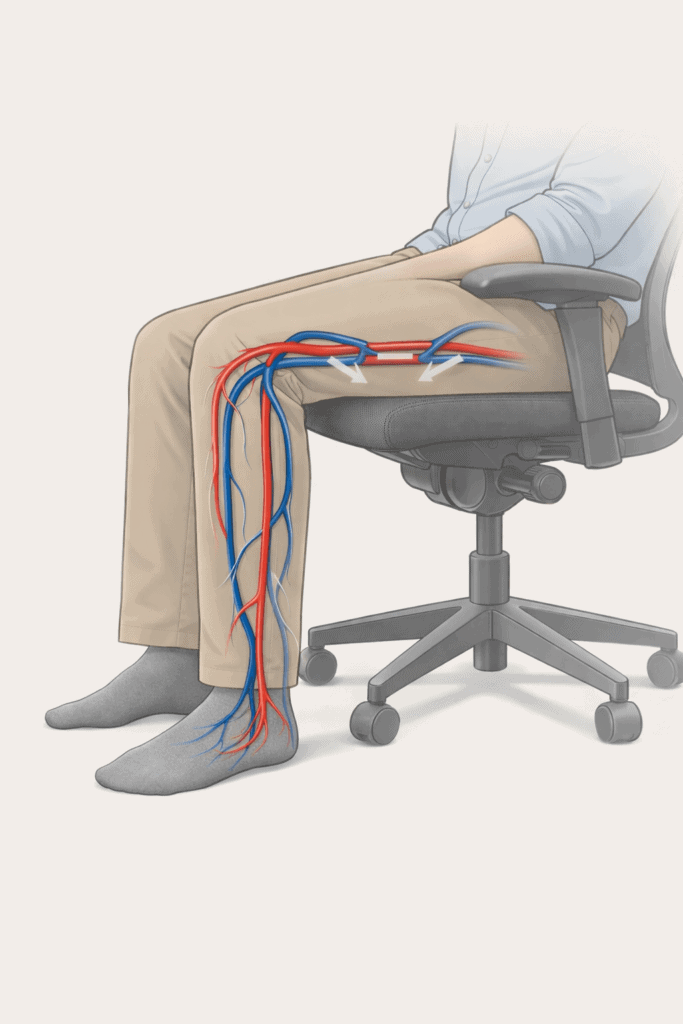
Blood Flow Slows Down
Your heart pumps blood through your body all day. When you sit for a long time, especially without moving your legs, blood can pool in your lower body.
If your chair presses against your thighs or the backs of your knees, it can make it harder for blood to flow smoothly. Less blood flow means less oxygen reaching your tissues. That can cause tingling or numbness.
Nerves Get Compressed
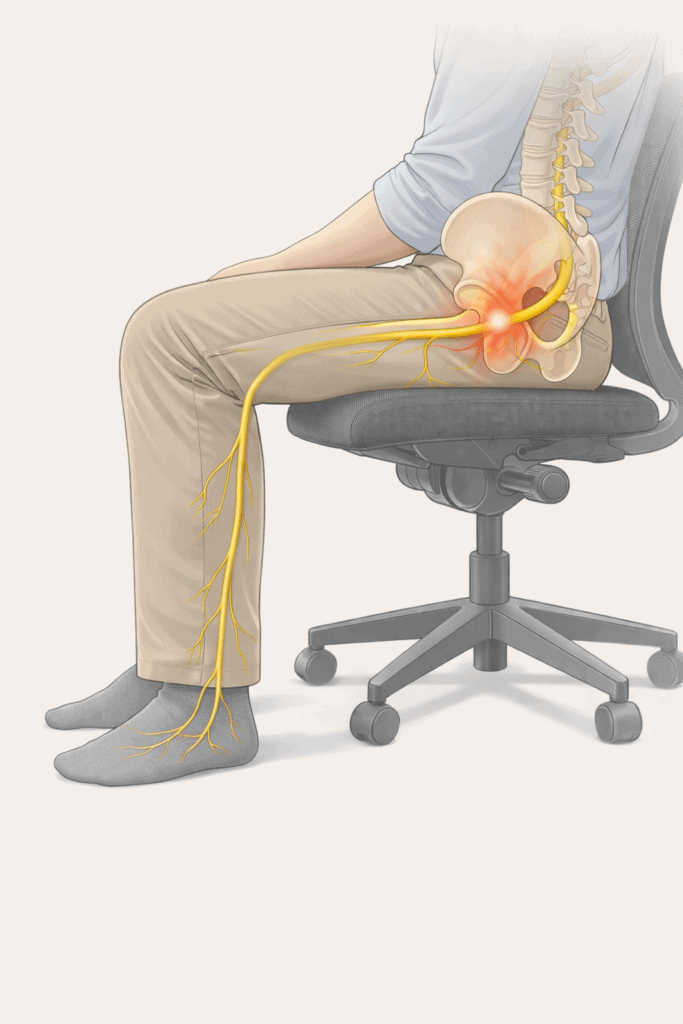
Your legs have important nerves that travel from your lower back down to your feet. When you sit in a poor position, you can put pressure on these nerves.
For example:
- Sitting with crossed legs
- Sitting on a hard seat edge
- Slouching heavily
- Sitting too low or too high
When nerves get compressed, they send strange signals. That’s when you feel the “pins and needles” feeling.
Muscles Stay Still for Too Long
Your muscles help with blood circulation. When you walk, your leg muscles squeeze and release, helping blood move upward.
When you sit still for 30–60 minutes, your muscles stop working. Blood movement becomes slower. That adds to discomfort.
Why It Feels So Frustrating
Let’s be honest
It’s not just numbness. It’s the interruption.
- You are trying to work.
- You are trying to focus.
- You are trying to relax. And suddenly your leg feels dead.
You stand up, and it feels like electricity shoots through it. It disrupts your concentration and makes you question your setup or even your health.
Quick Tips
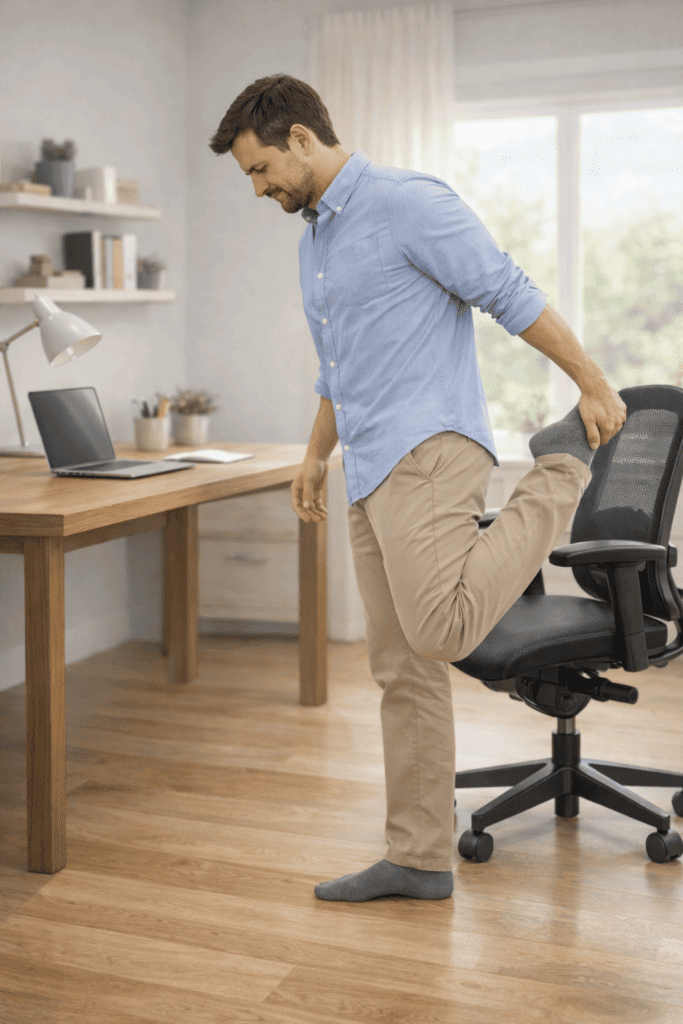
When this happens, try the “stand-stretch-sit” hack. Stand up, stretch your legs and back, and then sit back down. This small action can instantly refresh your circulation, decrease the numbness, and turn frustration into a moment of action. In addition, you might try doing ankle circles or gentle foot tapping for a minute while seated. These simple movements can further boost blood flow and alleviate numbness, offering more flexibility in your relief options.
You stand up, and it feels like electricity shoots through it. It annoys you. It breaks your concentration. It makes you question your chair, your desk, maybe even your health.
Your real desire is simple:
You just want to sit comfortably without problems.
Is Leg Numbness From Sitting Dangerous?
In most cases, no.
Short-term numbness that goes away after you move is usually harmless. It means your body needs movement.
However, you should pay attention to the following:
- Numbness lasts for hours.
- You feel weakness in your leg.
- You feel severe pain.
- You lose control of your bladder or bowel (rare but serious)
If that happens, talk to a healthcare professional.
But for most desk workers, the issue is posture and setup, not disease.
How Your Chair May Be Causing the Problem
Your chair plays a bigger role than you think.
Seat Height
If your seat is too high:
- Your feet may dangle.
- Pressure builds under your thighs.
- Blood flow gets restricted.
If your seat is too low:
- Your knees sit higher than your hips.
- Your hips compress.
- Nerve tension increases.
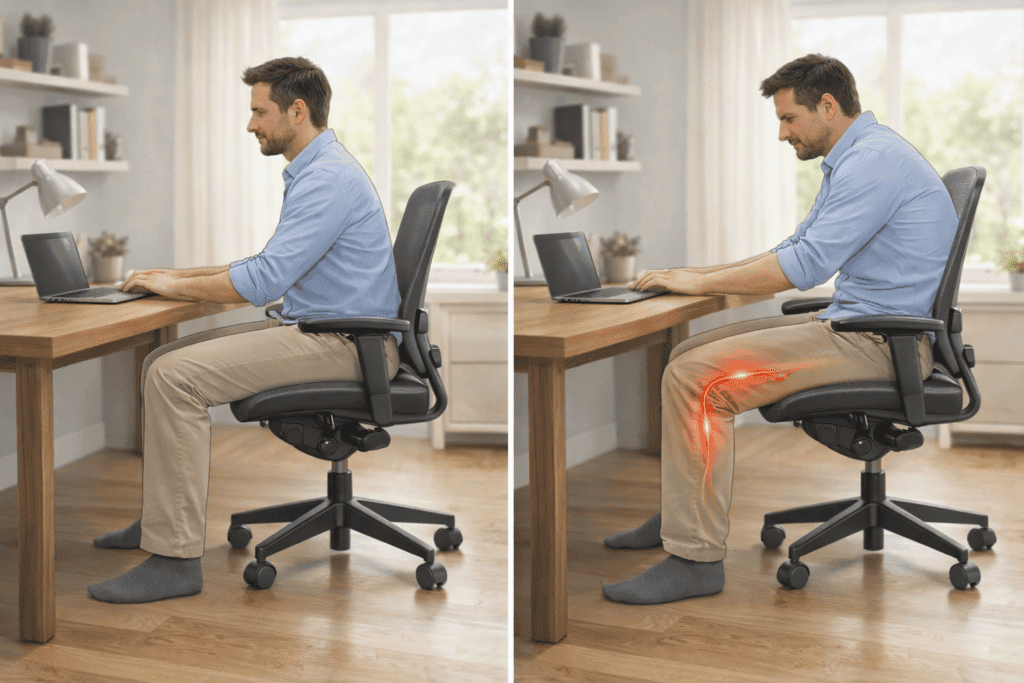
Your feet should rest flat on the floor. Your knees should form about a 90-degree angle.
Seat Depth
If the seat is too deep:
The front edge presses into the back of your knees.
Circulation gets blocked.
You should have about 2–3 finger widths between the seat edge and the backs of your knees.
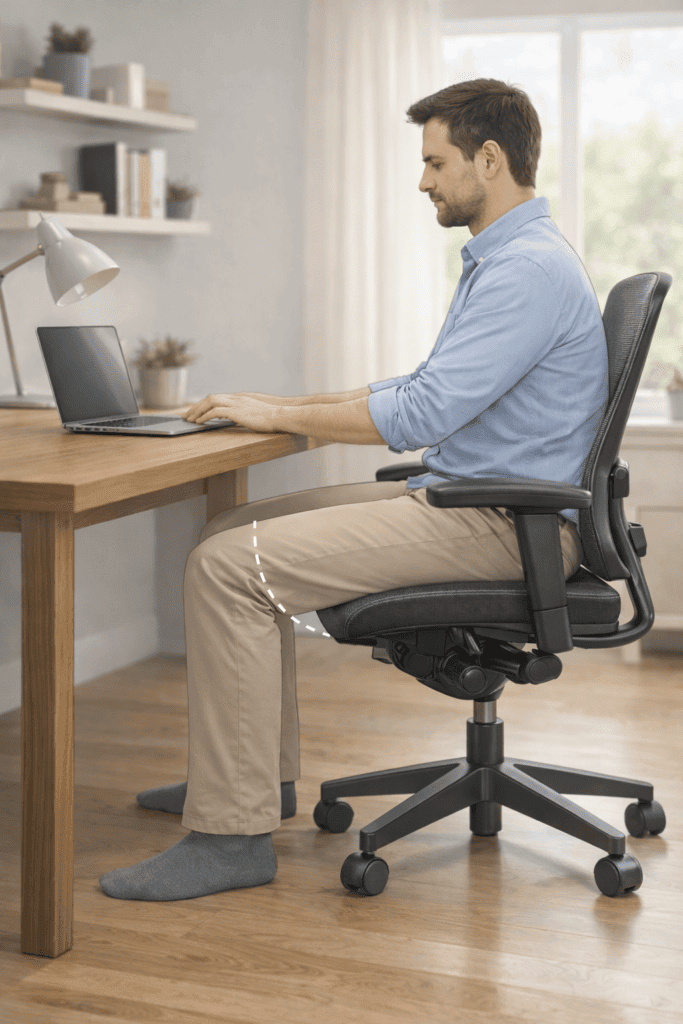
Hard Seat Edge
Some chairs have sharp front edges. That pressure compresses your thighs and impairs blood flow.
A waterfall edge (rounded front) reduces this problem.
No Foot Support
If your feet do not comfortably touch the floor, your legs work harder to stay stable. That increases pressure and discomfort.
You might also wonder how long you can sit for before it becomes a problem.
Many people start feeling discomfort after 20–30 minutes.
Your body is not built for long static sitting.
Even with the perfect ergonomic chair, you still need movement.
Think of sitting like holding a heavy bag. Even if the bag is light, holding it for a long time makes your arm tired.
Your legs feel the same way.
How to Stop Leg Numbness From Sitting Immediately
Here are simple fixes you can apply today:
1. Adjust Your Chair Height
Make sure:
- Feet are flat on the floor.
- Knees are level with hips.
- Thighs are parallel to the floor.
2. Stop Crossing Your Legs
Crossing legs puts uneven pressure on nerves and blood vessels.
Sit with both feet flat instead.
3. Use a Footrest (If Needed)
If your desk is too high, a small footrest can improve circulation.
4. Take Movement Breaks
Every 30 minutes:
- Stand up.
- Walk for 1–2 minutes.
- Stretch lightly.
This helps reset blood flow.
5. Shift Your Position
Small movements help:
- Change leg angle.
- Lean back slightly.
- Uncross and recross feet (without pressure).
Your body loves movement.
Best Sitting Positions to Reduce Leg Numbness
If you want deeper guidance, you can also read about comfortable sitting positions that support better circulation and posture. Detailed information about these positions can be found further down in the section “Best Sitting Positions to Reduce Leg Numbness”. You may look into additional resources online by searching for “ergonomic sitting positions for improved circulation and posture” for more in-depth tips.
- Keep feet flat.
- Keep hips slightly higher than knees.
- Avoid extreme slouching.
- Keep weight evenly distributed.
- Lean back slightly (100–110 degrees).
Do not freeze in one “perfect” posture. Change positions gently throughout the day.
Long-Term Prevention Strategy
Short fixes are helpful, but long-term comfort requires habits.
Strengthen Your Glutes
Strong hip muscles support a better sitting posture. Weak glutes increase pressure on nerves.
Simple exercises:
- Glute bridges
- Bodyweight squats
- Standing hip extensions
Stretch Hip Flexors
Tight hips increase nerve tension.
Stretch daily if you sit for long periods.
Improve Circulation
Daily walking improves blood flow. Even 20 minutes can help. For those who can’t leave their desk, consider alternatives like marching in place for 2 minutes or performing seated leg lifts. These options can make it easier to incorporate movement into a busy workday.
Hydrate Properly
Dehydration can worsen muscle tightness and discomfort.
Upgrade Your Workspace
Look at:
- Chair quality
- Seat depth
- Desk height
- Foot support
Small adjustments can make a big difference in comfort.
When Leg Numbness Becomes a Warning Sign
Most numbness from sitting is harmless.
But you should see a professional if:
- Numbness happens even when you are not sitting.
- It affects only one leg constantly.
- It comes with severe back pain.
- You feel muscle weakness.
- It does not improve with movement.
Listening to your body is important.
Why Movement Is More Important Than a Perfect Chair
Many people believe that if they invest in an expensive chair, their problems will disappear. However, the reality is that even the most costly chair cannot replace the benefits of regular movement.
Consider the cost of a premium ergonomic chair, which can run hundreds or even thousands of dollars. In contrast, the value of taking standing breaks every 30 minutes is priceless. These breaks, which cost nothing, can do wonders for your body’s circulation and overall comfort. For those who cannot afford expensive equipment, low-cost solutions such as adding a seat cushion, using a rolled towel for lumbar support, or crafting a DIY footrest from books or small boxes can also provide significant comfort improvements. These affordable adjustments can make your workspace more ergonomic without breaking the bank.
The real solution involves a blend of proper setup and frequent movement. Your body is designed to walk, shift, stand, and stretch. No chair can alter this biological fact.
Emotional Side: You Just Want to Sit Without Worry
Let’s talk honestly.
You don’t want:
- Tingling.
- Sudden numbness.
- Fear of nerve damage.
- Discomfort during work.
You want:
- Focus.
- Comfort.
- Productivity.
- Peace of mind.
- The good news?
In most cases, this issue is simple to fix.
Your body is not broken.
It just needs better support and more movement.
Frequently Asked Questions About Leg Numbness From Sitting
Why do my legs fall asleep when I sit?
Because pressure reduces blood flow or compresses nerves. Moving restores normal feeling.
Is it normal for legs to go numb every day?
If it happens briefly and improves with movement, it is usually normal. If it lasts for a long time or includes weakness, get medical advice.
Can a bad chair cause leg numbness?
Yes. Incorrect seat height, seat depth, or hard edges can increase pressure on nerves and blood vessels.
How often should I stand up?
Try standing or moving every 30 minutes.
Does crossing legs cause numbness?
Yes. Crossing legs can increase uneven pressure and reduce circulation.
Final Thoughts
Leg numbness from sitting can feel scary and frustrating. But in most cases, it is your body’s way of asking for movement and better support.
You do not need to panic.
You need small adjustments.
Adjust your chair.
Keep your feet flat.
Move every 30 minutes.
Avoid crossing your legs.
Comfort is not about sitting perfectly.
It is about sitting smartly and moving often.