
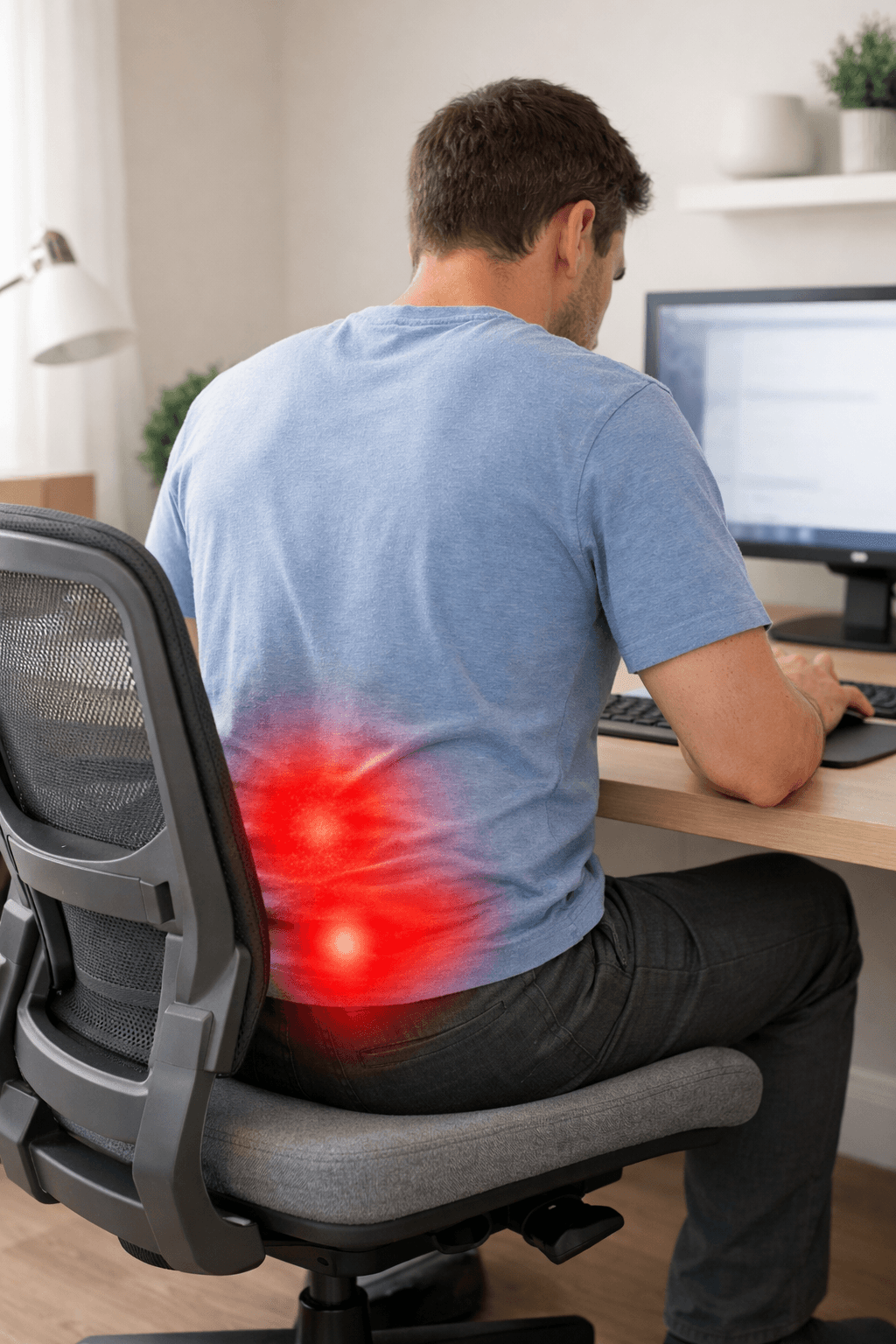
Sitting pain can be frustrating. Sometimes it affects your lower back, other times it is deeper at the base of your spine. If lumbar support or changing chairs does not help, confusion is natural.
Is it lower back pain?
Is it tailbone pain?
Or are both happening at the same time?
Many people experience pain while sitting but are unsure of its source, often leading to ineffective solutions and more frustration.
This article will help you distinguish between tailbone pain and lumbar pain, explain why sitting affects them differently, and guide you in identifying your pain without jargon or complex explanations.
Table of Contents
Why Sitting Pain Is Often Misidentified
Many people refer to any pain in the lower body as “lower back pain,” which is often inaccurate.
Advertisements and advice often emphasize lumbar support, leading to the misconception that the lower back is always the issue. Rigid furniture does not accommodate the spine’s adaptability, so that pain may originate from the tailbone. If lumbar support does not help, your pain may be lower, near the tailbone. This shows the importance of solutions that support the body’s flexibility.
This is why:
• Lumbar pillows don’t help everyone
• Expensive chairs still feel uncomfortable
• Pain goes away when standing, then returns when sitting
Focusing on the wrong area will not bring relief.
What Tailbone Pain Really Feels Like
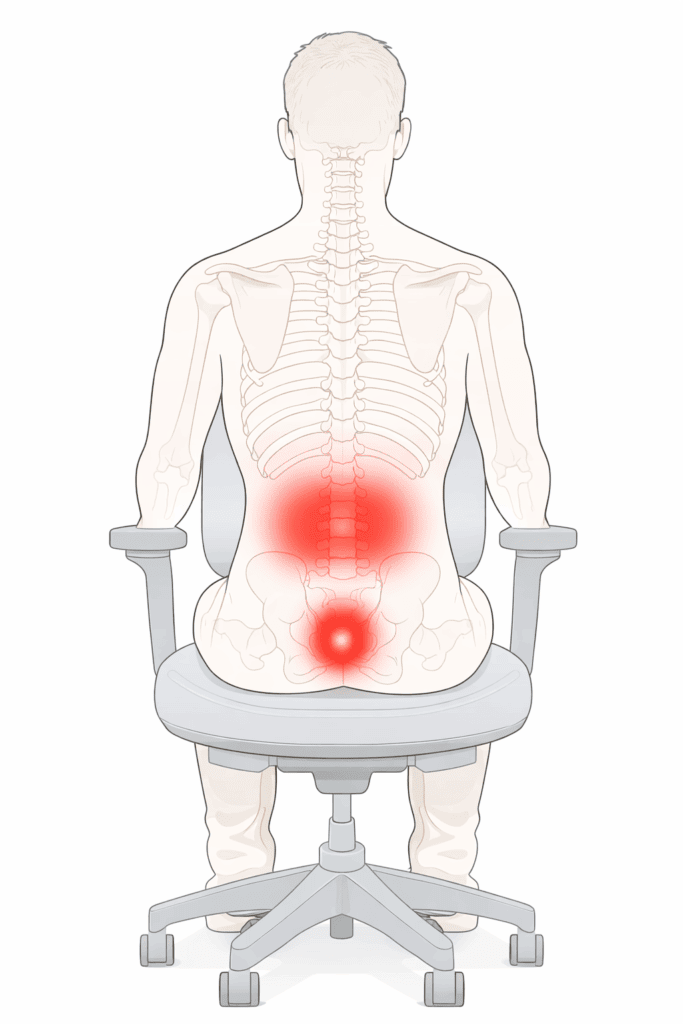
Now that common misconceptions are addressed, it is important to define tailbone pain clearly.
Tailbone pain originates at the coccyx, the small bone at the base of the spine. The coccyx helps maintain balance while sitting.
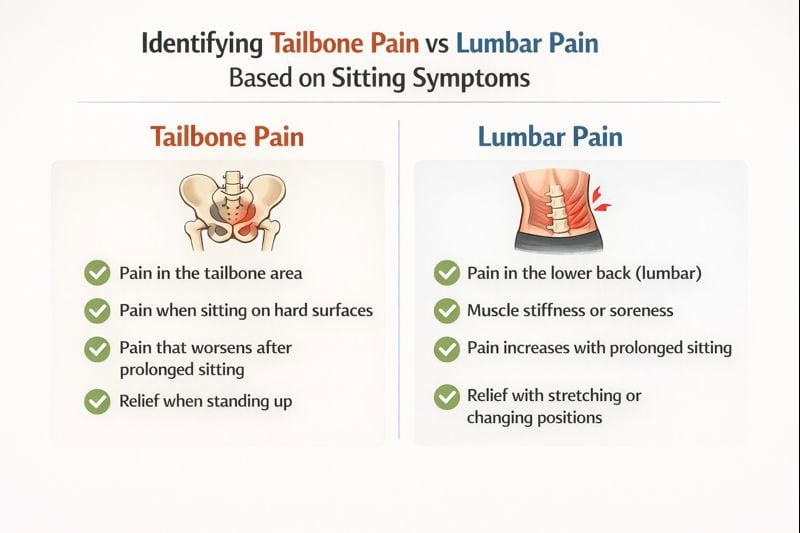
Common Tailbone Pain Signs:
• Very low, near the seat surface
• Like pressure or deep soreness
• Worse on hard or flat chairs
• More painful when standing up from sitting
Better when walking. Many people do not realize that tailbone pain is distinct from lower back pain.
What Lumbar Pain Really Feels Like
Lumbar pain refers to discomfort in the lower back, just above the hips, while tailbone pain specifically affects the coccyx at the base of the spine, according to the Mayo Clinic. This highlights the need for active rather than static solutions.
Common Lumbar Pain Signs:
• Spread across the lower back
• Tight or stiff
• Worse when slouching
• Better with proper back support
• Sometimes worse after long sitting or poor posture
Backrest support often alleviates lumbar pain but is generally ineffective for tailbone pain.
Why Tailbone Pain and Lumbar Pain Are Confused
The tailbone and lower back are anatomically close. Increased pressure while sitting can cause mixed pain signals, making it difficult to identify the source. Recognizing the difference enables more effective treatment.
Key Differences — Tailbone vs Lumbar Pain (CLEAR TABLE)
The following comparison clarifies the differences:
| Factor | Tailbone Pain | Lumbar Pain |
| Pain location | Bottom of spine | Lower back |
| Sitting effect | Worse on hard seats | Worse without support |
| Standing relief | Yes | Sometimes |
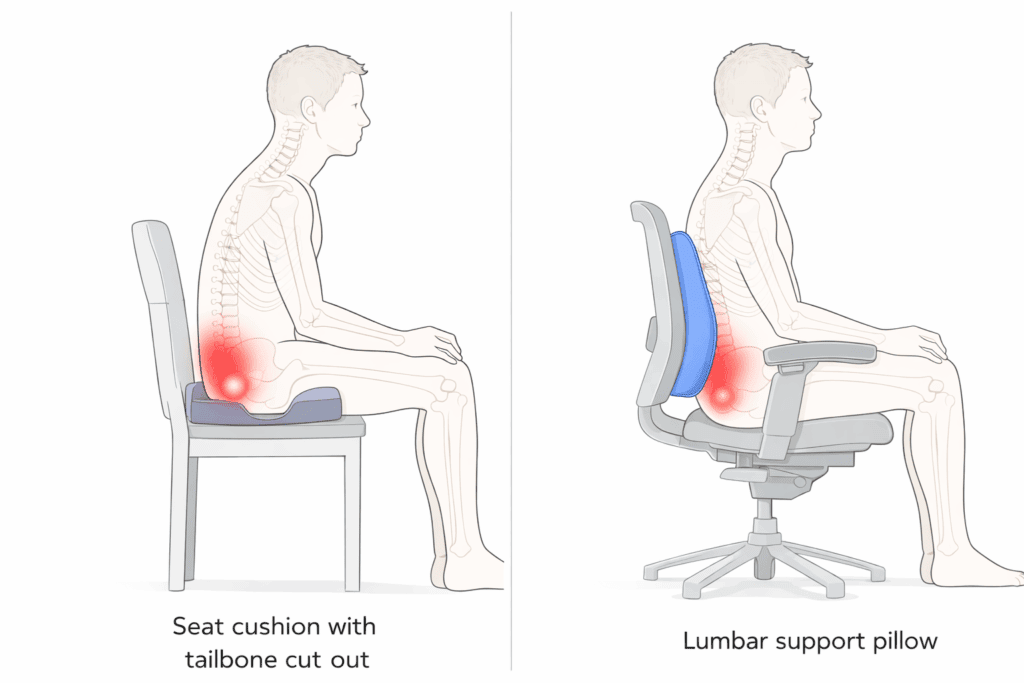
| Cushion helps | Often | Rarely |
| Lumbar support | No effect | Helps |
Why Chairs Fix One Pain but Not the Other
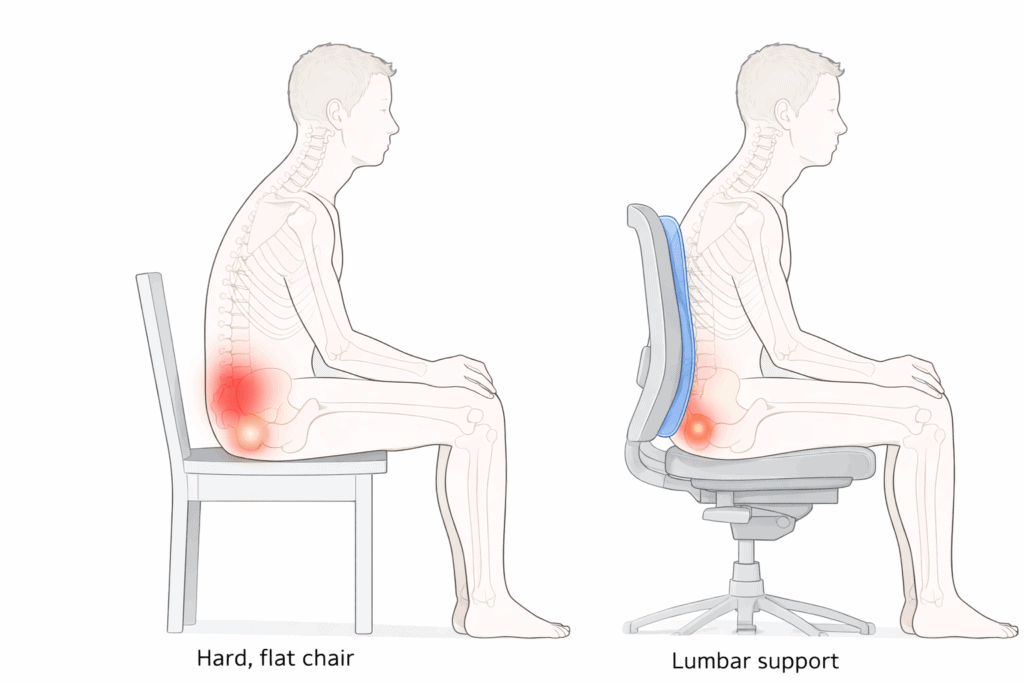
This comparison helps many people identify the true source of their pain. Clear distinctions such as these increase confidence in addressing discomfort effectively. Understanding these differences raises the question of why chairs help with one type of pain but not the other. Seat design plays a significant role. a role.
This type of support is effective for lower back pain. According to Mia, most tailbone pain while sitting is related to seat factors like hardness, insufficient depth, or poor weight distribution, not the backrest. Lumbar support alone rarely resolves these issues. Adjusting seat depth is often more effective, and lumbar support may become unnecessary once seat depth is corrected.
How Sitting Posture Affects Tailbone and Lumbar Pain Differently
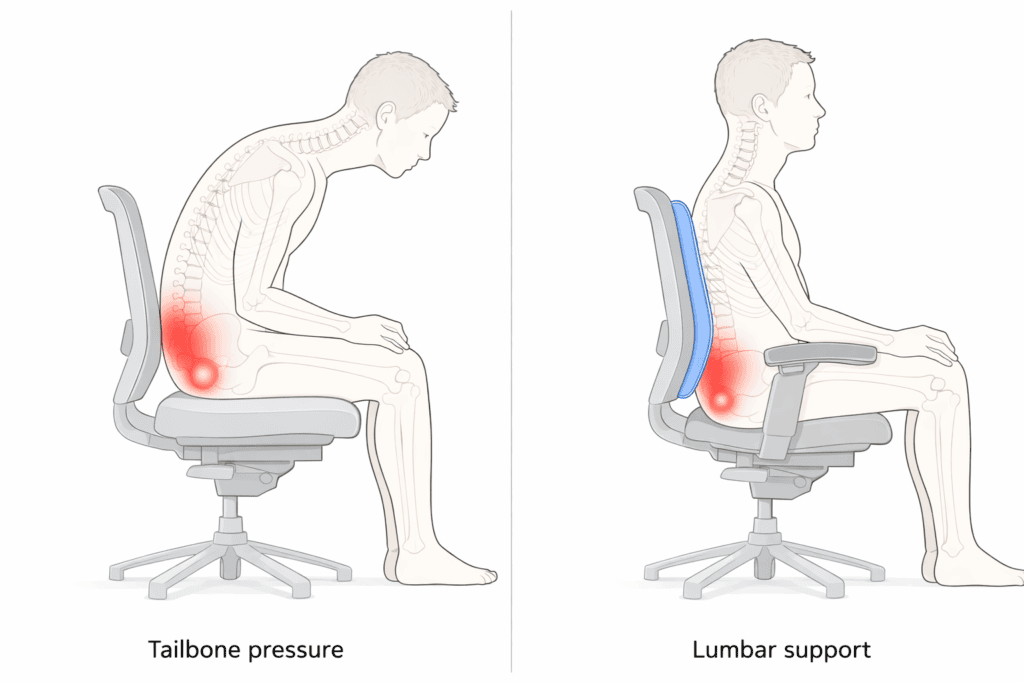
Posture influences both types of pain, but in different ways. It is important to view posture as an active process, not a fixed position. Making small, ongoing adjustments is often more effective than maintaining a rigid posture.
Lumbar Pain and Tailbone Posture
- Slouching shifts weight backward
- The tailbone takes direct pressure
- Long sitting increases soreness
- Slouching flattens the spine curve
- Muscles work harder
Stiffness. This is why being told to “sit straight” does not resolve the problem.
Which Pain Gets Worse the Longer You Sit?
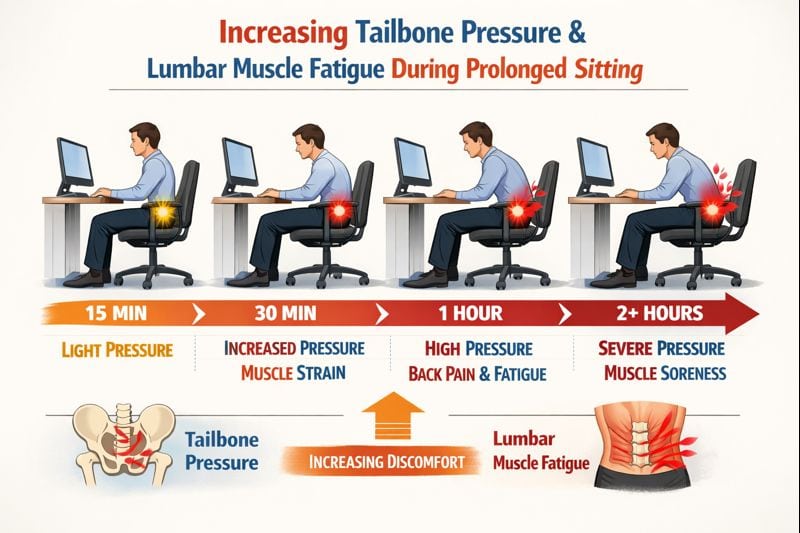
Both pains get worse with time, but for different reasons.
Tailbone Pain Progression
• Pressure builds in one spot
• Muscles tighten around the coccyx
• Pain increases steadily
Lumbar Pain Progression
• Muscles fatigue
• Spine loses support.
Understanding this difference helps you determine the appropriate solution.
Simple Self-Test to Identify Your Pain
• Does pain feel lowest, near the chair surface? → Tailbone
• Does lumbar support change nothing? → Tailbone
• Does pain improve with a cushion? → Tailbone
• Does pain spread across the lower back? → Lumbar
• Does back support make a difference?
Many people realize they have been addressing the wrong issue for a long time.
Why Tailbone Pain Often Comes With Hip Pain
The hips, tailbone, and seat work as a system.
When hip support is poor:
• Pelvis tilts backward
• Tailbone absorbs more pressure
• Pain spreads to the hips
This explains why some people feel tailbone pain and hip pain together.
Seat Design and Its Role in Both Pains
Seat design matters more than most people realize.
Seat Depth
• Too deep → sliding forward → tailbone pressure
• Too shallow → poor hip support → instability
Seat Firmness
• Too hard results in tailbone pain.
• Too soft can result in poor posture or back pain. Achieving balance is crucial.
Can You Have Both Tailbone Pain and Lumbar Pain?
Yes, experiencing both types of pain is more common than many people realize.
Poor sitting habits can:
• Collapse posture
• Shift weight backward
• Fatigued muscles. These factors can cause both types of pain to occur at the same time.
The solution is to:
- Reduce seat pressure first.
- Then improve back support. Incorporate regular movement habits. The sequence in which you address these issues is important.
Jane’s experience can help set priorities. She notices tailbone pain and first adjusts seat depth and firmness. She improves her sitting balance and uses cushions carefully to reduce tailbone pressure. She avoids relying solely on lumbar pillows, knowing they will not relieve tailbone pain.
What to Fix First Based on Your Pain Type
If Tailbone Pain Is Your Main Issue
Focus on:
– Seat depth
– Seat firmness
– Sitting balance
– Cushions (used carefully)
When Jane experiences lumbar pain, she focuses on back support. She adjusts her chair’s backrest, checks the height of her desk and monitor, and increases her posture awareness to reduce back strain.
If Lumbar Pain Is Your Main Issue
Focus on:
– Backrest support
– Desk height
– Monitor height
– Posture awareness
Why Movement Helps Both Pains
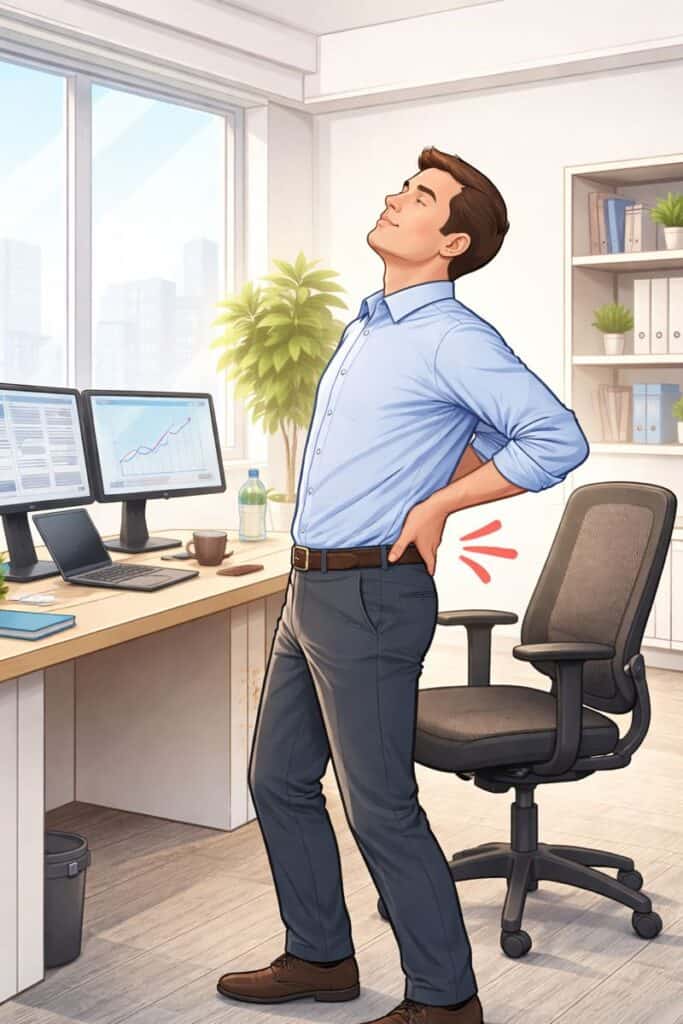
No chair can prevent pain if you remain seated for extended periods.
Movement:
• Resets pressure
• Restores circulation. Standing up every 30 to 45 minutes can help alleviate both tailbone and lower back pain.
When Pain Is NOT Caused by Sitting
Most sitting-related pain is mechanical in nature, but not always.
Other causes include:
• Recent injuries
• Pregnancy changes
• If your pain is severe, constant, or not related to sitting, it’s a good idea to seek professional help.
This article focuses on sitting-related discomfort, which is the most common scenario.
Common Mistakes People Make
• Assuming all sitting pain is lumbar pain
• Buying expensive chairs without adjusting them
• Sitting longer to “get used to it.”
• Using thick cushions without addressing the underlying issue. Being aware of these mistakes can save time and effort.
What Most People Really Want
What Most People Really Want. People don’t just want relief. They want comfort, confidence that they’re fixing the right issue, a chair that works with their body, and the ability to relax. Knowing the difference between tailbone and lumbar pain is the first step toward that comfort.
Final Thoughts: Fix the Right Pain, Not Just the Chair
Sitting pain is not you Sitting pain is not your fault; it is a mechanical issue. Once you understand the source of your pain, solutions become simpler. Although tailbone pain and lumbar pain can feel similar, each requires a different approach. Identify your pain type and implement the appropriate solution. Start with one change and observe how much better sitting can feel. Do not wait for relief; make sitting comfortable again now.