
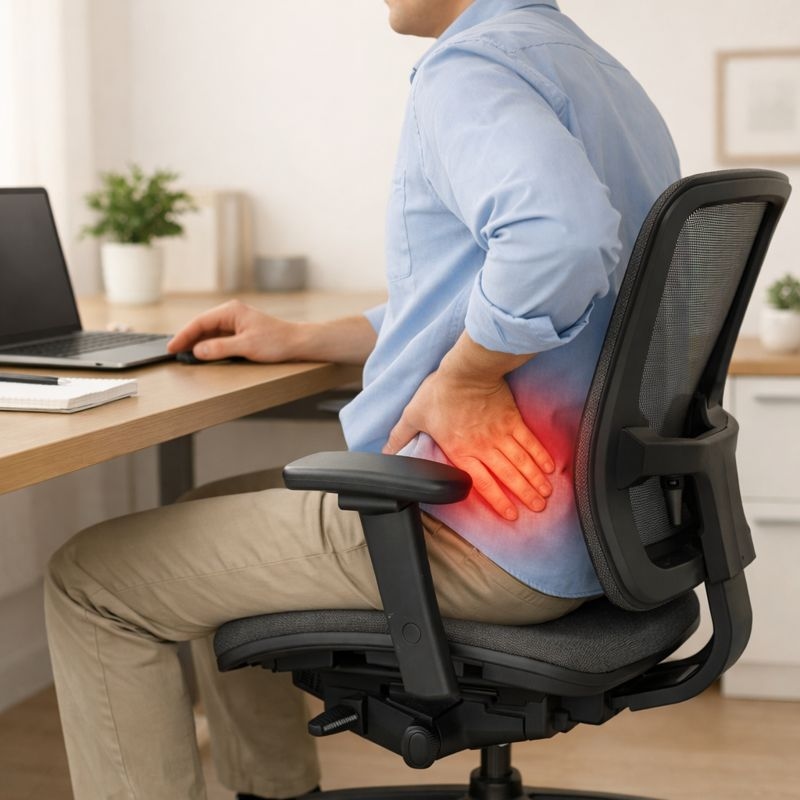
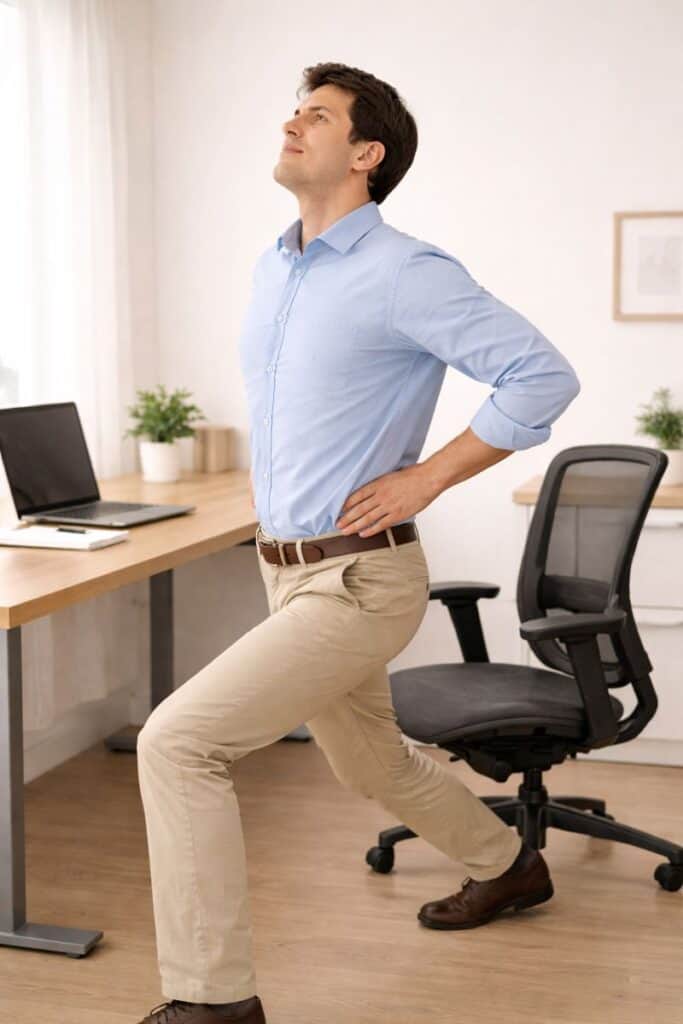
Picture sitting at your desk when a dull hip throb appears—a familiar feeling after hours of work. While sitting feels comfortable, the real discomfort starts when you stand, leaving joints stiff and muscles tense.
This pain often makes people worry about serious problems, even when it’s mild or occasional. Yet many office workers report hip stiffness from sitting, and most say it’s reversible with simple lifestyle changes.
The good news is:
Hip pain from sitting is very common and reversible, offering hope for relief to office workers, students, and drivers.
Most discomfort is due to long sitting, poor chair fit, or little movement—not injury or disease. You’ll learn about different hip pain sensations, why sitting affects the hips, and some simple relief steps.
Table of Contents
What Hip Pain From Sitting Feels Like
Hip pain from sitting varies. Some notice mild stiffness, others feel a deep ache that makes standing hard. The hip joint—a ball-and-socket joint where the thigh meets the pelvis—can make these sensations more pronounced or more focused.
Common sensations include:
- A dull ache deep inside one or both hips
- Tightness when standing after sitting for a long time
- Stiff hips during the first few steps after getting up
- Discomfort that slowly fades once you start moving
This discomfort is usually tightness, stiffness, or a locked feeling, not sharp pain. It may switch sides if you lean unevenly, or both hips may feel stiff.
Pain doesn’t usually worsen while sitting. Instead, it appears when you move or stand, making it hard to link the pain to sitting, even though sitting is usually the cause. Recognizing this timing is the first step to understanding how daily habits affect your hips.
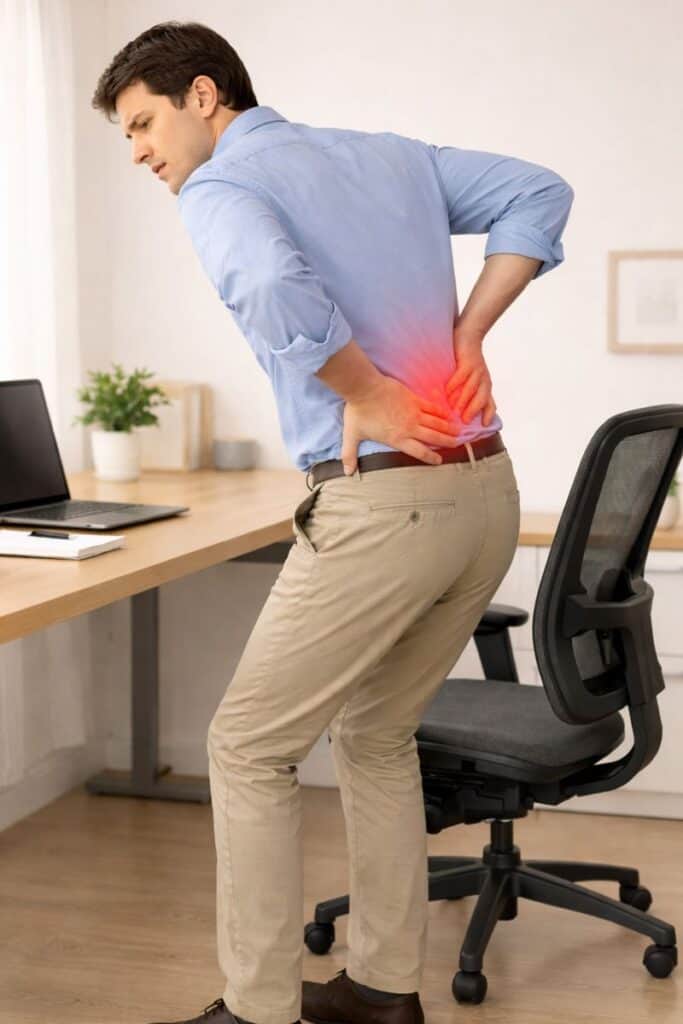
Why Sitting Affects Your Hips
Hips are meant to move. Walking, standing, and shifting positions keep hip muscles flexible and supplied with blood.
Sitting for hours keeps the hip muscles shortened and contracted, not stretched.
- Hip flexors remain in a closed position. Hip flexors are the muscles at the front of your hips that help lift your knees and bend at the waist. A closed position means these muscles stay bent rather than extended, keeping your hips in a seated posture.
- Blood flow slows slightly.
Over time, staying in one position stiffens muscles and reduces flexibility. Even the best chair can’t prevent this if you don’t move. The issue isn’t sitting, but a lack of movement. Inactivity strains hip muscles and joints, so people who sit for work often experience hip pain—even with a good chair. To help, take micro-breaks: move for 2-3 minutes every 30 minutes. Let simple actions, like refilling your water bottle, remind you. Regular breaks help you shift position and stay active, reducing muscle strain and stiffness.
Common Causes of Hip Pain From Sitting
Hip pain from sitting often has several causes: how your chair fits, your habits, and the duration of your sitting.
Below are the most common causes.
Sitting Too Long Without Moving
This is the main reason people get hip pain from sitting.
When you sit for long periods without standing:
- Muscles slowly tighten
- Hips remain in a bent position.
- Pressure builds in the same areas.
Long sitting keeps the hips bent and builds pressure, which can cause discomfort when you stand and stretch the muscles. This transition is usually more uncomfortable than sitting itself.
Take regular movement breaks to prevent stiffness and reduce hip discomfort. Use easy movements like standing during calls, desk stretches, or walking to the printer. Try 30-second stretches: lift one knee toward your chest while sitting, hold, then switch. For two-minute breaks, try standing stretches by placing one foot on a chair and leaning forward. Students can do discreet desk stretches, such as straightening one leg or shifting their weight. These small movements ease tension and boost comfort without drawing attention.
Seat Depth That Doesn’t Fit Your Body
Seat depth affects hip comfort more than most people think.
If the seat is too deep:
- The front edge presses against the thighs
- The hips slide forward.
- The pelvis tilts backward.
If the seat is too shallow:
- Thighs lose support
- More weight shifts to the hips
- Muscles work harder to keep balance. This extra work can strain your hip muscles, as they try to keep your body stable.
Both situations disrupt hip alignment. Over time, this strains your hips and causes discomfort after sitting.
Seat depth should support most of your thighs, leaving a small gap behind your knees. Ideally, there’s a 2-3 centimeter (0.8-1.2 inch) space between the front edge and the back of your knees. To check, sit back in your chair and see if two or three fingers fit in that gap.
Chair Height and Hip Angle Problems
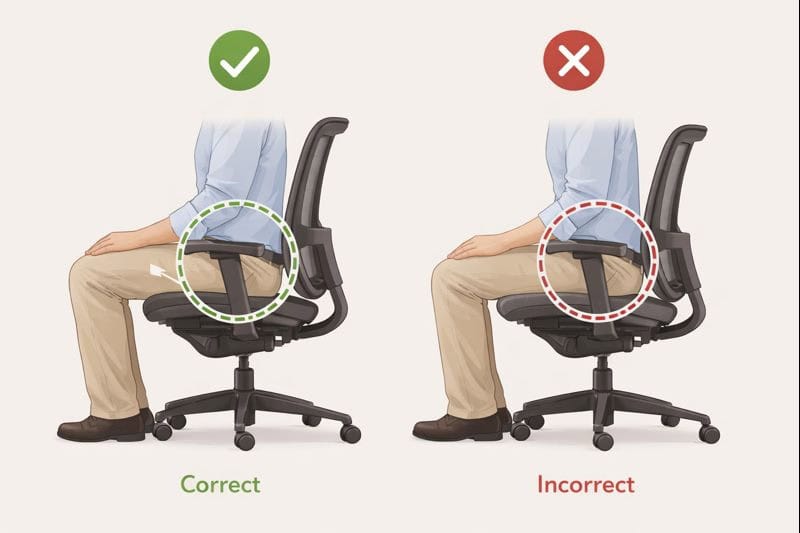
Chair height directly affects how your hips and knees line up.
Hip discomfort often occurs when:
- Hips sit much lower than knees.
- Hips are raised too high.
- Feet cannot rest flat on the floor.
These positions tilt your pelvis forward or backward, which means your hip bones rotate either toward your stomach (forward) or toward your back (backward), changing how pressure is spread through your hips.
Poor hip angles may feel fine at first, but over time, the hip muscles tighten to compensate, leading to stiffness when you stand.
Poor Back and Pelvis Support
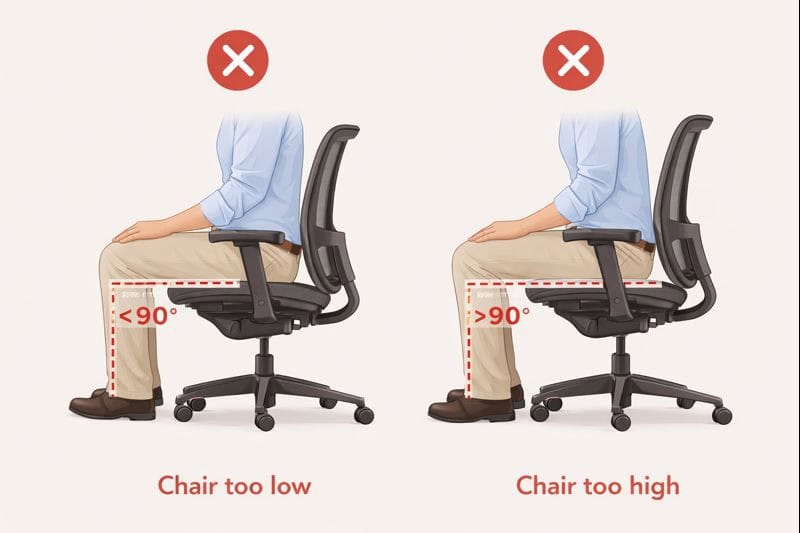
Your hips don’t work alone. They move together with your lower back and pelvis.
When back support is weak, the pelvis tilts backward.
- The spine collapses
- Hip muscles lose neutral alignment, meaning they are no longer in a natural, unstressed position where the joints and muscles work best. Neutral alignment is when your body is in its most balanced, natural state.
Why Hip Pain Often Appears After Sitting, Not During
Slouching puts stress on the hips. Over time, they absorb more pressure than they should, causing stiffness and discomfort.
Support your lower back. If pain persists, worsens, or is accompanied by numbness, swelling, or nighttime pain, consult a healthcare professional. Many are confused that pain appears only after sitting. Muscles tighten slowly, and pressure builds without clear warning. When you stand, muscles stretch quickly, making stiffness more noticeable. The pain is a signal from tight, inactive muscles, not damage. Knowing this can ease your worries—most hips need more movement, not more rest.
How to Fix Hip Pain From Sitting
Realizing that small, steady changes can greatly reduce hip pain helps you take action without feeling overwhelmed.
Hip pain from sitting usually improves with small, steady changes. Complicated routines or expensive equipment aren’t necessary.
Adjust Your Chair First
Begin with the basics. Focus on:
- Seat height: Feet flat on the floor
- Seat depth: Small space behind knees
- Back support: Gentle support for the lower back
When your chair fits, your hips stay in a natural position. Adjusting your chair matters more than its brand. If you can’t adjust or replace your chair, try these low-cost fixes: use a cushion or rolled towel for lumbar support.
– Use a stack of books as a makeshift footrest if your feet cannot rest comfortably on the floor.
– For students in fixed seating arrangements, bring a small cushion or use a backpack for added support.
These tips can make sitting more comfortable. Before you change sitting habits, make sure your chair setup is comfortable.
Change How You Sit
Instead:
- Sit in a relaxed, neutral position.
- Shift slightly during the day.
- Use a gentle recline when possible.
Sitting stiffly tires your muscles faster than relaxed movement. Small changes in posture can significantly reduce hip strain with little effort. Consider incorporating a variety of sitting positions throughout your day instead of striving for a single ‘perfect’ posture. For example, try a slight recline occasionally or a forward perch position, where you sit closer to the edge of the chair. These variations can normalize movement, help avoid the trap of perfectionism, and keep your muscles more engaged and less fatigued.
Move Your Hips Regularly
Moving regularly is the most effective way to help.
Helpful habits include:
- Standing every 30 to 45 minutes is a helpful habit. However, linking movement to existing routines can strengthen these habits. For example, you can use actions you already do, like getting up when the phone rings or standing during TV commercials, as reminders to move around. These if-then cues not only make it easier to remember but also rely on fewer conscious decisions.
To make regular movement easier, consider setting phone alarms or using apps that remind you to stand or walk. For students, you can link movement to routine tasks, like changing classrooms or taking study breaks. Use a water bottle refill as a reminder to stand and stretch, or take a quick walk to the library printer after finishing a chapter. When in a lecture or studying in open areas such as a library, try subtle movements that won’t draw attention, like shifting your posture slightly, doing seated stretches, ankle circles, or shoulder rolls. These small but impactful adjustments help busy students build healthy habits without extra effort.
When Hip Pain Is Not Caused by Sitting
Not all hip pain comes from sitting.
Other possible contributors include:
- Old injuries
- Very low activity levels
- If your hip pain continues even after improving your sitting habits and incorporating more movement, it is important to consider that the issue might not be solely related to posture. While most sitting-related hip pain is not serious and can improve with lifestyle adjustments and environmental changes, there are certain red flags to watch for.
Seek immediate medical help if you experience any of the following symptoms:
- – Severe pain
- – Pain that disrupts your sleep
- – Swelling
- – Numbness
These symptoms may indicate a more serious underlying issue that requires professional evaluation. Remember, getting timely advice from a healthcare professional can help you address any potential concerns and avoid complications.
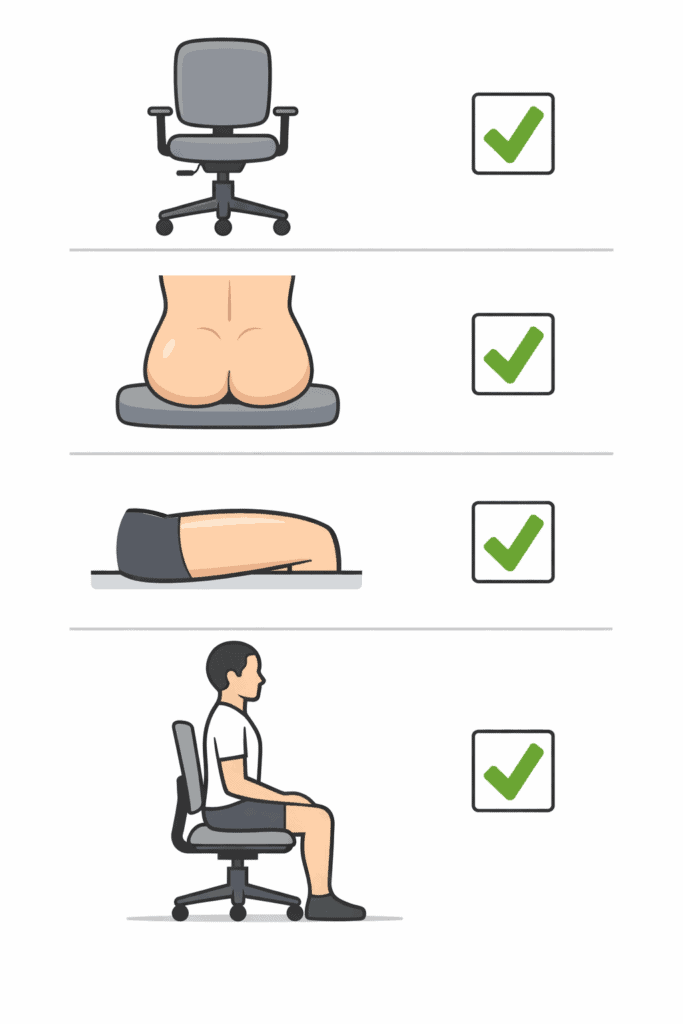
Quick Self-Check: Is Your Chair Causing Hip Pain?
Ask yourself:
- Does hip pain appear after long sitting?
- Do your hips feel stiff when standing?
- Is there pressure behind the thighs?
- Does movement reduce the pain?
If you answered yes, your sitting habits or chair setup are likely part of the problem.
Many sitting-related issues stem from overall chair setup and support.
Frequently Asked Questions
Can sitting all day cause hip pain?
Yes. Long hours of sitting without movement commonly lead to hip stiffness and discomfort.
Should hips be higher than knees when sitting?
For most people, hips should be level with or slightly higher than knees.
Can seat depth cause hip pain?
Yes. An incorrect seat depth can alter hip alignment and increase pressure on the hips.
Sitting Comfort Starts at the Hips
Hip pain from sitting is common but rarely permanent. Most cases are caused by sitting too long, a poorly fitting chair, or not moving enough, not by serious damage.
Small changes make a big difference:
- Better chair setup
- Relaxed sitting habits
- Regular movement
When your hips are comfortable, sitting feels easier and less tiring. Knowing how sitting affects your hips helps you notice early warning signs and make small changes before discomfort becomes a habit. Remember, small changes add up, and each adjustment you make brings you closer to a more comfortable and healthier sitting experience. Take charge of your comfort and take the first step today! For students, your study and class time can be more productive when your body feels good. By taking care of your hips, you not only enhance your comfort but also improve your focus and performance. Embrace these changes to support your body throughout your academic journey and make every learning opportunity count.